Monk@Durham Day 10

LAST DAY!

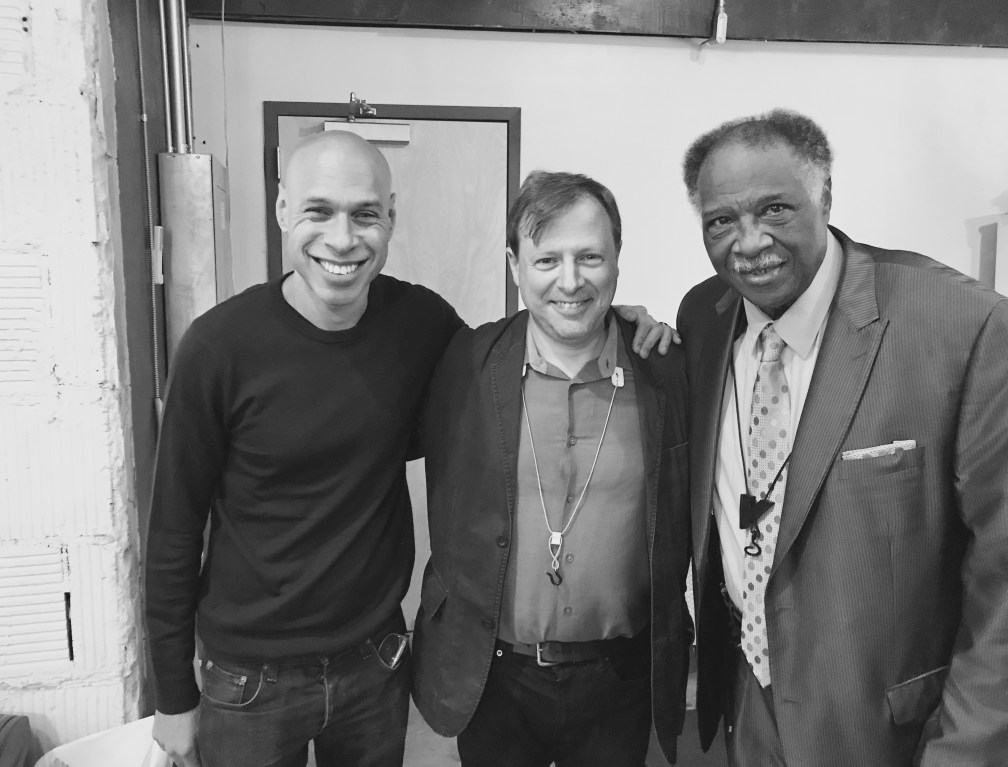
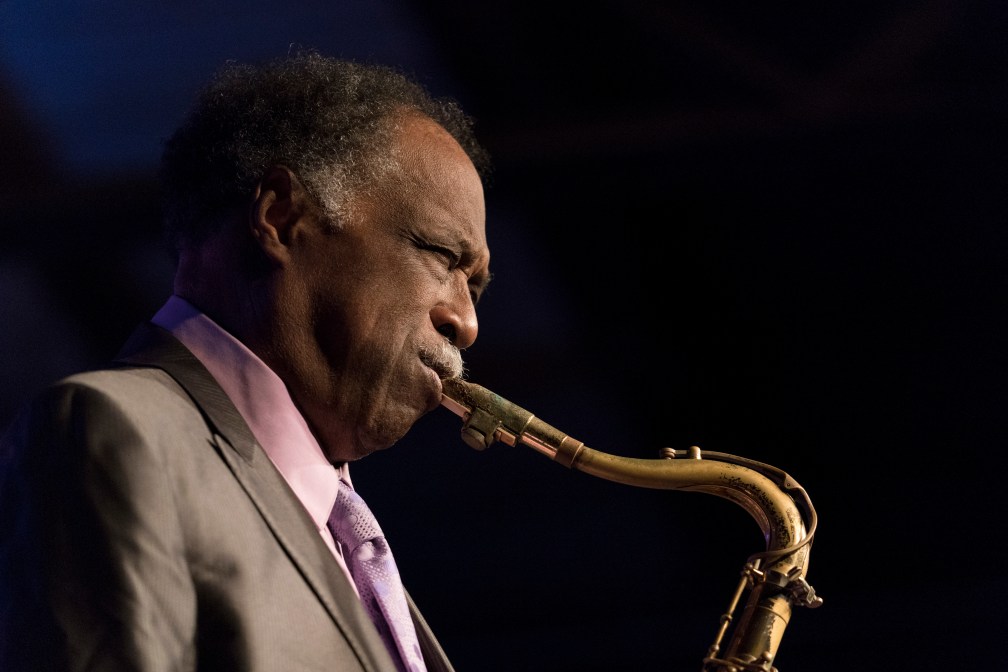
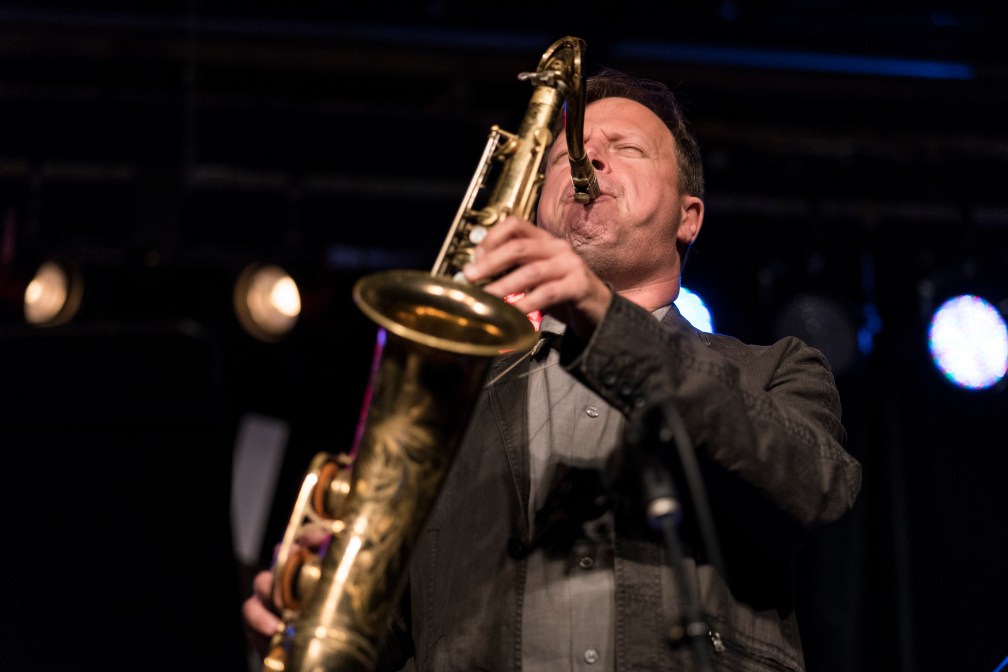
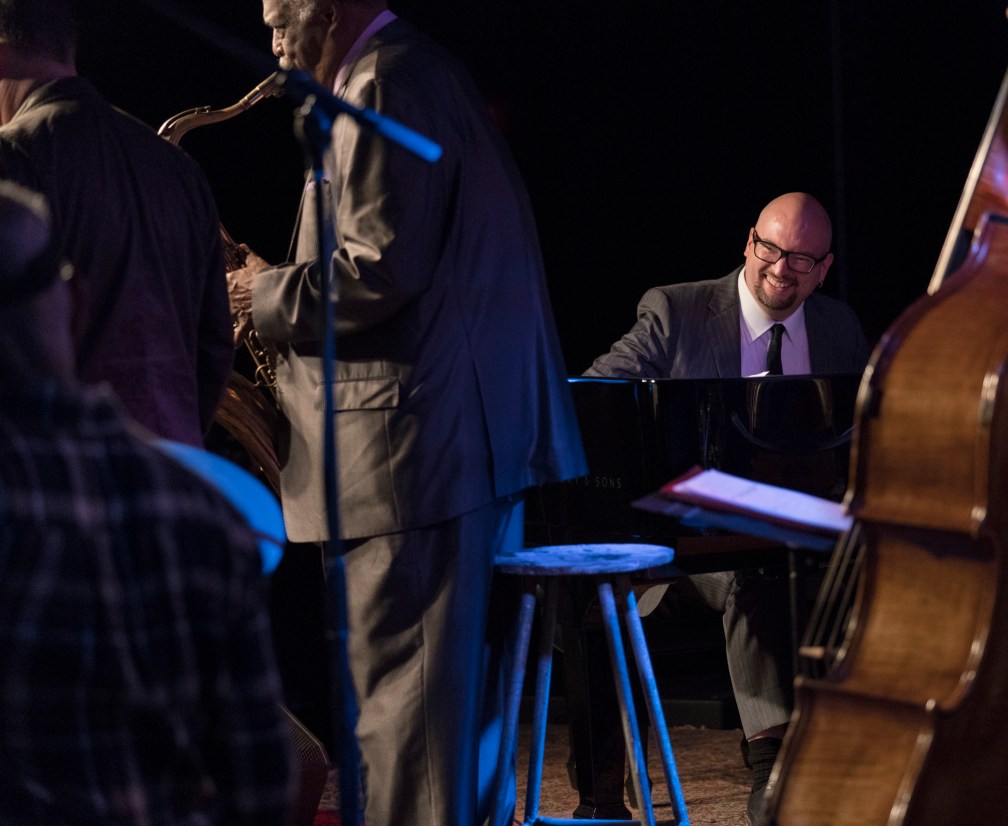
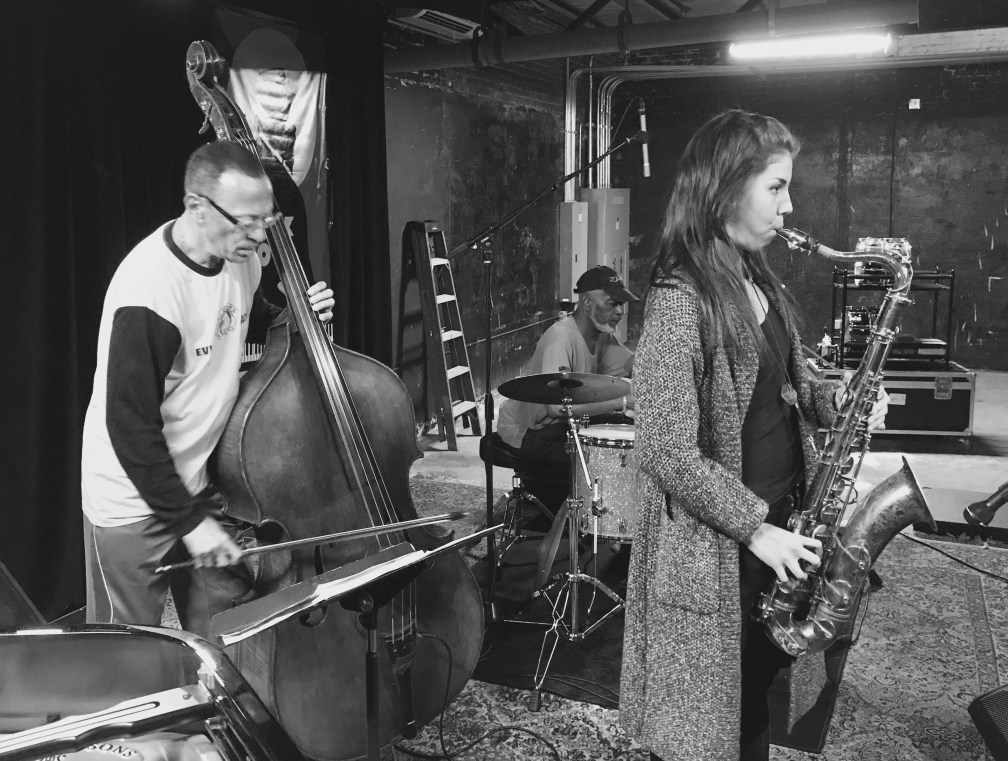
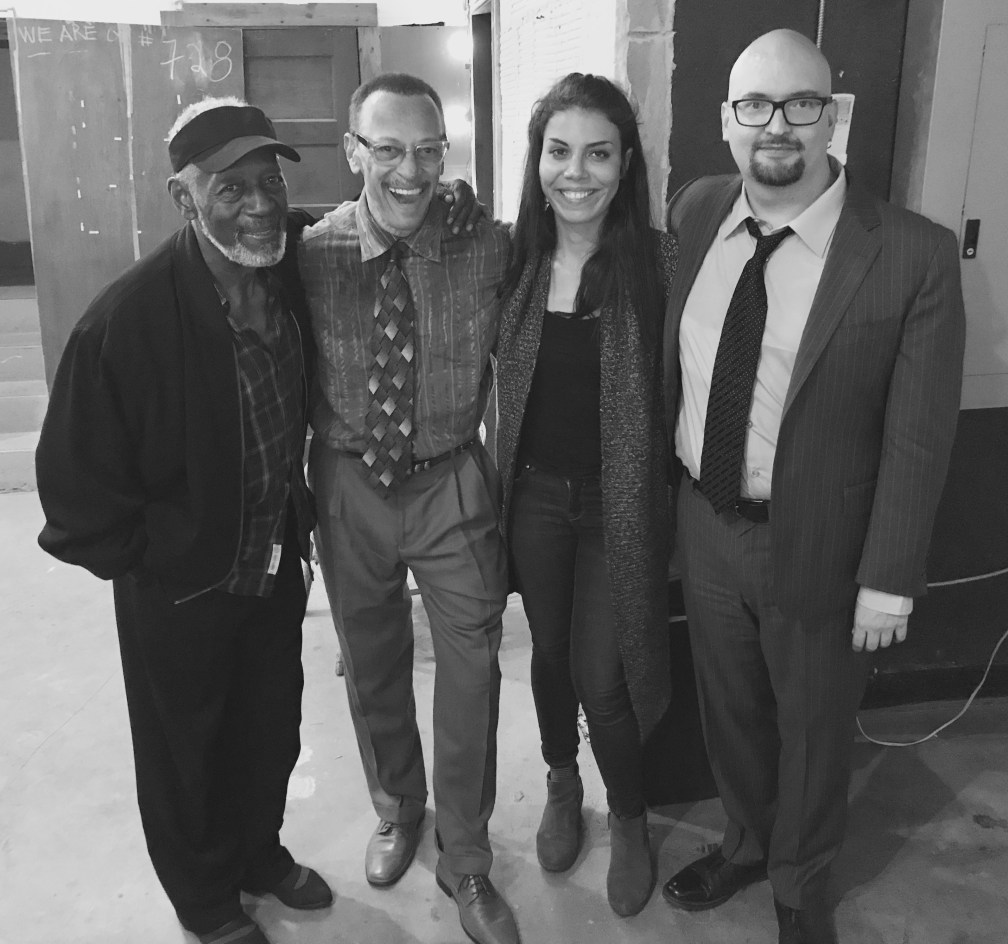
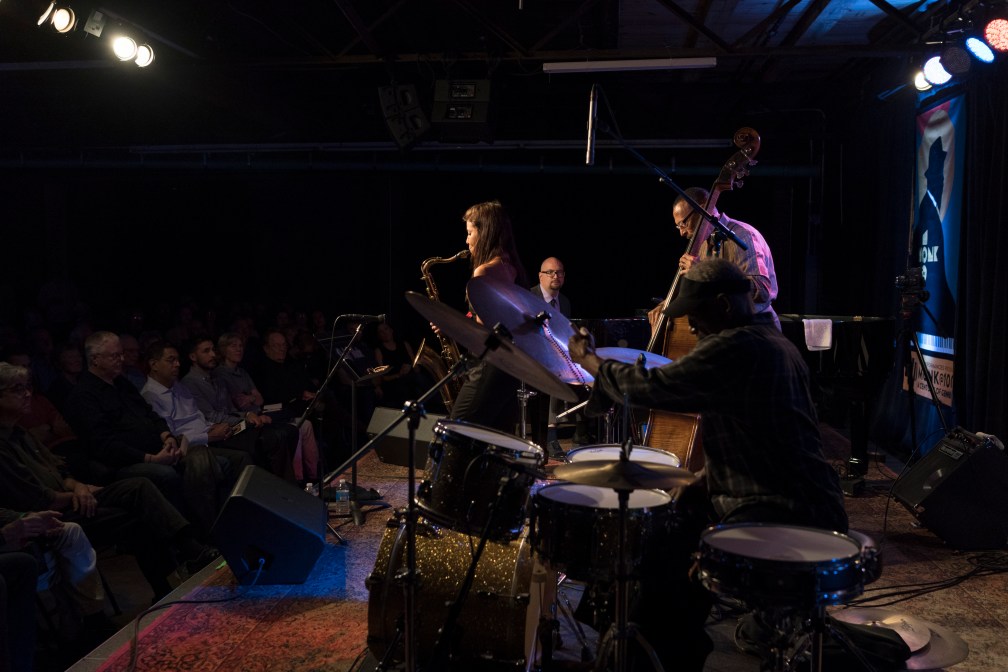
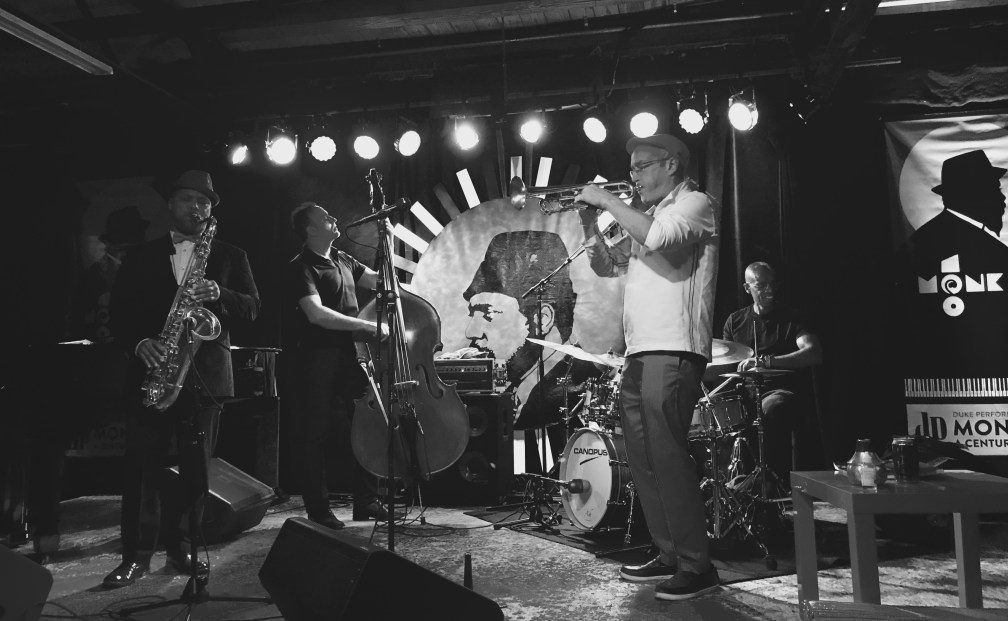
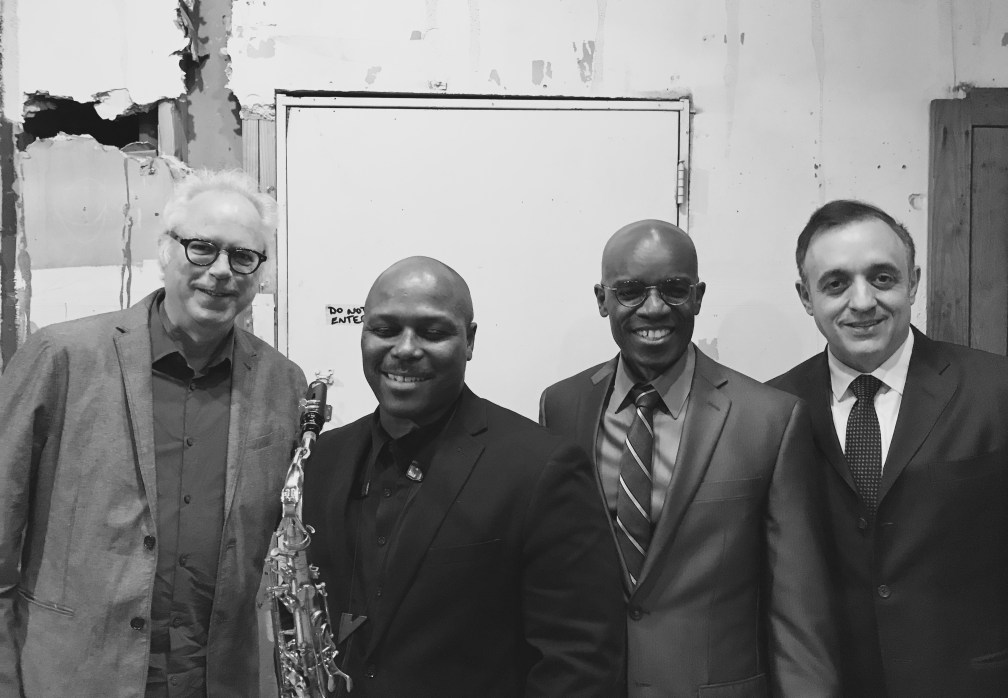
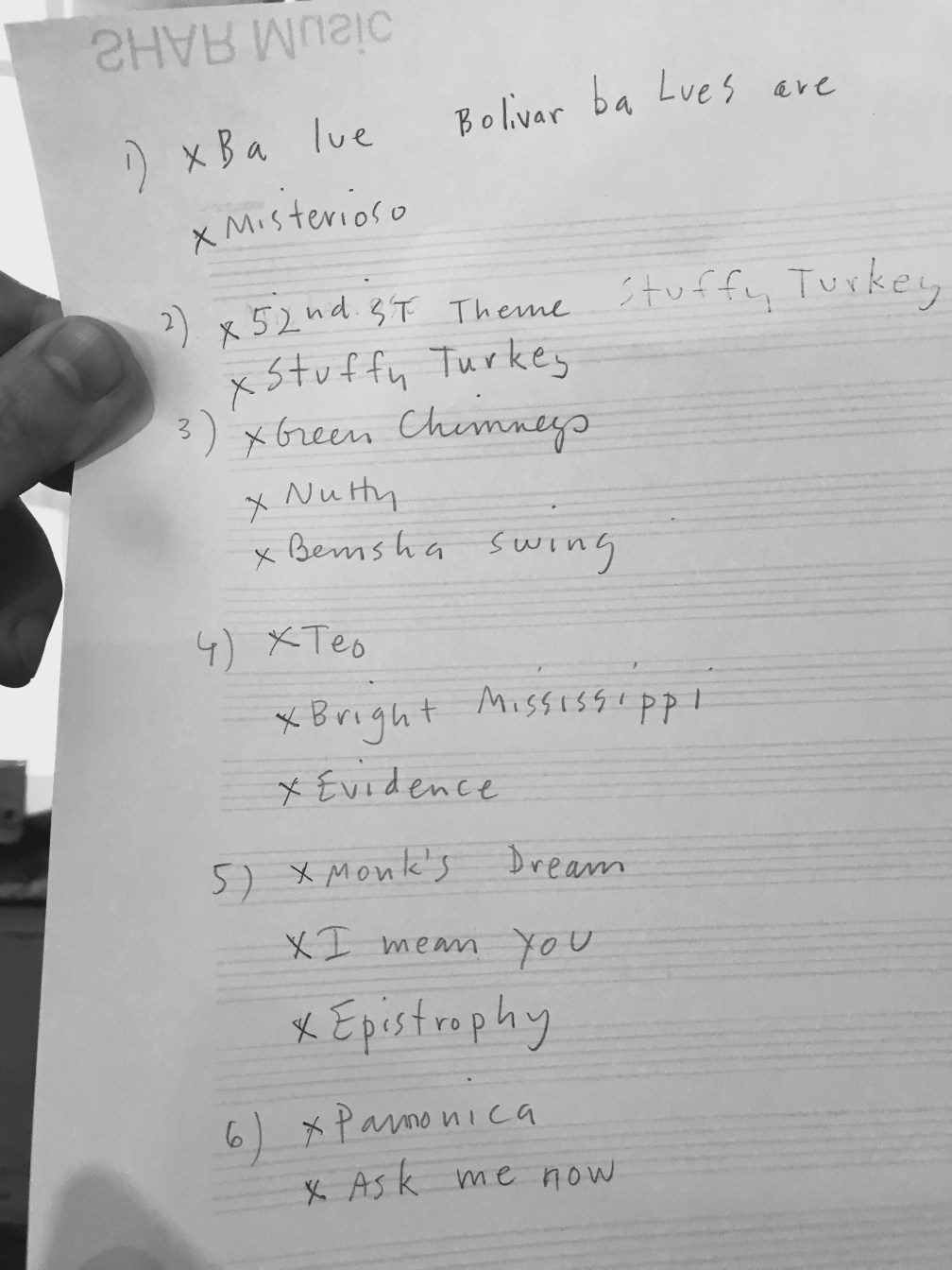
Ravi Coltrane guesting with David Williams, Victor Lewis, and me.

Set 1

Played Twice
Bemsha Swing
Ask Me Now
Wee See
Monk’s Mood
Skippy
Evidence

Set 2

Monk’s Dream
Ugly Beauty
Criss Cross
Monk’s Mood
Epistrophy
Rhythm-a-ning

After the concert a woman I didn’t know came up to me and said, “I’m so glad I got to hear ‘Criss Cross’ three times! I love that piece!” Then vocalist Kate McGarry said almost the same thing, “Great to hear ‘Criss Cross!’ I learned so much from that album!”  Hard to imagine these sentences occurring anywhere else but at MONK@100….

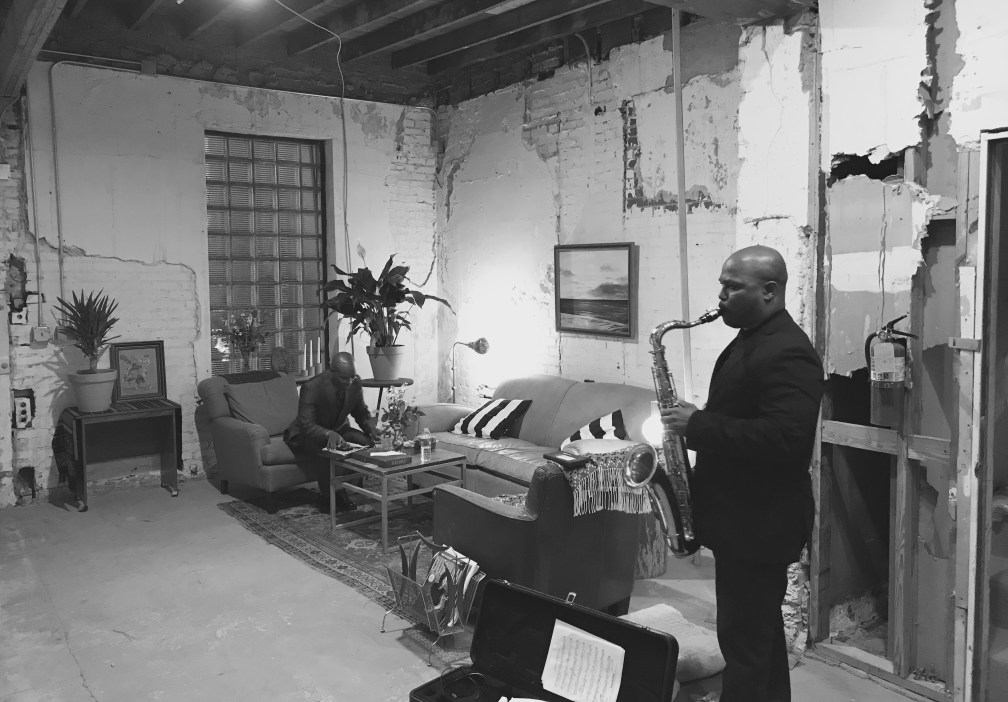
Ravi and I played “Monk’s Mood” duo in both sets. We sort of emulated the version that Monk did with John Coltrane. After a solo piano statement there are two unexpected cadenza chords, B dominant and B-flat dominant, before the tenor and piano continue more or less in unison. In my opinion the studio recording is a window into the process of Monk’s music, where he played his songs over and over and Coltrane caught as many notes as he could.

I was sort of amazed that both Melissa Aldana and Ravi wanted to play “Skippy.” Damn, that’s a hard tune. However, both really sounded great on it. I’m coming up with a kind of personal take as well. Possible think piece: “Skippy: A jazz standard for the 21st century?”

Ravi played soprano on “Bemsha Swing” and “Rhythm-a-ning,” that was a nice move and perhaps brought a little of Mr. Steve Lacy into the room. If MONK@100 were continuing another week, it would make sense to do a night of compositions by Monk’s best students: Lacy, Herbie Nichols, Mal Waldron, Paul Motian, Roswell Rudd, Geri Allen….

But MONK@100 is done, and it was a huge success. Thank you to all, especially Aaron Greenwald (who created the project) and Tim Walter (who gave us Durham Fruit and Produce to work with).

fullsizeoutput_a53.jpeg

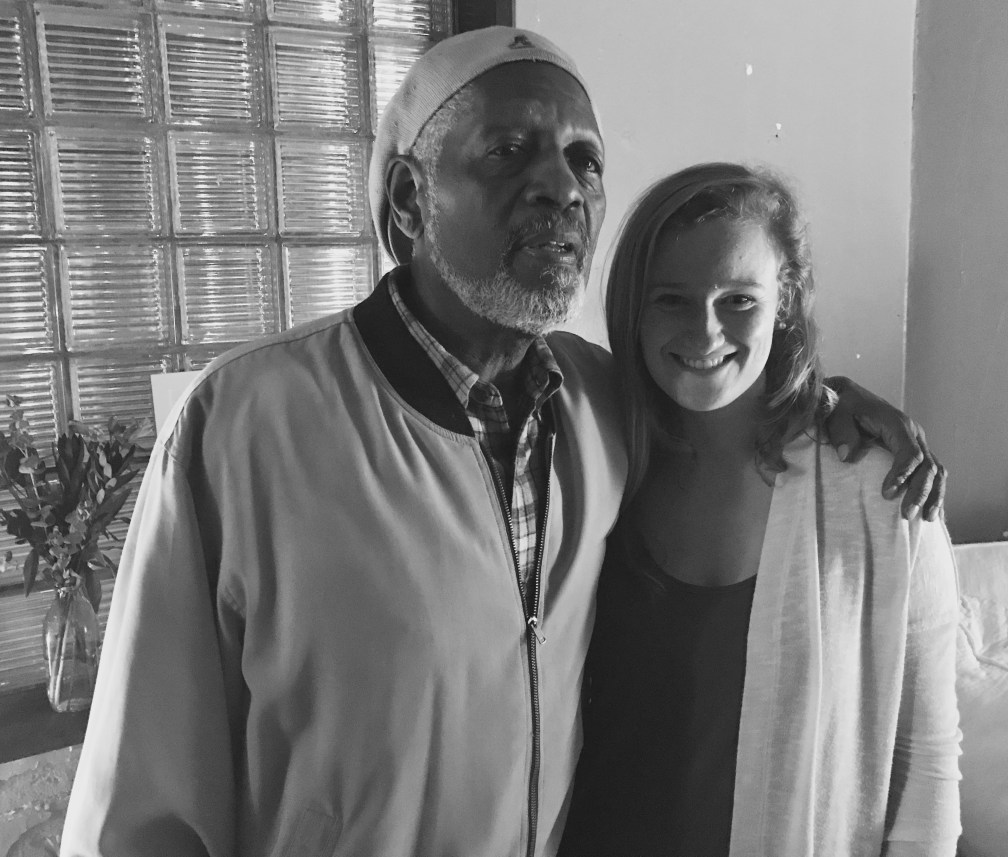
Drummer Sarah Gooch loaned Victor some killing cymbals.
fullsizeoutput_a59

There may be a film of what happened here. If so, that will be thanks to Matt Durning.

fullsizeoutput_a5a

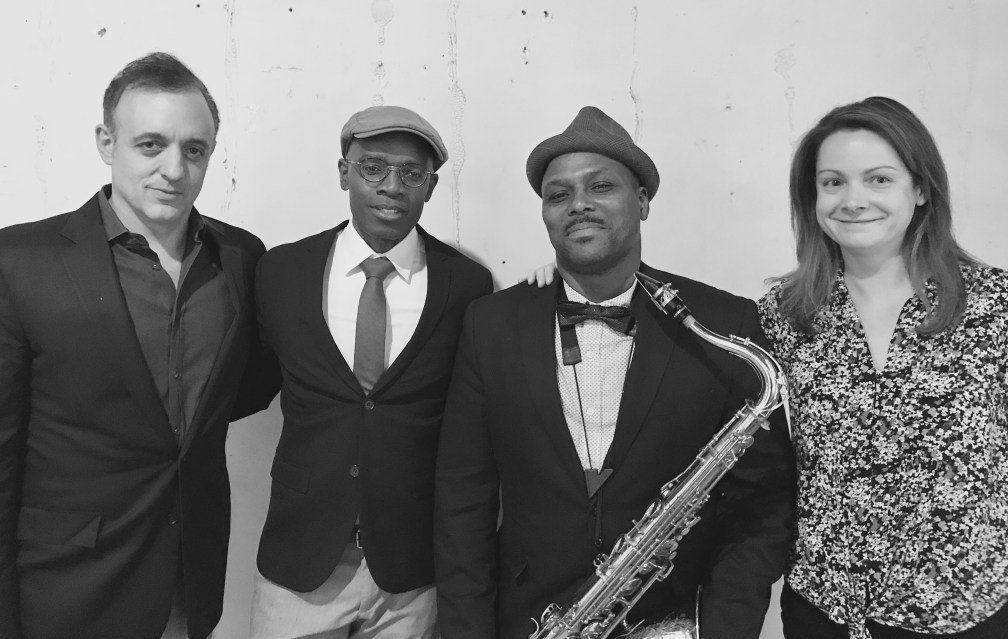
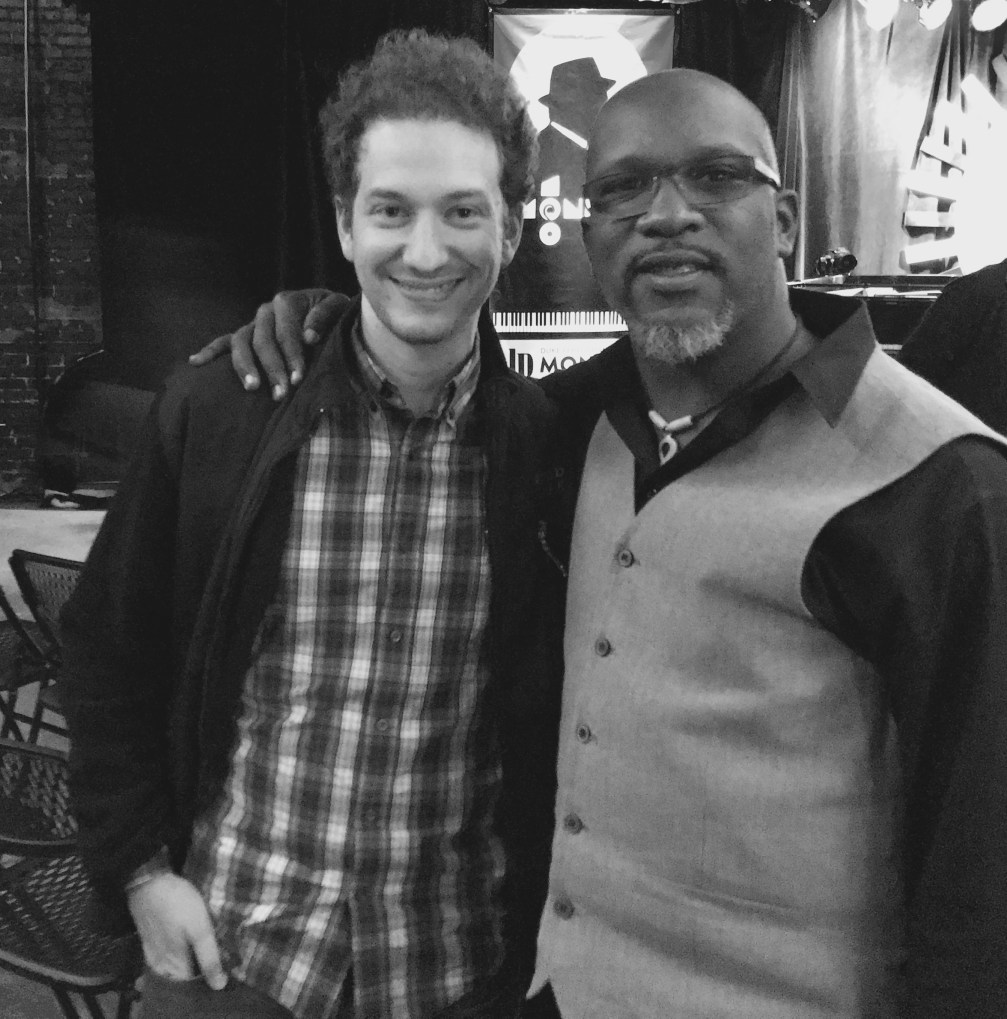
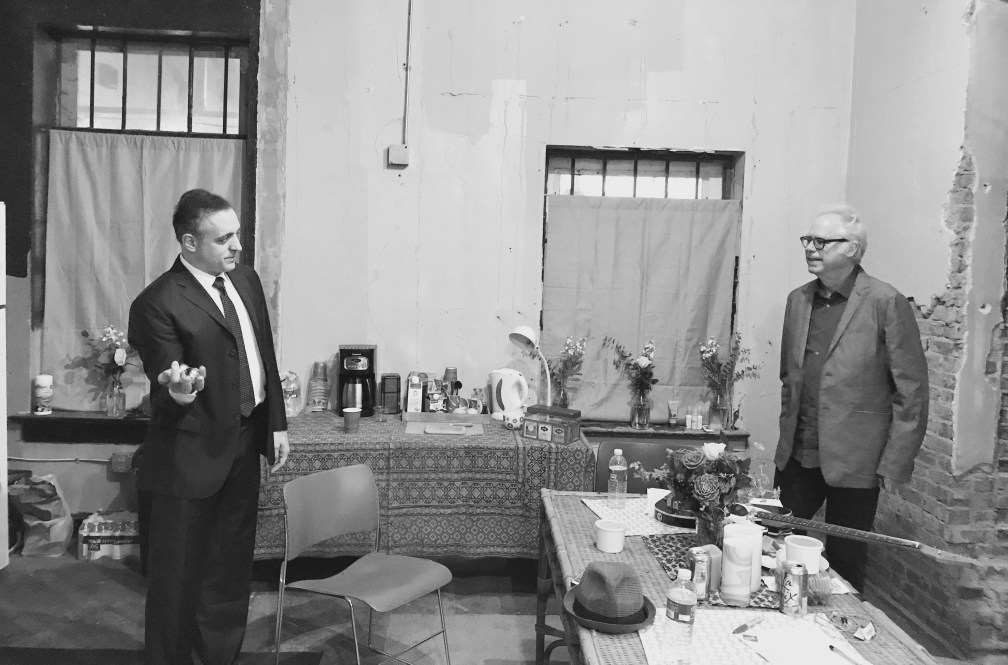
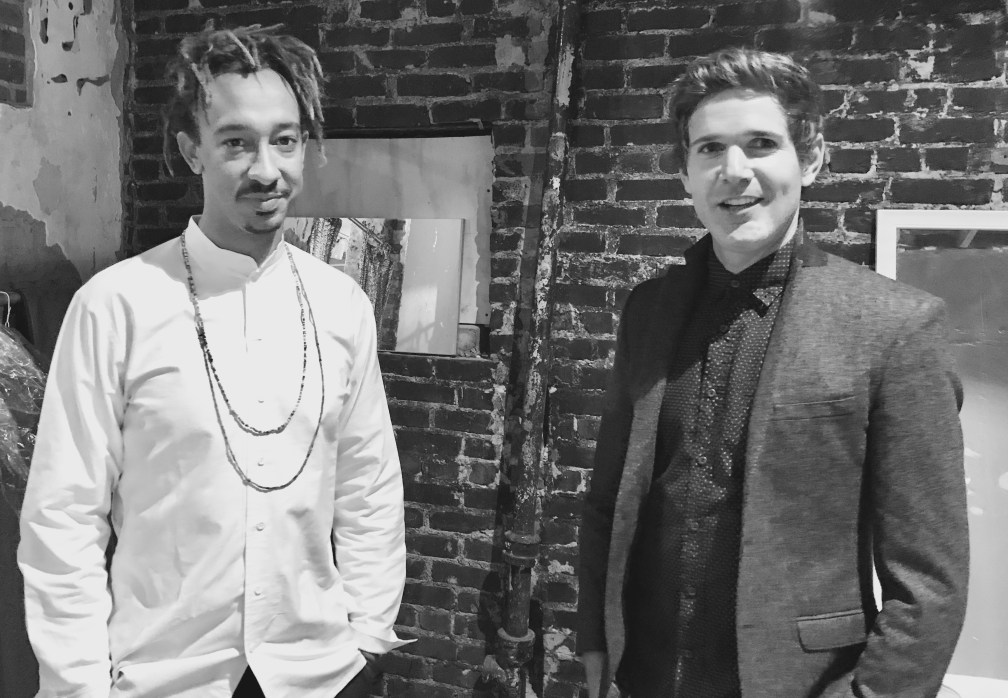
My “taking candid photos” game was down, I didn’t even get a group shot of tonight’s quartet. But here’s Victor and Ravi talking about Geri Allen. (The last time they played together was with Geri at the Vanguard.)

fullsizeoutput_a56

Finally, a signal boost of the three big Monk pieces I published the week before the Durham festivities. (And scroll back to see quick overviews of what we did each day.)

Think of Monk (at the New Yorker Culture Desk)

Primary and Secondary Documents (this is the big one)

Judge Not, Lest Ye Be Not Judged (auditioning tapes for the Monk Competition)
DFgmyuCVwAAPWxS

Monk@Durham Day 9

Joshua Redman guesting with David Williams, Victor Lewis, and me.

I’ve gotten to know Josh pretty well through all the gigs with The Bad Plus Joshua Redman and more recently the week with Billy Hart. He’s a worker, and didn’t mind getting assigned some more obscure items. It was a sensational couple of sets. Actually I thought it was the best showing from the “house trio” yet. It was telling how differently Victor Lewis played for Houston Person than for Josh Redman. I asked Victor about it and he said, “I love all the eras of this music.”

Before we began with “Boo Boo’s Birthday,” David Williams told us about how Barbara Monk (Thelonious’s daughter, nicknamed “Boo Boo”) would come by rehearsals when David played with T.S. Monk in the group Natural Essence.

Set 1

Boo Boo’s Birthday
Bye-Ya
Misterioso
Ugly Beauty
Off Minor

Set 2

Think of One
Light Blue
Criss Cross
Oska T.
Ask Me Now
Straight, No Chaser

Josh came by the previous night with Houston Person and Chris Potter. Lotta tenor in this photo!

fullsizeoutput_9f8.jpeg

After Josh’s triumphant sets:

fullsizeoutput_a33

Monk@Durham Day 8 — and a visit to Rocky Mount

David A. Graham (who wrote the centennial piece in the Atlantic) drove us an hour and a half to Rocky Mount, the birthplace of Thelonious Monk.

fullsizeoutput_9f3

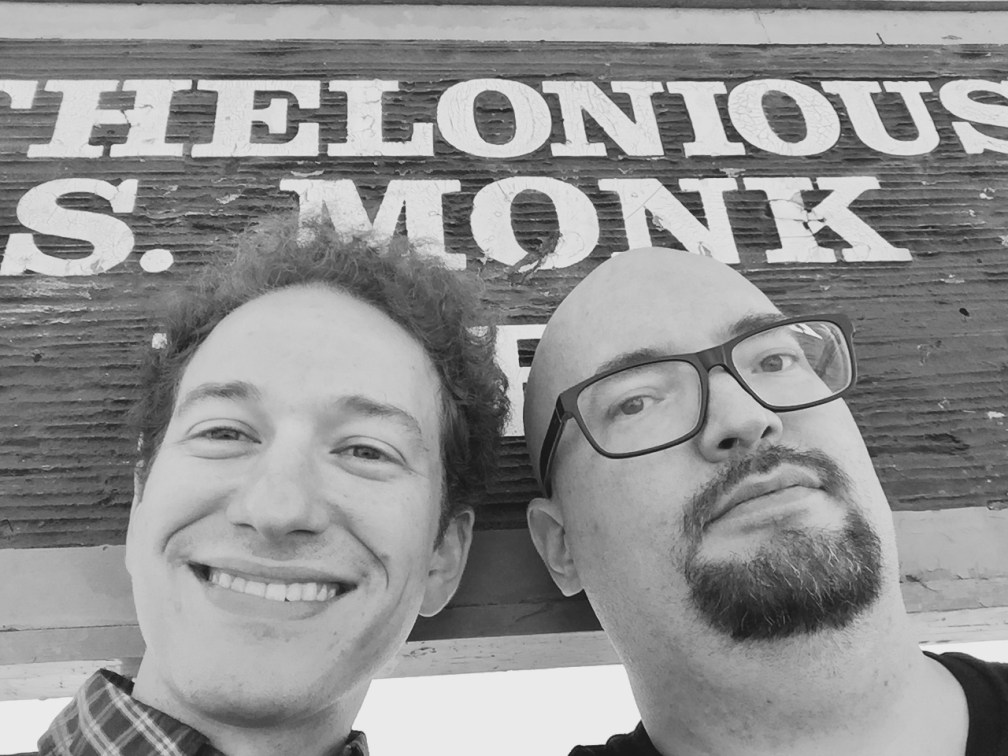
Yeah, we took this selfie.

fullsizeoutput_9f4

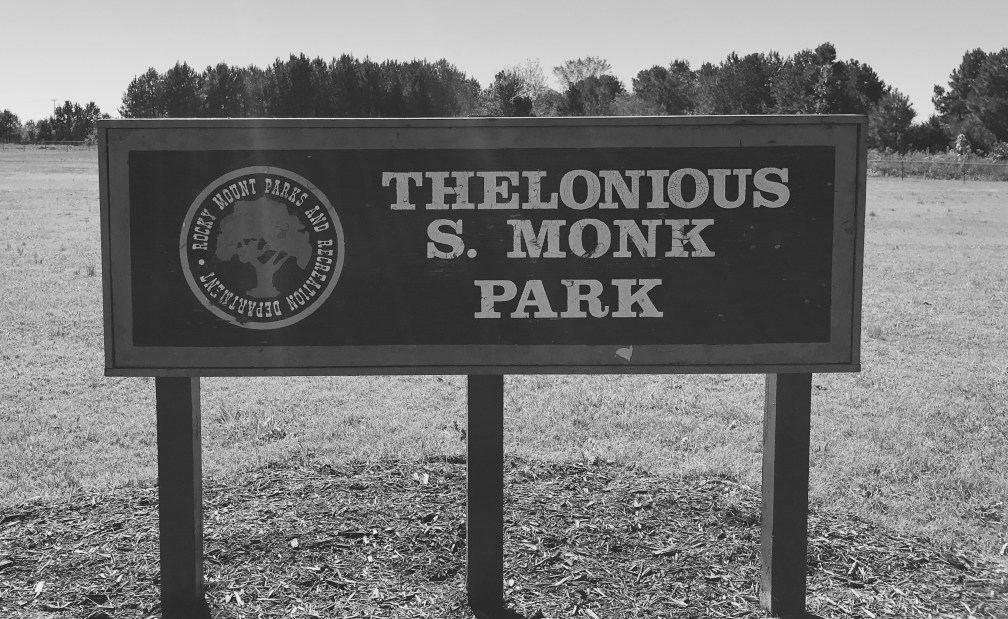
David pointed out, “How the hell does this sign not say, ‘Park closes ‘Round Midnight?’”

fullsizeoutput_9f2

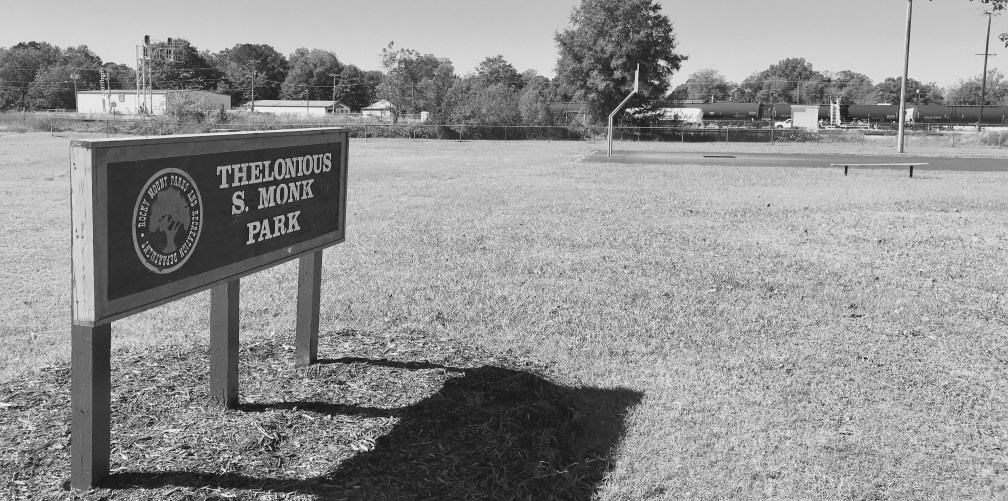
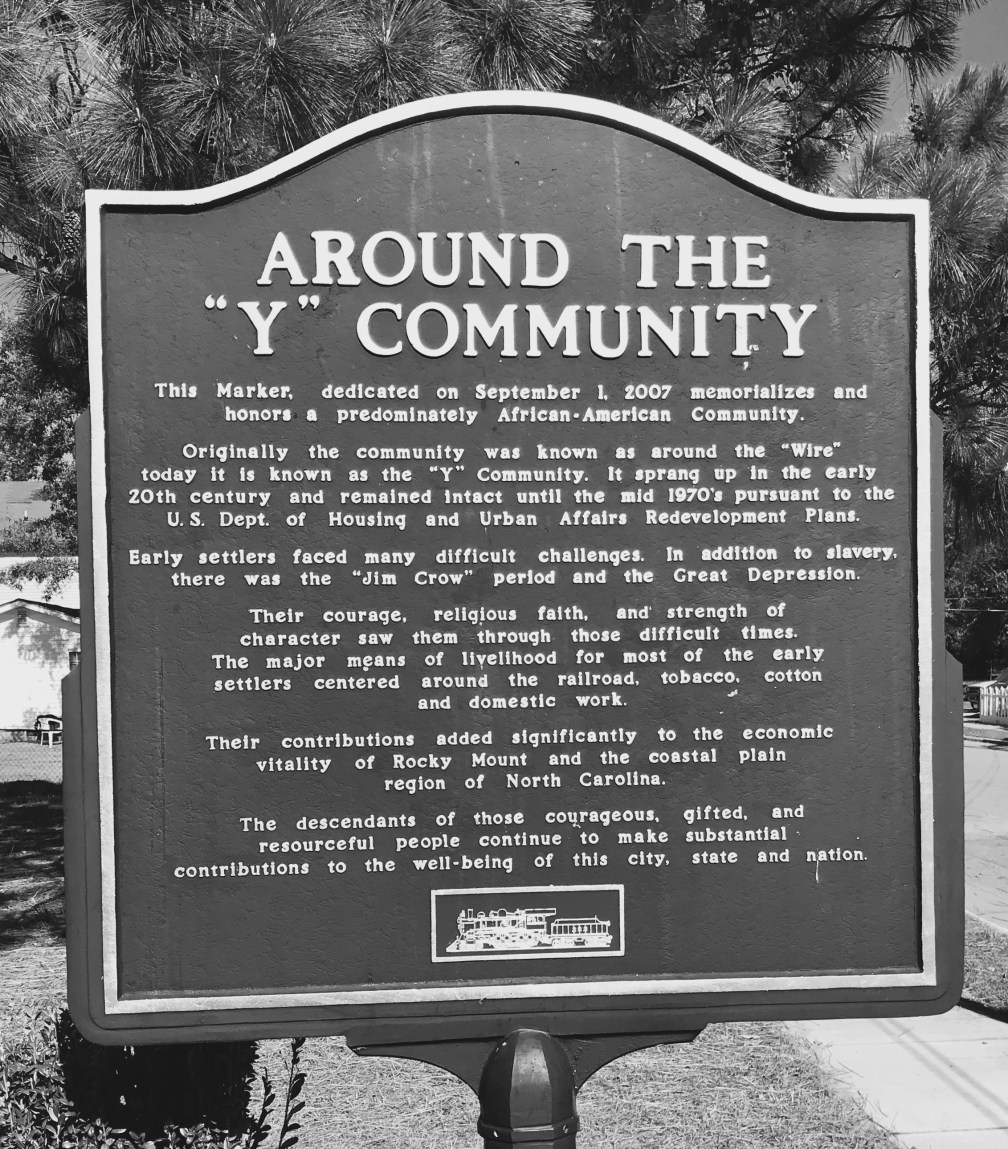
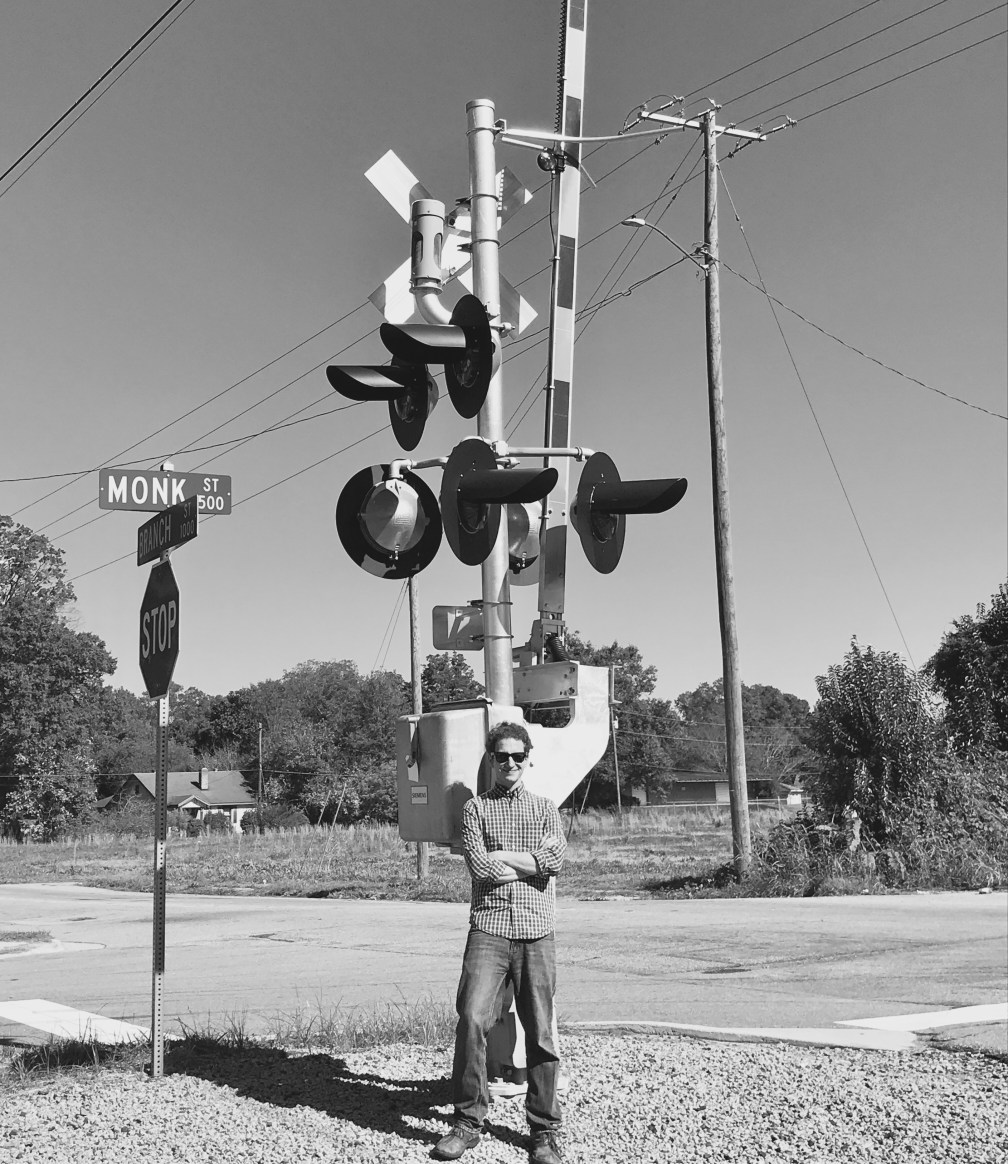
The park is within a block of the location of the house Monk lived in until he was five. It is right by a major train junction. In the following pic you can see the active trains right next to the park.

fullsizeoutput_9f1

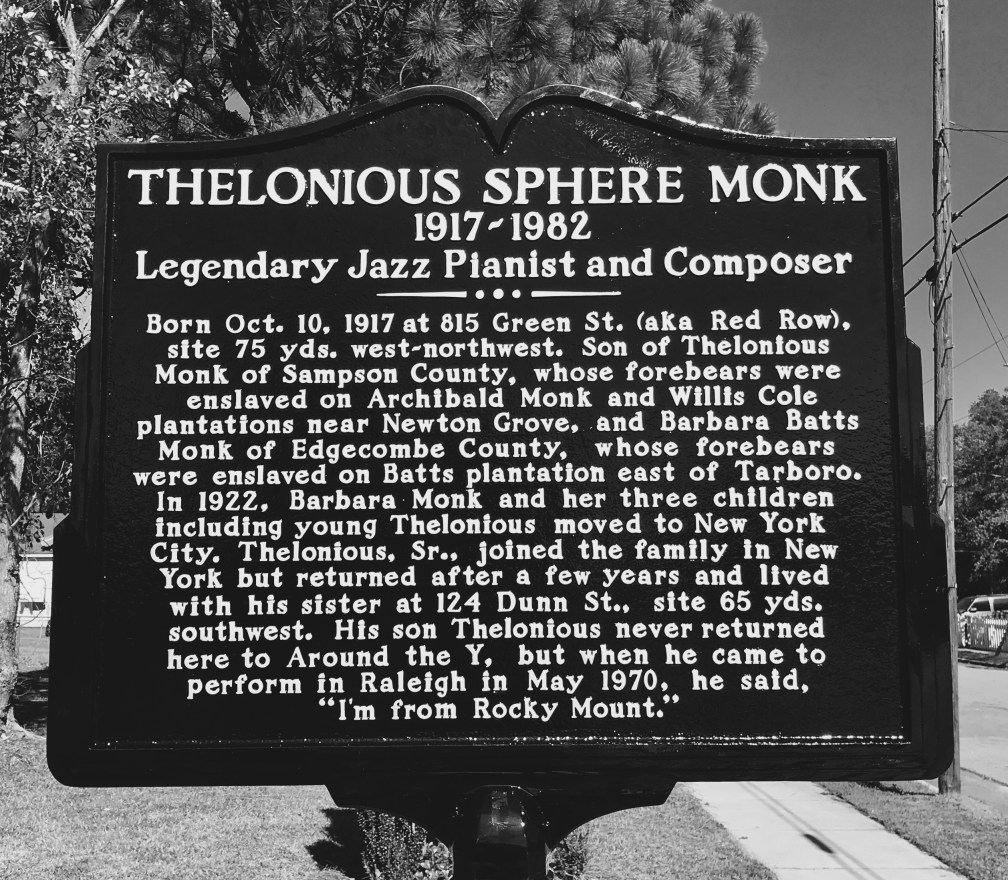
More detail from park signage:

fullsizeoutput_9ef

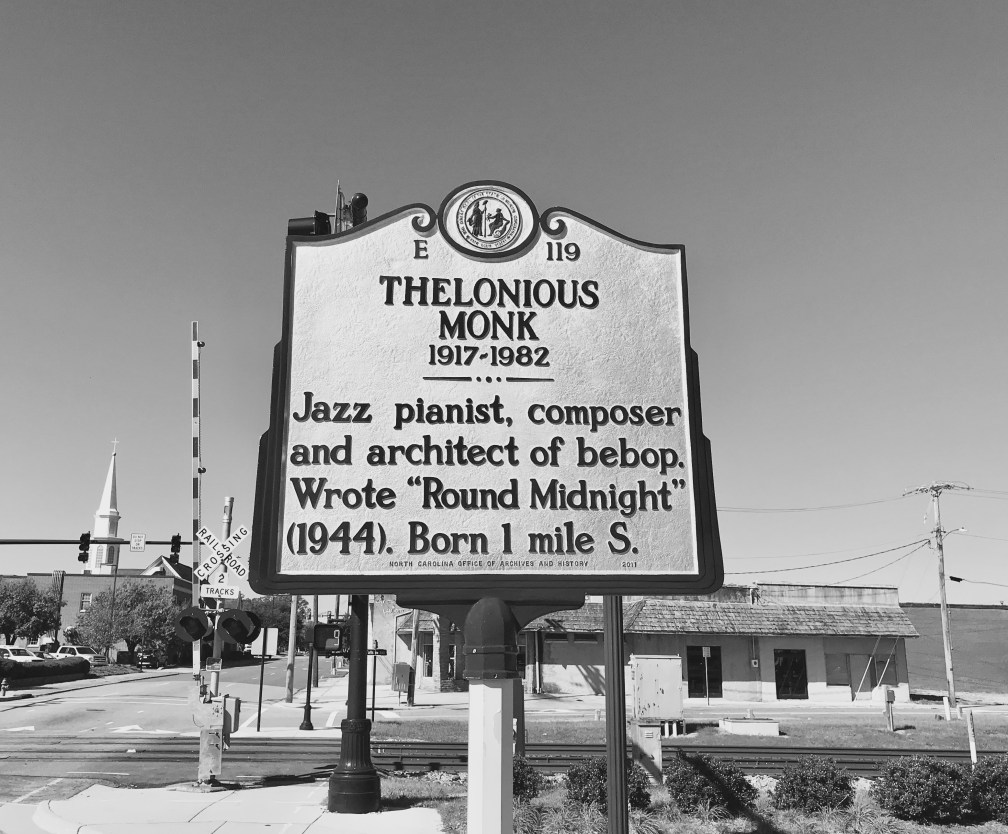
This plaque just went up for the centennial.

fullsizeoutput_9f0

Down the block from the park, South St. was renamed Monk St. in 2012. Cover of David A. Graham’s album, Monk at the Crossroads.

fullsizeoutput_9ec

Cover of my album, Monk Street.

fullsizeoutput_9eb

I had emailed Sam Stephenson (who  wrote the definitive article on Monk’s 1970 return to North Carolina, “Thelonious Monk: Is This Home?”) in order to help us find our way around.

Sam has a new book out, Gene Smith’s Sink: A Wide-Angle View,  which connects the dots to a lot of Sam’s interests, including piano genius Sonny Clark. This photo is for Sam.

fullsizeoutput_9e9

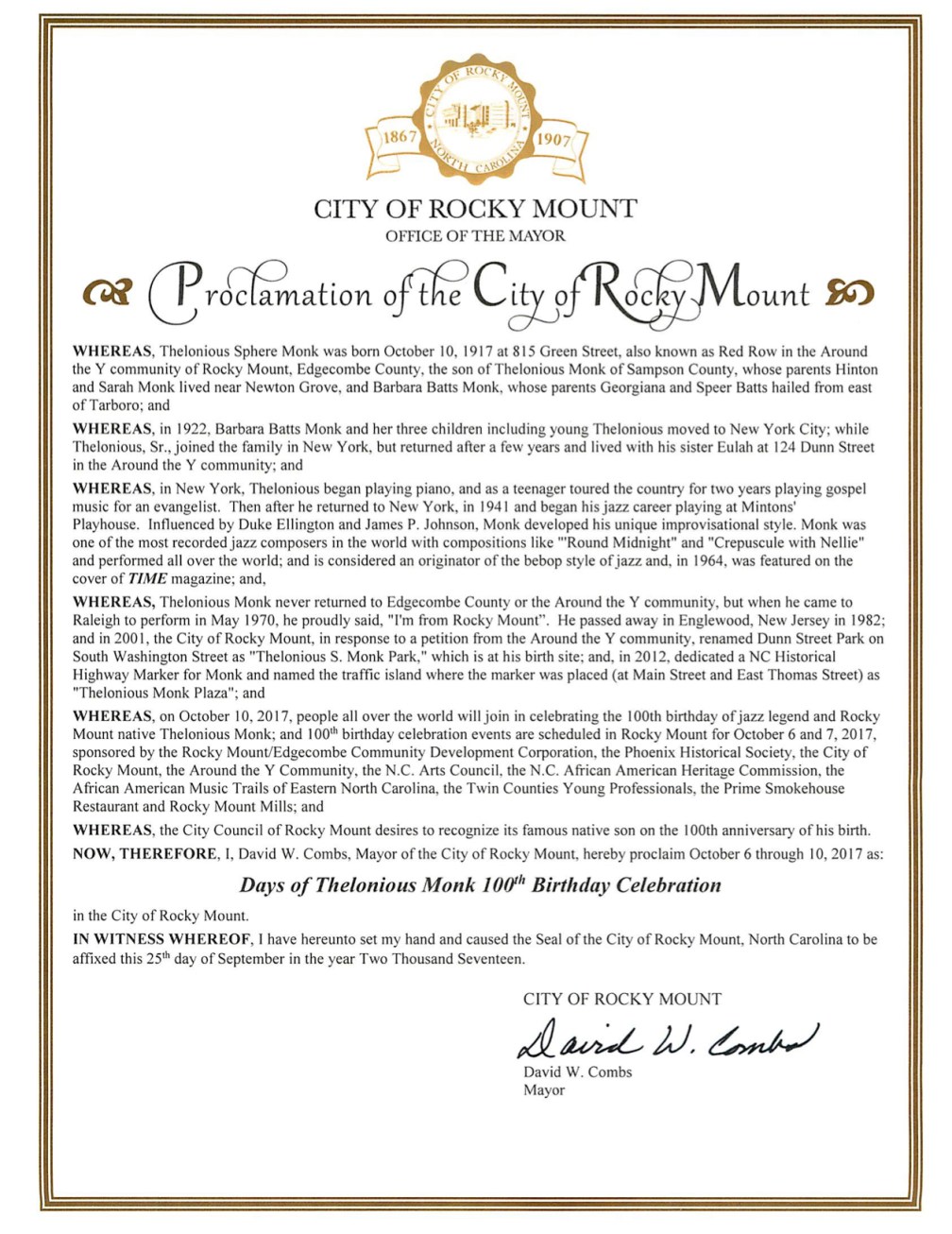
Sam also sent some official paper work courtesy of James Wrenn of The Phoenix Historical Society of Rocky Mount.Thelonious Monk Proclamation

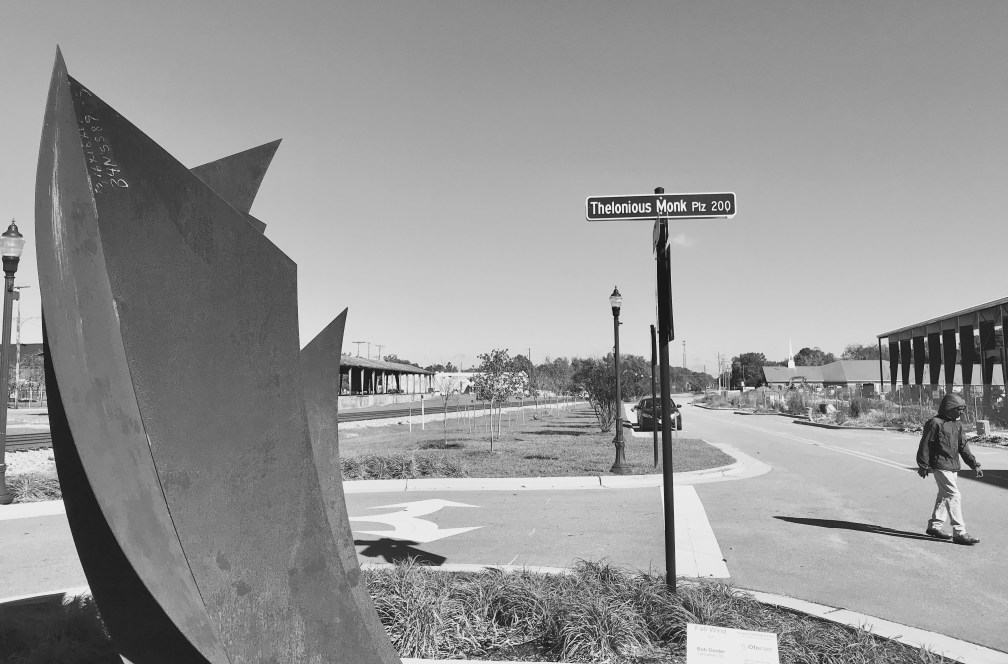
In the center of town there’s a small plaza with a highway marker. Again, thanks to James Wrenn of The Phoenix Historical Society, a key player in making these recent commemorations of Monk in his birthplace happen.

fullsizeoutput_9e5

The art is “Fall Wind” by Bob Doster, unconnected to Thelonious

fullsizeoutput_9e7

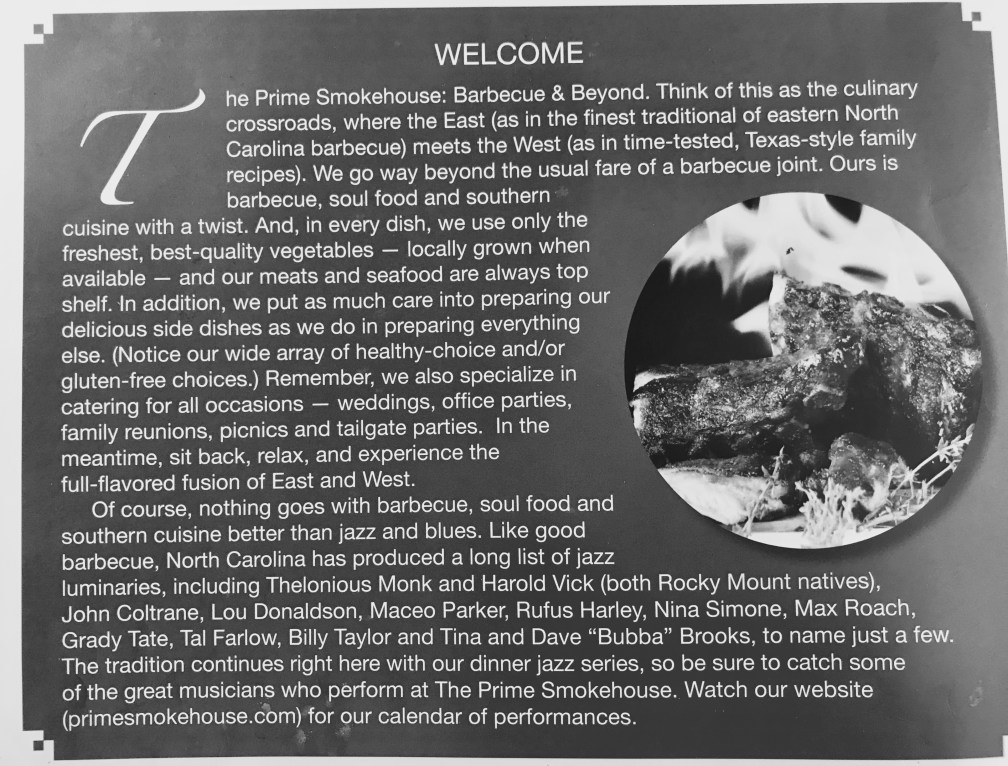
Nearby there’s the Prime Smokehouse, which boasts excellent barbecue and further connections to jazz.

fullsizeoutput_9e6

A few more shots of Rocky Mount.

fullsizeoutput_9e4fullsizeoutput_9e3fullsizeoutput_9e2

Back at the gig that night at Durham Fruit and Produce: Houston Person and Chris Potter guested with David Williams, Victor Lewis, and me. While separated by almost 40 years in age, both tenor masters are from South Carolina and both command the audience.

Monk’s music can be looked at from so many delightful angles. If Kris Davis or Tyshawn Sorey participated in the most abstract gigs at MONK@100, then this two-tenor winner will probably rank as the most grounded. Houston says that jazz must be dance music, and Victor knew to bring the backbeat when things got heated. At times the saxophones riffed together and the stage seemed to levitate. I couldn’t stop smiling.

Set 1

Blues Five Spot
Bemsha Swing
Ruby, My Dear
Let’s Call This
‘Round Midnight
In Walked Bud
Ba-Lue Bolivar Ba-Lues Are

Set 2

Nutty
Reflections
Bright Mississippi
Blue Monk
Ask Me Now
Rhythm-a-ning

Houston took the first solo on “Ba-Lue Bolivar Ba-Lues Are.”  He was wearing his glasses in order to read the tricky melody, and began blowing with the eyewear still on. However, after a few perfect blues phrases, Houston paused. He slowly took off the glasses placed them in his breast pocket while the rhythm section ticked over. (The thought bubble over Houston’s head read, “I got this.”) Then he recommenced laying down the law.

Another highlight was Chris’s incredible closing cadenza on “Ask Me Now.” Actually Chris was a very important part of the gestation of MONK@100. I played a week in Potter’s quartet with Larry Grenadier and Eric Harland. All the music was good but Monk’s “Four in One” was a real highlight. It was an easy win: In order to create great jazz, I just needed to play the right voicings while Chris blew virtuoso tenor and the rhythm section swung out. No overthinking was required. When Aaron Greenwald asked me what we should do for MONK@100, I remembered that gig and said, “Let’s get the best tenor players we can find.” We had four slots and asked six. Branford Marsalis (who could have easily driven from his house to the gig) couldn’t make it, but everyone else said yes. That’s why we put Houston and Chris on the same show, and — wow! —  it really worked out.

Concert photos by John Rogers.

duke day 6_2duke day 6_1duke day 6duke day 6_3


Monk@Durham Day 7

Most of Thelonious Monk’s records and gigs were with a quartet made up of tenor saxophone and rhythm. Monk’s music still makes the most natural sense in this configuration. For Monk@100 at Duke Performances, Melissa Aldana kicked off the first of four concerts featuring a tenor saxophone star (or two) with a house trio.

As soon as the Bad Plus broke through to our astonishing success all those years ago I began pursuing relationships with an older generation of swinging jazz musicians. It was not enough to be the newest, hippest thing, I also wanted to attempt to become as grounded as possible. These kind of “historical” studies also aligned with my interest in writing about the music.

David Williams and Victor Lewis are the latest to fall into my clutches. Neither played with Thelonious Monk but they’ve played with just about everybody else, including most of Monk’s tenor saxophonists: Sonny Rollins, Johnny Griffin, Charlie Rouse, Paul Jeffrey.

For 33 or 34 years David Williams was with Cedar Walton. That’s about as close to playing with Monk as you are going to get. (Walton even subbed for Monk at the Five Spot.) One of Victor Lewis’s first long associations was Woody Shaw, a modernist composer who influenced the 70’s just like Monk influenced the 50’s.

There’s not much good written language to describe straight-ahead jazz mastery, especially in the bass and drums. I’ve been trying to work on this on DTM for about 15 years with mixed results. But if you know it, you know it. And David and Victor have it.

Melissa Aldana is the youngest of our tenors. She is from Chile, which is not known for its jazz culture, but her father had the records and by the time she was just barely in her double digits she was already a Sonny Rollins fanatic. She told me she loves to transcribe, not just lines, but also the sounds. Among many other things she brought to the table was a version of Rouse’s outrageous note choices on “Wee See.”

Set 1

Let’s Call This
Ugly Beauty
Gallop’s Gallop
Friday the 13th
Ask Me Now
I Mean You
Blue Monk

Set 2

Four in One
We See
Pannonica
Skippy
Monk’s Dream
‘Round Midnight
52 St. Theme

Notable events: Victor’s march on “Friday the 13th,” Melissa’s virtuosic cadenza on “Ask me Now,” David’s feature on “‘Round Midnight.”

“Skippy” was interesting. Victor and I played a duo for a while (I joked it wasn’t Harlem Stride, but sadly only Northern Wisconsin Stride) and then Melissa tore the hard changes to shreds. For “52 St. Theme” Victor brought the calypso and Melissa responded in kind.

Houston Person, Victor Lewis, and David Williams meeting at the hotel:

fullsizeoutput_996

David, Victor, Melissa at soundcheck.

fullsizeoutput_99c

fullsizeoutput_99d

Concert photos by John Rogers:

band w Mmelissa

Monk@Durham Day 6

It was Sunday, and Ernest Turner played two church services in the morning before coming to join us for the second day of the Monk Songbook marathon. I had casually assigned Ernest “In Walked Bud” without thinking much about it one way or the other, but as it turned out that song gave him the opportunity to tell the audience that his middle-school teacher was Celia Powell, Bud Powell’s daughter. (I had to pick my jaw off the floor after hearing that.)

31 Ethan Coming on the Hudson

32 Ethan + Ernest Four in One

33 Ernest Monk’s Dream

34 Ernest + Jeb Evidence

35 Jeb Trinkle Tinkle

36 Jeb + Orrin Hackensack

37 Orrin Ask Me Now

38 Orrin + Chris Friday the Thirteenth

39 Chris Stuffy Turkey

40 Chris + Ethan Skippy

41 Ethan Who Knows

42 Ethan + Orrin 52 St Theme

43 Orrin Reflections

44 Orrin + Ernest We See

45 Ernest Boo Boo’s Birthday

46 Ernest + Chris Thelonious

47 Chris Blues Five Spot

48 Chris + Jeb Let’s Cool One

49 Jeb Work

50 Jeb + Ethan Straight, No Chaser

51 Ethan Monk’s Mood

52 Ethan + Ernest Little Rootie Tootie

53 Ernest In Walked Bud

54 Ernest + Jeb Gallop’s Gallop

55 Jeb ‘Round Midnight

56 Jeb + Orrin Rhythm-a-Ning

57 Orrin Think of One

58 Orrin + Chris Ba-Lue Bolivar Ba-Lues Are

59 Chris Ugly Beauty

60  Jeb + Ethan + Orrin + Chris + Ernest Epistrophy

Chris Pattishall, Orrin Evans, me, Ernest Turner, Jeb Patton.

fullsizeoutput_940

I asked Orrin about the relationship of Gospel and the Blues. He said that harmonically there could be striking correspondences. Some hymns are 12 bars and many have “blues movements.” It’s not just the Blues, Orrin said, but jazz standards like “There Is No Greater Love” can find striking parallels with certain hymns and gospel pieces.

Recently Mike McGinnis sent me the hymnal sheet to “Blessed Assurance.”

Blessed Assurance.jpg

In 1966 Thelonious Monk recorded a short version of “This is My Story This is My Song” that remained unreleased for decades. Essentially Monk reads though the above chart of “Blessed Assurance” (or another similar realization). He adds a couple of color tones, changes register a few times, and thins out the left hand activity. In the end, this (still reasonably faithful) reading totally sounds like “Monk.”


Esther Mae Wilbourn:

fullsizeoutput_93f

Della Daniels:

fullsizeoutput_93d

Angelia Taylor:

fullsizeoutput_93e

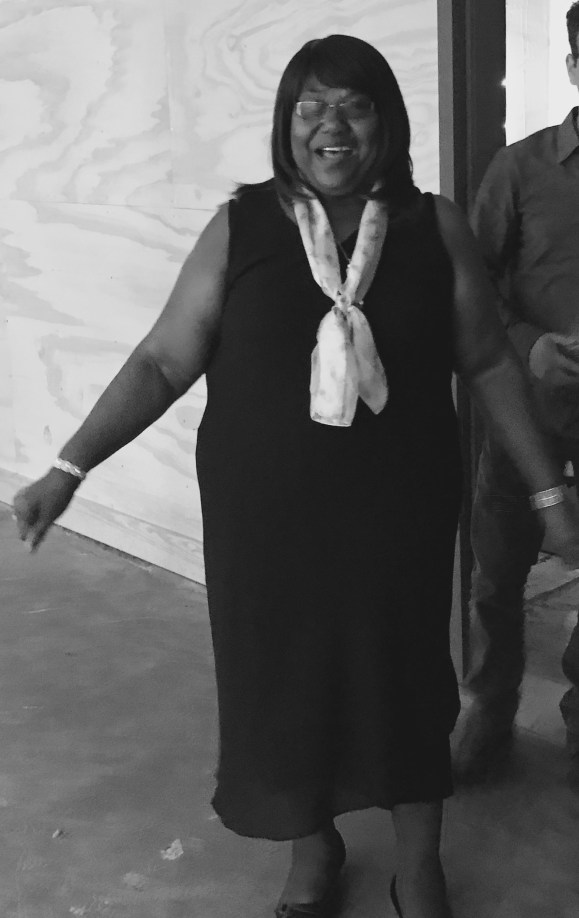
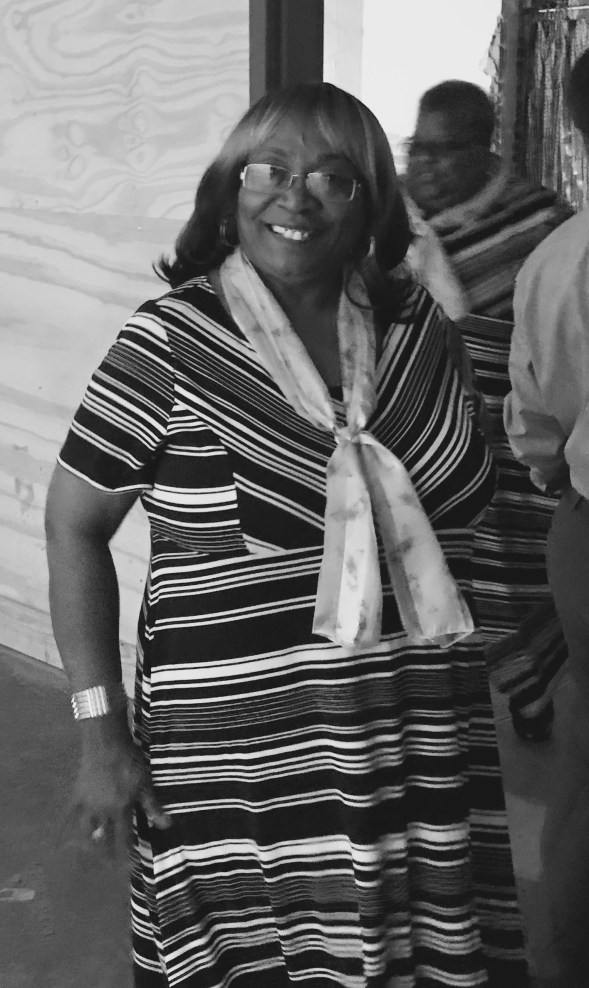
The Como Mamas are from Como, Mississippi, and have been singing together for decades. They are the real deal. It was an honor to be in their presence and to hear their extraordinary a cappella concert. It was a Sunday in Durham, and the message was delivered.

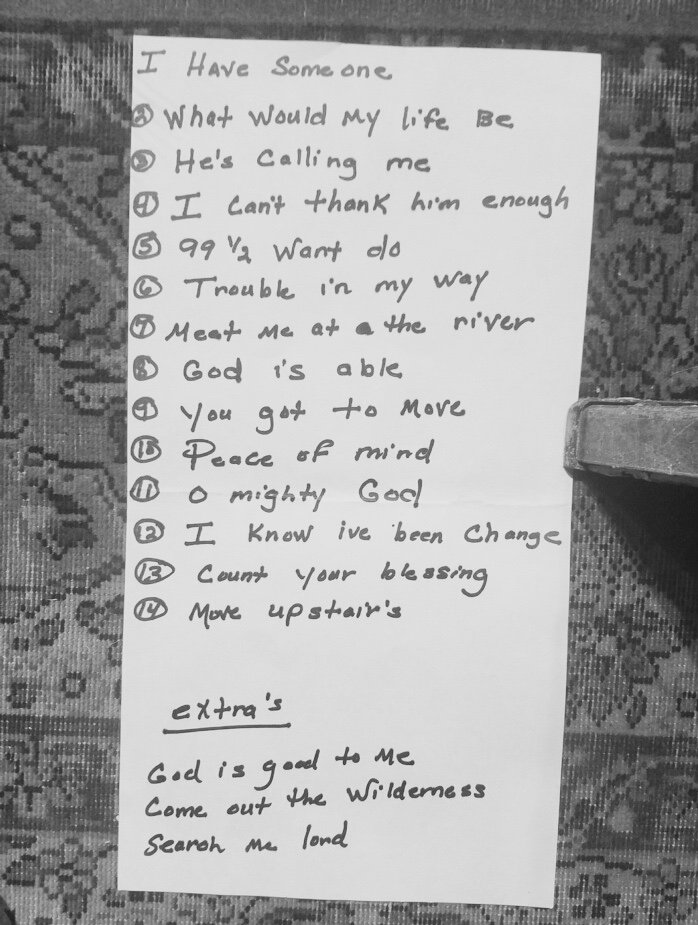
Set list.

fullsizeoutput_92c

We don’t know much about Monk’s first opportunity to tour. From the official website: “Monk dropped out at the end of his sophomore year to pursue music and during the summer of 1935 took a job as a pianist for a traveling evangelist and faith healer. Returning after two years, he formed his own quartet.”

Two years on the road at the end of adolescence! Whatever happened must have been powerful influence on the young musician. Later on Monk said that music he played out there with the evangelist was like rock and roll.  Tonight Della Daniels led the whole audience in clapping on the back beat, which certainly got us all rockin’ and rollin.’

Once again, Thelonious Sphere Monk has ways to make the math work out. A pianist controls 88 keys. Five times 88 is 440, better known as the tuning pitch, A=440.

duke day piano marathon.jpg

photo by John Rogers

And for MONK@100, the Como Mamas scored one their biggest successes of the night with the piece where they exhorted,  “95 won’t do. 96 won’t do. 96 won’t do. 97 won’t do. 98 won’t do. 99 and a half won’t do. You’ve got to keep running until you reach 100.”

como

photo by John Rogers

Monk@Durham Day 5

Day five was also Dizzy Gillespie’s centennial. Dizzy, Monk, and Coltrane were all born relatively close to each other in the Carolinas. Cheraw (Dizzy’s birthplace) is about 160 miles from Rocky Mount (Monk’s birthplace) and 16 miles from Hamlet (Coltrane’s birthplace). James P. Johnson’s “Carolina Shout” comes to mind…

I would have liked to have done something for Dizzy for DTM but just didn’t have the bandwidth: I’ve been all Monk, all the the time. But there’s no doubt Dizzy deserves serious love and celebration.

Billy Hart has taught me a lot about the importance of Dizzy Gillespie. It’s through Billy that I’ve come to realize how crucial an architect John Birks really was. His trumpet playing was outstanding, his compositions were immortal, and his Afro-Cuban concept vital. He was also the most important teacher of the bebop giants. Todd Barkan shared a picture of Coltrane listening to Dizzy. Says it all, really.

coltrane dizzy

Back at Durham Fruit and Produce: Day one of five pianists playing sixty compositions of Thelonious Monk.

There are few things I left off the list: “Sixteen,” “Two Timer,” “Merrier Christmas,” and some of the solo piano blues pieces. I can debate those choices with the persnickety if need be, but I’m confident that the remaining sixty are the meat, worthy of the title, “The Complete Monk Songbook.”

Orrin Evans, Jeb Patton, Chris Pattishall, Ernest Turner, and myself were the tag team, rotating through solo and duos. The Bad Plus has had a lot to do with Duke Performances, Orrin and I are the future and past of TBP. Jeb went to Duke U and even got into jazz because of Paul Jeffery. Chris is originally from North Carolina and Ernest is currently a local star in these parts.

It’s kind of a conceptual art piece to play through the pieces in this fashion — I joked on the mic that it was a “happening” — but we kept the pace moving along and the mood upbeat. The first thirty tunes clocked in at just over two hours.

1 Ethan Crepuscule with Nellie

2 Ethan + Orrin I Mean You

3 Orrin Bemsha Swing

4 Orrin + Ernest Jackie-ing

5 Ernest Misterioso

6 Ernest + Chris Let’s Call This

7 Chris Played Twice

8 Chris + Jeb Oska T.

9 Jeb Ruby, My Dear

10 Jeb + Ethan Eronel

11 Ethan Criss Cross

12 Ethan + Ernest Well, You Needn’t

13 Ernest Locomotive

14 Ernest + Jeb Off Minor

15 Jeb Worry Later

16 Jeb + Orrin Nutty

17 Orrin Green Chimneys

18 Orrin + Chris Hornin’ In

19 Chris Humph

20 Chris + Ethan Introspection

21 Ethan Bye-ya

22 Ethan + Orrin Shuffle Boil

23 Orrin Raise Four

24 Orrin + Ernest Brake’s Sake

25 Ernest Pannonica

26 Ernest + Chris Brilliant Corners

27 Chris Teo

28 Chris + Jeb Light Blue

29 Jeb Bright Mississippi

30 Jeb + Ethan + Orrin + Chris + Ernest Blue Monk

The evening performance was a duo of Gerald Clayton and Ben Wendel. Romantic, aphoristic, and seemingly telepathic. Aaron Greenwald suggested their connection was informed by a kind of Southern California vibe.

Set 1

Eronel
Green Chimneys
Pannonica (in 5/4)
‘Round midnight
Trinkle Tinkle
Well You Needn’t (with “you’ve got to dig it to dig it, you dig” added over R&B chords)

Set 2

Ugly Beauty
Epistrophy
Ruby, My Dear
Ask Me Now
Evidence
Monk’s Mood

Among the highlights were “Ruby, My Dear” and “Ask Me Now.” The former was mostly Gerald and the latter was mostly Ben. These solos showed off how masterful instrumentalists both Gerald and Ben are. Jaw-dropping, really.

At the jam session I played “Monk’s Mood” while the drums set up, then offered “Monk’s Dream” and “52 St Theme” with Butler Knowles and Kobie Watkins. With guests we played “We See” and “Let’s Cool One,” then the rhythm section turned over and there was a long “Rhythm-a-Ning.” I’m sorry I didn’t get any names — but the new bassist and drummer were good, so I got back up there and taught them “Trinkle Tinkle” on the spot.

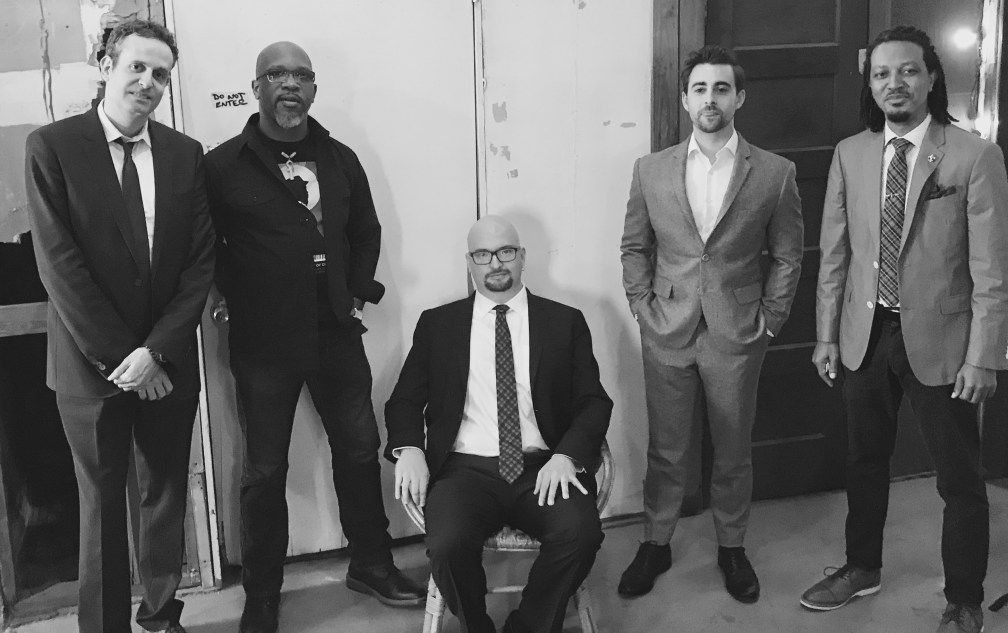
Orrin made me sit down for this photo, I’m mad about that ’cause it makes me look pompous as hell. Oh well. From left to right: Jeb Patton, Orrin Evans, seated Iverson, Chris Pattishall, Ernest Turner.

fullsizeoutput_8f4

Gerald Clayton and Ben Wendel.

fullsizeoutput_8fa

Photographer John Rogers and radio personality Josh Jackson. It really kinda feels like the Vanguard is down here in Durham!

fullsizeoutput_8fd

Very special thanks to Marilee Annereau, flawless captain of the green room.

fullsizeoutput_900

Monk@Durham Day 4

In the afternoon Kris Davis, Jason Moran, and I discussed Geri Allen (who was originally supposed to be part of MONK@100) with Ben Ratliff. It was a good conversation, there is tentative plans for a transcript to appear on DTM.

In the evening, the duo of Jason Moran and Tyshawn Sorey offered rhapsodic and colorful stream-of-consciousness improvisation. It was an impressive example of avant-garde “channeling the masters.”

Set one

Monk’s Mood
Evidence
Four in One (just a phrase)
‘Round Midnight
Nutty
Skippy
Little Rootie Tootie
Monk’s dream
Thelonious

Set two

Off minor
Friday the 13th
Crepuscule With Nellie
In Walked Bud
I Mean You
Monk’s Mood

Highlights included: Burning “Skippy,” Sorey’s piano playing (!), ruminative “Crepuscule With Nellie.” The audience loved it.

fullsizeoutput_8b0fullsizeoutput_8b5

Mr. Sorey’s drum rider is in its own category.

fullsizeoutput_8b3

And Sorey also used Aaron Greenwald’s daughter’s toy piano.

fullsizeoutput_8b4

Suzanne Despres is invaluable to Duke Performances.

fullsizeoutput_8aa

Ben Ratliff.

fullsizeoutput_8ae

Gerald Clayton just got here.

fullsizeoutput_8b6

Lunch was memorable: Jason, Ethan, Kris, Orrin.

fullsizeoutput_8bb

Monk@Durham Day 3

Aaron Greenwald began the festivities by noting a few perhaps unexpected connections between Duke University and Thelonious Monk. Mary Lou Williams, a crucial friend and mentor to Monk, was Duke’s first artist in residence from 1977 to 1981. Paul Jeffery, Monk’s last tenor saxophonist, was the inaugural director of the Duke jazz program from 1983 to 2003.

JD Allen trio with Gregg August and Rudy Royston, special guest Kris Davis

Set 1

Bemsha Swing
Bright Mississippi
Stuffy Turkey
52nd St. Theme
Ask Me Now
Nutty

Set 2

Ba-Lue Bolivar Ba-Lues Are
I Mean You
Teo
Pannonica
Evidence
Bright Mississippi

Highlights included: Davis’s prepared piano on “Teo” (in general Davis gave this night the most overall “avant” cast to the proceedings yet), August and Royston’s duo on “Bright Mississippi,” and the exceptionally burning JD solo with fearsome Royston on “Evidence.” For the final head on “Evidence” the whole group jumped off the cliff and it was great!

Kris and Rudy.

fullsizeoutput_877

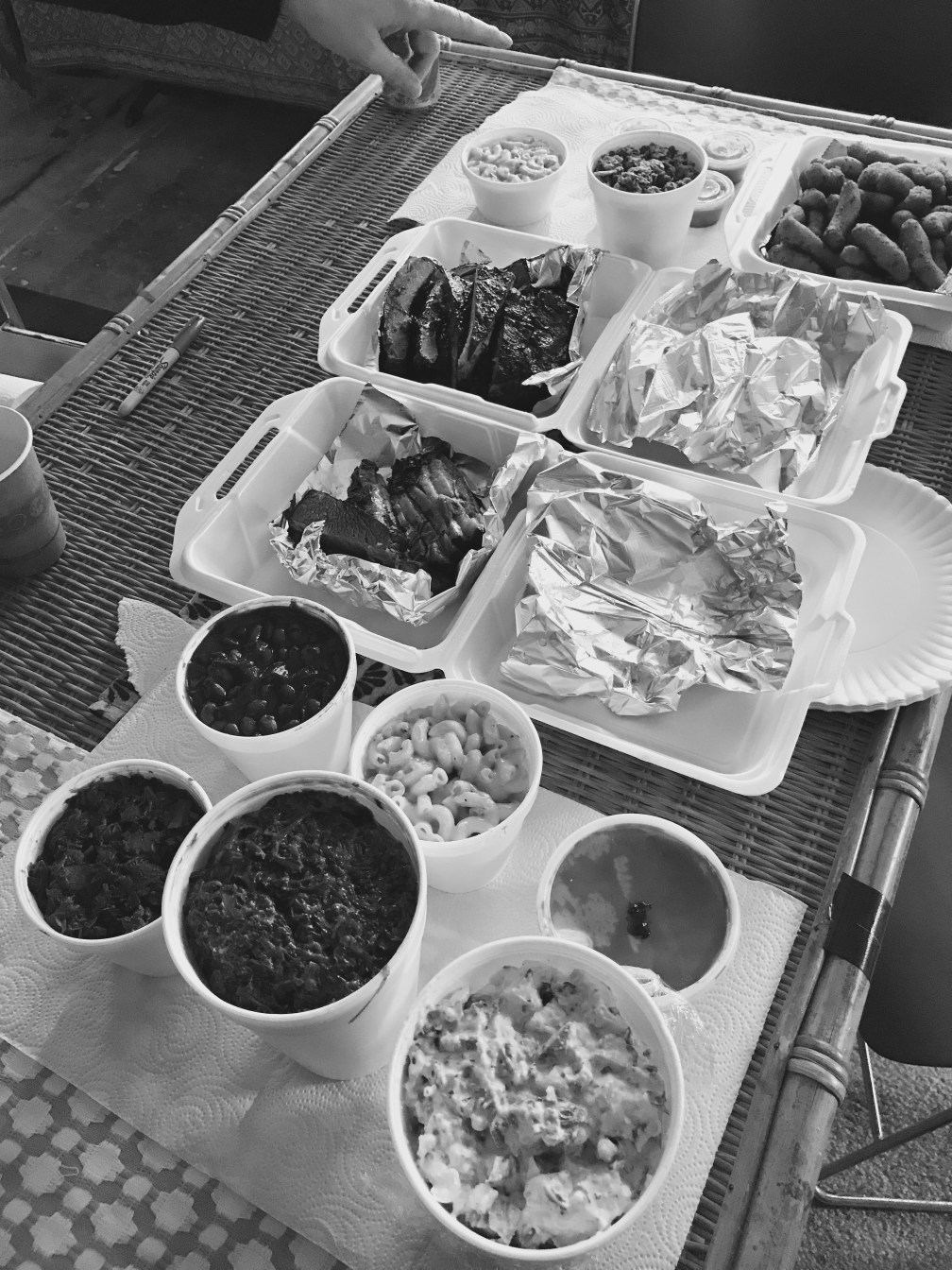
BBQ for dinner yum yum.

fullsizeoutput_875

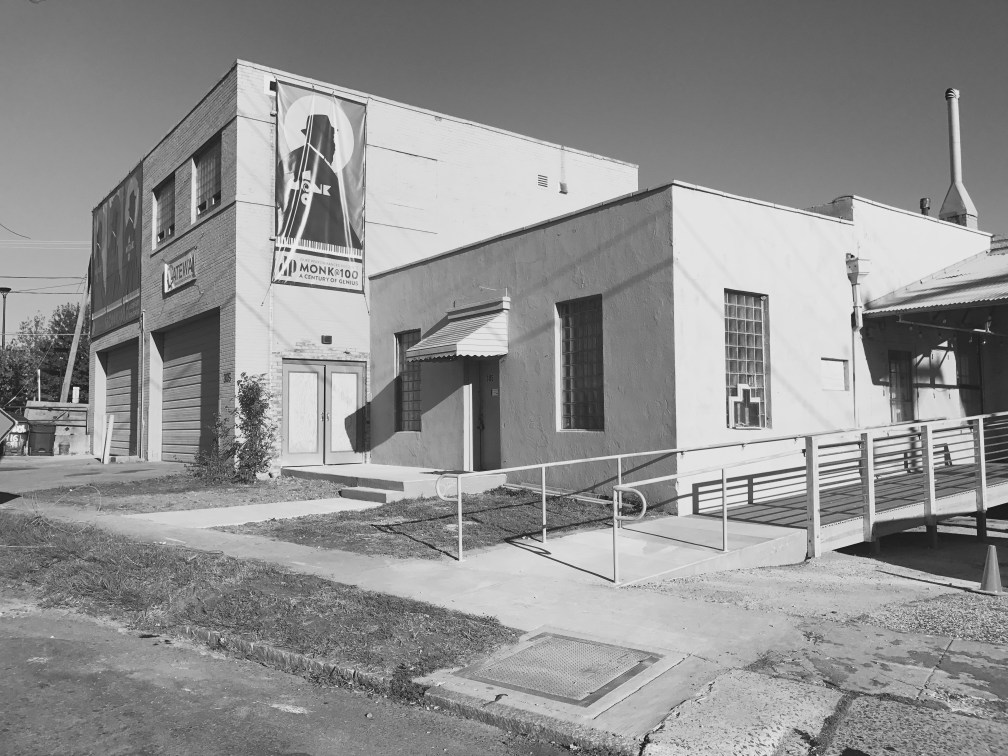
Fruit and Produce from the outside.

fullsizeoutput_869

Eric Oberstein is invaluable to Duke Performances.

fullsizeoutput_879

The dexterous hands of Kris Davis.

fullsizeoutput_87b

Showtime.

fullsizeoutput_87c

David A. Graham (who wrote that great Monk piece) has been at all the shows so far. Orrin Evans is already here as well. Getting to be quite a hang!

fullsizeoutput_881

Monk@Durham Day 2

Nice long piece by David A. Graham in the Atlantic.

Dan Ruccia’s local preview of the festival also has some juicy quotes.

JD Allen trio with Gregg August and Rudy Royston, special guest Dave Douglas

Set 1

52nd St. Theme
Bright Mississippi
Ba-Lue Bolivar Ba-Lues Are
Teo
Pannonica
Nutty
52nd St. Theme

Set 2

Bemsha Swing
Green Chimneys
Stuffy Turkey
I Mean You
Ask Me Now
Misterioso
Monk’s Dream

Highlights included: Douglas’s melodic choruses on the blues, August’s solo on “Stuffy Turkey,” Royston’s quarter note on “Pannonica,” JD’s swagger on “Green Chimneys.”

Jam Session

I played “Crepuscule With Nellie,” “Monk’s Mood” and “Ruby, My Dear” solo while the band changed over, then quick versions of “Off Minor,” “Bye-Ya,” and “Criss Cross” trio with Butler Knowles and Bean Clemons. Al Strong (an important local force) joined us for “Reflections.” Then there were others…I don’t know the names of everyone who sat in, but the level was shockingly high. I mean I was really kind of blown away. Rep included “In Walked Bud,” Evidence,” “Epistrophy” (with poetry recitation) and “Straight No Chaser.”

Rehearsal:

fullsizeoutput_841

I remember hearing a great, long, deconstructed version of Monk’s “Introspection” with Dave Douglas, Mark Dresser, and Mike Sarin in fall of 1991 at CBGB’s Gallery.

fullsizeoutput_842

Aaron Greenwald and Gregg August.

fullsizeoutput_844

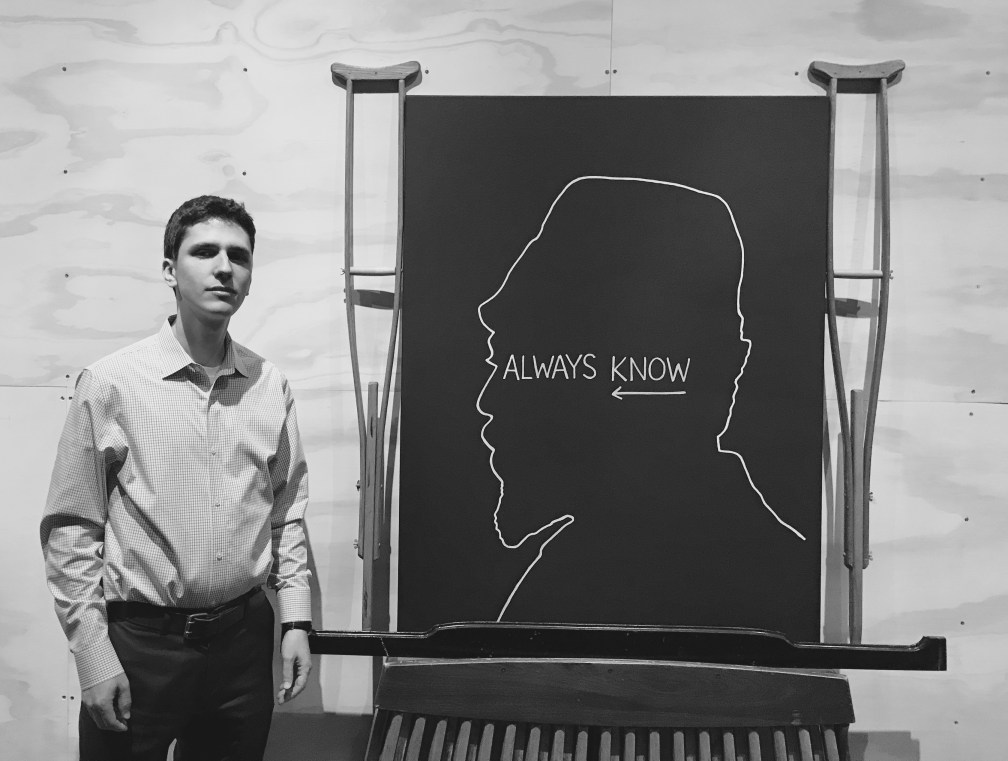
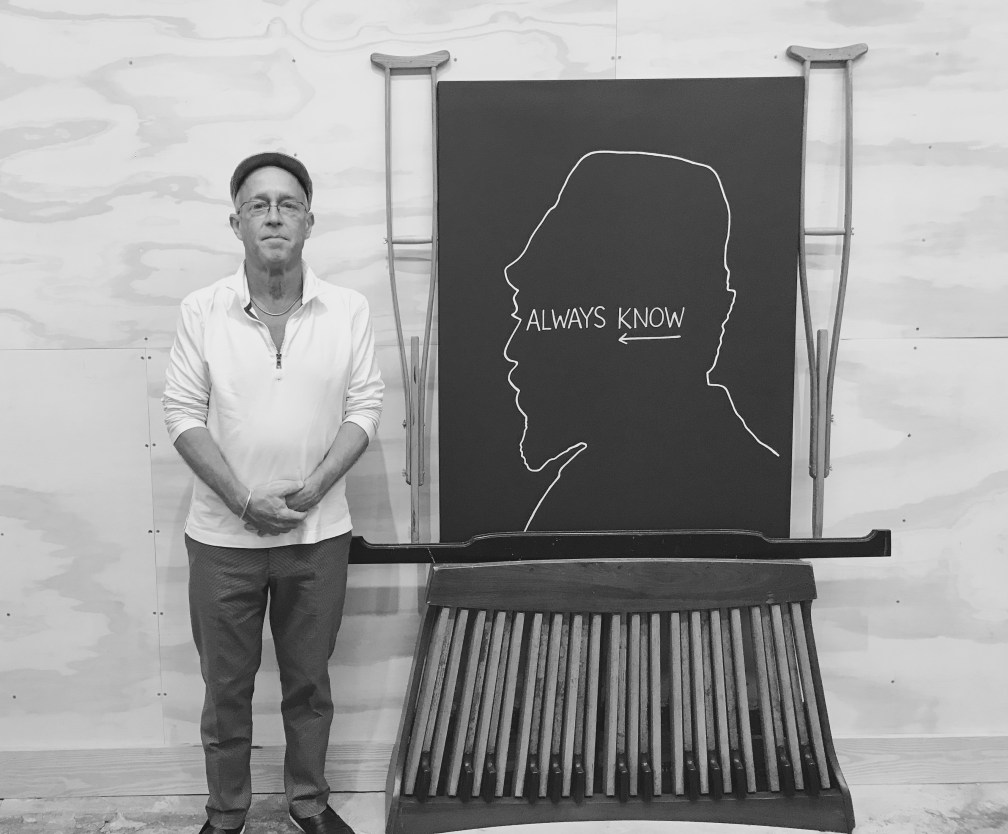
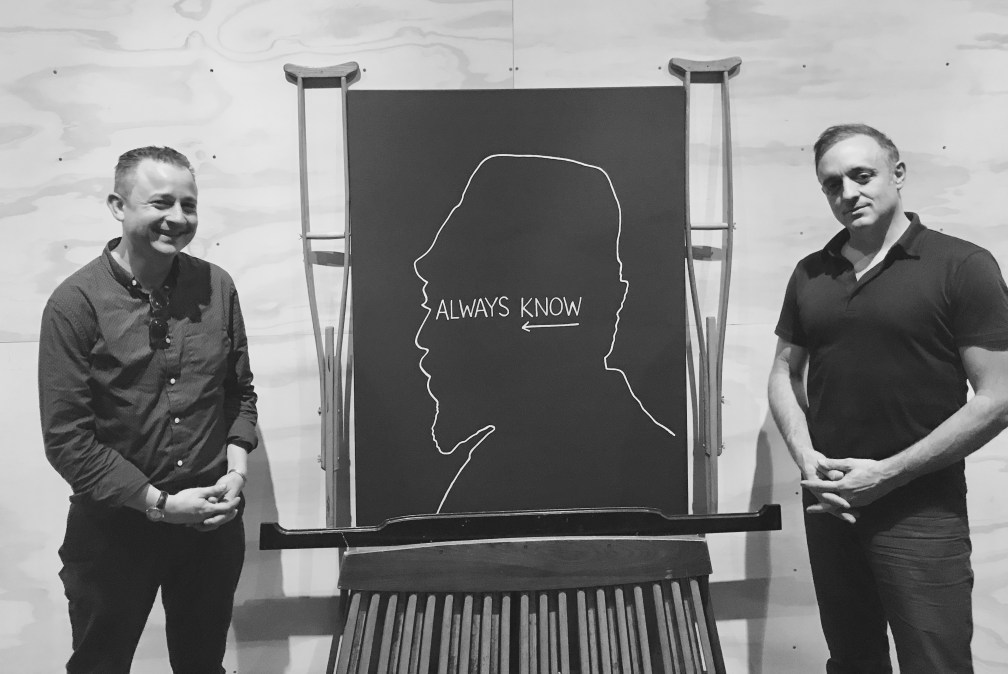
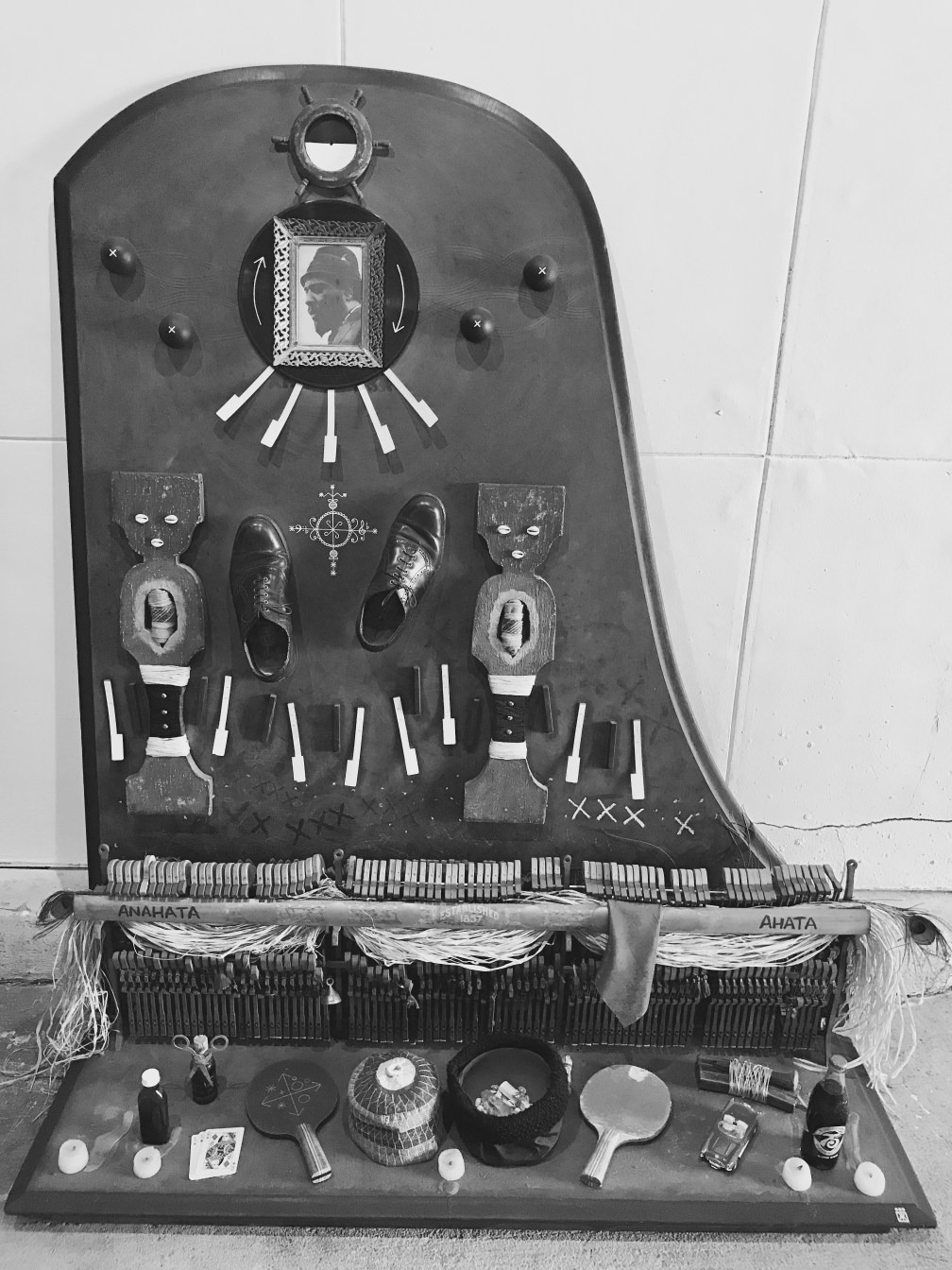
The “Always Know” piece above is by André Leon Gray.

fullsizeoutput_84d

Yeah, I wore the festival T-shirt.

fullsizeoutput_847

Monk@Durham Day 1

JD Allen trio with Gregg August and Rudy Royston, special guest Bill Frisell

Set 1

Ba-Lue Bolivar Ba-Lues Are
Teo
52 St. Theme
Pannonica
Bright Mississippi
Nutty

(JD worked in reprises of the blues and the rhythm changes: very hip.)
Set 2

Stuffy Turkey
Bemsha Swing
Ask Me Now
Epistrophy
Bright Mississippi
Monk’s Dream
I Mean You

encore: Misterioso

Highlights included: JD’s levitating post-Coltrane search on “Bemsha Swing,” Frisell’s melodies on “Ask Me Now,”  Royston’s one-handed single stroke rolls accompanying the theme of “Monk’s Dream,” August’s indomitable up-tempo walking lines on “52 St. Theme.”

Very special thanks to Tim Walter of Durham Fruit and Produce Co., the warehouse is warm and welcoming.

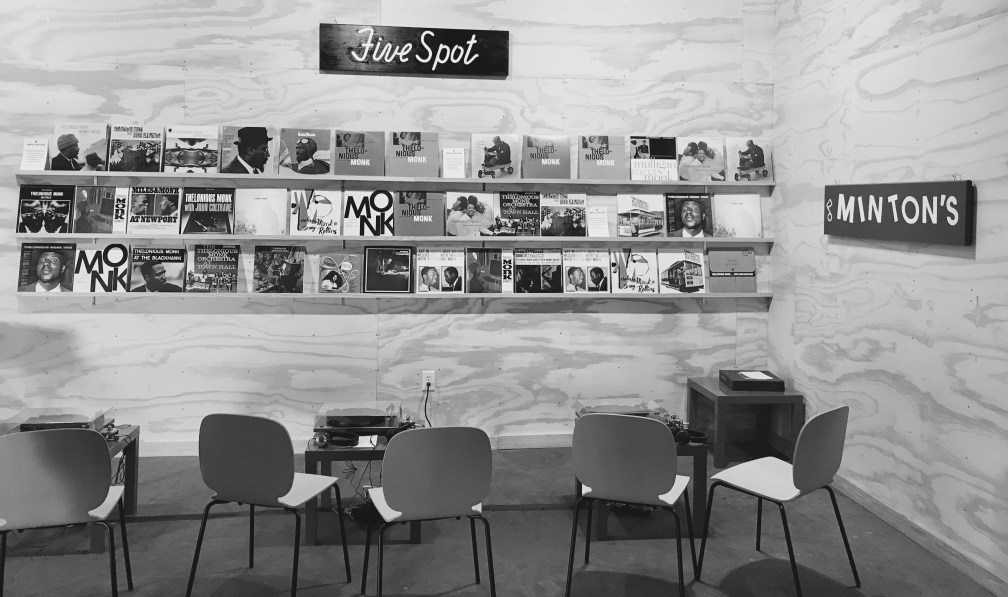
MONK@100  includes a listening booth

fullsizeoutput_809

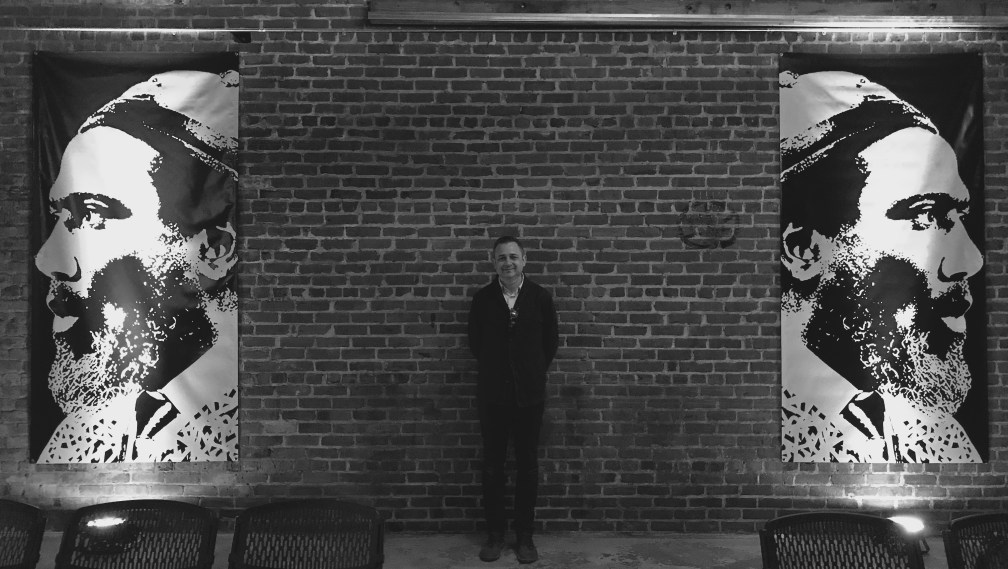
and several pieces of art by André Leon Gray.

fullsizeoutput_813

Aaron Greenwald of Duke Performances made it all possible.

fullsizeoutput_807

Rehearsal and pre-gig:

fullsizeoutput_808fullsizeoutput_80dfullsizeoutput_80bfullsizeoutput_80efullsizeoutput_80a