Ethan Iverson’s Home Page

Greetings! Thanks for stopping by! If you are new here, you might want to look at the Bio page. 

To keep up with my current events including articles and gigs, subscribe to my newsletter, Transitional Technology. (Sign-up is free.)

Twitter is my evil social media drug of choice, where I post frequently.

At the moment you are looking at Do the Math, a blog (but really more like an internet magazine) that began in 2004 and runs well over a million words.

The most significant DTM posts are “pages,” organized by topic:

Interviews: Over 40 discussions, mostly with musicians: Billy Hart, Ron Carter, Keith Jarrett, Marc-André Hamelin, Carla Bley, Wynton Marsalis, many others.

Consult the Manual: Lessons, mainly material written for my piano students at New England Conservatory of Music.

Rhythm and Blues: Jazz music essays about McCoy Tyner, Thelonious Monk, Ornette Coleman, Geri Allen, Bud Powell, Lester Young, many others.

Sonatas and Études: Classical music essays about Glenn Gould, Igor Stravinsky, a few others.

Newgate Callendar: Crime fiction essays about Donald E. Westlake, Charles Willeford, a few others.


If you want to support Do the Math and also get updates about gigs, masterclasses, and new DTM posts, subscribe to Transitional Technology.

tt_base-letter-block_venn_256

“What do you give someone to introduce them to modern jazz?”

In my recent article on A Love Supreme, I make the observation that Kind of Blue and A Love Supreme are in a class of two.

The criteria includes:

  • Peak popularity with a general audience aligned with peak musicianship
  • Small group instrumental modern jazz with extensive improvised horn solos
  • A priority on group interplay, where each member of the band makes a personal and undeniable contribution to the overall sound.

Kind of Blue is obviously first. A Love Supreme is obviously second.

After those two there’s nothing else that fits the same profile. Time Out is not peak musicianship (I love it, but it can’t possibly be compared to the other two), and piano trios like Concert by the Sea, Live at the Pershing, and Sunday at the Village Vanguard aren’t quite right either.

In lieu of a third place winner, I’d submit ten Blue Note LPs.

They all deal with essentially the same continuum. Nothing that avant-garde, and not just no piano trios, but no organ or guitar dates either. A certain thing, and a thing that has outreach beyond serious jazz fans. These records could be in anyone’s collection; I’ve heard all of them in coffee shops and airports.

David Sanborn told me that classic Blue Note records were like classic Film Noir. That’s a perfect comparison. A baseline, all engineered by Rudy Van Gelder in a humble studio, all more truly alike than truly different.

There’s a lot of great jazz from all sorts of angles, but this is the center of the mosaic. A peak of American music, 1958-1967.

Sonny Clark, Cool Struttin‘ (1958)

Cannonball Adderley, Somethin’ Else (1958)

Art Blakey, Moanin’ (1958)

Hank Mobley, Soul Station (1960)

Dexter Gordon, Go (1962)

Lee Morgan, The Sidewinder (1963)

Horace Silver, Song for My Father (1964)

Herbie Hancock, Maiden Voyage (1965)

Wayne Shorter, Speak No Evil (1965)

McCoy Tyner, The Real McCoy (1967)

In half the cases the album is not my personal top selection for the given leader. Many would disagree with me, but I’d choose Empyrean Isles over Maiden Voyage and JuJu over Speak No Evil. Less controversial is the suggestion the Blakey, Silver, and Morgan LPs aren’t automatically their best; it’s more that the opening title tunes have such a hold on the human imagination that they simply must be included. (Of course, they are all still great records from top to bottom.) With Adderley it is a similar case, that moody opening “Autumn Leaves” is just too important. (It’s also almost a way of sneaking another Miles Davis date on to this list.) As for Clark, Mobley, Gordon, and Tyner, it is a smooth 1:1 ratio, these albums make the list and are also personal favorites.

Lists are banal and reductive, but they are also interesting thought experiments. The complete list ends up being my proposal for “What do you give someone to introduce them to modern jazz?” A banal and reductive question, but an important question nonetheless. That’s the answer: Kind of Blue, A Love Supreme, and these ten Blue Notes.

In the age of streaming playlists, the opening tracks of the dozen are a notably perfect “starter kit.”

“Cool Struttin'”
“Autumn Leaves”
“Moanin'”
“So What”
“Remember”
“Cheesecake”
“The Sidewinder”
“Song for My Father”
“Part 1: Acknowledgement”
“Maiden Voyage”
“Witch Hunt”
“Passion Dance”

Of course, there are plenty of other things to play for a newbie, including Time Out, Getz/Gilberto, the great vocalists, the great piano trio records, the organ records, the guitar records, the big band records. But I like my list. It is all the same yet different, it’s all got charisma, and it’s all absolutely the finest music imaginable. Again, the center of the mosaic.

Footnotes:

The first tune on the earliest date, “Cool Struttin,” and the last tune on the final, “Blues on the Corner,” are both 12-bar blues. They even walk at a similar tempo while referencing street life in the title. More truly alike than truly different — yet under the hood, what a turbo-charged nine years of change, evolving from peak Sonny Clark/Jackie McLean to peak McCoy Tyner/Joe Henderson.

Joe Henderson doesn’t get a selection — Inner Urge starts with a long bass solo, making it ineligible — but he is a force of nature on three sideman appearances.

It’s hard not to include Sonny Rollins’s A Night at the Village Vanguard but the lack of piano — and, frankly, the raw mistakes of a fearless live performance — renders it a bit too abstract for civilians.

Perhaps the most commonplace modern jazz instrumentation is a quartet of tenor saxophone, piano, bass and drums. A Love Supreme is the fancy version; the meat and potatoes are on Soul Station and Go. But what meat and potatoes!

Modal jazz is more accessible and popular than bebop. Kind of Blue and A Love Supreme are the alpha and omega of modal jazz. Several of the Blue Notes are also a bit modal, especially the opening tracks. In a related topic: There’s plenty of hot blowing but there is not an undue emphasis on fast tempos. None of the opening tunes are fast.

Original compositions heavily outweigh songbook standards, although the standards are there. Only a few albums don’t have a literal blues form, but all have a blues ethos.

Drums: Elvin Jones, three. Art Blakey, three. Billy Higgins, two. One apiece to Jimmy Cobb, Philly Joe Jones, and Tony Williams; Roger Humphries and Roy Brooks split Song for My Father.

Bass: Paul Chambers, three. Ron Carter, three. One apiece to Sam Jones, Butch Warren, Bob Cranshaw, Jimmy Garrison, and Jymie Merritt; Teddy Smith and Gene Taylor split Song for My Father.

Piano: Sonny Clark, two. McCoy Tyner, two. Herbie Hancock, two. Wynton Kelly, one (plus one track on Kind of Blue). One apiece to Hank Jones, Bobby Timmons, Bill Evans, Barry Harris, and Horace Silver.

We are so lucky to have these records!


Artemis and Dianne Reeves at NJPAC

The TD James Moody Jazz Festival is celebrating 10 years, and the relief and joy of both the performers and the audience was palpable. NJPAC is a lovely hall, good sound, good vibes all-around.

Artemis is a supergroup of hot players that scans as a collective, but the music director and MC is the experienced Renee Rosnes, who has played with seemingly every consecrated mainstream jazz master. Anat Cohen, Ingrid Jensen, and Nicole Glover tell their stories in the front line, Noriko Ueda and Allison Miller are the engine room.

A group like this is not necessarily organic, but I always like hearing people who wouldn’t automatically play together work it out in real time. Indeed, the members of Artemis are more diverse aesthetically than the Blue Note confabs two generations ago such as Out of the Blue or Superblue. (Trivia: I bought Superblue 2 on cassette tape in 1989, with Renee Rosnes on piano.) The repertoire is varied but the intent is unified.

Set list:

“Galapagos” (Rosnes) — a burning modal fanfare, everyone got a say. Clarinet, Trumpet, and Tenor is reasonably unusual, but the impact was similar to any good hard bop sextet.

“Step Forward” (Ueda) — jokes about early piano lessons (Debussy’s “Doctor Gradus ad Parnassum” lurks in the background) moves into a fast and pretty waltz.

“Nocturnal” (Cohen) — Cohen showed off her skills as a colorist in the Ellington line in a moody number.

“Big Top” (Rosnes) — a multi-sectional showstopper, the highlight of the set. Even a bit of the AACM was present in the circus touches. However, when it comes time to play serious uptempo jazz, the cats in Artemis throw down. Jensen really is one of the best trumpeters around.

“The Fool on the Hill” (arr. Jensen) — A Beatles classic in Jensen’s slow and chromatic reharmonization.

“The Procrastinator” (Lee Morgan) — I suspect Rosnes did this arrangement, with an exotic piano intro and an emphasis on parallel harmony. By this time everyone was all the way in gear; Glover tore the changes completely apart.

“Goddess of the Hunt” (Miller) — another notably strong original. As with “Big Top” this kind sprawling form suits the band. Miller was dynamite throughout, and the drum solos were crowd-pleasers, but I’ve heard some of Miller’s own records, and I wouldn’t object if some of her more avant and pop tendencies pushed further into the mix as Artemis evolves. During the piano solo, Rosnes played some truly impossible double-time runs.


Diane Reeves’s fine band included Romero Lubambo, Peter Martin, Ben Williams, and Terreon Gully. They walked through a casual “Alone Together” to warm up with before Reeves came out. Her opening rubato a cappella statement on “Stella by Starlight” was one of the most beautiful things I’ve ever heard. Perfect pitch, perfect sound, wide range, direct emotion.

Josh Redman told me once, “The only person I don’t want to follow at a jazz festival is Diane Reeves,” and by the end of the set, I could see why. This audience was in the palm of her hand, she put everyone on the same page, preaching the truth of love and forgiveness.

I didn’t know every tune, but was surprised to hear Pat Metheny’s “Minuano,” which featured a strong scat solo from Reeves. (Trivia: I bought Still Life/Talking on LP in 1988.) There was a Brazilian theme throughout; of course Lubambo is a master Brazilian guitarist, and at the end Reeves said her next album will be all-Brazilian.

Other highlights included “A Time for Love,” duo with Lubambo, and Peter Martin’s rather astonishing opening cadenza to “Infant Eyes.” The band was grooving hard. It was apparently Williams’s first gig with the group and he offered serious vibes on both acoustic and electric bass. Gully played the room, played a “singer’s gig,” but a few happily esoteric fills confirmed his status as one of the heavy cats.

It was so nice to go out and hear a serious concert!

Supreme

New for The Nation: “Which Version of A Love Supreme Reigns Supreme?”


Credit to Lewis Porter and Ashley Kahn: Anyone writing on this topic is indebted to their pioneering work, not just Porter’s biography of Coltrane and Kahn’s book on A Love Supreme, but also their superb liner notes to both the deluxe reissue of A Love Supreme and the new A Love Supreme: Live in Seattle.


The “score” in Coltrane’s own hand:

The payroll statement for the December 9, 1964 session at Van Gelder’s:


Bits and pieces that didn’t make the finished essay:

[From the essay: “Acknowledgement” is a groovy vamp, “Resolution” plaintive swing tune, “Pursuance” a burning fast minor blues, and “Psalm” a poem over a drone.] The euphonious key structure of the four pieces — F, E-flat, B-flat, and C — maps out the cellular information of much of the melodic material, 4/5ths of a pentatonic scale.

Acknowledgement, Resolution, Pursuance, Psalm

The opening fanfare is comprised mostly of E, F-sharp, and B, all notes “out of key” from the rest of the suite; a dramatic “neighbor note” (and also a partial pentatonic) implying the vast amount of chromatic elaboration Coltrane will employ to ornament his basic modal structures.

fanfare

In addition to dry technical details, the work is grounded by a vibrant emotional rhythm: Love of life and of God. 

(….)

Omree Gal-Oz has created a score-scrolling video of A Love Supreme for YouTube. The final section, “Psalm,” where Coltrane performs his poem (at 26 minutes) is particularly exciting, for Gal-Oz makes the relationship of text to tone completely obvious.

(…)

It’s a bit unfair to bring up Plays Duke Ellington, for this LP might have simply been the record label’s idea: producer Bob Thiele had recently signed Ellington to Impulse! and probably this was an attempt at some kind of cross-pollination.  There’s a somewhat surprising amount of Coltrane/Ellington back and forth. Not only did McCoy track an album of Ellington covers, but Coltrane and Ellington made a classic album together; eventually Elvin’s first gig after Trane was with Duke.

(…)

A Love Supreme: Live in Seattle is “Volume Two” of Live in Seattle, first released as a 2-LP set in the ’70s, then expanded with more tracks on compact disc in the ‘90s.

All the music recorded that week has a similar shape, especially thanks to a new chaos demon in the form of Donald Garrett on second bass. Garrett and Garrison are totally in their own zone, it’s almost as if they aren’t even listening to anyone else. When Coltrane calls “Out of this World,” the bassists immediately strum low E together. Tyner gently plays an octave E-flat for a while, trying to get them to find the right key, before giving up and grimly settling into E-flat dorian to support Trane’s impassioned preach of the old Harold Arlen tune. All the while, the bassists don’t let up, they just stay in the land of “noise bass on the open strings.” It actually kind of works, but it’s also pretty damn nuts. It’s easy to understand why Tyner left shortly after.

Yeah: If you like extended avant-garde bass, the Seattle music has you covered, especially during A Love Supreme. Garrison and Garrett wander around together after the opening fanfare, offer no less than 12 minutes of solo and duet interludes in the middle, and keep playing after the suite is over.

There are plenty of other highlights, including fervent solos by Sanders and Ward. Still, nobody but Coltrane and Elvin Jones knows the music. Even Tyner forgets that “Pursuance” is a blues form and blows a fierce uptempo solo in the “one key” style of ‘65 — although to be fair, maybe the pianist thought that trying to delineate dominant to tonic with two basses working against him was just too hard a job. 

If I had to chose, I’d suggest that Live in Seattle is even more essential than A Love Supreme: Live in Seattle, especially for the extraordinary blowing from Coltrane and Tyner on “Body and Soul” and “Out of This World.” Together, Coltrane and Tyner had reimagined the Great American Songbook in their own image, and this is the final document of that astounding journey.

(…)

The McCoy Tyner quote, “All black peoples of the earth always improvise their music. We never sit down and systemize everything” comes from the Joe Brazil site curated by Steve Griggs. Brazil recorded all the Seattle material; Griggs was the one to discover the Seattle Love Supreme tapes in the Brazil archive. Many thanks to Griggs for all this vital work! The Brazil site is a treasure trove, and the Seattle Love Supreme is a magnificent addition to the discography.


The release of A Love Supreme: Live In Seattle has been unanimously praised by critics. I praise it myself. We must validate Coltrane’s quest, noisy bassists and all.

(Footnote: I love my editor, Don Guttenplan, but almost had a heart attack when I saw his subhead, “Is the latest posthumous addition to his canon released today the Holy Grail—or the tainted fruit of a system that denied Coltrane’s collaborators royalties or credit?” I could never call anything by Coltrane tainted. He told me sternly, “Writers don’t get to dictate their headlines,” but I threw myself on his mercy and he took out “tainted.”)

For a time I toyed with trying to write about the conflict of old and new from a musician’s perspective, perhaps trying to honor those who didn’t like the freer music made after Ascension. In the end I’m letting it lay. Trane was right. Of course.

Not too many consecrated African-American musicians have criticized Trane in public, but Jimmy Heath hints at the opposing viewpoint in I Walked with Giants:

I was working at Slugs in the East Village with Art Farmer when Coltrane died on July 17, 1967. We played late sets, and I was very tired when I went to the funeral on July 21 at the old gothic-style Saint Peter’s Lutheran church at Fifty-fourth Street and Lexington Avenue, with the Reverend John Gensel as pastor. That building predated the Citicorp Center site where the church is currently located. I sat next to Sonny Stitt during the funeral. I had been asked to be the pallbearer, but I couldn’t handle it. I was in tears when I saw Trane in the coffin. His face didn’t look anything like him. It resembled a puffed doll. I noticed his hands, which were just as they had been, and then it hit me that it was John. His whole life flashed back on me, and I was overwhelmed with sorrow. I had been so close to him during all those years with Dizzy and the many practicing sessions. I remembered when he was in Philly practicing all day and hanging out.

People were at the funeral from all over the country and the world. It was a big event, and I realized that the humble beginnings he had come from where similar to my own — more even than I realized at the time. For him to have risen to such a point and to then to have been snuffed out made me think of the old expression “Life begins at forty.” Lying in the casket, he was forty and gone. He was out of here. It was overwhelming, and I couldn’t really handle it. Dizzy was sitting in back of me, and there were musicians in the balcony playing free jazz. Dizzy said, “If they play that stuff when I die, Lorraine [Dizzy’s wife] will come in here and shoot all of them.”

Heath is too discreet to mention the musicians performing, but they were big names, Ornette Coleman and Albert Ayler, and their performances from that day can be heard online. I wrote about the Ayler medley in “Albert Ayler at 80.” Ornette’s “Holiday For A Graveyard” is also beautiful.

While working on this essay, I noticed for the first time that McCoy Tyner, Jimmy Garrison, and Elvin Jones did not perform at Coltrane’s funeral. Perhaps this surprising omission indicates just how big the rift really was.


Ads for the Seattle engagement (thanks to Impulse! promo dept.)

John le Carré and Mick Herron

John le Carré would have been 90 today. His greatest work remains Tinker, Tailor, Soldier, Spy. The BBC television adaption is equally great, for example the astounding quiet opening sequence:

My new British espionage addiction is the Slough House series by Mick Herron, which begins with Slow Horses. In time I will have more to say about Herron, but for now, I am so pleased to have a fresh literary obsession.

Updates on James Newton and Misha Mengleberg

The You Tube score-scroller is a good invention. How wonderful to have a bevy of new uploads from James Newton.

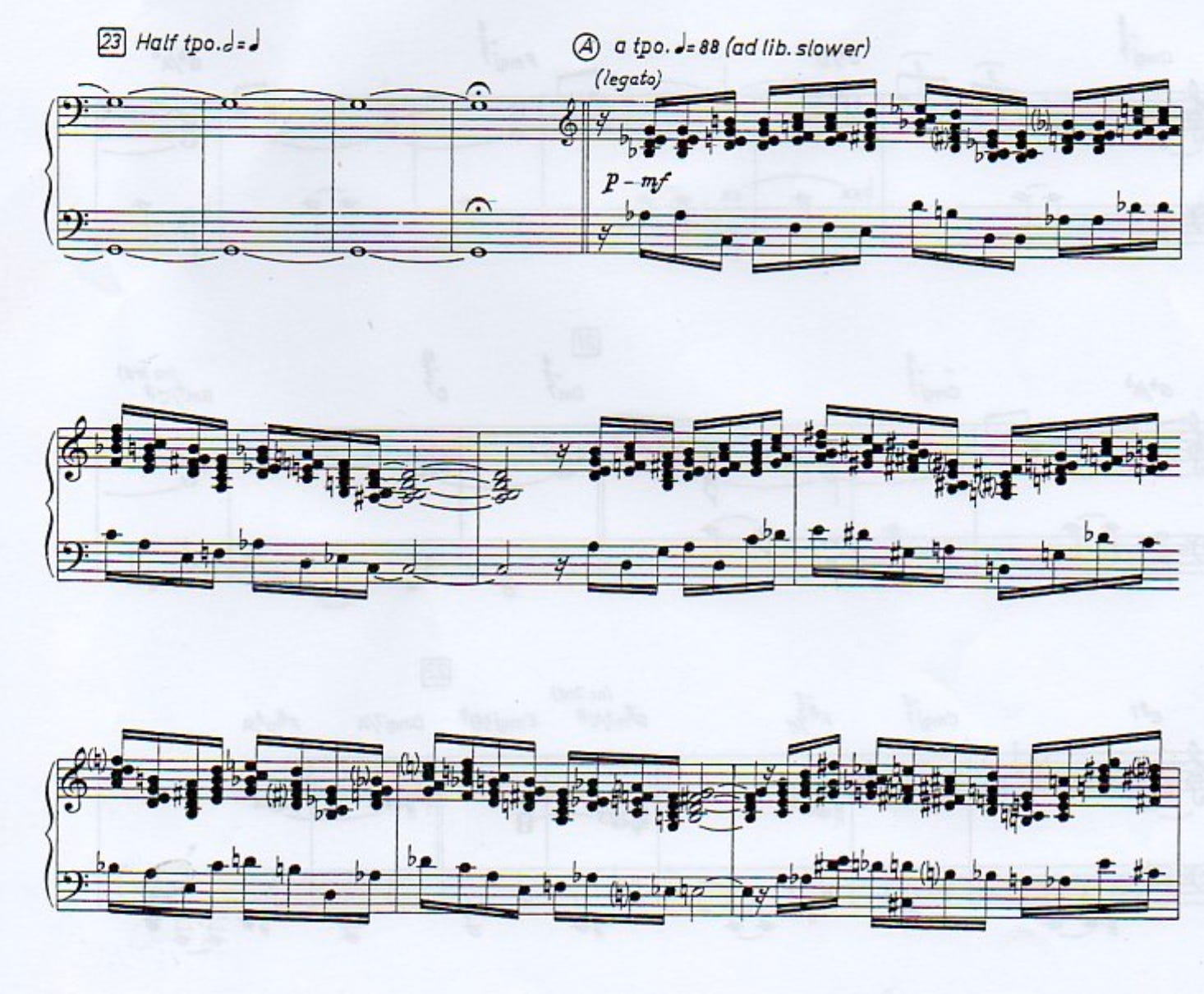
Newton is hard to explain in a word or two. After establishing himself as one of the most celebrated of jazz flutists (his Blue Note LP African Flower was Downbeat’s record of the year in 1986), he transitioned to work as a full-time formal composer. Unlike many jazz-to-classical composers from his peer group such as Henry Threadgill and Anthony Braxton, Newton’s scores are fully written out in the European tradition and do not require an orchestra to engage with improvisation or graphic notation.

Of course, many great black American composers were solely concerned with notation; two of my favorites are Ulysses Kay and George Walker. However, the industry seems to prefer black composers to engage with improvisation. Perhaps if Newton had been fulfilling commissions with scores featuring a rhythm section and open sections then his music would be programmed more often.

At any rate, Newton’s choice to switch careers at midpoint from jazz soloist to formal composer has obscured matters. It’s high time for him to be more visible to anyone concerned with American Music writ large. When I finally discovered his music I felt a key turn in a lock.

In some ways Newton recalls Mel Powell, who played jazz with Benny Goodman before writing formal scores in the Milton Babbitt mold. However, Powell kept all his swinging Benny Goodman language at bay when sitting with a pen to write chamber music. Newton does not follow the model of Powell’s splintered psyche; instead, Newton lets in all of his life experience. The tropes of jazz, especially avant-garde jazz, give Newton’s formal music an exceptional melodic freshness and spontaneous joy. There’s really nothing else like it.

I’ve championed Newton twice before, with an interview at DTM and also an article in JazzTimes. Perhaps the score-scrolling videos will also do something to get the word out.

Violet is perfect for a score-scroller. Two marimbas are running in parallel lines and dyads, an unusual synchronicity for chamber music, but a recording on its own doesn’t give the visual cue the way a live performance would. There’s something African about these sounds, but that obvious cultural borrowing doesn’t stop this American composer from fully embracing modernism. Eric Dolphy (who studied Edgard Varèse and Olivier Messiaen in addition to Charlie Parker) would have loved this score.

Paul Griffiths gave Violet a rave review in 1998 for the New York Times.

A more recent piece from 2014, Elisha’s Gift, is taut and charismatic. Again, watching the counterpoint unfold helps clarify the precision of the composer’s intention. Just awesome.

I’ve embedded these videos, but by all means go over to Newton’s new channel, hit a few links, and teach the algorithm to promote these beautiful pieces, or at least grant him a little more searchable edge against his “competitor” James Newton Howard. (!)


After playing the Bimhuis in Amsterdam last week with the Billy Hart quartet, I left with a wonderful object.

Mishakosmos: Misha Mengelberg Music Book is a big volume of all sorts of themes, from graphic notation to lead sheets to a fully notated fugue, superbly edited by Michael Moore. It is available from ICP; the relevant page has more information and a nice quote from Uri Caine.

DTM obituary: The Great Mengelberg.

back to be.jazz

Caught up with the O.G. jazz blogger Mwanji Ezana at the gig last night in Antwerp.

Mwanji (also spelled Moandji) hasn’t updated be.jazz since 2008, but back when the jazz blogosphere was new and exciting, Ezana was a major player on a little scene that included Darcy James Argue, Steve Smith, Destination: Out!, Patrick Jarenwattananon, Pat Donaher, and others. (More than I remember! The tag “jazz and blogs” on be.jazz records an astonishing amount of activity.)

As far as my own story goes, Mwanji was first. Ben Ratliff had told me one night: “There’s this guy from Belgium, Mwanji Ezana, who is really smart, and is writing about jazz online.” I was still plugging my computer into a landline, but upon searching out be.jazz I immediately saw why Ben was impressed. Soon after, I talked Reid and Dave into letting me start Do the Math.

I admit I miss those days, circa 2005-2008, when the internet seemed much more freewheeling and innocent than it does now.

Is blogging mostly a historical practice, something as au courant as the 8-track tape? DTM is still here, but I am sort of a special case. My sense is that “the conversation” moved to conversational social media posts, aggregates like Reddit, and more recently subscriber platforms such as Substack. “Hot takes” are the main currency, especially concerning the culture wars, while fun and moderately in-depth music appreciation content done for the sheer joy of sharing has slowed to a trickle, at least compared to back in the day.

In the 2000s, a vast amount interesting info was placed online by rabid amateur fans and specialists. Most of that rare info was never officially published, and at least some of it is now lost. (“404 error: page not found.”) If there were a way to compile an anthology of “Best Amateur Music Writing” from those years it would be valuable resource. When looking up the jazz articles, be.jazz and the episodes of “Around the Jazz Internet” edited by Jarenwattananon would be a good place to start…


Certain other moments hit home on the recent tour. I’ve visited London frequently over the years, and the city has changed a great deal. Many old friends have grey in their hair. Trying to shake off a pandemic is another factor. When I turned south from Covent Garden and saw St Martin-in-the-Fields I felt something akin to vertigo.

I met the late jazz critic Richard Cook on the steps to St Martin-in-the-Fields sometime before The Bad Plus played its first gig. Thanks to Richard, my early Fresh Sound records got positive mentions in The Penguin Guide to Jazz, which was a lovely, huge doorstop of a book and one of the best sources of basic discographical information before the internet. At the time I was performing with the Mark Morris Dance Group and had brought along a girlfriend to see London. After taking tea with Richard, she told me that she had thought I didn’t talk that much, but now she knew that I could talk a lot about jazz. Doing the math, I suppose the year was 2001 — in other words, 20 years ago.

From A Dance to the Music of Time:

…nothing establishes the timelessness of Time like those episodes of early experience seen, on re-examination at a later period, to have been crowded together with such unbelievable closeness in the course of a few years; yet equally giving the illusion of being so infinitely extended during the months when actually taking place.

“Ursula” by Harold Land and “Hip” by Hampton Hawes

[West Coast interlude]

Jazz clubs are not created equal. For example: What music are they playing over the sound system when the band isn’t onstage?

Le Duc des Lombards in Paris always has some groovy tunes. A decade ago, Le Duc is where I heard Introducing Johnny Griffin, which is now high on my list for both Griff and Max Roach.

Last week a strange piece of great jazz was audible on the set break. Mark Turner told me it was “Ursula” by Harold Land.

Land has slowly been creeping more into the frame. Not long ago I spent some time with A New Shade Of Blue, which is an early example of Buster Williams and Billy Hart in an exposed and extremely swinging situation. In the car I re-listened to all of Clifford Brown and Max Roach, and decided that I had underrated Land’s importance to that famous group.

“Ursula” is from West Coast Blues! with Joe Gordon, Wes Montgomery, Barry Harris, Sam Jones, and Louis Hayes, recorded just after Land’s most familiar record, The Fox. Before that was the debut leader LP Harold In the Land of Jazz, with marvelous Carl Perkins, a soulful pianist somewhat in the Sonny Clark/Hampton Hawes mold.

I plan to write about this spectacular opening Land trilogy at some point. Among other things, the compositional integrity of these LPs is very strong. Clifford Brown’s pieces for the Brown/Land group have gone into the repertory, but the Land originals on his early discs (not to mention Elmo Hope’s outstanding contributions on The Fox) push much further into pure modernism.

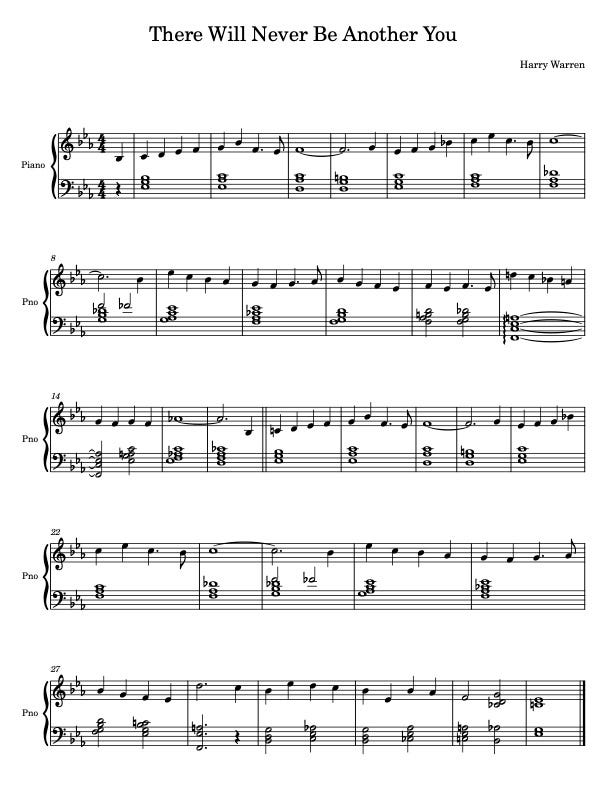
Indeed, “Ursula” can hold its own with anything intellectual or experimental written in New York for a Blue Note date at that time. Fun to hear East Coast legends Wes Montgomery and Barry Harris blow on this tricky form, but Land might be the only one comfortable here. His tenor sax lines snake so beautifully through the changes…

(Mark suggests I have the 2/4 bar in the wrong place, which could be true.)


Land also appears on Hampton Hawes’s For Real!, a wonderful quartet session that seems to be Hawes’s only studio date as a leader with a horn. Of the great 50’s West Coast jazzers, I know Hawes the best, and as I grow older, he becomes more of a touchstone. Truthfully I think Hawes is not so organized behind Land in accompaniment on the standards, at that point he might have been a more natural trio pianist. Still, For Real! offers truly great playing from all hands, Frank Butler is right in there, and this might be the most unrepentantly swinging Scott LaFaro I’ve ever heard, especially on the opening blues, “Hip.”

Hawes has a way with the piano that seems to be powered by an external supernatural source. His bluesy/bebop lines on “Hip” are really in a class of their own. Of course, there are so many: The 50’s terrain controlled by Bud Powell on one side and Horace Silver on the other includes Hope, Perkins, Harris, Sonny Clark, Red Garland, Wynton Kelly, Hank Jones, Tommy Flanagan, and others.

Still. Hampton Hawes. Wow.