Never Bet on an Eggplant

In the middle of his game-changing bestseller Miami Blues, Charles Willeford takes time out from crime and chaos in order to offer advice to would-be-authors. “Write simple sentences — subject, verb, object…Use concrete words that convey exact meanings.” Most importantly, “Force your reader to reach for something.”

Willeford is talking about himself, of course, but also a certain kind of literary tradition. Kafka and Beckett. Twain and Hemingway. Hammett and Westlake. Authors who state things simply, but also force the reader to reach for images, ideas and emotions not on the page.

For my money the greatest stylist in Young Adult fiction is Daniel Pinkwater, who recently turned 70. He is funny and surreal. He selects each subject, verb, and object carefully, ensuring the audience must participate in getting the most out of the text.

From Lizard Music:

Anyway, Walter Cronkite isn't on very much in the summer because that's when he takes his vacation and Roger Mudd fills in for him. I watch the show anyway, because if something really big were to happen, Walter would come straight from his vacation to take over. Another thing I like about when Roger Mudd does the show is the possibility that Walter will die (not that I wish him any harm) on his vacation, and a news flash will come in while Roger Mudd is on the air. Or he wouldn't have to die–he could be trapped underwater in a Volkswagen bus with only enough air for two hours, and Roger Mudd could describe the rescue attempts. Then the Navy divers would get Walter out, and he would say, "That's the way it is," and sort of salute into the camera, and the news program would fade out into the coffee ads. Or it might be good if he did die after all, just after the Navy divers got him out of the sunken bus. Then he could say, "That's the way it is," as his last words. There are a lot of possibilities to the Walter Cronkite show. I used to try to get some other kids interested in it, and maybe set up a Walter Cronkite fan club, but they didn't even take it seriously, and I got a reputation as a crazy.

From Snarkout Boys and the Avocado of Death:

Everybody ate in silence until the Bullfrog Root Beer was served. Then the conversation at the table got started. Aunt Terwilliger began making a sort of speech about grand opera. She was against it. Later, Rat told us that her aunt had just about every opera recording ever made. Her aunt spent hours in her bedroom listening to them, but all the rest of her time was spent arguing that people shouldn't listen to operas, and, above all, they shouldn't go to see them performed. Rat said that Aunt Terwilliger makes regular appearances in Blueberry Park, where she tries to convince people to live their lives opera-free. She feels that operas take up too much time. Also, she has an idea that people who like opera will become unrealistic, and not take their everyday lives seriously. Most of all, she believes that operas are habit-forming, and once a person starts listening to them, it's hard to stop, and one tends to listen to more and more operas until one's life is ruined.

Aunt Terwilliger has pamphlets printed up that she hands out. Her most popular one is called "Grand Opera: an Invention of the Devil."

From Borgel:

The Story of the Rabbit and the Eggplant

Once there was a race between a rabbit and an eggplant. Now, the eggplant, as you know, is a member of the vegetable kingdom, and the rabbit is a very fast animal.

Everybody bet lots of money on the eggplant, thinking that if a vegetable challenges a live animal with four legs to a race, then it must be that the vegetable knows something.

People expected the eggplant to win the race by some clever trick of philosophy. The race was started, and there was a lot of cheering. The rabbit streaked out of sight.

The eggplant just sat there at the starting line. Everybody knew that in some surprising way the eggplant would wind up winning the race.

Nothing of the sort happened. Eventually, the rabbit crossed the finish line and the eggplant hadn’t moved an inch.

The spectators ate the eggplant.

Moral: Never bet on an eggplant.

At first I was pleased to see Pinkwater’s name in the New Yorker last week. He’s a cult figure but the literary establishment usually isn’t that interested in him. (The essential anthology 5 Novels is blurbed by a dozen readers and no critics.) Nor is he a particularly hot property in the business. (The modern YA “thriller” serves it all on a plate; the reader doesn't have to reach for much in J. K. Rowling or Suzanne Collins.)

After my initial gratitude that Pinkwater was getting noticed, I became astonished by the context. Briefly, the fable from Borgel above was recently mutilated by the New York Department of Education for their eighth-grade reading exam. After changing most of the words, they tacked on a nonsensical multiple-choice question that understandably confused the students. Since they left Pinkwater’s name on the “excerpt,” the author started getting calls and emails from students wanting to know about owls, sleeves, and pineapples — three concrete words that weren’t Pinkwater’s.

The best line is by Pinkwater, who is understandably cranky. “If a pineapple were funnier, I would have used pineapple in the first place.” The rest of Ben McGrath’s piece is a contemporary and amused adult take on the vagaries of education. Nowhere does it say that Pinkwater is a great artist; indeed, McGrath seems a bit skeptical. Myself, I’d call Pinkwater a genius, but by any standard he’s not just any children’s author, or, in McGrath’s words, a “specialist in nonsense.”

Pinkwater’s own humble account of the brouhaha was posted by the Daily News. He’s devoted his life to making children laugh and think, and even under pressure he is more concerned with protecting them than himself.

Well, I’m concerned with protecting Pinkwater. In addition to changing his hard-fought subjects, verbs, and objects, there were other violations perpetrated by NYS Dept. of Ed.

The revision does away with the obvious satirizing of Zeno’s Paradoxes. The original sentence, "People expected the eggplant to win the race by some clever trick of philosophy," glows like a golden sunbeam. It’s simply glorious. You can almost see the centuries of accumulated argument slink away into dark corners. While you don’t need to know anything about Achilles and the Tortoise to enjoy Pinkwater’s fable, a youngster who reads Borgel before getting to Zeno (or Lewis Carroll's interpretation of Zeno) will come to the table just a bit more prepared. (I can’t understand how the New Yorker piece mentions Aesop, Mad Men, drugs, and Chomsky, but not Zeno.)

The revision appropriates the humorous side of Pinkwater without honoring his anti-establishment voice. Many of Pinkwater’s books are about surviving school. His lead characters are outsiders that never fit in with the masses. Those including Pinkwater in an average curriculum must respect that “otherness,” because Pinkwater has helped many students more than many teachers.

A common comment from fans to the author is “One of your books saved my life.” The relief and validation that washed over me from repeated readings of Alan Mendelsohn, The Boy From Mars was worth a thousand therapy sessions. Acting like Alan Mendelsohn at school also did wonders socially: I went from being a wimp easily hurled into lockers to an artistic weirdo that bullies thought best to leave alone.

(My wife was a bit younger when she discovered “her” Pinkwater, the picture book The Big Orange Splot, nominally for elementary readers but great for adults, too. The refrain of creative empowerment is still Sarah's song today.)

If putting Pinkwater into a test isn’t bad enough, the revision assigns Pinkwater to multiple choice. When you ask the reader to reach for something, whatever is found at the tip of that reach could be different for everybody. Certainly there are no right or wrong answers in Pinkwater! There aren’t even heroes and villains, just a bunch of unusual people. When Uncle Boris refuses to parse a cryptic home movie to Alan Mendelsohn and Leonard Neeble, he says, “It’s a work of art. You don’t have to know what it means.”

I could go on and on about the Department of Education’s misreading of Pinkwater. Presumably this is enough for now, but, fair warning: If you are the one responsible for “The Hare and the Pineapple,” make sure I don’t find out. Because if I do, I will be at your house bright and early the next day, with opera records and Walter Cronkite VHS tapes and the right equipment to enjoy them, and our interaction will last far longer than you want it to. I won’t threaten or hurt you, but you will be very uncomfortable.

It’s really too bad that Pinkwater says,"…After 40 years of authoring, and more than 100 books, I got interviewed by all the major newspapers in New York City…Everybody knows what Andy Warhol said about everybody getting his 15 minutes of fame. Is this mine? Do I need to ask that? Obviously it is. I think I’m happy about it. I feel like a real celebrity — real in the sense that I got a whole bunch of media attention, and I didn’t actually do anything."

Well, Mr. Pinkwater, this dumb test may have resulted in an unprecedented number of interviews, but this was not your fifteen minutes of fame. For many, you are immortal.

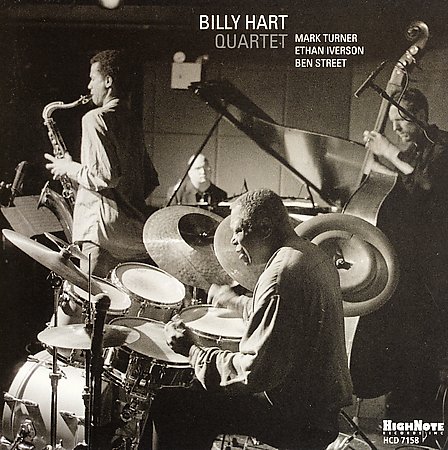
Billy Hart Quartet

William W. “Jabali” Hart, drums

Mark Turner, tenor saxophone

Ethan Iverson, piano

Ben Street, bass

This quartet has been performing since 2003, mostly in New York at the Village Vanguard, the Jazz Standard, Fat Cat, Dizzy’s, and Birdland.

The first week it was billed as “The Ethan Iverson/Mark Turner quartet.” But after Billy asked it to be his band for a night for a gig in New Jersey, the other members unanimously voted to give it him permanently. There has never been any doubt that the right name was on the bill:  At every gig, fans and musicians from all over the world come out to support a drummer who has engendered so much love and respect during so many years of touring, teaching, and living.

Ethan Iverson interviews Billy Hart in 2006 and 2008.

There are two records for ECM and one for High Note.

One is the other

One is the Other was recorded May 2013 and released March 2014. At one point I quickly jotted the below as potential liner notes or press release:

Lennie Groove (Turner) Mark Turner’s melding of Tristano and clave was recorded years ago on the early Turner album In This World. Since then, it has become a classic, with many musicians trying their hand at its stunning complexities: odd meter, unusual bass line, fast doubled melody. My intro suggests Tristano sped up and spun out.

Maraschino (Iverson) The blues may come in any and all colors. Perhaps a wisp of Paul Bley is here, along with collective free improvisation that strives for structural integrity. Billy Hart’s brushwork is masterful, so swinging yet without any clear pulse.

Teule’s Redemption (Hart) This was written for one of Billy Hart’s sons, a two-part work that eventually allows Ben Street and Hart to work closely on a powerful groove. Turner’s solo takes flight.

Amethyst (Hart) This unusual through-composed piece is another gateway to free improvisation. At one moment Hart and I are left to ourselves, allowing cubist patterns to repeat and develop.

Yard (Hart) He was there, right on the scene, when jazz began embracing the even-eighth note as a legitimate resource. This blues connects Charlie Parker with all those grooves Hart played with Jimmy Smith, Herbie Hancock, Miles Davis, and so many others. The fierce abstraction achieved by every member of the group attests to a long working relationship.

Sonnet for Stevie (Turner) A swing piece for Stevie Wonder shows moody restraint, although the form is deceptively complex. Hart joked after listening to playback, “It’s like Kind of Blue.”

Some Enchanted Evening (Rodgers/Hammerstein) This group doesn’t play many standards, but in this case Hart (who loves musicals) wanted something for almost for encore purposes, a gentle reframing of the familiar.

Big Trees (Iverson) Specifically written as a drum feature. The idea of “rhythm changes” lurks in the background but is quickly discarded by the ensemble.  The drumming may momentarily suggest other masters like Ed Blackwell or Max Roach but in the end Billy Hart sounds like nobody but himself.

Reviews of One Is the Other:

NPR review by Kevin Whitehead.

From JazzTimes review by Steve Greenlee: “In the Billy Hart Quartet, every moment is an opportunity for everyone to express himself.”

Guardian review by John Fordham.

AAJ review by John Kelman.

Something Else review by S. Victor Aaron.

AllMusic review by Thom Jurek.

2014 interview of Billy by R. J. Deluke.

1331467388_cover

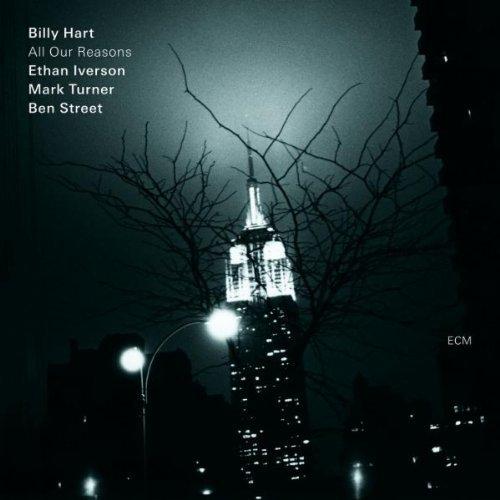
All Our Reasons (ECM) was recorded June 2011 and released March 2012.

EPK.

NY Times review by Nate Chinen.

Time Out NY article on Hart and Iverson’s relationship by Hank Shteamer.

Boston Globe interview of Hart and Iverson by Andrew Gilbert.

Guardian review by John Fordham.

eMusic review by Peter Margasak.

Boston Phoenix interview by Jon Garelick.

All About Jazz review by John Kelman.

Lexington and Beyond review by Walter Tunis.

About.com review by Jacob Teichroew.

LondonJazz review by Chris Parker.

Irish Times review by Cormac Larkin.

Los Angeles Times review by Chris Barton.

Jazz Session podcast with Jason Crane.

BHQ live reviews:  Will Friedwald, Ben Ratliff, Steve Smith.

I’m devoted to Billy Hart, but I’m also devoted to Mark Turner and Ben Street. On September 23, 2009 the group played a set at the Vanguard that was documented by NPR.  I was so impressed by the way Mark and Ben played “Giant Steps” that night that I transcribed it.

Giant steps

Download PDF

Giant Steps solo

That was 2009.  On “Ohnedaruth” from All Our Reasons, Mark and Ben (and Billy) show they are still developing how they thread these changes…

Billy+Hart+-+Quartet

The group’s first release, Quartet (High Note), recorded October 2005, was chosen as one of the “10 best jazz records of 2006” by K. Leander Williams at Time Out NY and Nate Chinen at the New York Times.

The Court Composer of Kalamazoo

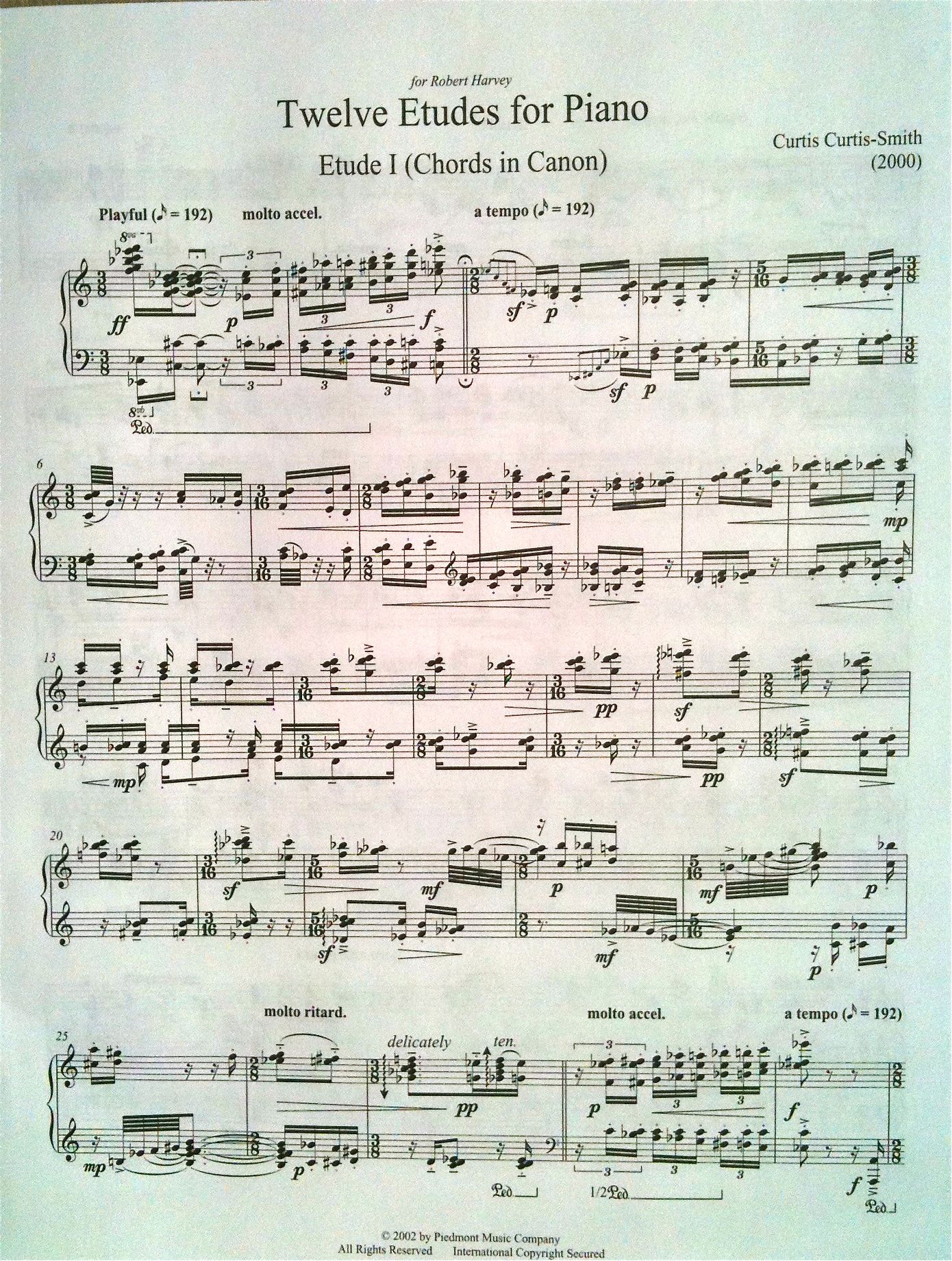
Everyone in Kalamazoo, Michigan speaks of Curtis Curtis-Smith with a hushed tone of respect. I first met him while in town with Alex Ross for the Gilmore Keyboard Festival.  Curtis-Smith then sent me the score and recording of his Twelve Etudes for Piano.  I was taken aback by their beauty and the composer’s own virtuoso pianism.

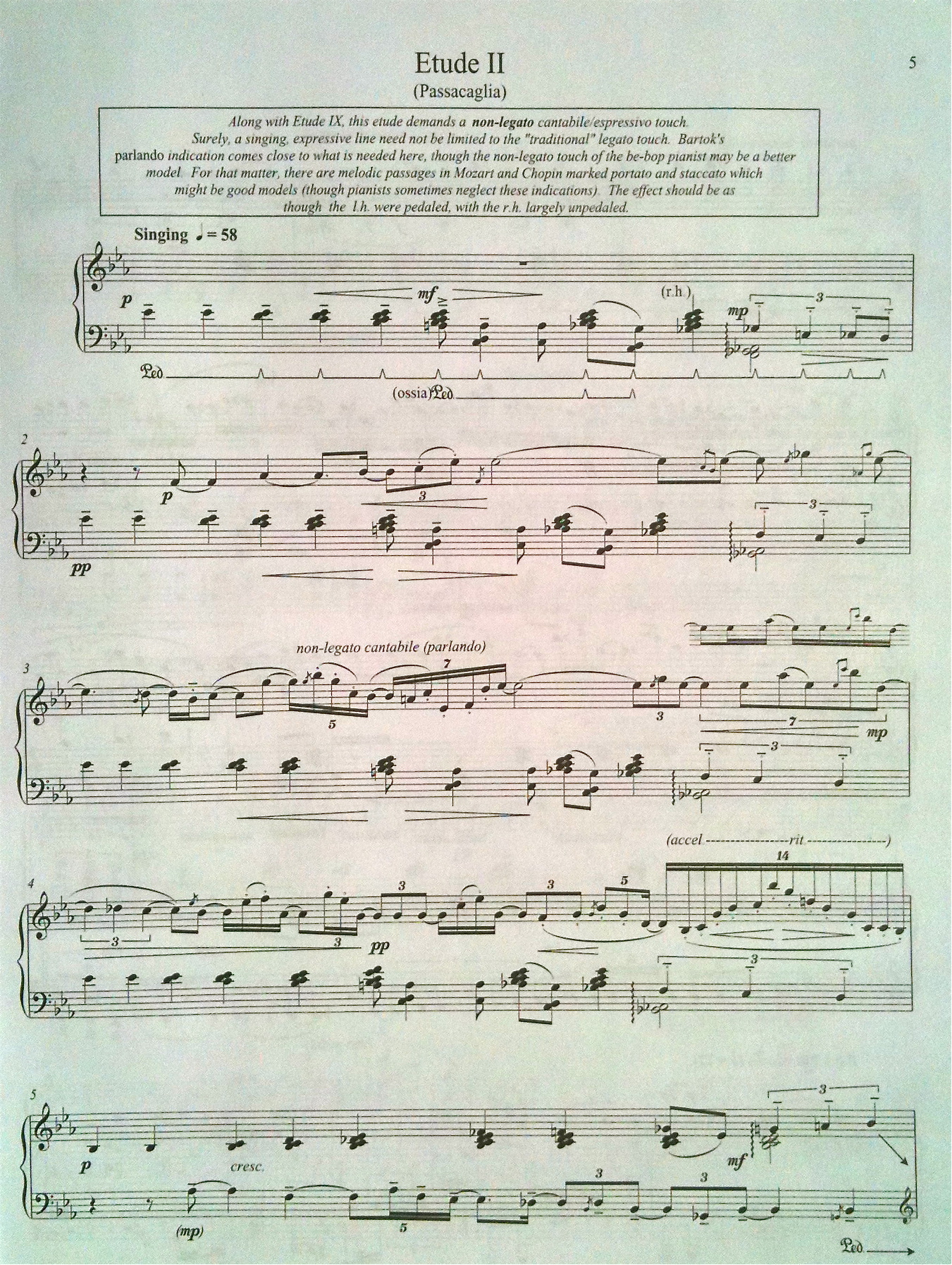
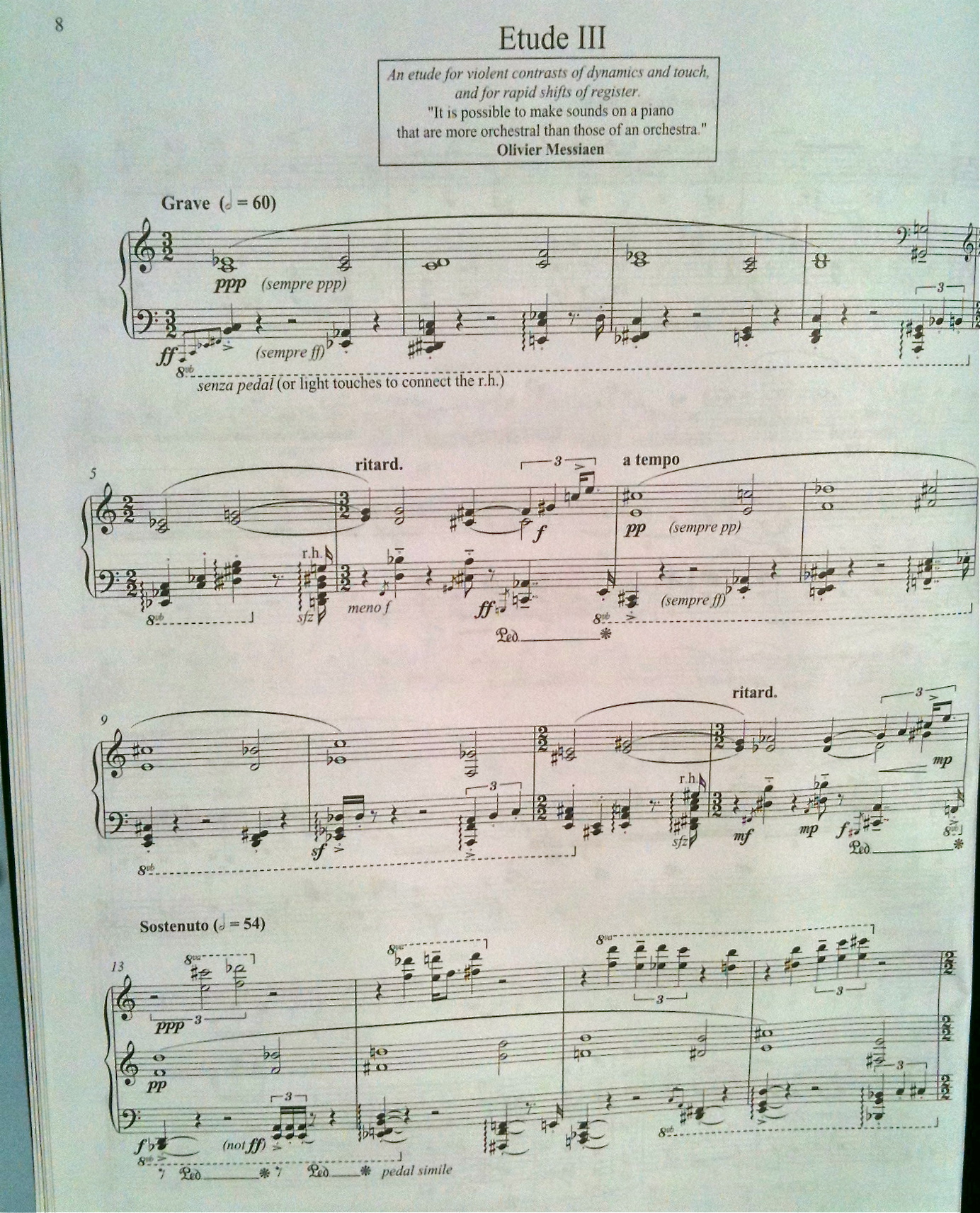
With Curtis’s permission, I’m offering a few amateur snaps and lo-fi excerpts to encourage further exploration of this major voice. His record of the Etudes is coupled with a hair-raising event called The Great American Symphony (GAS!), and the score is easy to find.

The cycle of twelve etudes begins with a rather jaunty canon.  It gets quite hard later on. I admire challenging composers who can play their own music! (Click to enlarge the pages.)

6a01348156fe55970c016303599975970d

The second is a lyrical effusion over a ground bass. The composer’s marking, “….demands a non-legato cantablie/espressivo touch.  Surely, a singing, expressive line need not be limited to ‘traditional’ legato touch.  Bartok’s parlando indication comes close to what is needed here, although the non-legato touch of the be-bop pianist may be a better model,” is dead on.

IMG_2291

Track three has an astonishing sonority:  huge hits in the left leave a negative image of delicate dyads on top.

IMG_2294

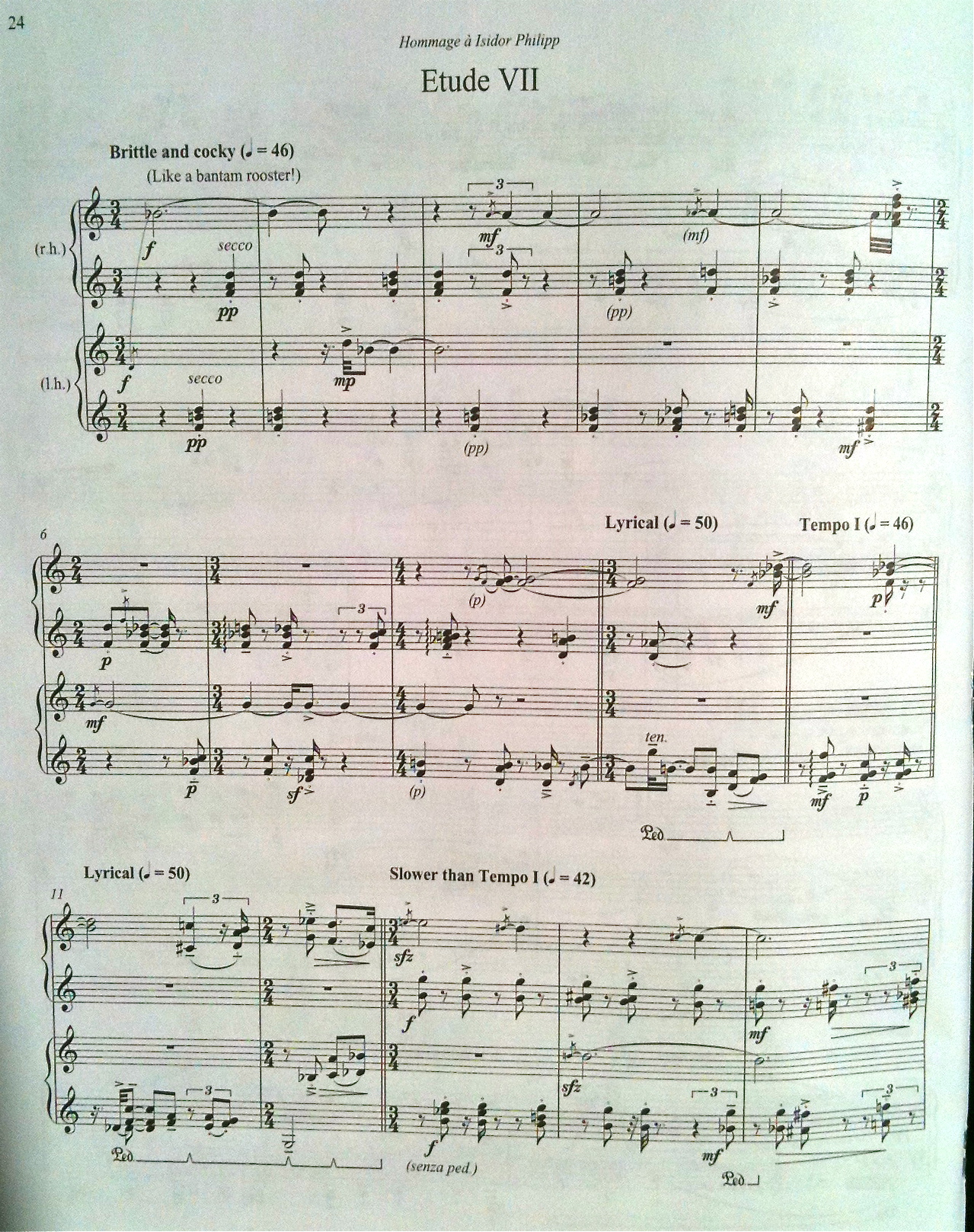
The rest of etudes are all great, but I particularly like number seven, which reminds me of Jaki Byard a little bit…

IMG_2297

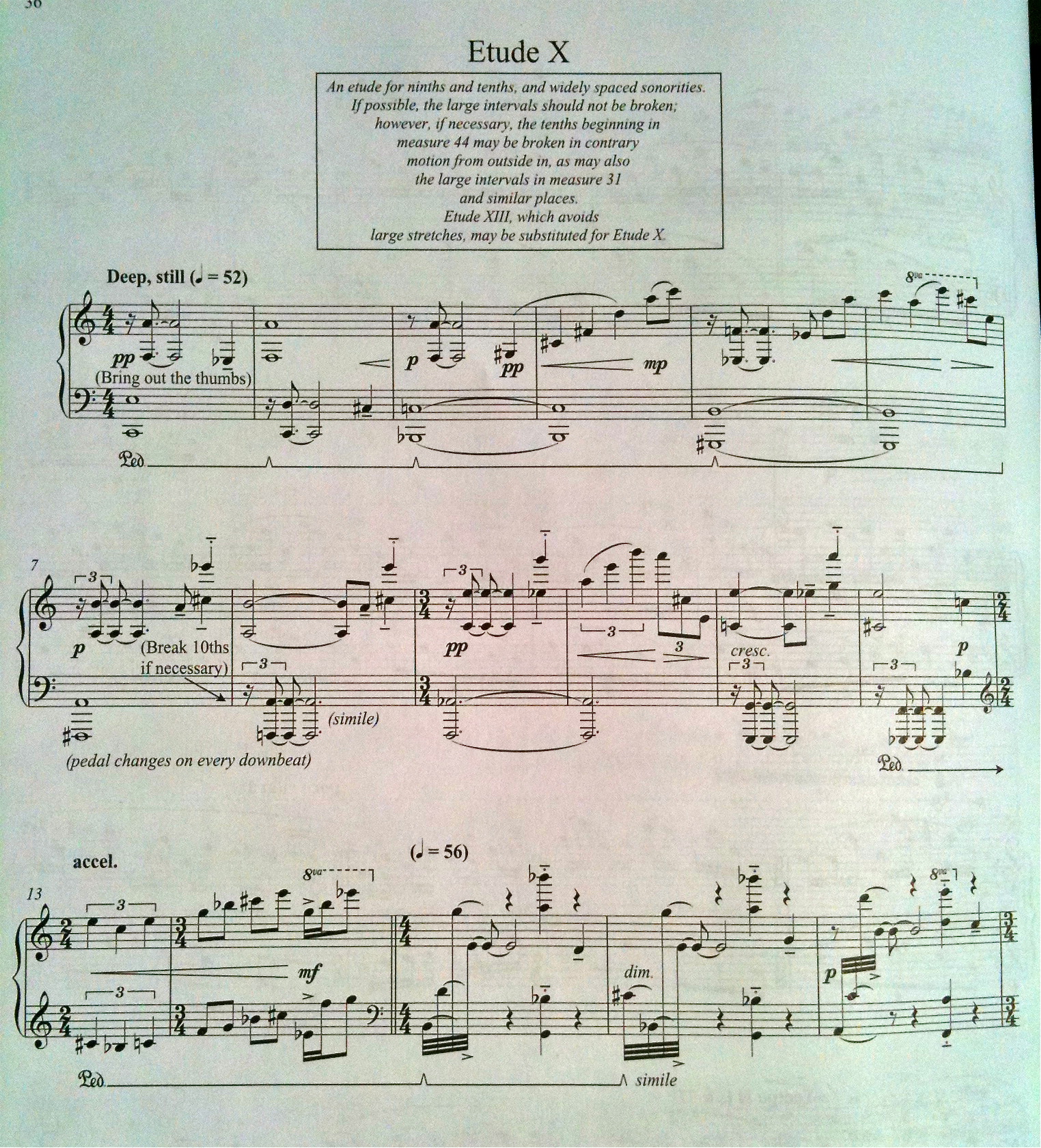
…And number ten, the longest of the set, which has the kind of wide-spaced “blues” feel that Morton Gould repeatedly attempted, Curtis is more sophisticated than Gould.

IMG_2300

I’m afraid I committed a faux-pas at our initial meeting, asking Curtis if he was still bowing pianos.  Curtis winced:  he hasn’t been doing that for many years, as the above excerpts show!  He’s probably frustrated that reference books like David Burge’s Twentieth-Century Piano Music and Maurice Hinson’s Guide to the Pianist’s Repertoire only discuss him as the inventor of this extended piano technique.  From his liner notes to CRI 346, Five Sonorous Inventions for piano and violin:

The bows are constructed of nylon thread of varying thicknesses and lengths, and of varying number of strands: some of the bows having as few as eighteen strands, others as many as forty-eight, depending on the register for which they are intended. These bows are threaded at various points through the piano strings prior to the performance.

This sounds like it could just be a party trick.  However, it turns out to be a genuinely valid:  the piano now can increase volume on a sustained note.  It’s not out of style, either, as Barbara Lieurance is currently touring the early Curtis-Smith Rhapsodies.

Of the “bowed piano” Curtis-Smith works I’ve heard, I’m particularly struck by Unisonics from 1976 (CRI 388) featuring Trent Kynaston on alto saxophone.  Yes, that’s the same Trent Kynaston who is familar to jazz students everywhere as the author of excellent books of transcriptions.

I need to learn more about Kynaston’s jazz horn (Billy Hart has recorded with him).  But for now, I’ve always had a soft spot for avant-garde classical saxophone, and Kynaston is superlative as a youngster playing both lyrical and extreme vocabulary with Curtis-Smith.  The composer himself handles the tricky extended techniques with flair.

It is always a blessing when a major stylist of American music takes root outside the major cities.  Kalamazoo is lucky to have him.

Walter Norris R.I.P.

I always liked hearing a taste of Norris's romantic harmony with Pepper Adams, Chet Baker, George Mraz, and others.  His best things were ballads.  A long station in Europe seemed to suit him; surely countless local musicians learned some of the secrets of '50s-era Hollywood voice-leading when gathered around his warm voice.

Paradoxically, Norris is best known to Americans as the pianist on Ornette Coleman's first disc of not-quite free jazz, Something Else!  (I have written extensively about this album already.)  But today, check out Walter Norris dealing with the romantic language.  The style of "Ad Astra" with Adams suits him perfectly.  "A Child Is Born" with Mraz is perfect, too.


Piano First

Saturday marked the 200th year of Franz Liszt. 

I recently blogged about Brahms being a good gateway into classical music.  Liszt is another one.  It is impossible to miss his meaning even if you don't know the language. The problem is that not all of his music is very good:  No other major composer has as many repetitive, boring, and underwritten pages.  But the great stuff, especially for piano solo, is immortal. 
There are so many incredible Liszt recordings.  However there is only one Liszt recital CD that I couldn't bear to part with, a compilation of Claudio Arrau on Phillips with "Sonetto 104 del Petrarca," "Ballade No. 2," "Sonetto 123 del Petrarca," "Vallées d' Obermann," "Valse oubliée No. 1," "Les jeux d' eaux a la Villa d'Este," and the etudes "Waldesrauschen" and "Gnomenreigen."  This is the very finest of the non-virtuoso Liszt (although still very hard of course) played by a committed musician with one foot in the 19th century and another in the 20th. 

(Astonishingly, this album  — which I thought was considered essential by all piano buffs –  seems to be completely out of print.   I guess some of these tracks are on iTunes and at the Amazon MP3 store, but be careful to get the official studio recordings. The complete Arrau/Liszt/Phillips box must turn up sometimes, that's a worthy investment.)

Arrau plays with devout fidelity to the composer, an approach which would have astonished Lizst himself.  Most of Liszt's absolute best works are transcriptions of other's music, done up in fancy style to celebrate the pianist.

There is nothing wrong with a pianist then adding their imagination to Liszt's own. The quintessential Vladimir Horowitz recordings are quintessential Liszt performances.  "Danse Macabre" from 1942 is famous.  These days young virtuosos play the Horowitz version, but really they should treat the score like an improvisor and add their own touches.

On YouTube you can watch and listen at the same time. There really is something old-school casual about this: Horowitz hits a huge clinker in bar 36 but keeps going. 

Many can play play fast and loud but the best Horowitz sounds like the Devil himself.  In the end, "Danse Macabre" is not a technical performance; it is spiritual.

Hamburg Concerto

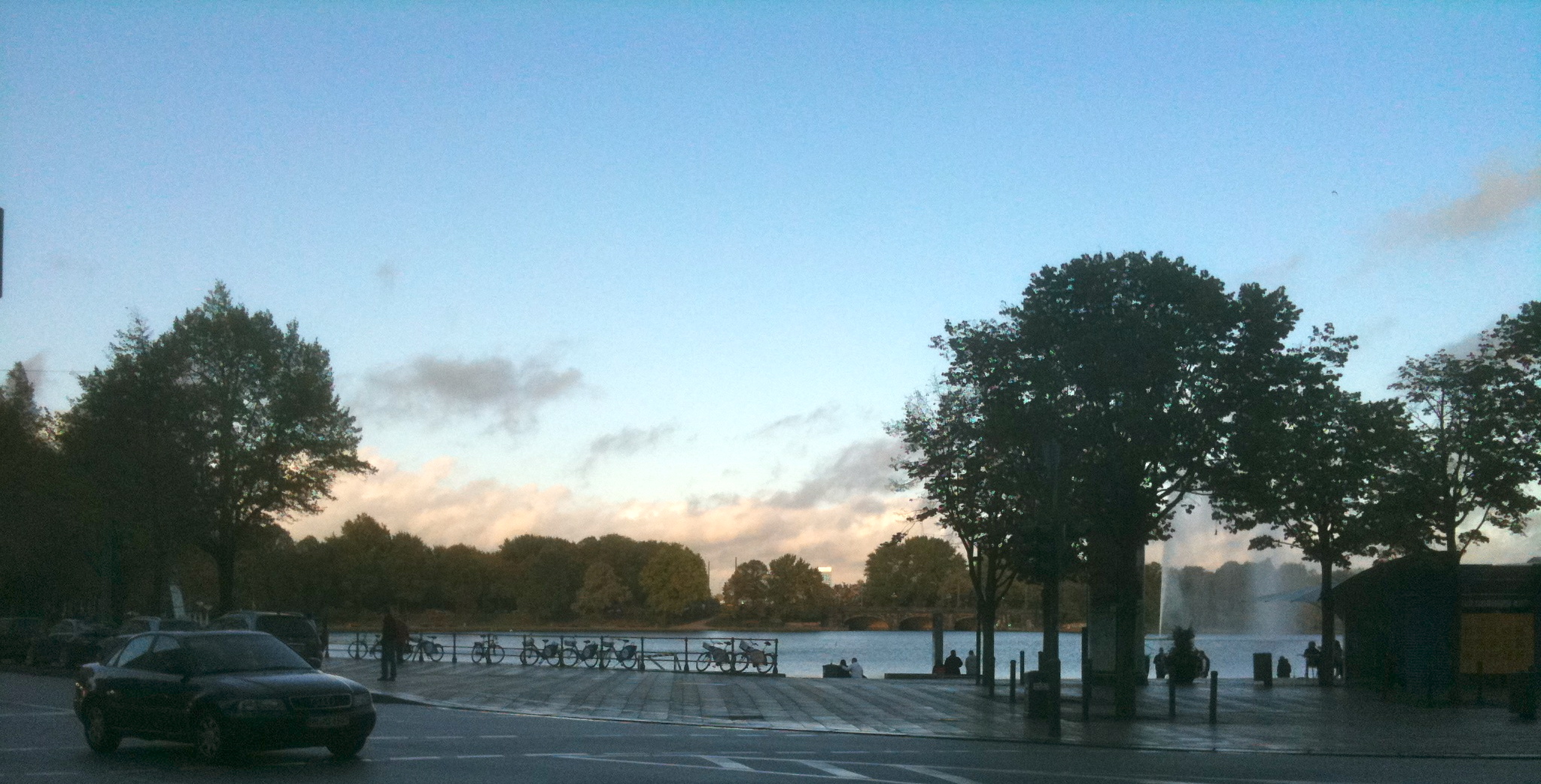
After Berlin, Hamburg is Germany’s largest city.

IMG_2096

The natives seem happiest about their harbors

IMG_2094

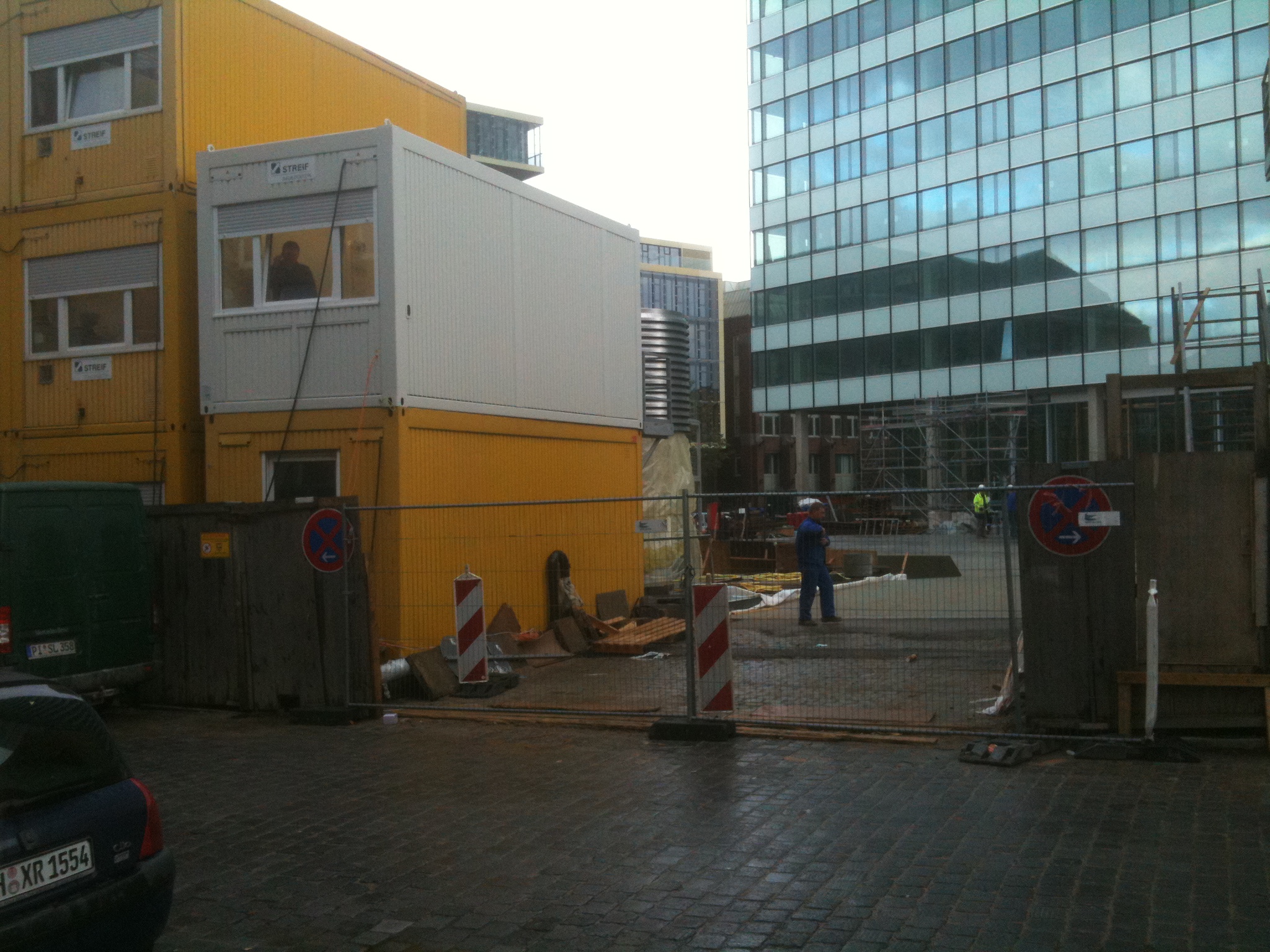
and most distressed about the incessant construction.

IMG_2098

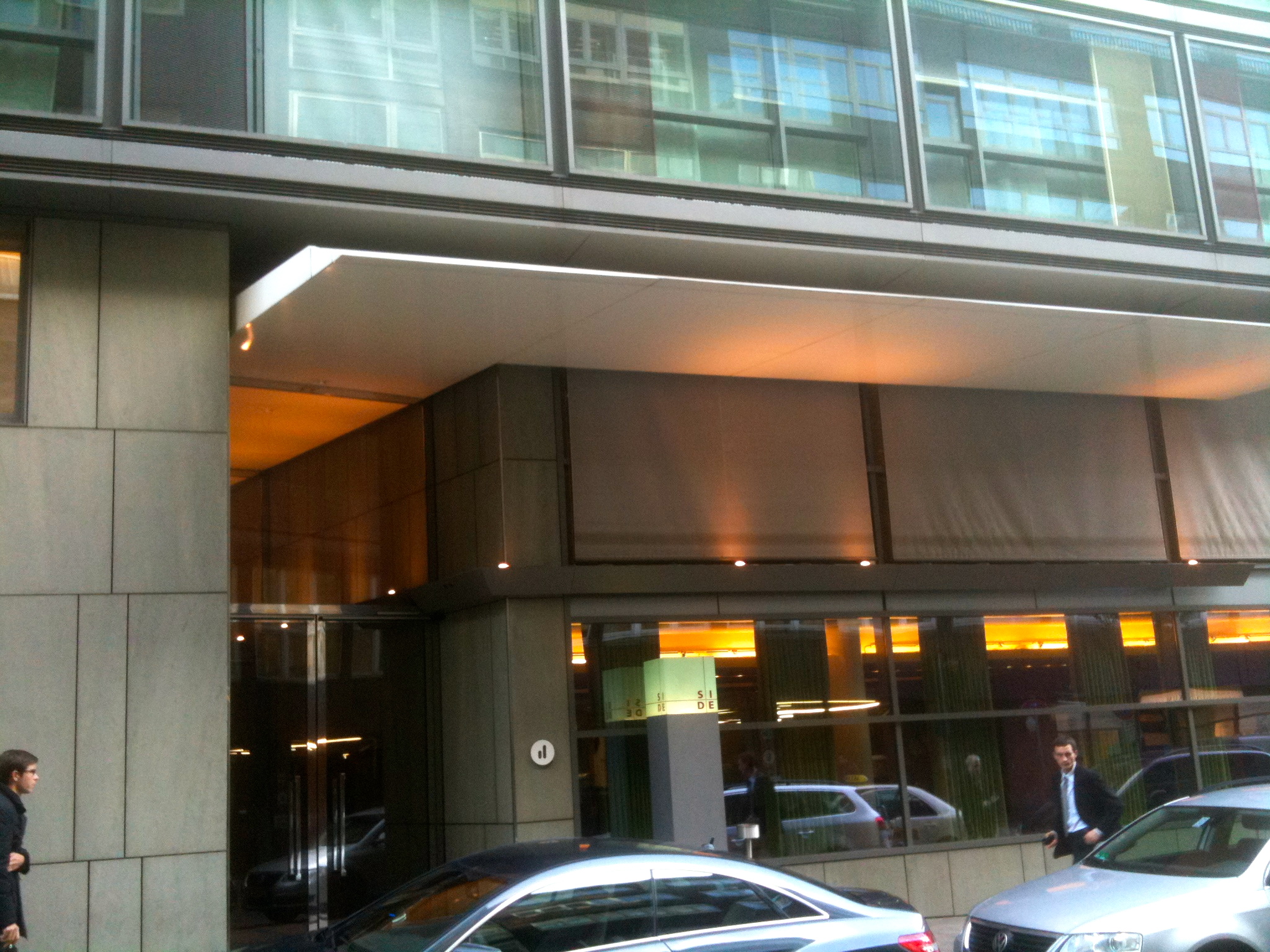
Our hotel was modern and rather posh

IMG_2123

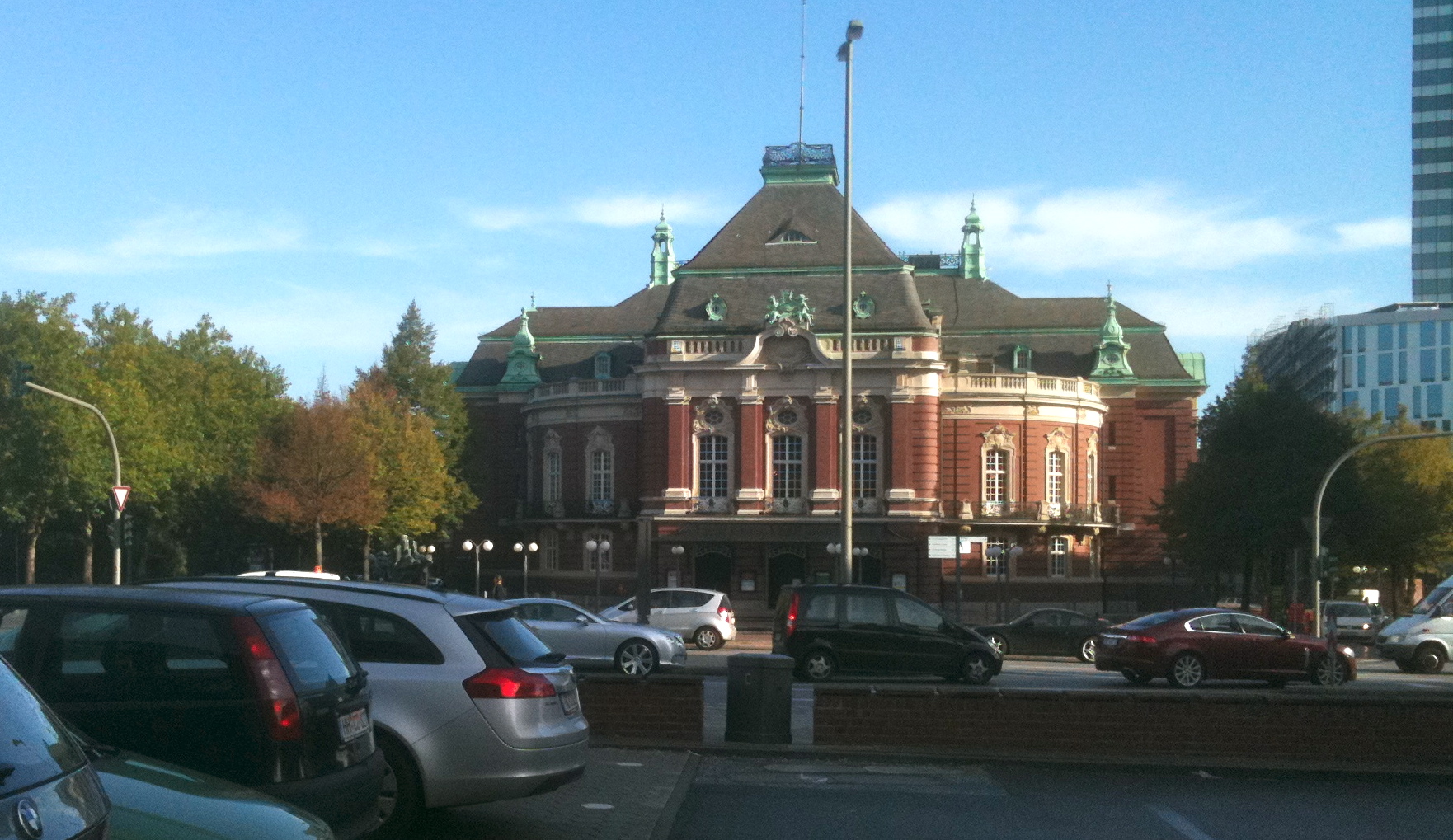
and just a few blocks away from the Elbphilharmonie, where we performed in the Kleine Laeiszhalle.

IMG_2122

Across the street was another concert hall.

Compared to Vienna’s garish and unsettling celebration of Wolfgang Mozart, Hamburg’s promotion of Johannes Brahms is benign and tasteful.  Probably one just couldn’t sell “Brahms chocolates” or “Brahms bathmats,” anyway.  There’s something about Mozart which can be taken in a frivolous manner, but Brahms just sits there, sincere and forbidding.  I’m not even sure if Brahms has a “hit” like Eine Kleine Nachtmusik or Beethoven’s Fifth Symphony.  “Wiegenlied,” perhaps?  Or the tiny A-flat waltz?  That one Hungarian Rhapsody?  But those charming little tunes crowd embarrassedly in a corner:  They know all too well that Brahms’s best melodies are impossible to reduce down from his vast, innovative sonata forms. 

IMG_2100

IMG_2101

IMG_2102

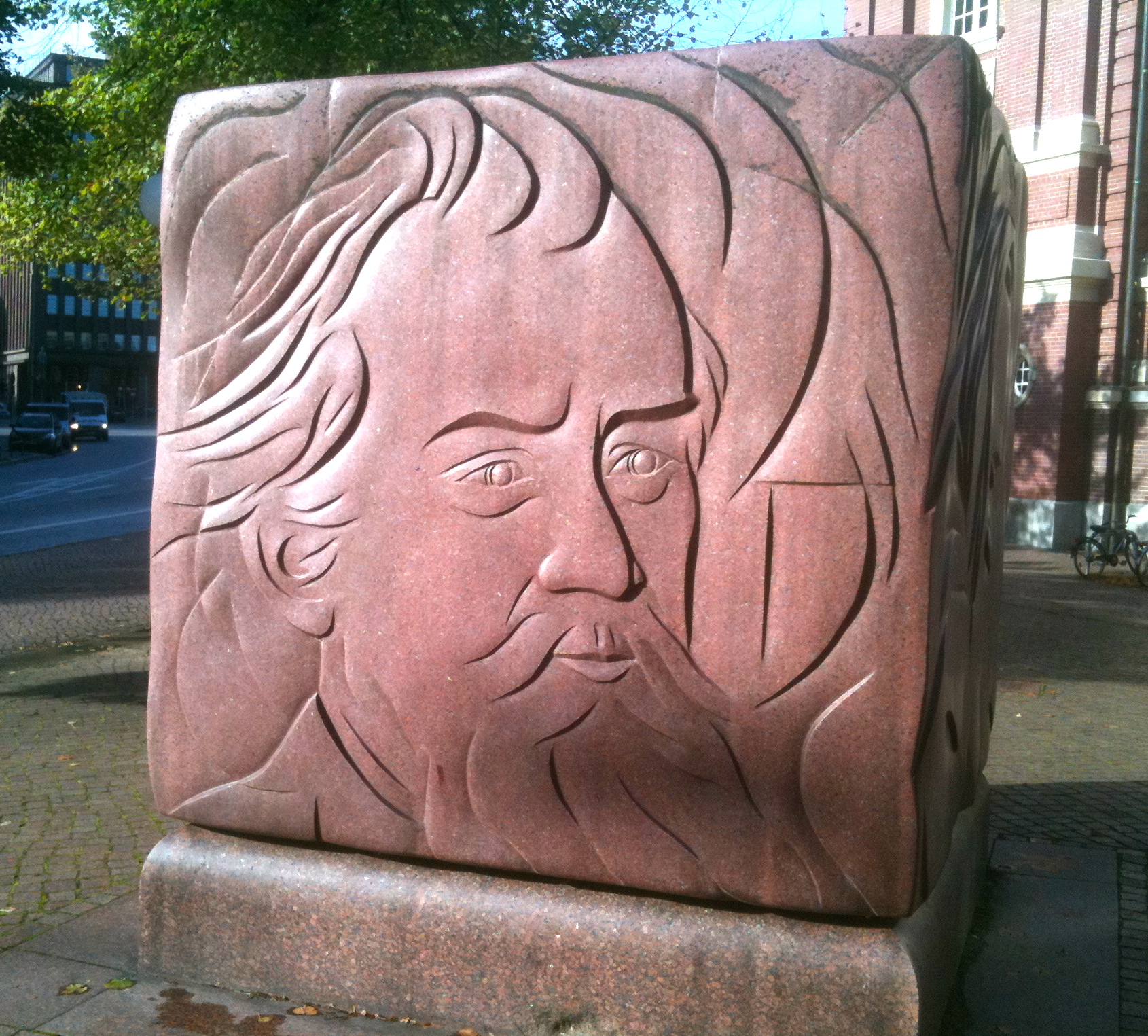
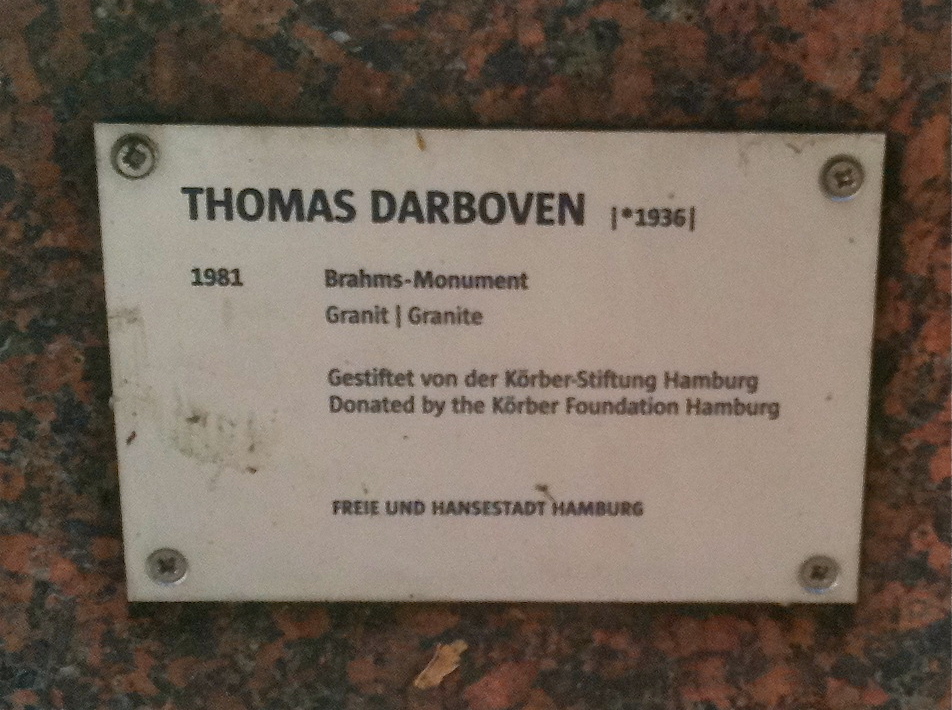
The tribute by Thomas Darboven is appropriate: a squat cube of granite.

IMG_2117

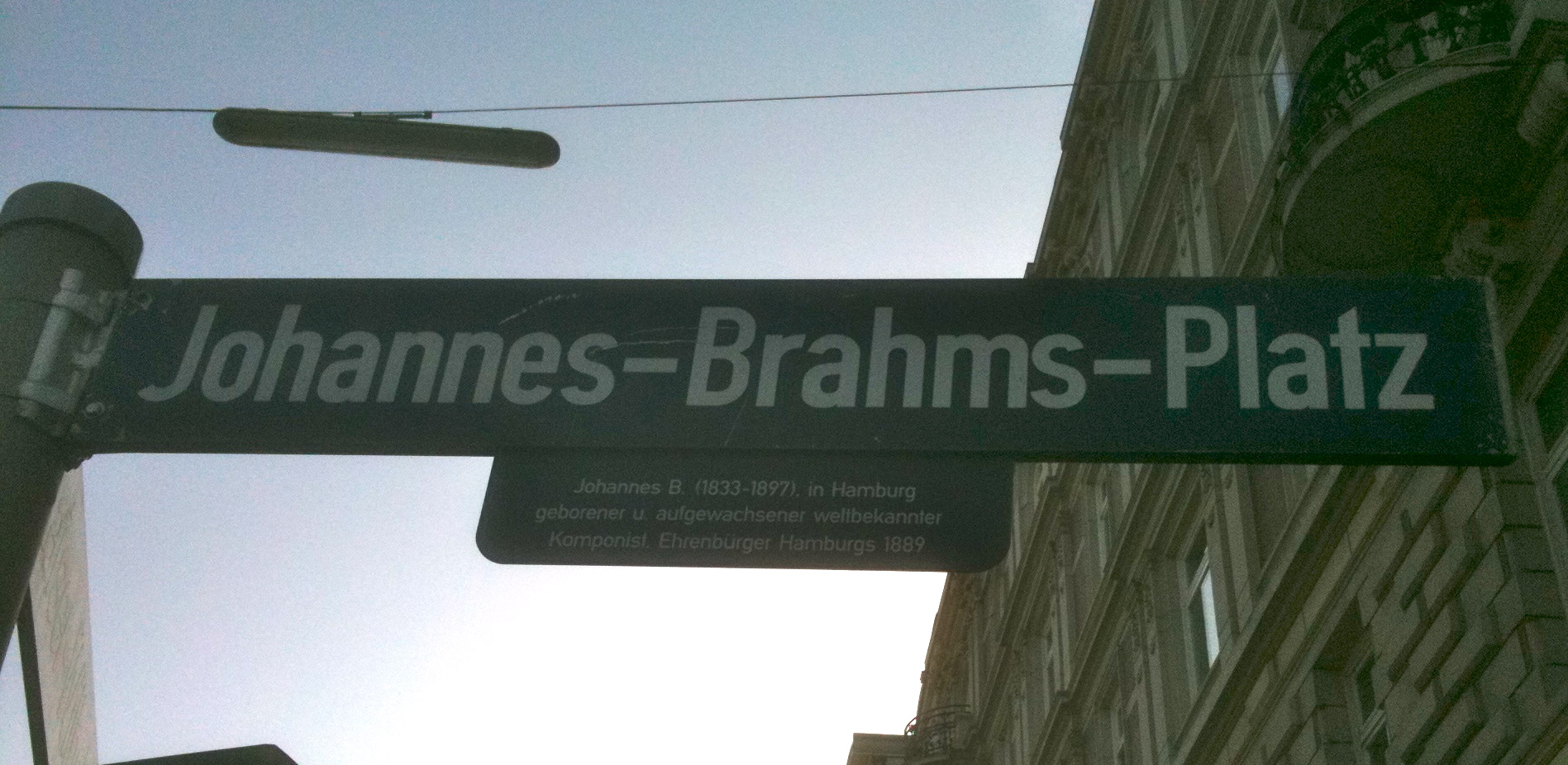
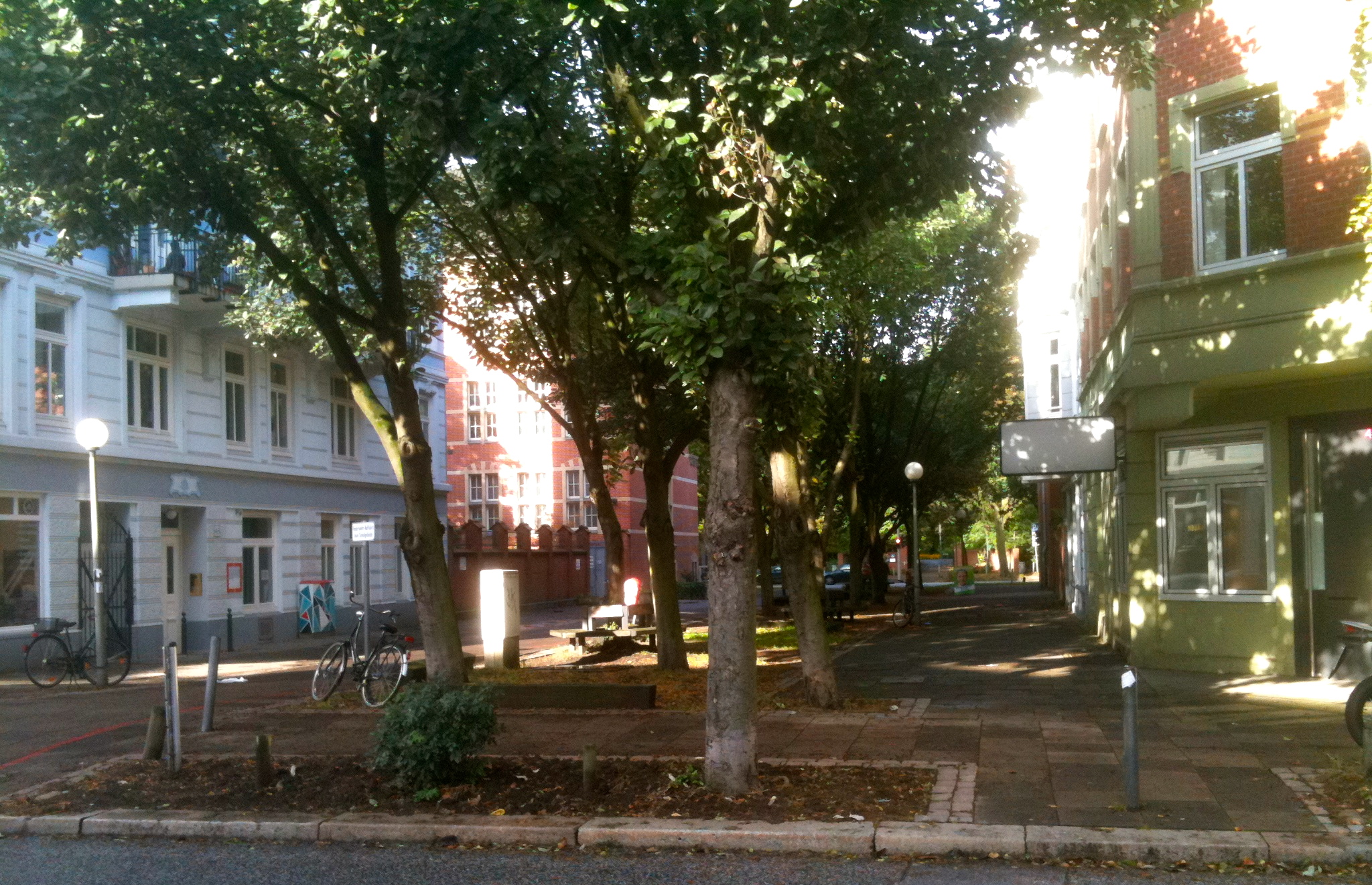
You cross the composer’s square

IMG_2126

IMG_2131

on the way to a tree-lined lane.

IMG_2129

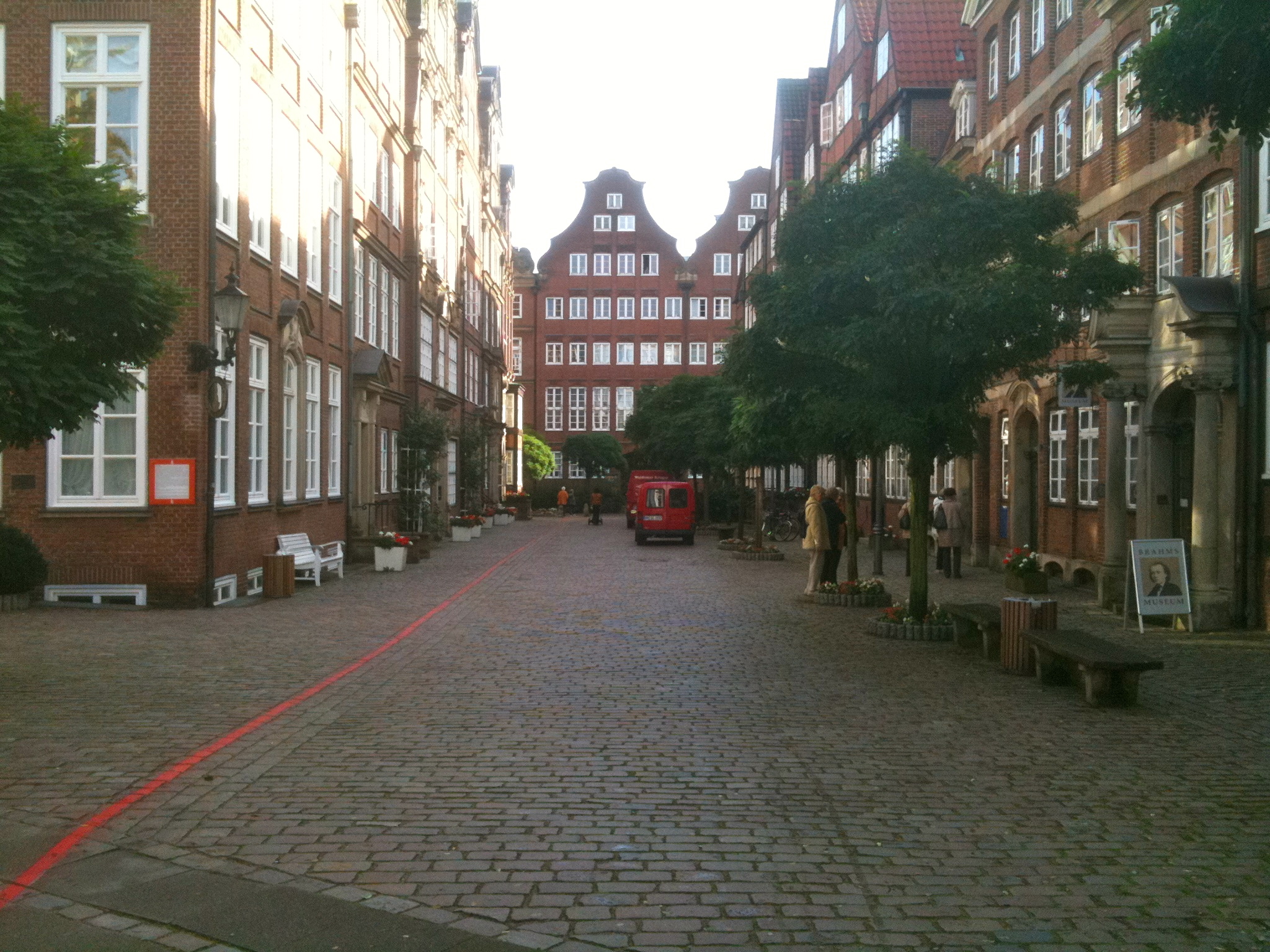
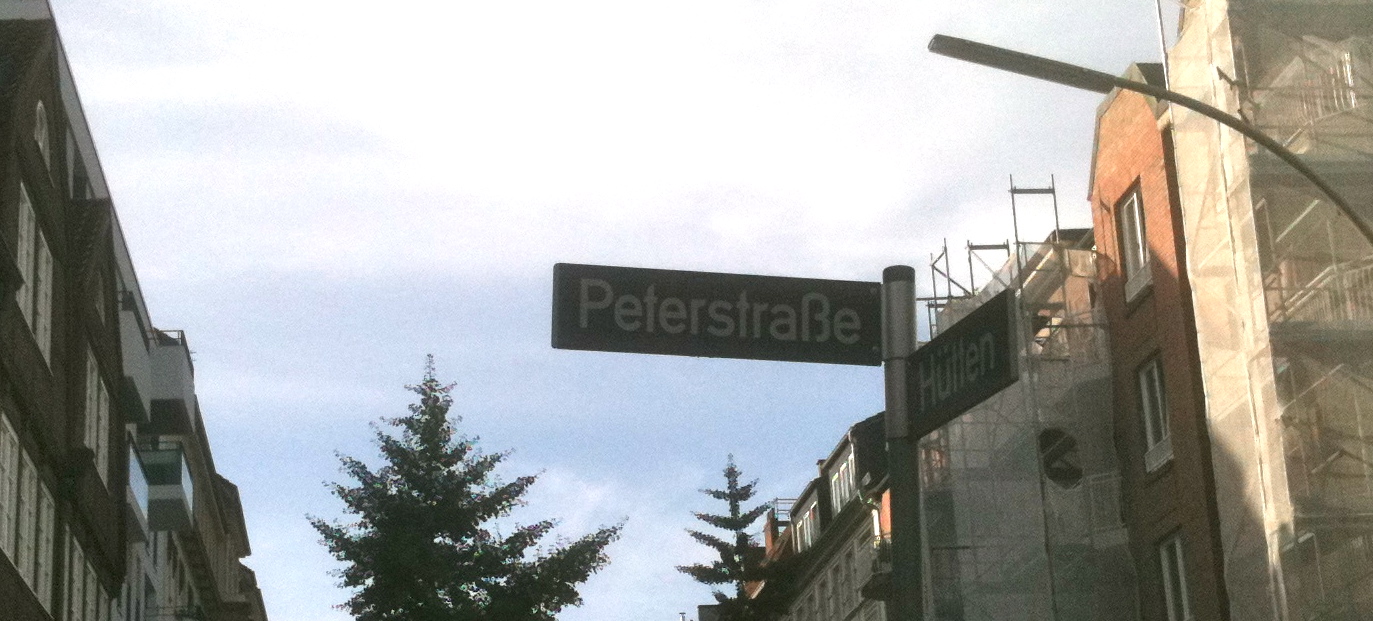
Peterstrasse is charming, with

IMG_2143

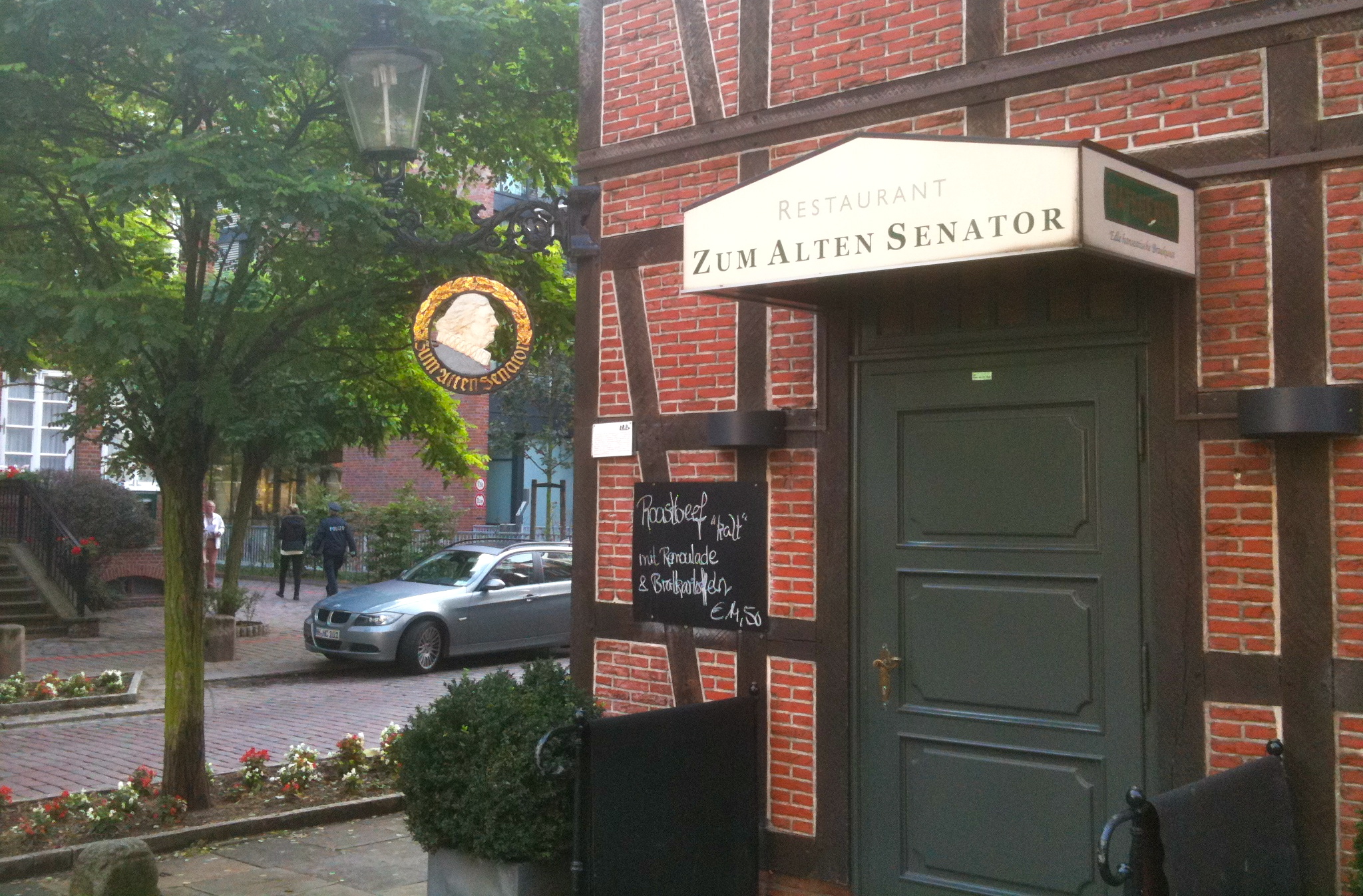
a restaurant

IMG_2141

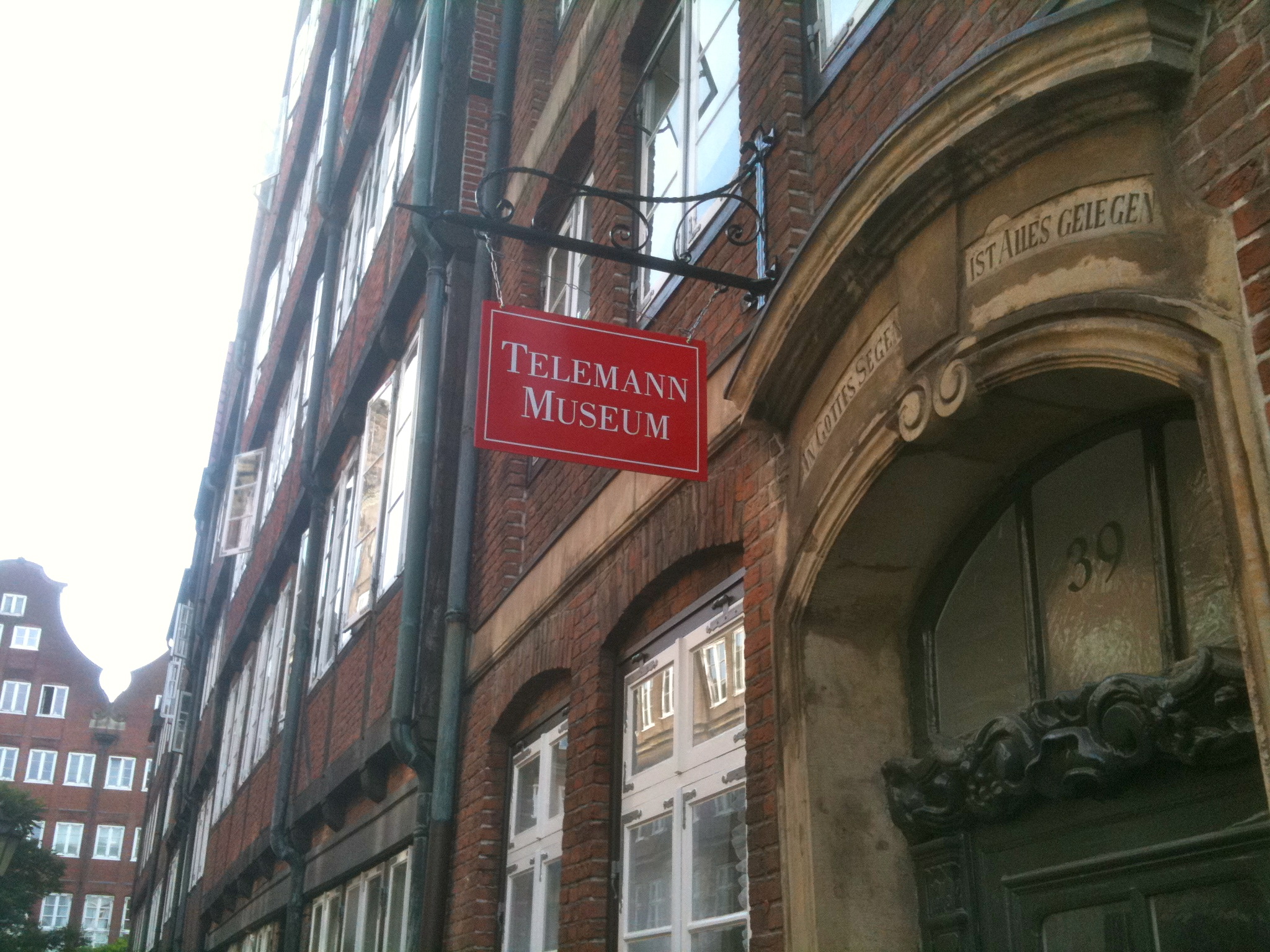
the Telemann Museum

IMG_2138

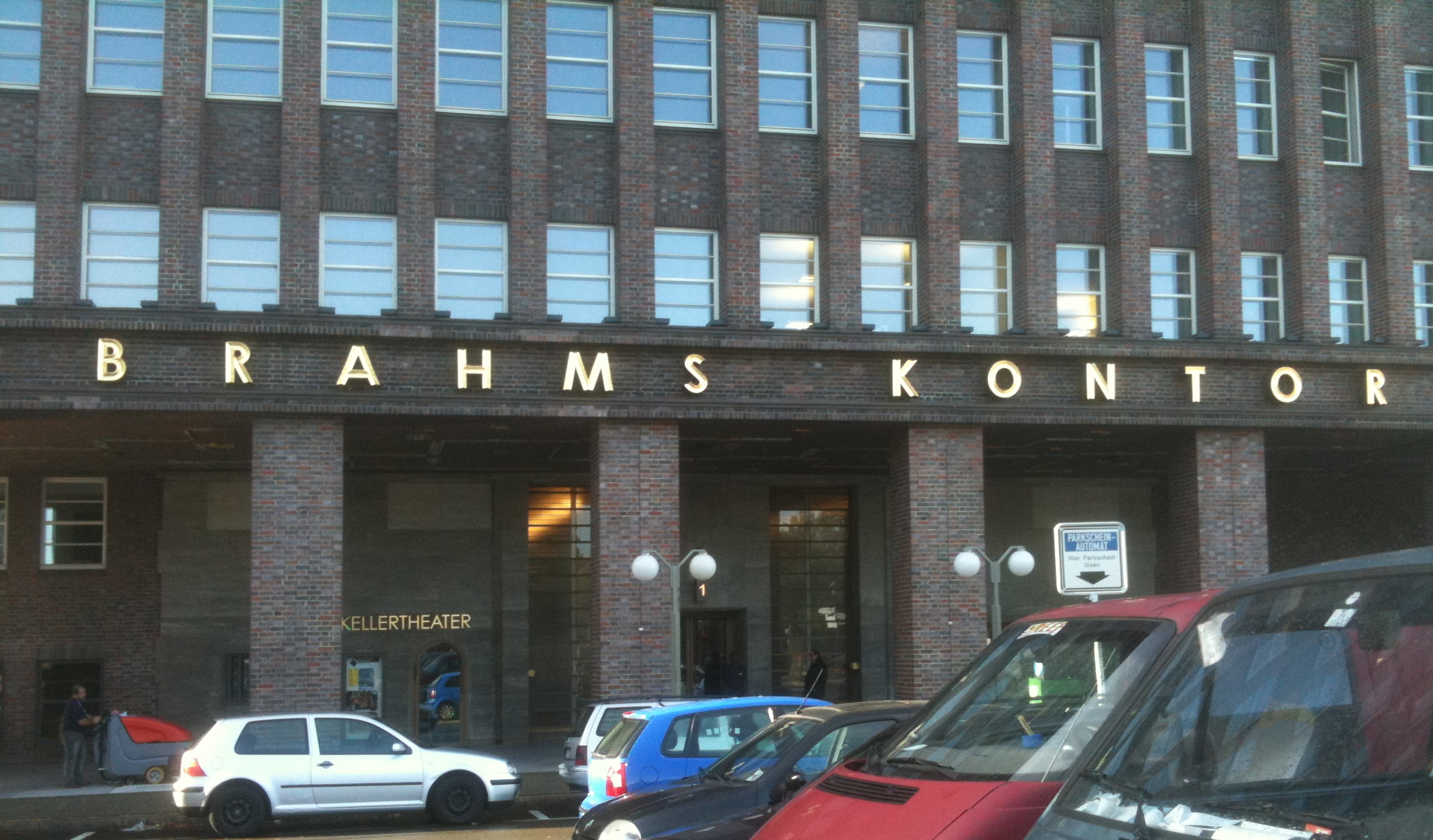
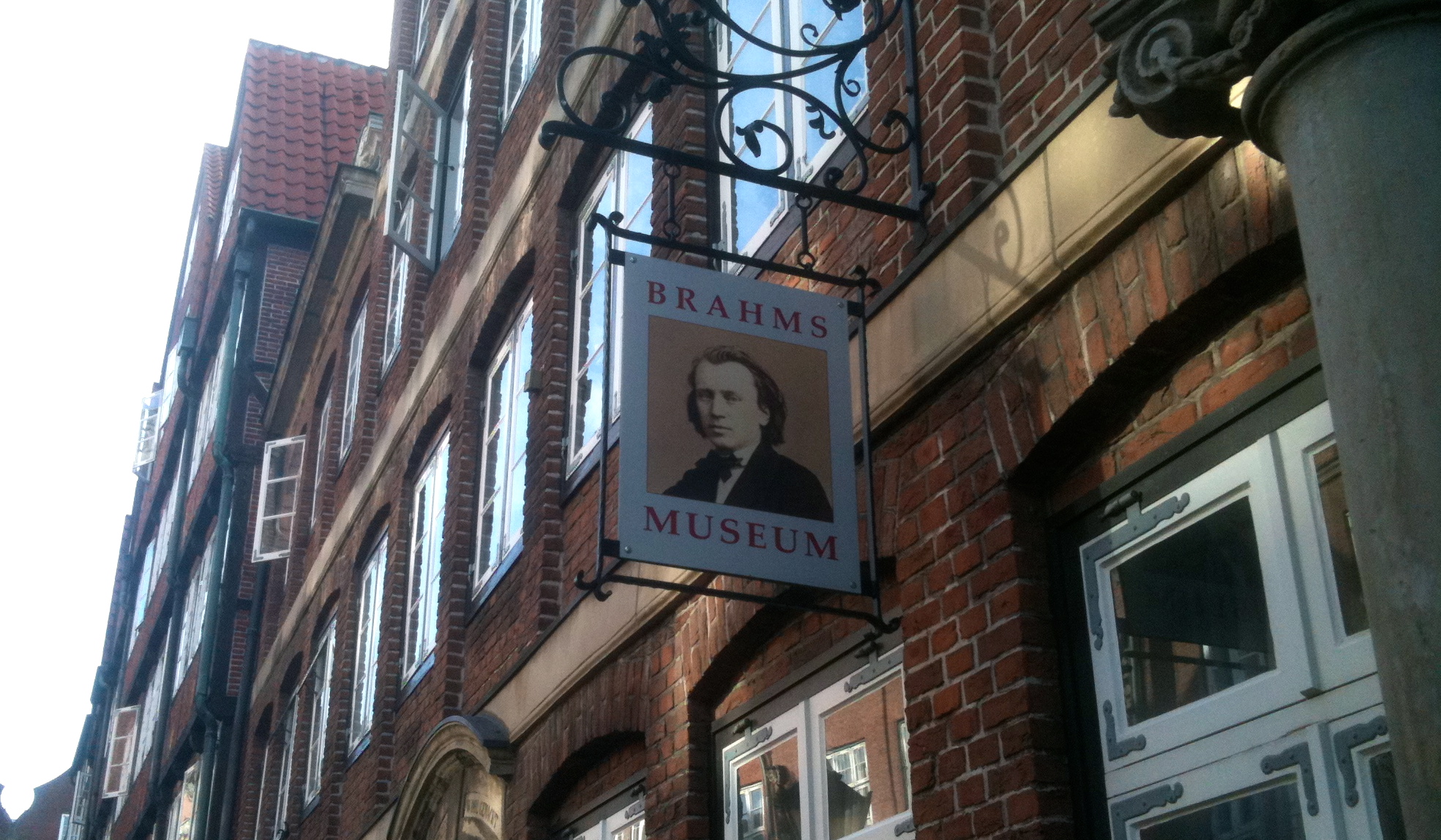
and the Brahms Museum.

IMG_2139

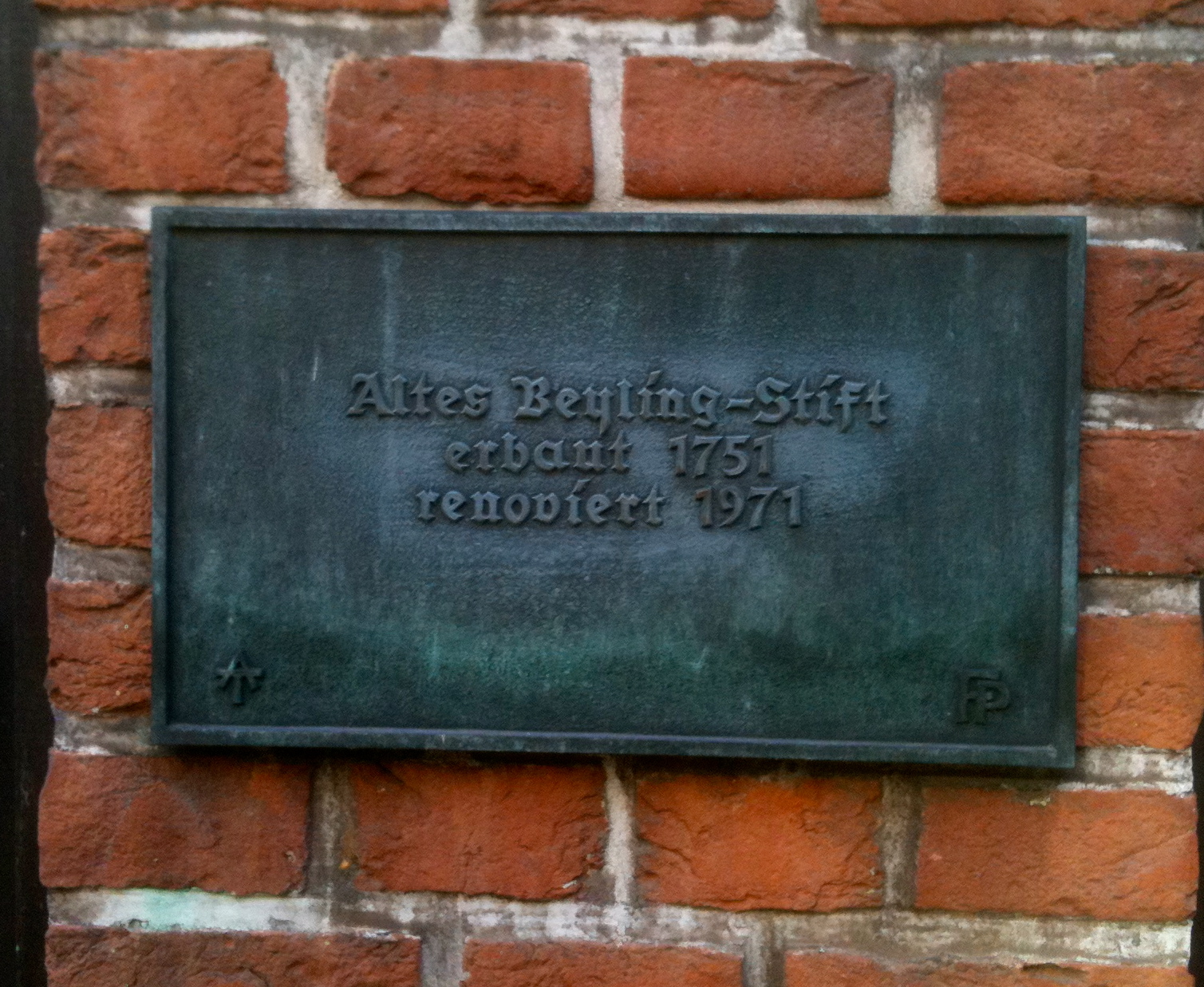
The original house was destroyed in World War II.  The current museum premises are of similar style and vintage.

IMG_2145

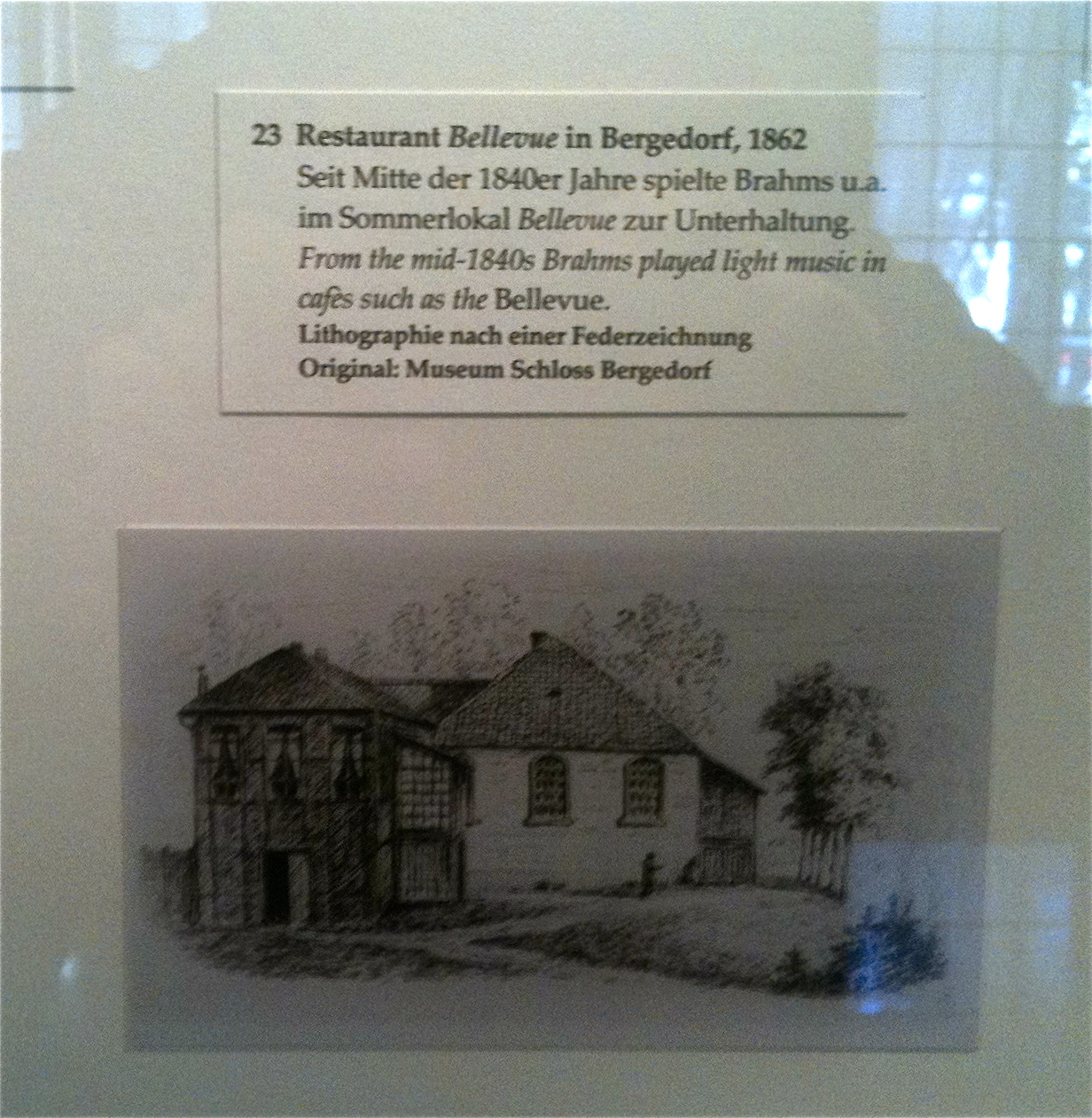
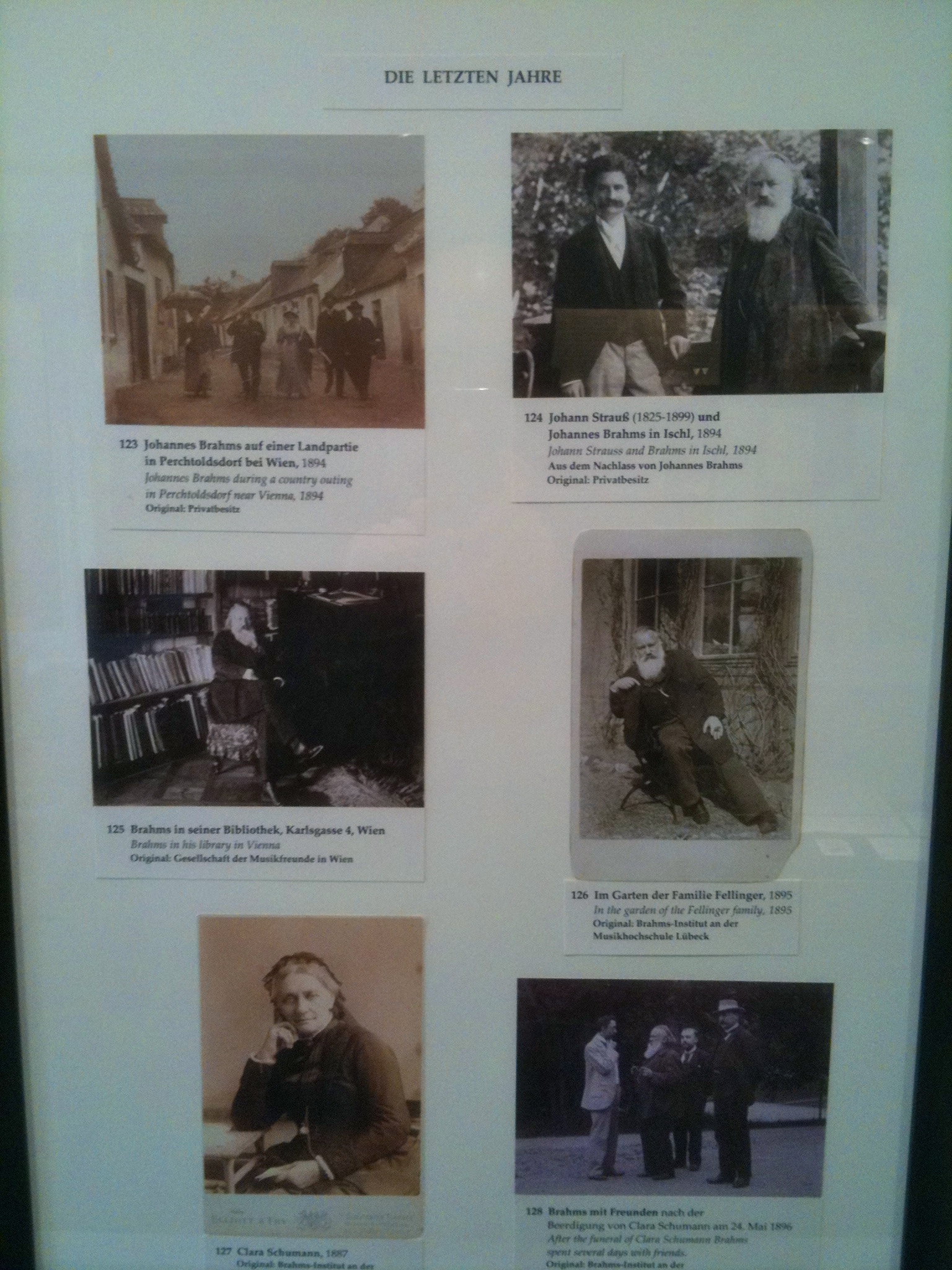
It’s a humble but uplifting space filled with pictures.  I’ve always enjoyed knowing that Brahms was a cocktail pianist.

IMG_2152

There a remarkable number of actual photographs of Brahms. Unfortunately, there aren’t really recordings except for a hard-to-hear cylinder of him talking and playing a little bit of a Hungarian Rhapsody.

Modern performances of Bach, Mozart, Beethoven, Chopin, Liszt, or Schumann are almost certainly not much like those of the composers themselves or their contemporaries.   But I suspect we are closer with Brahms.  There is something slightly impersonal about his scores:  they are so correct and easy to understand.  They are “performer-proof.”   (Admittedly, some think everything has slowed down a lot since the 19th century, maybe especially Brahms.  It’s hard for me to really believe this, though.  Maybe the slow movement of the Second Piano Concerto…)

Pianists of the early-20th century barely played Brahms (at least in comparison to Chopin or Liszt) because they thought there was less to engage a performer’s virtuosity and imagination.  Vladimir Horowitz said he didn’t like Brahms;  for that matter, Tschaikowsky and Benjamin Britten didn’t either.  Even today there are those that consider Brahms rather stodgy.

There are times when I understand that opinion, for Brahms never really lets go to write something that seems only inspired, not controlled as well.  But for a novice excited about classical music, he is a superb gateway into the mysteries.  He certainly was mine!  I’ll never forget my first contacts with the Third and Fourth Symphonies, the two Piano Concertos, and the Violin Concerto.  Whatever little I understand about symphonic music, I owe to Brahms and those five works in particular.   One needs only a little bit of basic knowledge to perceive how tiny cells bring forth epic development. 

IMG_2166

IMG_2157

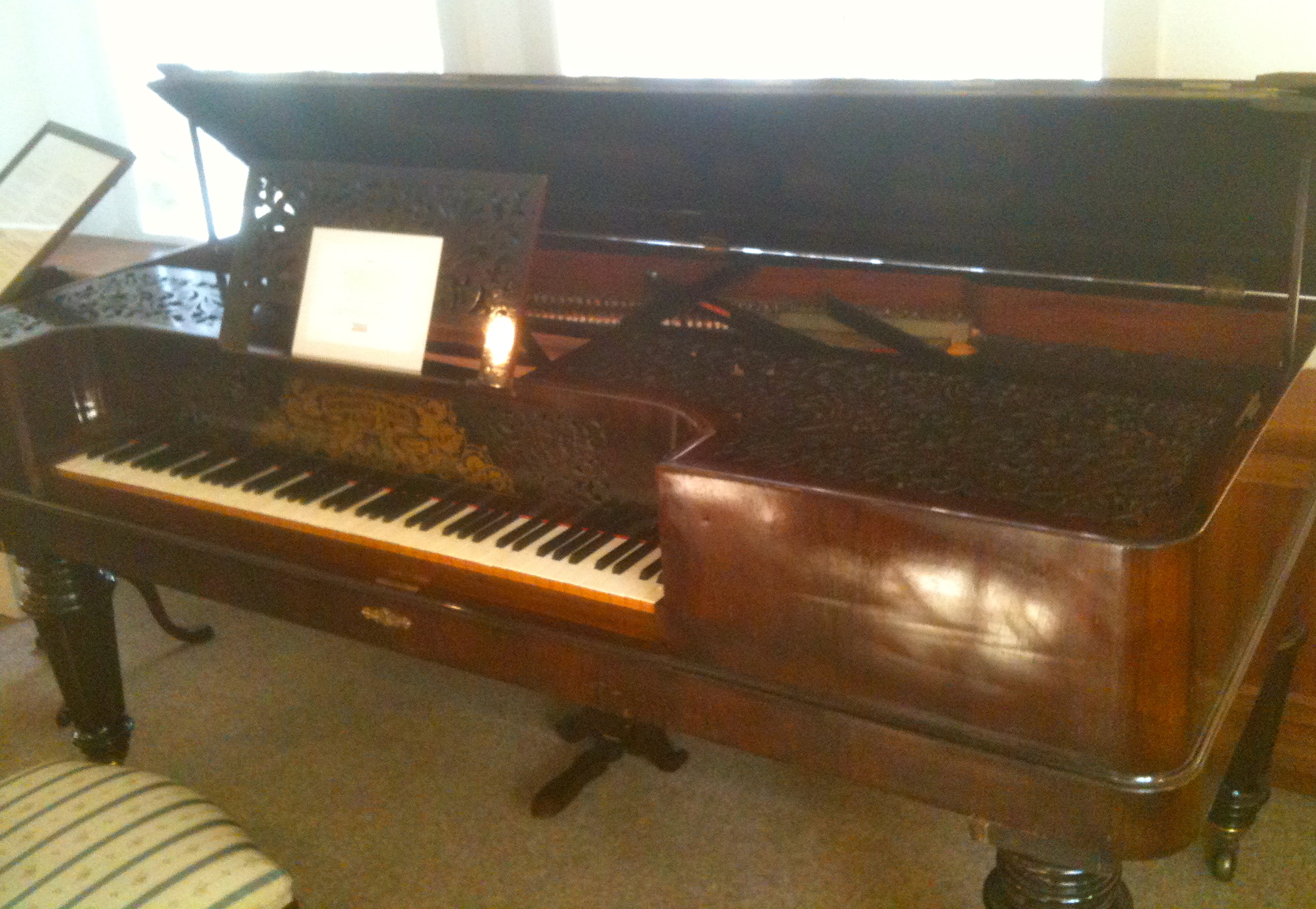
Brahms wrote a few important larger solo piano works, but most would agree that his greatest solo works are on a small scale. The staff let me run through a few phrases of Intermezzos on a piano Brahms used with students.  As with previous interactions with historical instruments, I was impressed with the indelicacy of touch and tubbiness of sound.  It has its attractions but there is no way to get an excessively “pretty” sonority like on a modern Steinway. (The Pleyel heard on most of Alfred Cortot’s important historical recordings has something of that 19th-century clank.)

The helpful staff then put in a CD by an unfamiliar pianist.

IMG_2162

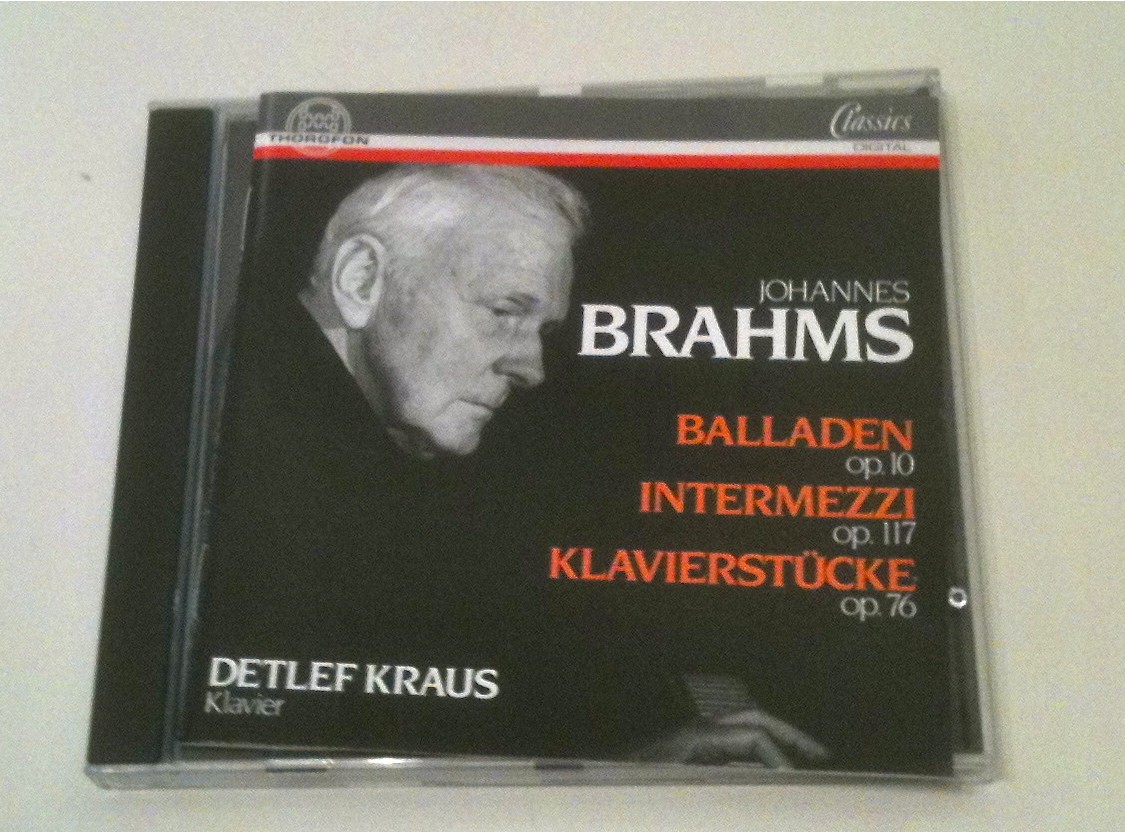
Detlef Kraus (Wikipedia) was a revelation.  Like many, I hold Wilhelm Kempff’s recordings of late Brahms in highest regard.  But I will have to make room on that top shelf for Kraus as well. 

Perhaps even more impressive than his glorious Intermezzi was on another CD where Kraus offered a sympathetic account of the early second sonata in F-sharp minor.  This work is seldom played, usually with good reason.  A youthful Krystian Zimmerman on DG does well, but he (and others) treat it as a virtuoso piece, and No. 2 may just be too slight for a barnstorming approach.  In a gentle and rather meandering fashion,  Kraus sings and whispers on a slightly clanky piano, shaping each phrase with care — but not too much care.  Delightful.

Kraus passed away recently at 88.  He was apparently beloved in Germany, especially in Hamburg, but doesn’t seem to have had much of an American reputation.  However, his now out-of-print CD’s cost an arm and a leg on used sites, a good sign that  insiders know of his importance.  Luckily, most of these obscure Thorofon discs are available on iTunes!  Get them while you can…

Speaking of the internet, IMSLP offers not just free scores of old editions of all of Brahms, but in some cases handwritten fair-copies.  Does all this access mean that we treat everything with less reverence?  In the wake of seeing Alan Gilbert and the New York Philharmonic last week I had been browsing autographs of Brahms 3 — not just the full score, but the two-pianist version as well.  Which is probably why the partial autographs hanging on the walls of the Brahms Museum hit me with lesser impact than they would have a few years ago.

  IMG_2148

Looking at the framed first page of the Handel Variations prompted thoughts of György Ligeti.  As with many professionals, there could be something a little back-handed about Ligeti’s admiration of Brahms.  He picked Rudolf Serkin’s recording as a desert-island disc not for the piece, but for the performance.  I agree with Ligeti, the Serkin rendition is one for the ages, a perfect mix of Old World charm and New World stress.  I have the CD, but would argue strenuously that the LP is the one to get.  There’s nothing better to have in your collection than that LP. 

Ligeti himself wrote some of his greatest music while living and teaching in Hamburg.  He even wrote a tribute, the Hamburg Concerto.  In this case, I would argue that the CD is fine, but that to properly understand Ligeti’s surreal fine-tuning of natural horns Hamburg Concerto must be experienced live. 

At any rate, Ligeti was arguably a modern Brahms:  like the elder, he loved advanced theorems and games but wasn’t really satisfied unless he gave a comparatively lay listener a guide to the codes. 

It’s not too soon for Hamburg to add Ligeti to the same street that houses Telemann and Brahms.

IMG_2170

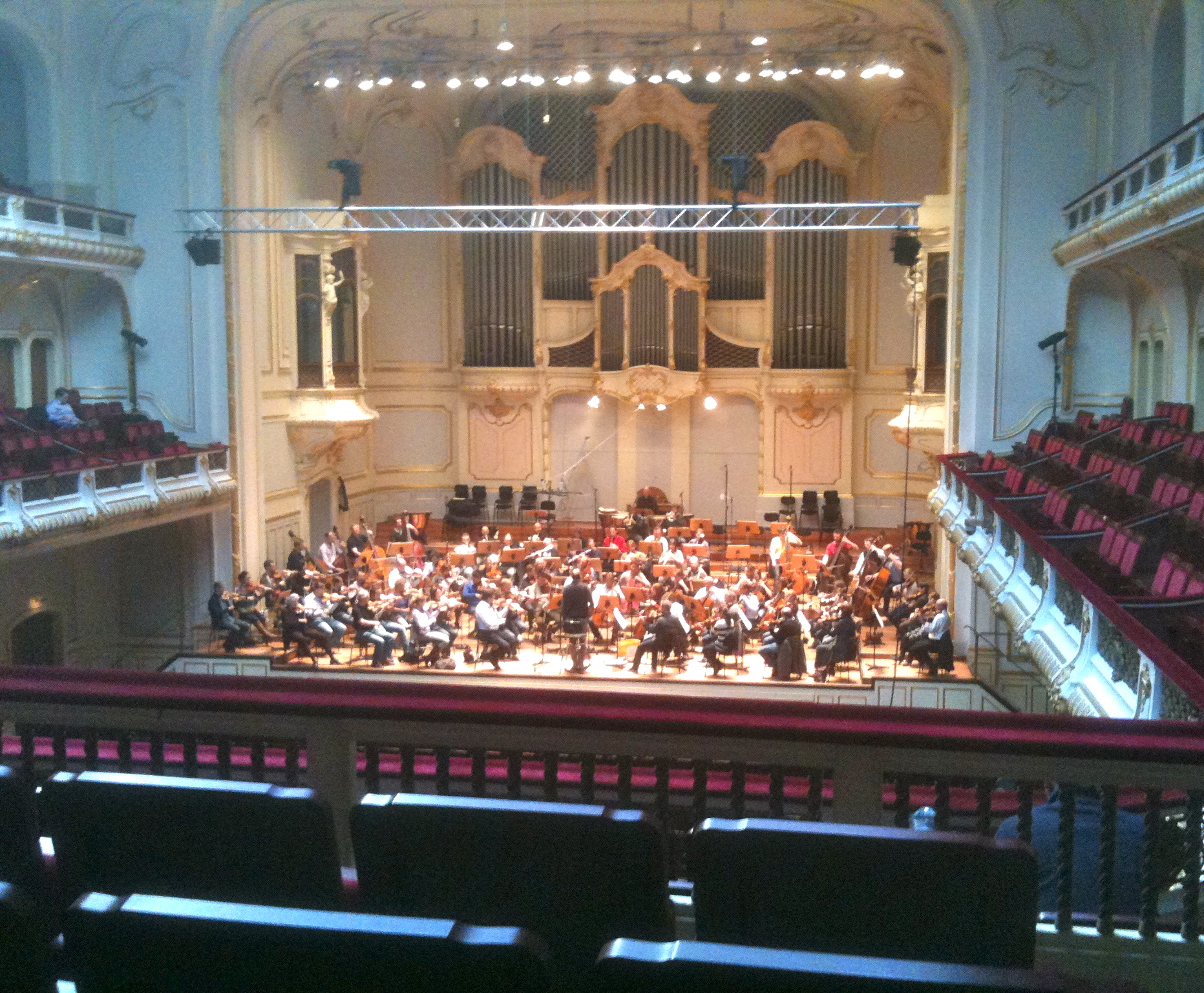
Back at the venue, they let me into the back of the bigger hall where the NDR Sinfonieorchester conducted by Thomas Hengelbrock was rehearsing Brahms 4.  It was just a rehearsal, but I was wowed nonetheless.  The rhythm was spectacular, pulsating but also full of rubato. 

Crucially, the size of the hall was much smaller than New York (and most American) symphonic halls.   During that aforementioned Gilbert/NY Phil Brahms 3, I sat in the back of Avery Fisher, which inevitably meant a rather disconnected experience.  Sitting in the back of Laeiszhalle I felt every thrust of Brahms’s basses. 

I paid $60 for the Philharmonic; a comparable seat on the pricing scale (although actually a much better seat) for the NDR Symphony would be 16 euros.  As I write this on the train from Hamburg to Frankfurt, a conductor is unselfconsciously going over a large score to some modernist choral work in the dining car.  Canonical classical music often makes more sense in Europe than in America:  I always try to go concerts on days off and really wish I could see Hengelbrock and the NDR in performance tonight. 

With any great composer there is always more to discover.  Still on Brahms 3, I asked an expert to recommend a recording.  I had Szell, Furtwangler, and Klemperer (the last being my favorite for some reason) but wanted another opinion.  The expert said Bruno Walter, which turned out to be excellent advice.  But the coupling, Brahms 2, was even more revelatory, simply because I’d never liked that symphony all that much before.  Now I can’t stop listening to it.

Arms and the Man

Samuel Barber, Op. 38, Piano Concerto

Once again I've grappled with this score tonight.  On the surface it is everything a mid-century American piano concerto ought to be:  It even won the Pulitzer Prize for music in 1963.  Most would agree that the celebrated performance by the original pianist John Browning with George Szell and the Cleveland Orchestra is a worthy listen.

The middle movement is wonderful, a Canzone of sweet and sad affect.  Everyone understands what they are doing here:  a romantic, moonlit movement with a bit of Stravinskyian cross-relationships.  The chromatic orchestral interlude at fig. 4 (3'10") is Barber at his best.  Pianistically, the work is playable and charismatic, especially the Thalbergian "third hand" at fig. 5 (3' 55"). Near the end, the harmony even references some jazzy Gershwinesque extentions without ruining the mood.

The problems lie in the first and last movements.  What is Barber's folklore when writing fast and energetic music?  Like so many 20-century composers, he can be caught between idioms.  The first movement's proud declarations are undercut by foursquare phrasing. If this style was more European in affect, the phrasing could be shaped by the performers into a classic antecedent/consequent idiom.  Instead, each new section of "moderately modernist Americana" lands with a graceless thump. 

It's still a pretty good movement, though, and certainly couldn't be played better than by the virtuoso John Browning here, especially in those thrilling cascades of wide-spaced octaves.

The third movement begins excitingly with a vamp in 5/8.  Until fig. 8, (58") this is some of the best film music I've ever heard.  I'm not kidding!  If this were the original score to the latest action thriller, I'd stand up in my seat and cheer.  Not sure if it's right as concert music, though, and what happens in the slow sections of the rondo are unforgivable, especially fig. 18, con grazia (2' 30").   Oh, the agony! The Tchaikovsian triangle heard signalling the start of this theme returns (after pointless bombast) in gruesome syncopation (4' 15"), an orchestrational misstep that compounds the crime.

YouTube.

UPDATE:  James Primosch responds

Relative Dimensions

I saw my old friend Kris Osegard today.  His current theorem:

Given

1) The inheritance of the classic show

2) How badly they have trashed the reboot

and

3) How so many people love the reboot so much —

it is therefore true that

The current Doctor Who is the worst television show ever. 

Since I've liked a few episodes, my take isn't as definitive, but after reading the latest at Io9 I'm ready to sound the cloister bell.  ("Tonight's Doctor Who episode brought back an idea that Russell T. Davies used to play with a lot: the Doctor inevitably ruins his companions."  AARGH)

The other thing Kris and I shared extensive rage about was how current sci-fi and fantasy fandom happily brand themselves "nerdy" or "geeky." Recently I spoke to a stunningly beautiful young woman at a party and she described herself as a "nerd" because she likes the Game of Thrones franchise.

No! No! No! 

You are not a nerd because you are a casual fan of easy-to-understand comic books, cgi-driven effects, or stuff with dragons…Especially if you are well-liked and well-adjusted! 

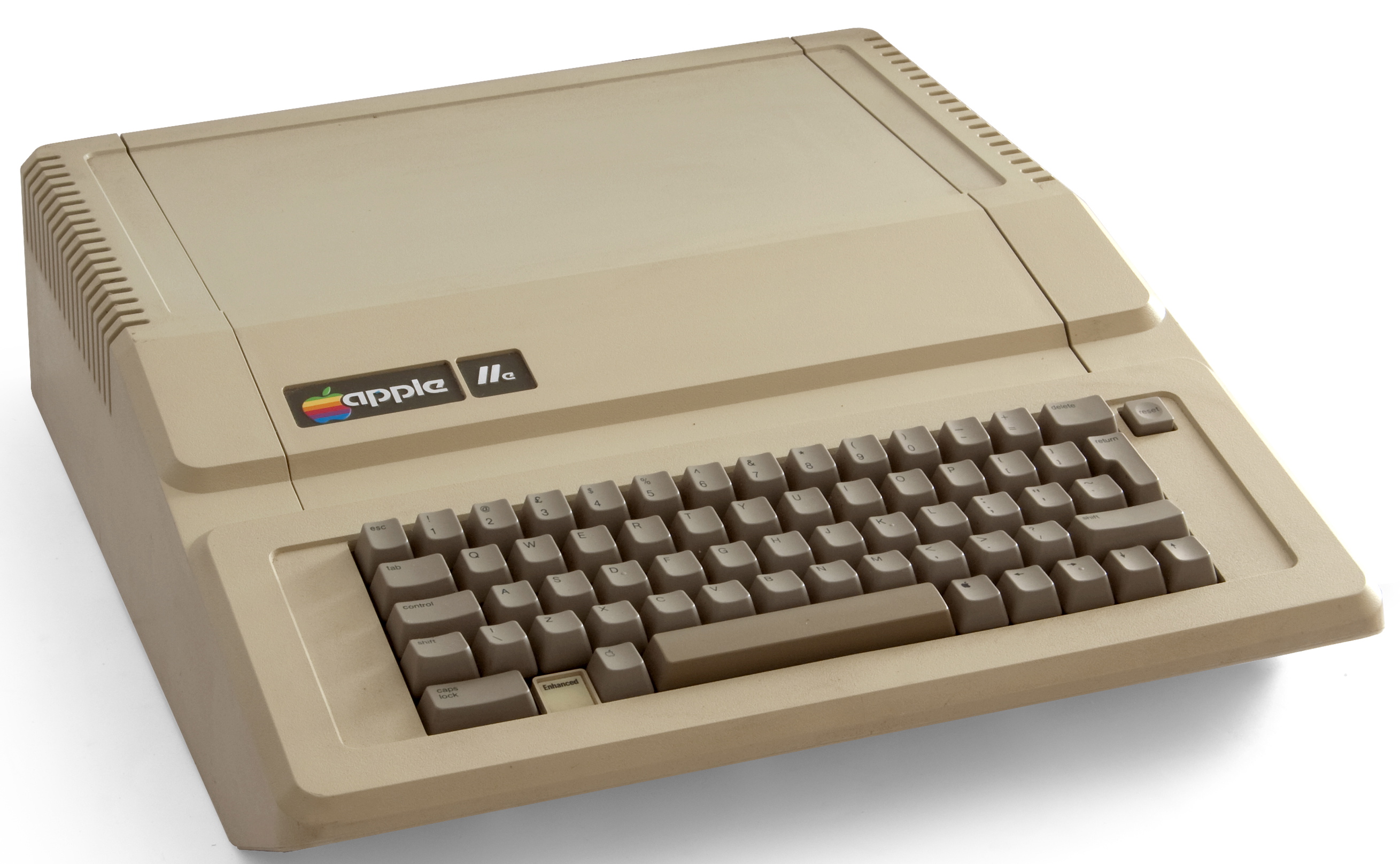
You need to pay your dues before claiming nerd pride.  Did you ever wrestle with Gygax?  Did you collect every Monk recording by the age of 16? Or (this is Kris's contribution) did you ever program an original Choose-Your-Own-Adventure story in Basic on an Apple IIe?  

Apple_IIe

Live at the New Thing

Two days ago in Amoroso I walked out with

IMG_1452

Andrew White Quartet, Live at the New Thing.  What a find!  There can’t be too many of these around.  Two-LP set of the legend, most importantly backed by Eric Gravatt.  As far as I know, this is the only conventional quartet date of the phenomenal Gravatt from the era (1970).  Gothic font.  Hell yeah.  Worth the price for the extensive blurbs by Ron Carter, Wayne Shorter, and Josef Zawinul.

Sonny Rollins, There Will Never Be Another You.  I looked everywhere for this when going in to interview Mickey Roker, but it hasn’t been re-issued even though it is on Impulse!  A live session in the rain with two drummers, Roker and Billy Higgins.  Had it in high school, didn’t like it much, now I know more, glad to have it back.

Johnny Griffin, Live in Tokyo A big hall in 1976 with a good band, Horace Parlan, Mads Vinding, and Art Taylor.  I’m always on the lookout for 70s performances by canonical bebop drummers.  H’mm, only five tunes on a two-LP set.  I suspect I’ll be hearing some 16th-note runs from Griffin on this!

Cafe Society — Original 1944-46 recordings by J.C. Heard, Mary Lou Williams, Edmond Hall, Maxine Sullivan, Budd Johnson, Mary Osborne, and Ellis Larkins.  Music I should know and don’t.  Heard Sullivan on the radio once and loved her.  Not in great condition, but Dan Morgenstern’s liner notes are worth it for sure.

On the road I need small paperbacks. Yesterday in Pulp Fiction I walked out with

IMG_1457

Ted Allbeury, The Lantern Network Matthew Guerrieri said what I’m looking for very well:  “…One of those really good understated 1970s thrillers where everything’s in sharp focus and it’s smart enough to assume you’ll think for yourself and it’s tricky enough to keep you on your toes, and when it’s over, everything around you seems to have just a touch more clarity.”  Dunno if I’ve ever read a great Allbeury but I re-try him once in a while.

Margery Allingham, More Work for the Undertaker.  I looked at her classic Tiger in the Smoke again recently and really enjoyed it.

Peter Abrahams, Last of the Dixie Heroes.  Once of the best these days, Abrahams’s thrillers are always built new from the ground up.

Max Allan Collins, No Cure for Death.  I’m impatient for the forthcoming Quarry, this can hold me for a moment.

Oliver Bleeck, No Questions Asked and The Highbinders.  I adore Ross Thomas but have never read his pen name.

Nicolas Freeling, Tsing-Boum.  Books that look at our war in Vietnam from the European perspective are always interesting.

John Lutz, The Truth of the Matter.  I really dig a couple of Lutz short stories but haven’t found the right novel yet.  Maybe this will be the one.

K.C. Constantine, The Man Who Liked Slow Tomatoes and Bottom Liner Blues.  After recently blogging about Constantine I noticed my collection was decimated for some reason.  I’ve read these before, they are most likely the greatest books on this list.

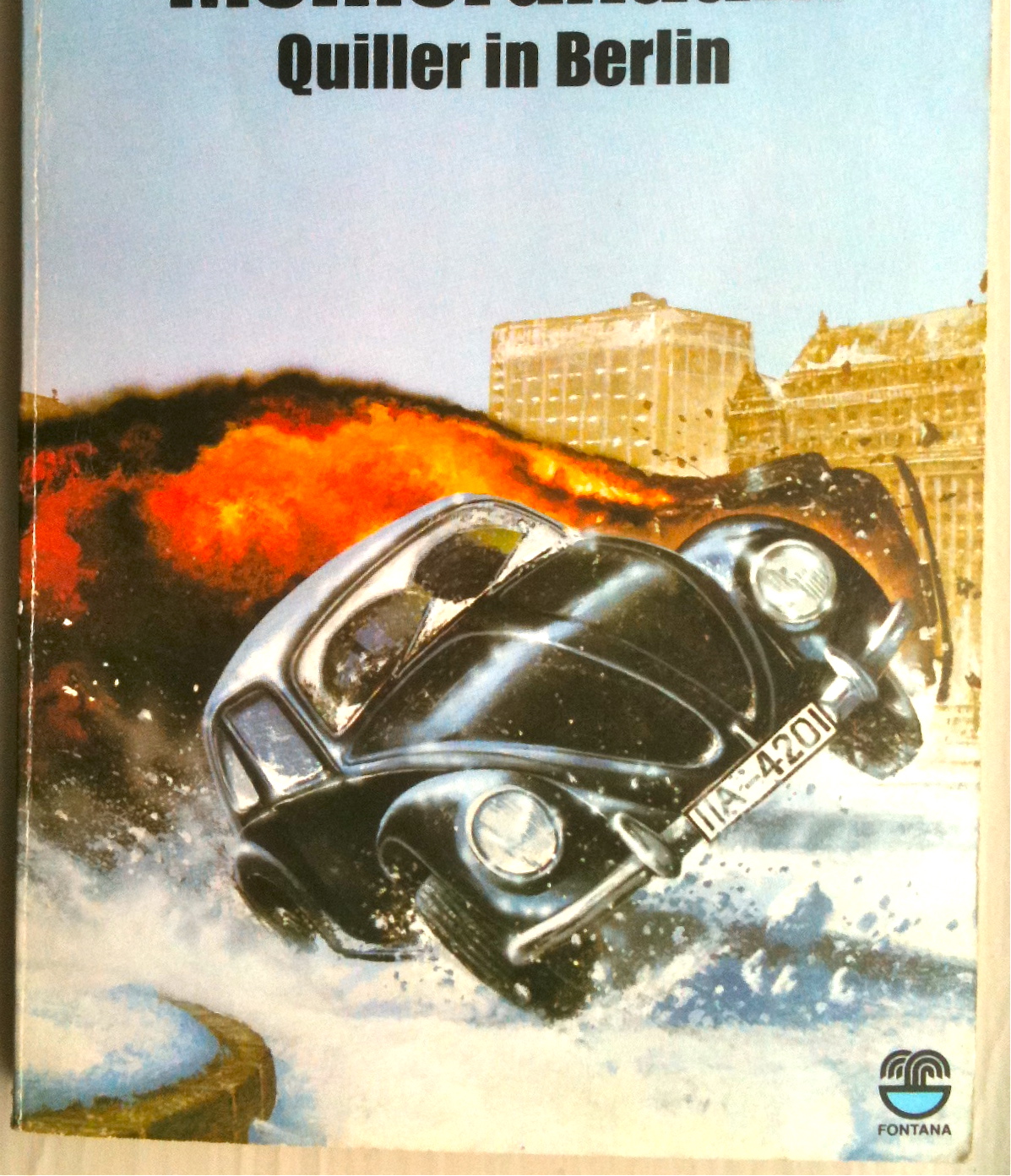
and, yes, that is exciting car action featuring a Beetle.

IMG_1461

Adam Hall, The Quiller Memorandum The franchise is worthless.  But the first volume has some acclaim, although I can’t remember it very well.  I got this for the hysterical cover.


My Name is Antony Skipling

The ITV series Armchair Thriller was made in 1978 and 1980.  Several of the stories were then broadcast in America as part of Mystery! on PBS.

I was probably a little too young when first looking at some of those episodes.  The famous “Black Nun” sequence gave me horrible nightmares for months.

But the most memorable series overall was Dying Day, written by John Bowen, starring Ian McKellen, and script-edited by Doctor Who architect Robert Holmes.

In some ways Dying Day remains my ideal kind of entertainment. It’s minimal and mysterious, enhanced only with atmospheric acoustic music and barely any special effects.  The implausible puzzle story is compelling because the acting is superb and director Robert Tronson creates compositions that are just barely off-center.

I have a sentimental attachment to Dying Day, so perhaps it isn’t as good as I think.  But if you love English thrillers, it has my highest recommendation.