Tanya Kalmanovitch and Mat Maneri: Magic Mountain

Among my peers, Mat Maneri gets a lot of a respect. Each phrase from his microtonal viola seems both lived in and fresh.

I hadn’t really been aware of Tanya Kalmanovitch before but I am bowled over this recent collection of duos, Magic Mountain. Two microtonal violists! Good god. Apparently the artists themselves don’t always know who is playing what on this exceptionally surreal and beautiful performance.

There are plenty of free improv duo CDs out there that are fun to listen to, but they seldom offer the kind of melodic purity displayed on Magic Mountain. Really this is nothing but soulful ear candy.

Disc includes three sets of liner notes (from Kalmanovitch, Maneri, and Michael Sliwkowski) offering additional food for thought. A significant release, available for preview and purchase at at Bandcamp.

A Quick Listen to Noel Da Costa

Aware of my interest in modernist composition, Ron Carter told me to check out his late friend Noel Da Costa (or DaCosta, not sure of spelling).  As far as I know, the only CD issue of Da Costa is CRI SD 514. Just reviewed it on Amazon:

For those interested in the intersection of jazz and European modernism, Da Costa is an intriguing figure. The trombone preludes are kind of like if Roswell Rudd met Stefan Wolpe (great performance by Per Brevig and Wanda Maximilien) and the cello pieces are sophisticated and delicate. However the highlight is “Jes’ Grew” for solo violin, which comfortably quotes Jelly Roll Morton and the blues alongside convincing atonal gestures. According to the NY Times obit, Max Pollikoff apparently premiered works by 250 composers. It’s hard to imagine to many of them being more fun to play than “Jes’ Grew,” which should absolutely be programmed by contemporary violinists.

Heath!

.fullsizeoutput_489

Albert “Tootie” Heath will turn 82 on May 31. He and David Williams appear together on record only on Warne Marsh’s Back Home from 1986, but they know each other well. Should be a special event.

Periodic reminder that my newsletter is Floyd Camembert Reports. A lot is coming up, and if you want all the Iversonian spam, that’s the place to get it.

The Good Works of Duke Performances

Friday night in New York: Kannapolis: A Moving Portrait with music by Jenny Scheinman and video by Finn Taylor based on the work of H. Lee Waters. It’s at the Met; the website has an intriguing blurb:

Live music performance Kannapolis: A Moving Portrait is a kind of time machine that will transport you into the lives of ordinary people living in the South during the Great Depression. Based on the work of nearly forgotten photographer H. Lee Waters, Kannapolis weaves some of the hundreds of short, silent films he shot of daily life in small towns across Virginia, Tennessee, and the Carolinas (including Kannapolis, NC); into a compelling tapestry of a moment in time. Composer/singer/violinist Jenny Scheinman and filmmaker Finn Taylor have shaped Waters’s shorts into a truly “moving” portrait. The original films’ subjects got to see themselves on the silver screen when Waters presented his short films at the local movie house. Today’s audiences will experience a shivery echo of that long-ago thrill.

I know Scheinman’s excellent artistry from Bill Frisell and her own records and really wish I could attend.

Kannapolis was commissioned by Duke Performances at Duke University, which has possibly done more than anybody in recent years to give jazz and improvising musicians a chance at a bigger canvas. TBP’s own Rite of Spring and Science Fiction projects were the product of Duke Performances. Last year I nearly made a special trip to check out Gerald Clayton’s Piedmont Blues, which got rave reviews.


The Great Mengelberg

RIP Misha Mengelberg.

Can jazz be absurd? We don’t mean like surreal blues lyrics or funny hats or goofy scatting. No. We mean uncomfortably absurd. Existentially absurd. The kind of absurdity artists of all kinds and nationalities turned to during and after two world wars when millions were lost to mechanized killing machines.

In America, jazz is always connected to race. Other countries have more room. In the Netherlands, especially Amsterdam, a kind of absurd jazz grew into a valid movement spearheaded by drummer Han Bennink and pianist Misha Mengelberg.

However, that last sentence is incorrect, a misstating of the situation. Bennink and Mengelberg are agents of change and masters of chaos. Calling them “musicians” is already almost wrong, let alone describing them as a drummer and a pianist.

Like most significant non-American jazz musicians, they did have important contact with American jazz greats: Indeed, Bennink and Mengelberg appear on Eric Dolphy’s swan song Last Date. And, unusually for any modern jazz pianist of any background, Mengelberg really understood Thelonious Monk and Duke Ellington. Mengelberg may also have been the first to forcefully suggest that Herbie Nichols also belongs in that constellation. Some of the best “conventional” jazz playing I’ve heard from Mengelberg is on two Soul Note dates with Steve Lacy and either Roswell Rudd or George Lewis playing Monk and Nichols. There are also interesting trio sides with Brad Jones or Greg Cohen and Joey Baron offering original music and standards rather in the tradition of Ellington, Monk, and Nichols.

However, what made Mengelberg Mengelberg wasn’t playing with respect for the text or with swinging bass and drums. What made him a force of nature was his fearless and faultless sense of the absurd.

There’s a huge discography that I wish I knew better, although the Mengelberg experience was certainly something best understood in person. The ICP Orchestra is one of the classic ensembles. I just listened to the early LP Groupcomposing with much pleasure, a galaxy of Euro free jazz stars (incl. Derek Bailey, Peter Brotzmann, Evan Parker, Peter Bennink, Paul Rutherford), great piano playing, and Han Bennink occasionally screaming in the background.

The definitive book on the movement is Kevin Whitehead’s New Dutch Swing. If you go to the Bimhuis in Amsterdam, ask around about Mengelberg; you’ll be sure to hear some stories.

I’m going to end this brief note on one of the most significant European jazz, creative music, and conceptual music practitioners with a cat video.

Can a cat video be transcendent? We don’t mean surreal or funny stuff where a feline surprises us with near-human behavior. No. We mean actual great art — specifically piano music — that is created by a cat and worthy of inclusion in the modernist pantheon.

Misha Mengelberg’s cat Pief, Misha Mengelberg’s piano, Misha Mengelberg’s camera work and video. 1967.

Pops Slept Here

Yesterday I went out to Corona, Queens and toured the Louis Armstrong House Museum.

From the website:

Louis Armstrong—the world’s most famous jazz musician—was an international celebrity who could have lived anywhere. Yet in 1943, he and his wife, Lucille, settled in a modest house in Corona, Queens, where they lived for the remainder of their lives. No one has lived in the house since the Armstrongs, and the house and its furnishings remain very much as they were during Louis and Lucille’s lifetime. Today, the Louis Armstrong House Museum is open to the public, offering guided tours of Louis’s longtime home. On the tour, audio clips from Louis’s homemade recordings are played, and visitors hear Louis practicing his trumpet, enjoying a meal, or talking with his friends. Visitors also get to enjoy an exhibit on Louis’s life and legacy, and the Armstrongs’ beautiful Japanese-inspired garden.

On staff at the Archives is Ricky Riccardi, the man for Louis Armstrong. Read Riccardi’s outstanding blog for serious nuts and bolts about Pops: try this entry on the Hot Fives session that produced “Cornet Chop Suey” and “Muskrat Ramble.”

DTM is also usually a nuts and bolts kind of affair. But since Pops remains of interest to all Americans, I wanted to experience the House Museum more like a tourist than as an insider.

It’s hard to realize what the House Museum is until you get there. The above blurb is fine but when you pull up on what looks like Edith and Archie Bunker’s block the gravity of the situation begins to hit home.

The staff, especially director Michael Cogswell, was very lenient with me: If you visit don’t expect to be able to take photos or play the piano.

But my photos don’t do the atmosphere justice, either. The House Museum is right by LaGuardia airport, perfect for stopping by for an hour on a travel day. Highly recommended!

fullsizeoutput_470

The garage is now the check-in and gift shop. Thousands of school kids see the House Museum every year. I watched the short introductory movie about Pops: it’s good! The gift shop has specialty Armstrong CDs and memorabilia you can’t get anywhere else.

fullsizeoutput_46d

Adriana works the desk and Harvey gave me the tour.

fullsizeoutput_450

Drummer Hyland Harris shows up on DTM once in while and also penned a terrific liner note to Tootie Heath’s Philadelphia Beat.  He was my “in” at the House Museum. Here we are on the steps to the front door.

fullsizeoutput_46c

Most of what is on display is for general consumption, but my eyes widened when I saw the actual chart Pops read from for a record date with Ella.

fullsizeoutput_46b

The living room is gracious.

fullsizeoutput_469

I played “St. James Infirmary” on the piano. (Louis Armstrong’s piano!)

fullsizeoutput_465

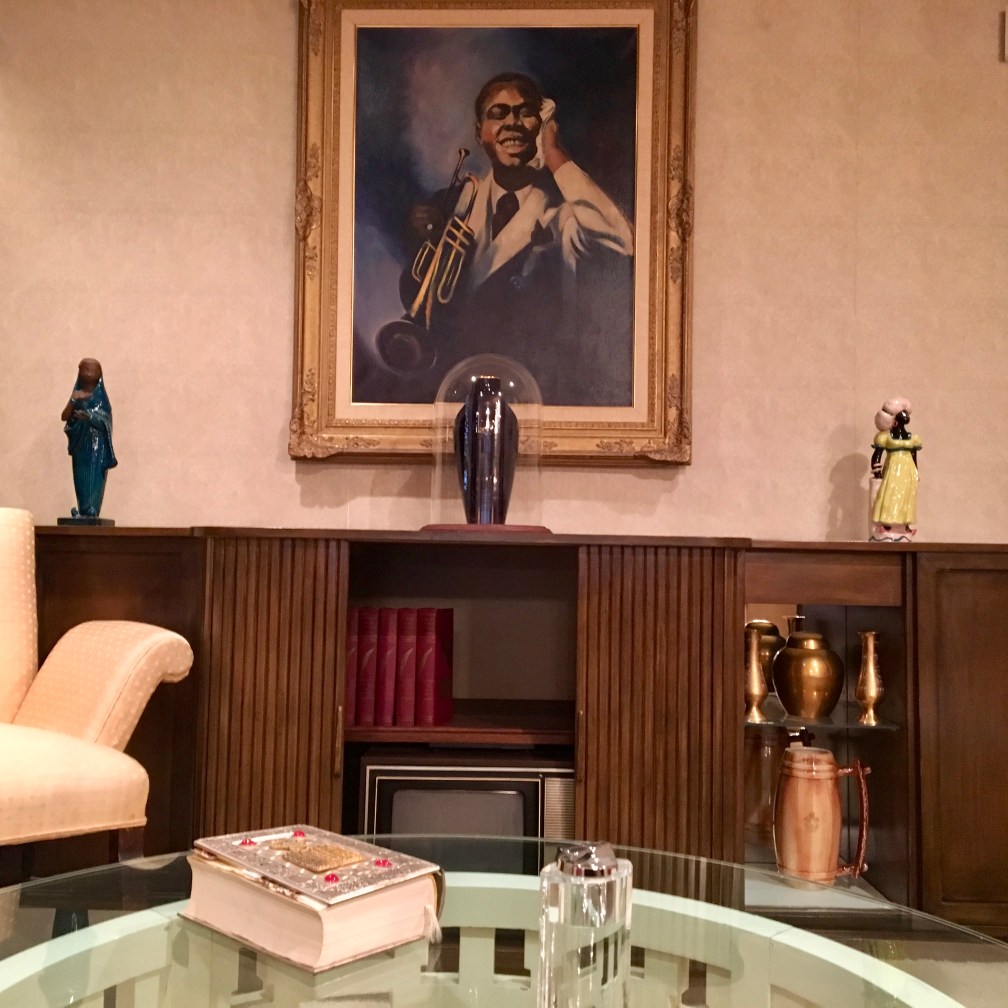
Above the piano hangs Arturo Toscanini.
fullsizeoutput_466

The center object is an exceptionally rare kind of Serves vase. They made three of this model: for Marie Curie, Toscanini, and Pops.

fullsizeoutput_462

The Lladró brothers presented Pops with the first Lladró figurine to have African features.

fullsizeoutput_45e

The breakfast nook has a still-life by Bob Haggart, jazz bassist and composer of “What’s New.”
fullsizeoutput_45f

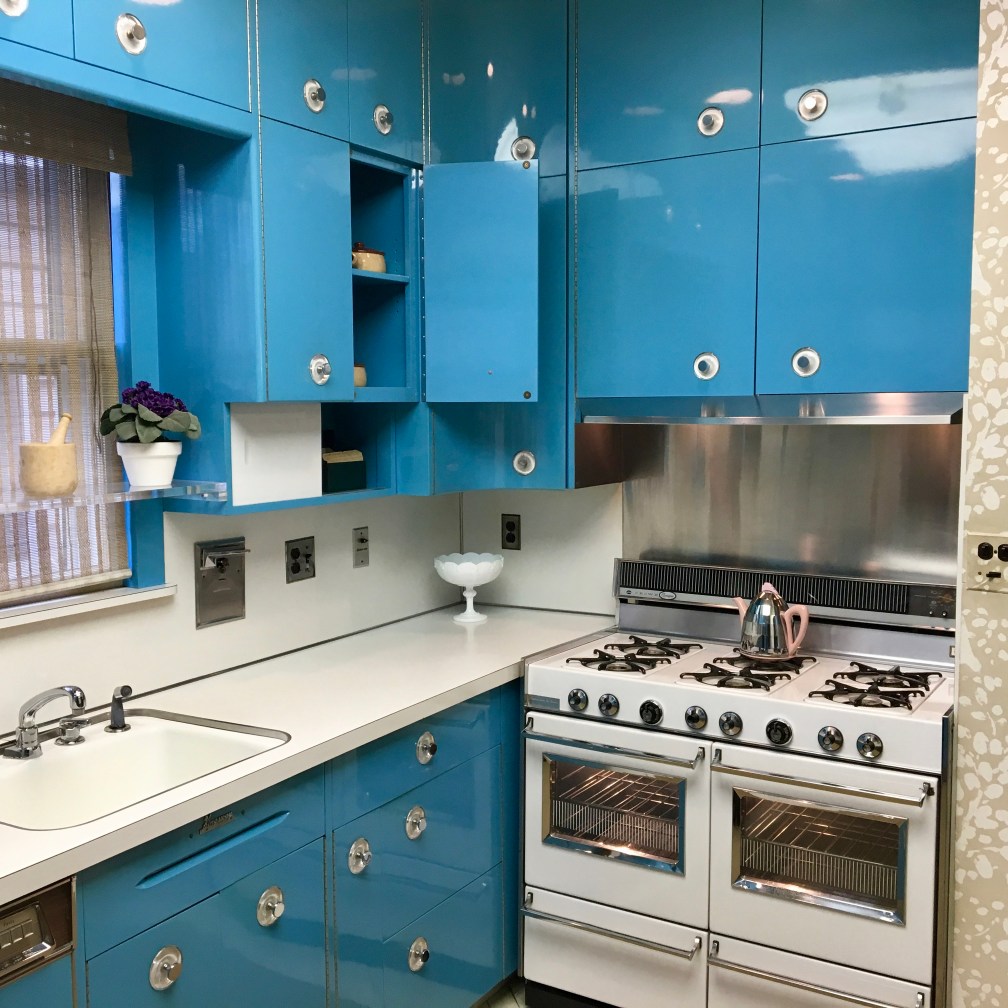
The kitchen is done up with a fabulous modernist aesthetic.
fullsizeoutput_45d

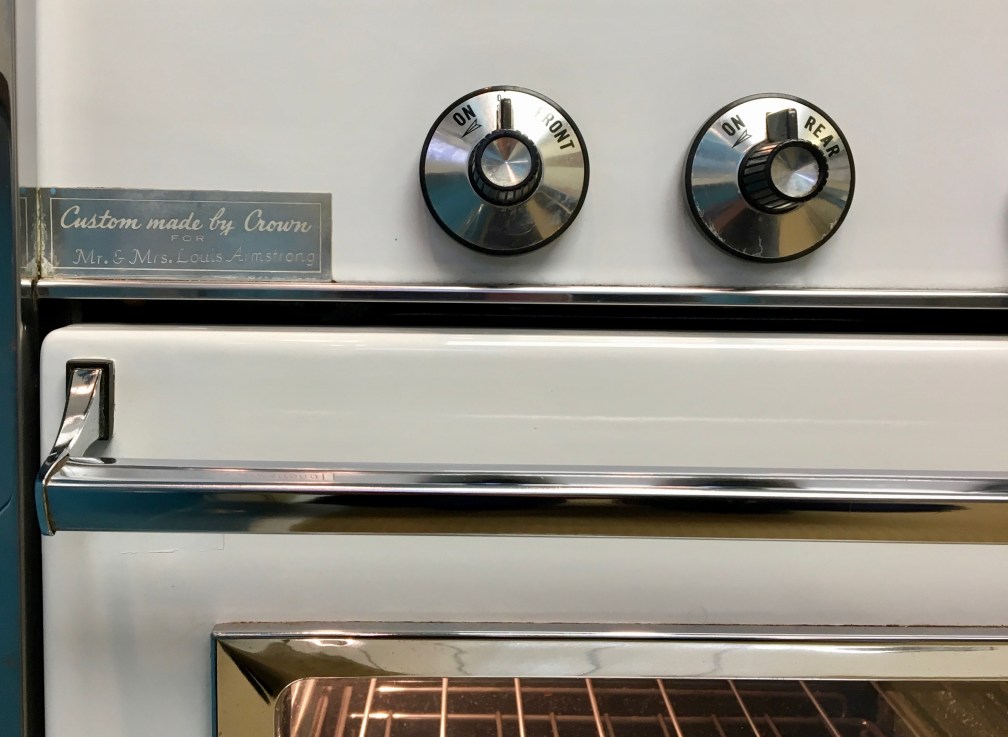
Custom oven with six burners.

fullsizeoutput_45b

In most of the rooms there’s a volume control for music piped in from the study…

fullsizeoutput_458

For musicians like Hyland and myself, that study is the highlight. Pop’s gear!

fullsizeoutput_453

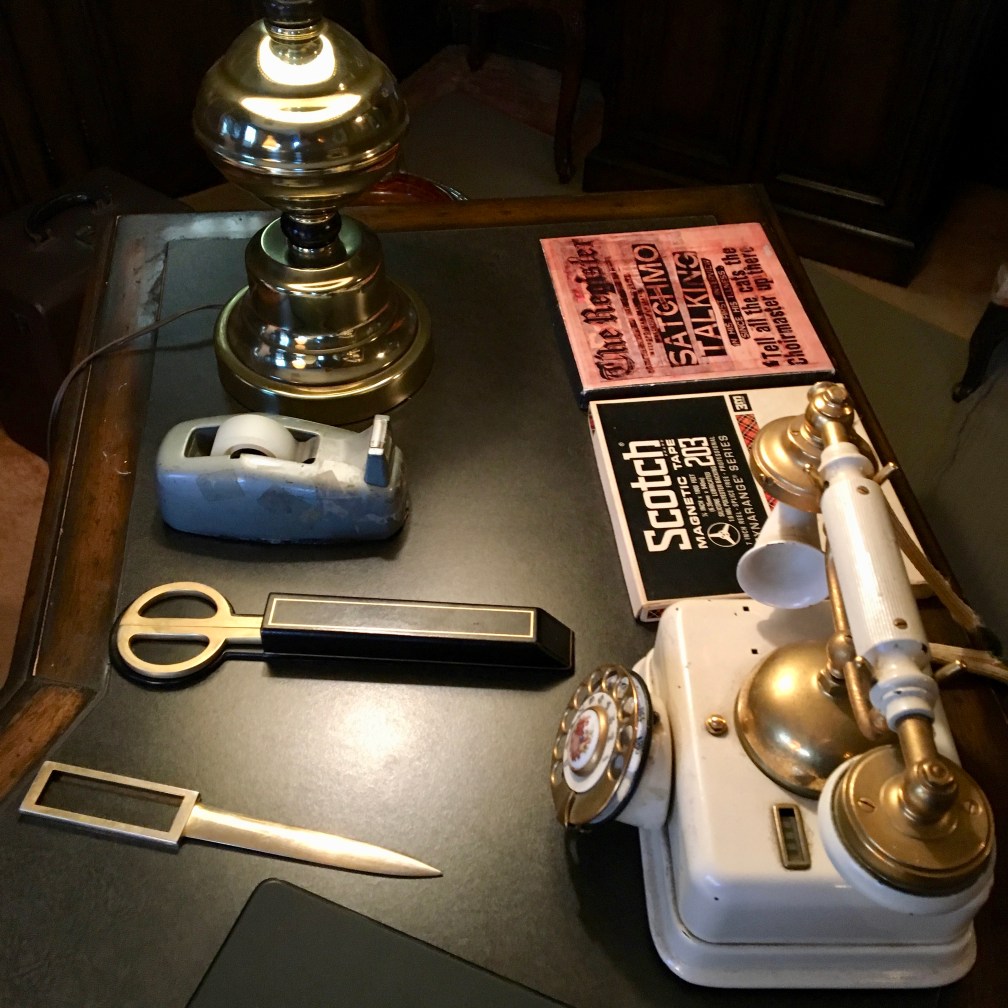
Pops edited the tapes himself.

fullsizeoutput_454

Letter opener, scissors, more tape…

fullsizeoutput_459

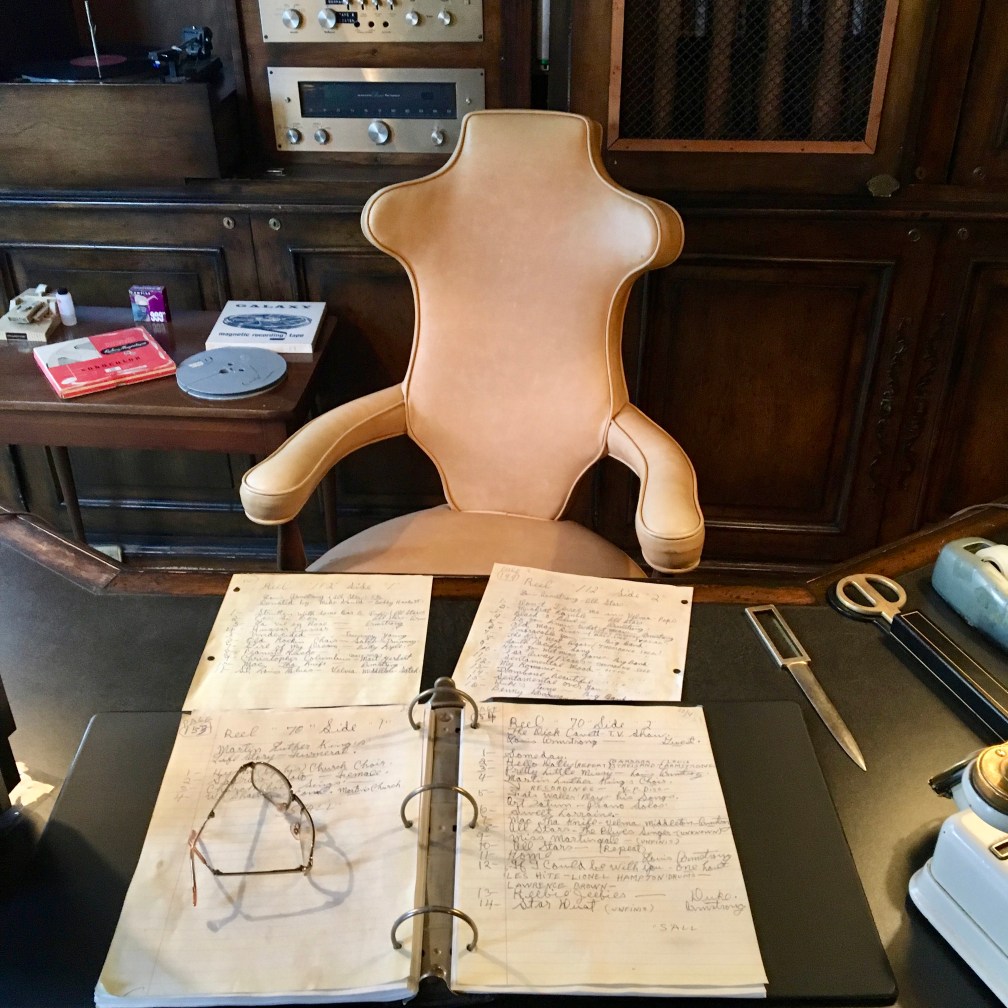
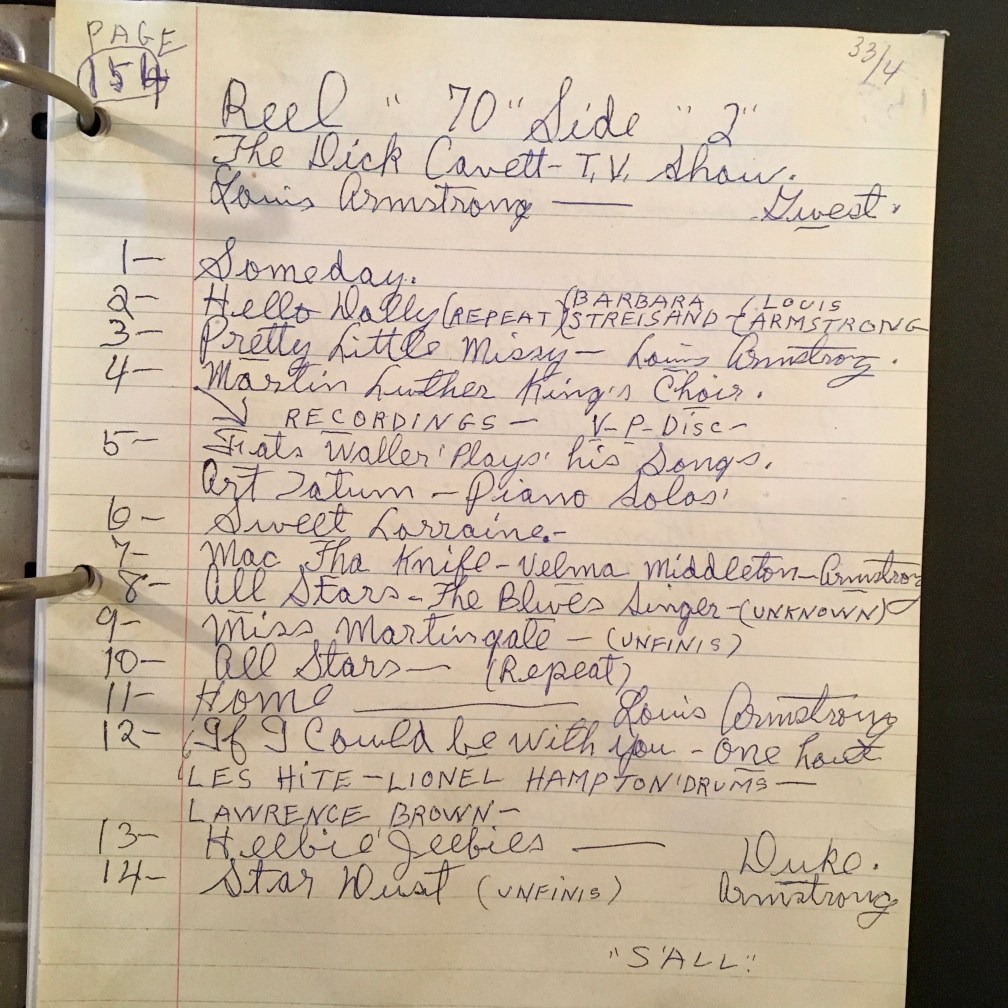
Groovy chair and a log book of reel-to-reels.
fullsizeoutput_455

When he finished assembling a tape, he’d write “‘S’ALL.””

fullsizeoutput_45a

The reel-to-reel machines are built right into the wall. Pops would tape anything and everything. Visitors to the House Museum are treated to clips in every room. The clips change, but Hyland and Harvey played me examples of Pops practicing with records, singing or playing along with pop tunes and Sousa. These tapes gave me chills. Unbelievable.

fullsizeoutput_457

I walked into this one. There’s a pretty good painting of Pops in the study. I asked, “This painter, Benedetto, is he famous?” Harvey answered, “You know him better as Tony Bennett.” I told Harvey he owed me 50 bucks for setting him up so perfectly.

fullsizeoutput_44f

After the House Museum I relaxed in the garden of Lucille and Louis Armstrong. Not pictured, but past the fence and to the left, is the house Dizzy Gillespie lived in for many years. These two architects of American music would frequently play cards in the basement den of 34-56 107th Street.

Written English

Social media informs me that it is David Foster Wallace’s birthday.

My first contact with DFW’s intoxicating, muscular and amusing intelligence was the essay collection Consider the Lobster. The whole book was a revelation but “Authority and American Usage” knocked me flat.

Now one can look at a PDF of the original Harper’s article from 2001.

There’s a lot to unpack in what starts out as a simple book review. Perhaps I no longer think every conclusion is a slam dunk. Repeated descriptions of how nerdy and annoying he was a kid is a bit distracting to the main argument. (On the other hand, considering how his story sadly ended, who am I to complain about how this profound genius wrestled with his demons?) Political correctness is a topic that has only gotten more rife since 2001, and, if given the chance, I suspect Wallace would want to re-edit the scene where he lectures his black students.

At any rate, for better or for worse, “Authority and American Usage” is unquestionably a big influence on DTM. If you’ve liked anything I’ve written here in the last ten years, some of the credit goes to DFW.

And, I’m just realizing with rereading tonight, now that I’m teaching jazz piano at NEC, “Authority and American Usage” is freshly relevant.

Issues of tradition vs. egalitarianism in U.S. English are at root political issues and can be effectively addressed only in what this article hereby terms a “Democratic Spirit.” A Democratic Spirit is one that combines rigor and humility, i.e., passionate conviction plus sedulous respect for the convictions of others. As any American knows, this is a very difficult spirit to cultivate and maintain, particularly when it comes to issues you feel strongly about. Equally tough is a D.S.’s criterion of 100 percent intellectual integrity — you have to be willing to look honestly at yourself and your motives for believing what you believe, and to do it more or less continually.

Floyd Update

Sign up for the best Iversonian spam here. Latest Floyd Camembert Reports has (hopefully) amusing tales of nights with Harvey Lichtenstein and Clyde Stubblefield.

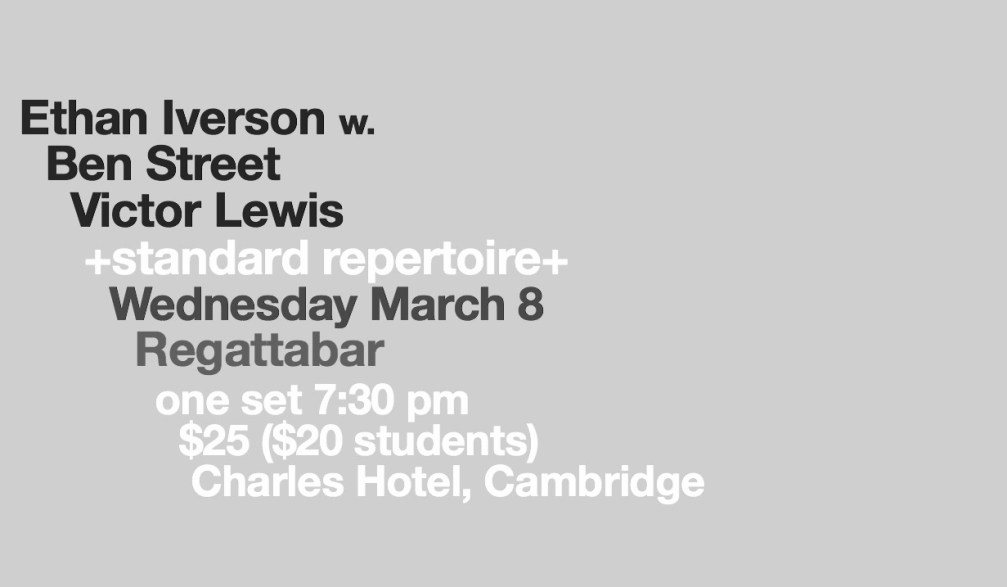
Gig “posters”…? I might make this a thing. I’m not graphic designer but…Anyway, if you are fan, please share on Facebook or whatever if you are in the relevant cities.

fullsizeoutput_412

fullsizeoutput_413