St. Louis Blues

St. Louis music trivia: Wendell Marshall was Jimmy Blanton's cousin, and reportedly played Blanton's bass on Ellington's Piano Reflections and all those incredible Savoy records with Kenny Clarke and Hank Jones.  

Arvell Shaw was from St. Louis, too. In high school, after reading an interview with Mark Helias, I got Satchmo at Symphony Hall, which really does have an amazing (and amazingly well-recorded, for 1947) bass performance. It's one of Sid Catlett's celebrated records, too: not just for the drum feature "Mop Mop" (which I've heard Jack DeJohnette can play at the drop of a hat) but for his rollicking time feel throughout.

Which reminds me to buy the new limited-edition reissue before it is gone. 

Euclid Records! What did you do to me? I thought we were going to be friends.

Purchased yesterday:

IMG_2879

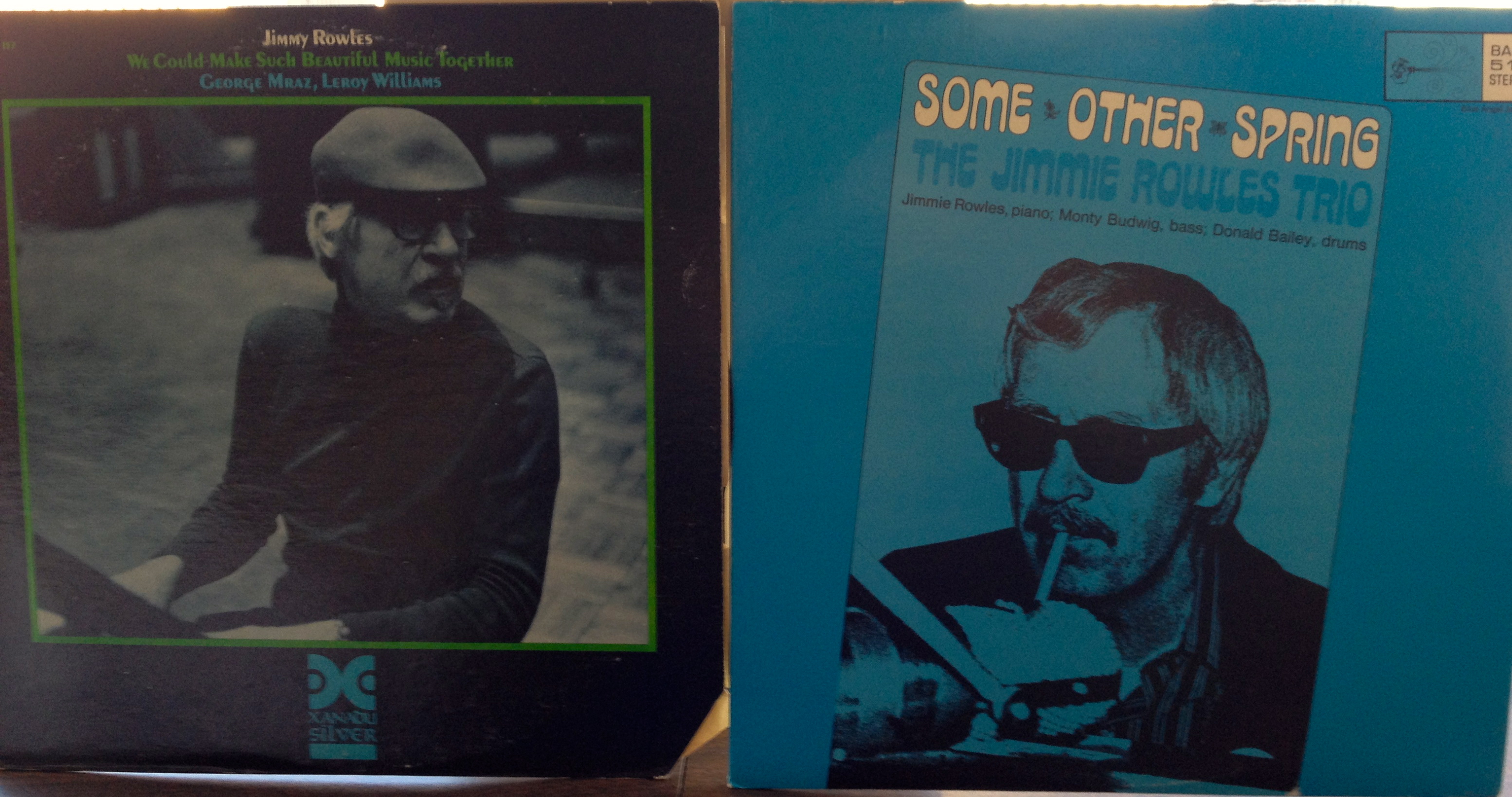
Two Rowles sessions, I particularly wanted to hear him with Leroy Williams and Donald Bailey.

IMG_2880

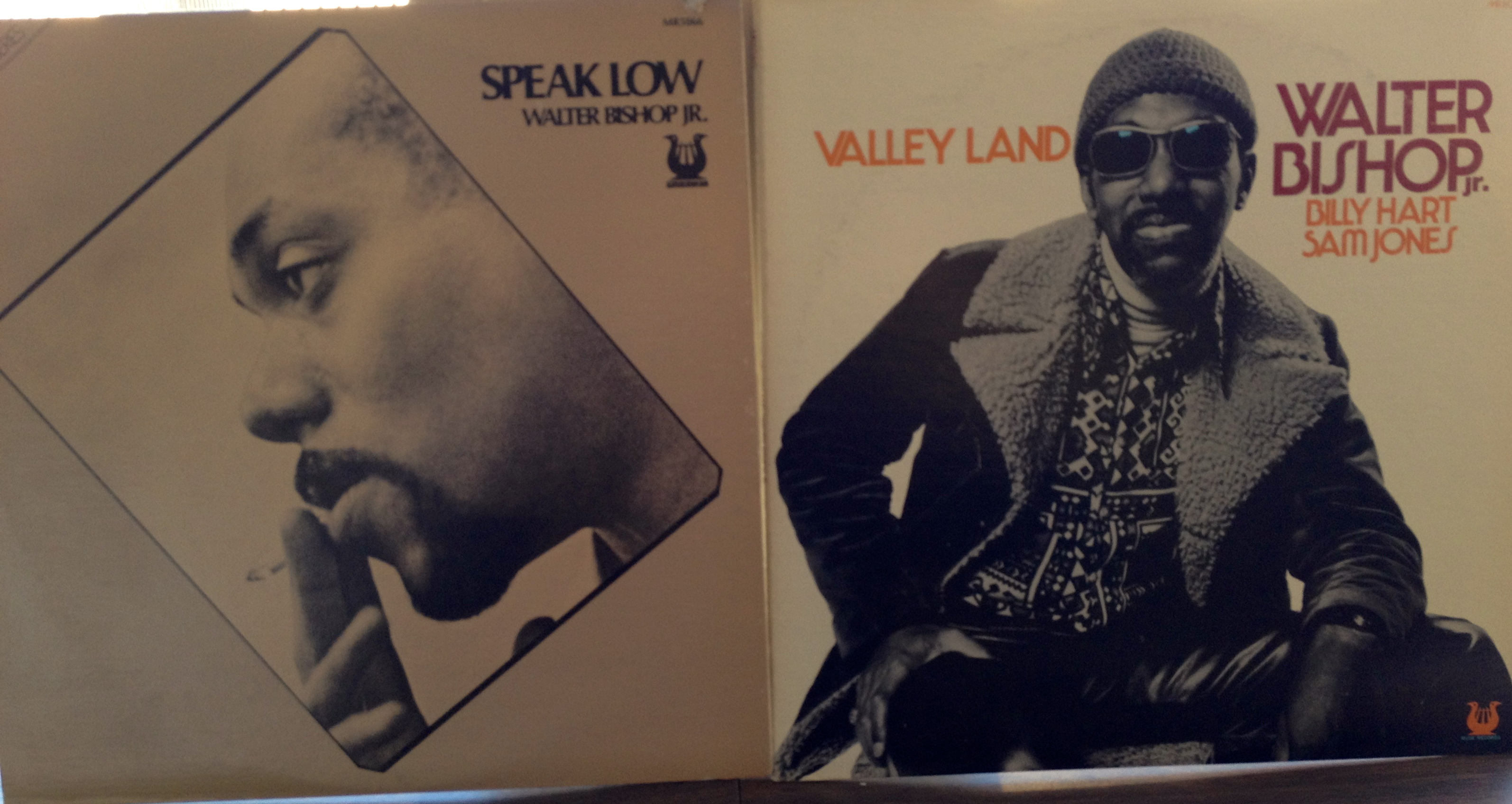
Two Walter Bishop records. Well, the one on the left has great Jimmy Garrison, and I've heard Valley Land too, a rare and wonderful chance to hear Sam Jones and Billy Hart together. Of course, that cover shot is impossible.

IMG_2883

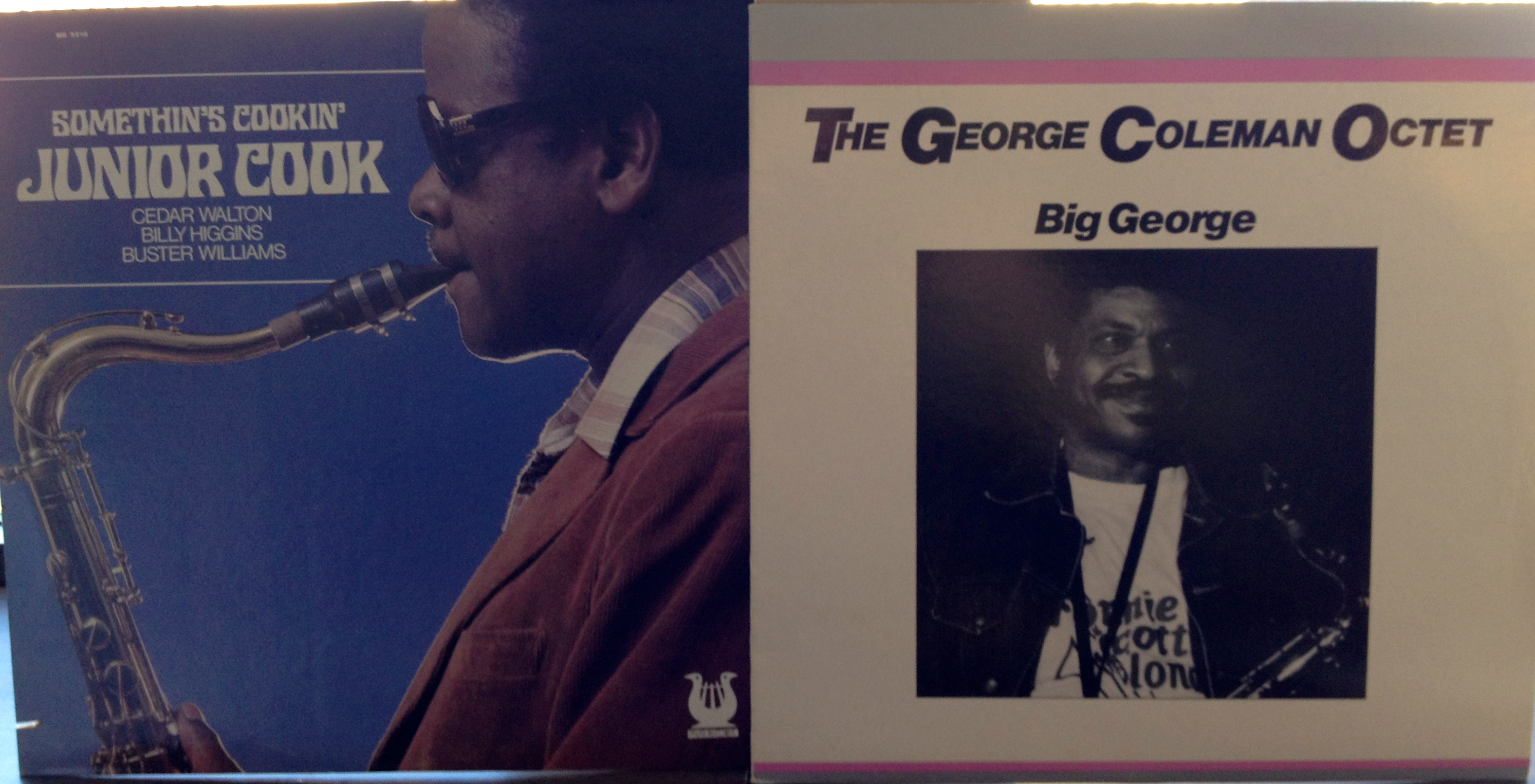
I collect records with Cedar Walton and Billy Higgins together like stamps or something.

I've heard the George Coleman at Mark Stryker's house, it's really great and exceptionally hard to find. Definitely underpriced $8, I would have paid three times as much in a heartbeat.

Hyland Harris just forwarded this petition to get Coleman elected a NEA Jazz Master, which I happily signed.

IMG_2885

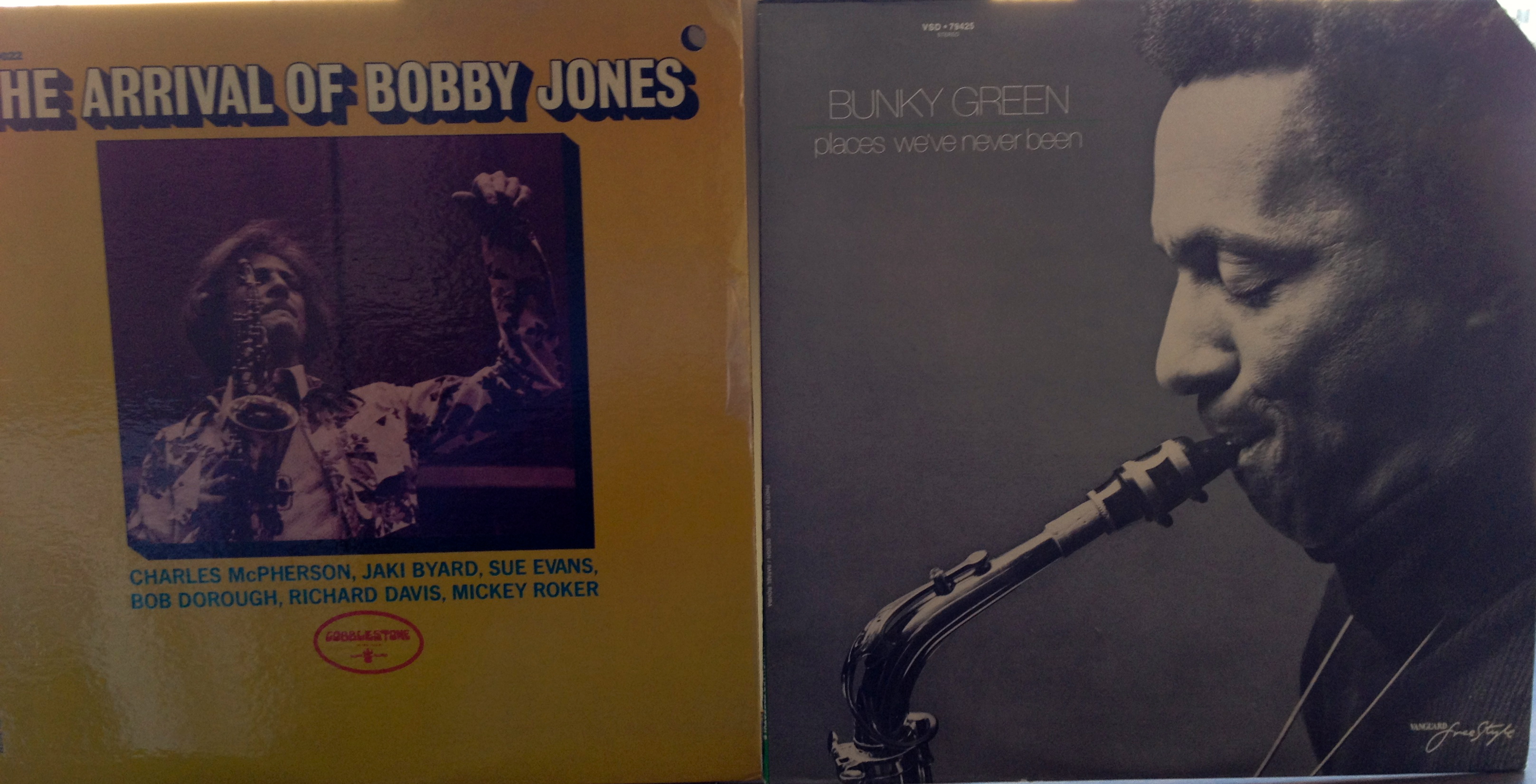
I had the Bobby Jones in high school, it made no impression at the time, but that cast is still so intriguing….

Albert Dailey, Eddie Gomez, and Freddie Waits on the Bunky Green. I keep looking for the very best Albert Dailey perfomances.

IMG_2887

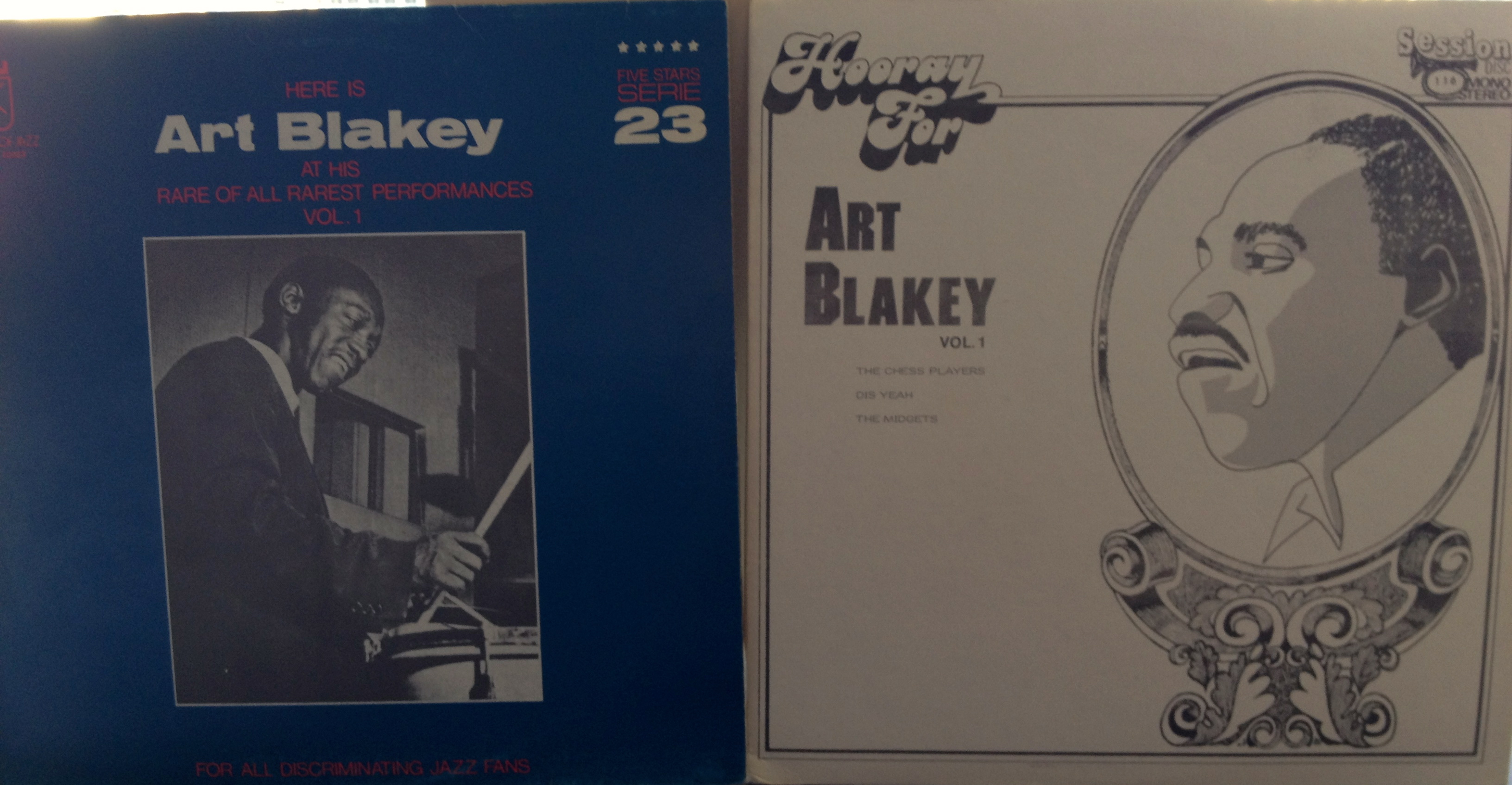
Two cheap boots of NYC 1960 with Morgan, Shorter, Timmons, Merritt. I haven't heard Wayne play on "Along Came Betty" before, nor a live version of "The Chess Players," one of my fav early Wayne tunes. Only $4 a pop, if I dig the tracks I'll start searching out the complete Birdland stuff on CD, it has been in circulation under Lee Morgan's name.

IMG_2891

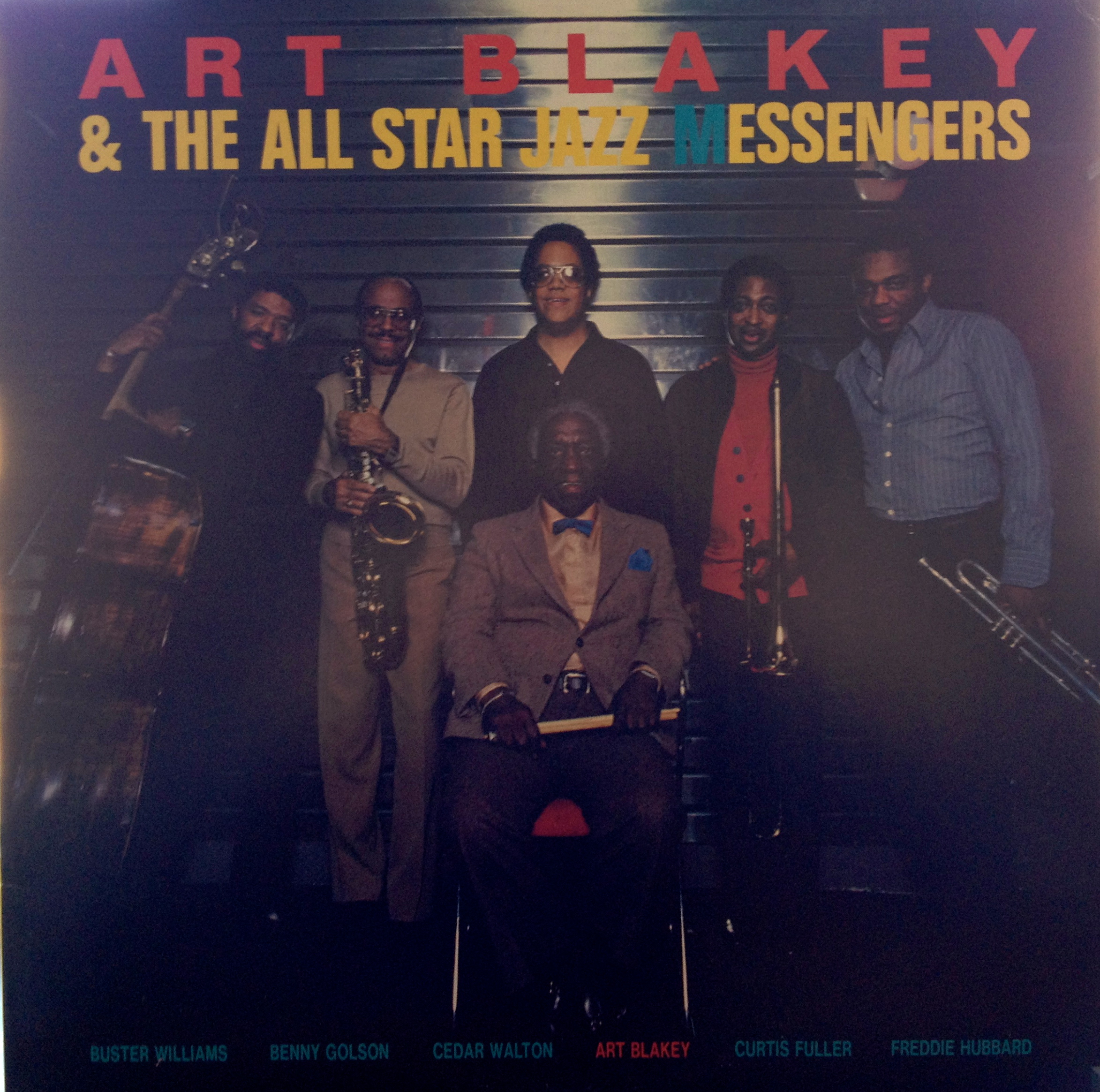
This was the most expensive purchase, $30, but how could I say no? Never seen it before, it's one of those Japanese productions that are so hard to find. I see Amazon has one for $63.  At the least, the cover is suitable for framing.

IMG_2895

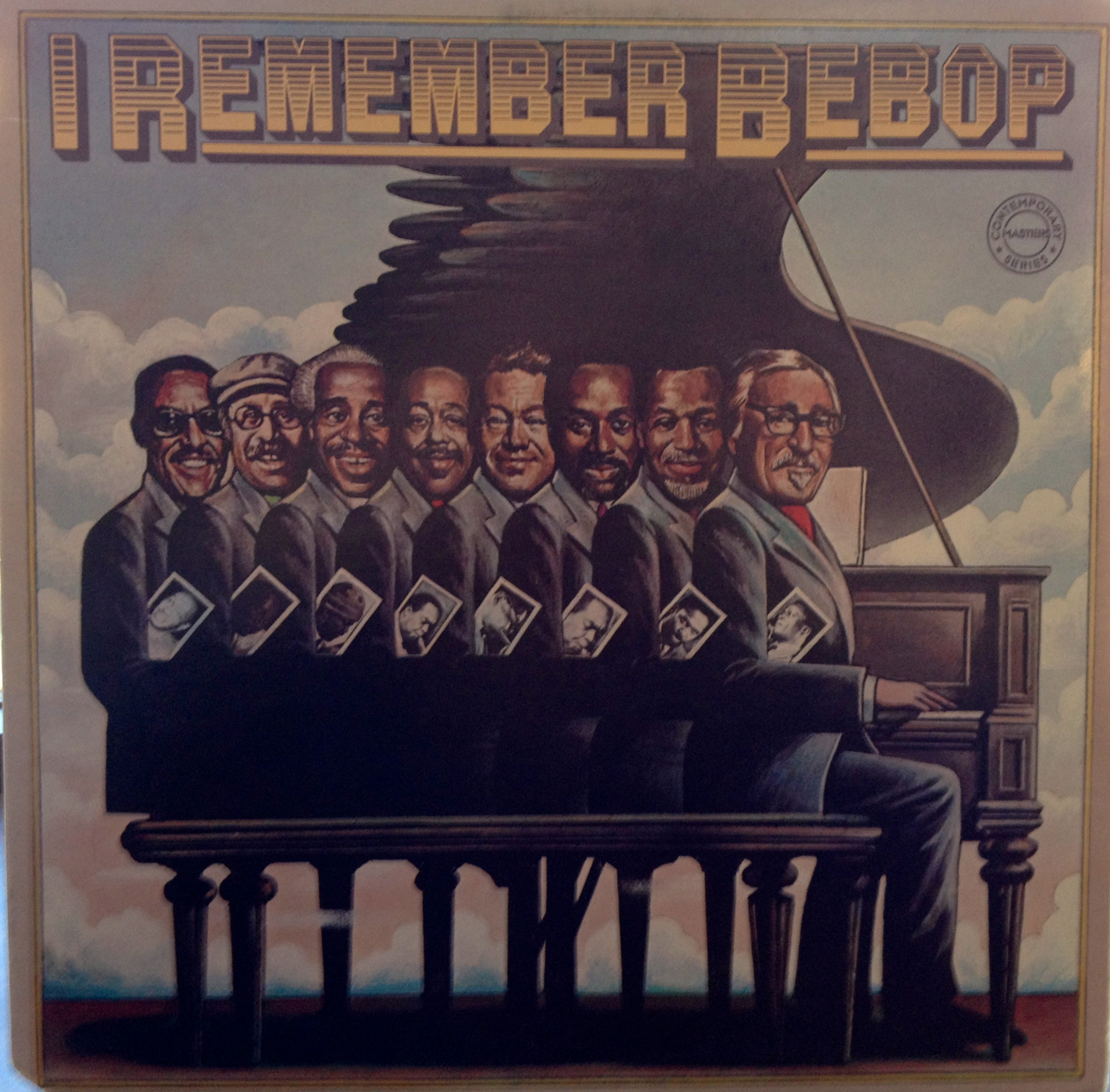
On the other hand, this cover is terrible. And if the music was awesome I think I'd I've heard more about this 2-LP set over the years. Still, I'm really curious. In 1977 Henri Renaud assembled the very greatest to cover classic bop.  (Al Haig, Duke Jordan, John Lewis, Sadik Hakim, Walter Bishop, Jr., Barry Harris, Tommy Flanagan and Jimmie Rowles.) If I like it, I'll let DTM readers know…

 
IMG_2893

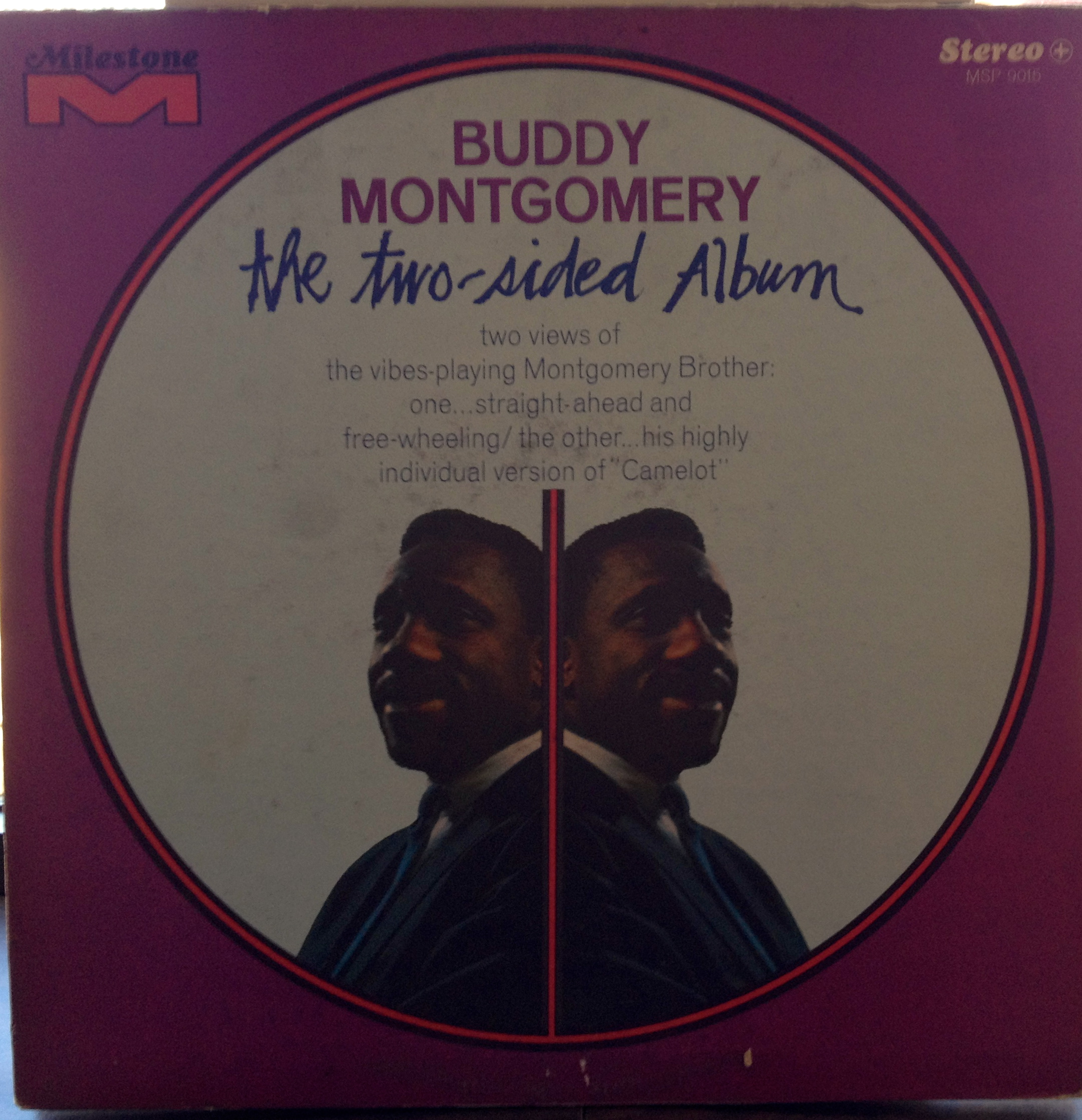
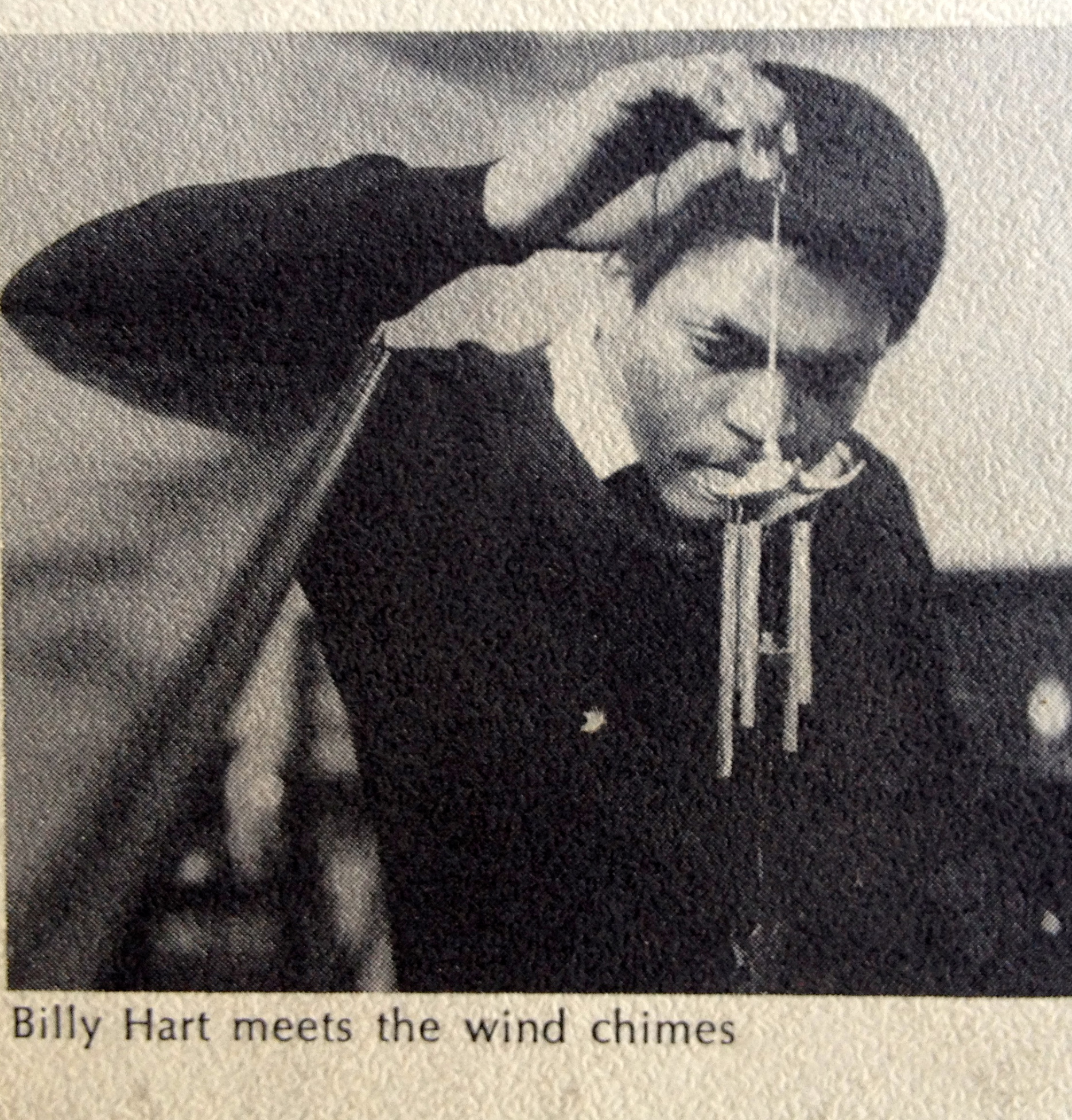
Speaking of Mark Stryker, I hope I'm making him jealous with this, the find of the day, and only $14. Reportedly Buddy Montgomery's best record and Billy Hart's first major studio date in 1968. He's even got a photo on the back:

IMG_2899

Bass Genius

(Thanks to Ben Street, Reid Anderson, and Larry Grenadier for talking with me about Wilbur Ware and Jimmy Garrison over the years — although none of them are to blame for this post!)

Recently Greg Thomas interviewed Mike LeDonne for the Daily News. It’s nice to see a mainstream paper shining light on one of the genres traditionally hardest to get press for: white cats that play resolutely straight-ahead jazz.

According to the article, some European (and undoubtedly also American) jazz students get upset about LeDonne’s mildly stern perspective and leave contrary responses on LeDonne’s Facebook page. I feel embarrassed for them. Since he was a teenager, LeDonne wanted to play with musicians like Benny Golson. Against strong odds, he was successful. Now the club Smoke regularly gives him a gig where he shines amongst a community of like-minded folk. Skeptics, let the man speak! You might learn something.

Speaking of Golson, he’s an example of a much older musician with clear ideas about what jazz is and isn’t. I suspect Golson left jazz because the early 70’s disheartened him; certainly, he is on record as crediting Wynton Marsalis and the return of acoustic values as the reason he began recording and touring again. Anyone sweating what LeDonne says should count their blessings that they don’t have Golson, Lou Donaldson, George Coleman, or Barry Harris pinning them to the wall with a glare and some firm talk.

If you wanted to argue that jazz is American Classical Music, Golson would be good person to bring to the table. Something like “Along Came Betty,” as played on the original Art Blakey recording with Golson as music director, is as detailed, precise, virtuosic, and distinctive as any European classical music. (Or Indian classical music, or African, or any other comparatively advanced genres.) I’m offended when I hear poor, Real Book-esque style performances of “Betty” today. There’s a lot to know about “Betty” that you can’t learn any way but in the school of hard listening. One time I was packing up and leaving Smalls when the jam session started. They called “Along Came Betty” and the piano player broke out his iPhone to read the changes off the iReal Book. Not impressive! I listened to him a little bit: I could tell he could play some piano but he sounded terrible on this tune. How could he not? You’re not going to even know what the main key centers of “Betty” are until you study it for a while. I hope that cat isn’t commenting snidely on LeDonne’s Facebook page…

For many, Ray Brown is the ultimate expression of classic jazz bass. Not for me, though. As great as he undeniably is, I can take or leave Ray Brown. On that first “Along Came Betty,” the bassist is that rogue madman Jymie Merritt. The way Merritt plays is correct within Classical Music, and part of that correctness is his gritty contrapuntal fire. Almost all of those bassists who I love best in Afro-American jazz have that kind of dark, at times downright unsettling flame.

Undoubtedly Ray Brown could have something of that dark tread — I can hear it best when he is on a studio record with Frank Sinatra or something equally arranged — but I find it far more in Percy Heath, Paul Chambers, and Ron Carter. Percy, Paul, Ron: presumably, there’s a list of three masters that I could agree on with just about anybody.

However, the highest expression of my cherished rogue sensibility is Wilbur Ware and Jimmy Garrison. Perhaps I’m wrong, but my firm impression is those that I think of as “conservative” New York jazz players don’t admire Ware or Garrison as much as they should. I should go up to Smoke more often, though, and find out for sure: maybe I’d get an earful about how Wilbur Ware was so much more of a badass than Ray Brown.

Wilbur has a new record out, Super Bass. At last! This 1968 session with Don Cherry, Clifford Jordan, and Ed Blackwell has been tantalizing in the discographies for a long time. I was beside myself when I heard that it was finally available.

LeDonne argues that anything called jazz must have the Afro-American sensibility in there somewhere. I hope he is right, although it is too late for redo the last 50 years, and some performers I admire are far, far, far away from that sensibility. Probably we do need some new genre names; perhaps defining “jazz” in stricter terms would be helpful to everybody. That’s not my first choice, but as I’ve written before, “If genre clarification does get pushed through, most of my own performing career will take place outside the word, “jazz.”  I won't fight it:  I have too much respect for a century of working-class black jazz musicians who paid unbelievably serious dues.”

For Wilbur Ware, music was a way to have a family and a community; an expression of his masters and of himself; a way to rise up out of oppression. Super Bass is about as Afro-centric as you can get. The session was originally for the Dolphy series on Strata-East, the first significant jazz label run by black musicians. All the musicians are basically untouched by any European classical ethos, instead incarnating what Ralph Peterson called the “Energy of the motherland and the fire and fury of what we’ve survived as people in the Middle Passage.” 

Wilbur doesn’t play anything that isn’t intimately bound up with oral tradition. Neither does Blackwell. What a pair! Intensely personal, tribal, indomitable patterns emanate in a circular and almost completely un-improvised fashion from the bass and drums. They swing hard, but they aren’t going to help anyone else swing. They are immovable forces. Fortunately, Cherry and Jordan never needed anybody’s help to sound great. It’s particularly exciting to hear the horns deal with some mid-tempo rhythm changes on “Wilbur’s Red Cross.” Jordan is Sonny Rollins on acid, Don is salutations, fragmentations, and flashes of pure melodic invention.

There are two terrific solo bass pieces. "Symphony for Jr" seems to reflect on past experiences and "By Myself" is mostly fabulous walking. Both are informed by a collection of canonical jazz quotes that Wilbur plays in his own way. They can’t be played better than they are here: Wilbur’s sound, phrasing and time are impeccable.

Two of the quartet pieces are also quotes: “Wilbur’s Red Cross” is indeed Bird’s “Red Cross” with a few note changes, “A Real Nice Lady” is a mildly avant turn on “Sophisticated Lady.” The last two works, “Mod House” and “For Frazier, Felicia, Veneida & Bernard” are simple but cleverly arranged riff pieces.  Ware is possibly thinking of the Ellington features for Blanton.

The music is extraordinary, divine, miraculous, but the mix is pretty weird. I wonder if there is a missing channel? Since very few people seem to know Super Bass is out yet, I would advocate pulling this issue and putting the master in the hands of a sonic professional before re-releasing in a cleaned up condition. It sounds like the Wilbur Ware Institute just put out what they had, probably with a superficial bass boost. The coarse balance is undoubtedly why one reviewer said Blackwell sounded “slightly tentative.”  Blackwell is not tentative — I can’t imagine a situation where Blackwell was ever tentative — but his presence is too small compared to the enormous bass.

My other caveat is the package: considering the historical importance of this impeccable music, it seems like there should be detailed notes explaining the provenance of the session, why it took so long to come out, and a history of this particular grouping. (The musicians on Super Bass are also heard, although not all together, on Jordan’s wonderful contemporaneous In This World, also on the Strata-East. What was the Dolphy series, anyway?)

Still, it is a thrill to have this record at last, and I advise everyone going over to the Wilbur Ware Institute and giving what they can. For their tiered donation awards, they misspell Scott LaFaro as Scott LeFaro. Talk about Afro-centric! I love it.

The bassist in the Bill Evans trio before LaFaro was Jimmy Garrison. Paul Motian told me he wanted Garrison to stay in the trio but Evans complained that everything Garrison played “Sounded like the blues.” Of course, Evans was right: Jimmy only played the blues, all the time, just like Wilbur Ware. But it is never that slick, Ray Brown-style blues. It is the dark, mysterious blues that concedes harmony just barely enough to stay on course.

Ware is underrated, but I think most people who love jazz know that the famous trio music with Elvin Jones and Sonny Rollins at the Vanguard could have been made with only only one bassist, Wilbur Ware. The case of Jimmy Garrison is more complicated. He gets lip service for "holding it down" with Coltrane but he doesn't have nearly the influence as the rest of the famous quartet. I think this is because Garrison didn’t really "hold it down." He was a free spirit, full of folkloric counterpoint delivered with subtle undertow.

(When Dave Liebman and Richie Beirach based their sound on Coltrane they always had a drummer that knew Elvin — Jeff Williams, Al Foster, Billy Hart, Adam Nussbaum — but the bass chair was Frank Tusa, George Mraz, Eddie Gomez or Ron McClure, excellent musicians that related to Garrison far less tangibly. Later on, when Wynton and Branford (alone and together) started playing their aggressive acoustic swing music, their pianists and drummers had to know McCoy and Elvin but the bassist was not encouraged to be a rogue Garrison-type. It’s almost like some of these leaders wished that there had been a different bassist in the Coltrane quartet! Someone more obvious and compliant, probably…)

Recently a stunning bootleg of Jimmy Garrison surfaced on YouTube. “All The Things You Are” is in 1974 with Warren Chiasson and Beaver Harris. It’s very exciting to hear Garrison of this vintage: there is relatively little of him on record between Coltrane’s passing in 1967 and Garrison’s own death in 1976. The few dates with Archie Shepp from the early 70’s have a rather odd bass sound, so it is a relief to hear Garrison be just like Garrison at a restaurant gig in Long Island.

Tootie Heath told me he called Garrison to play a casual gig in the late 60’s, but that Garrison said something to the effect of, “I can’t, Tootie! I’d love to, but after all that time with John, I don’t remember any tunes.” Maybe. But apparently he played not just trio but duo with Chaission more than once, and that was certainly tunes like “All The Things You Are.” But the general idea, that Jimmy gave up on the jazz scene after Coltrane, seems borne out by how little Jimmy recorded after 1967. Honestly, I’m surprised to hear him sounding so wonderful two years before his death.

Warren Chiasson is an important vibist who I have enjoyed in other contexts. I’m sure he was just having a good time at a gig that was never intended to be a record, so it is especially terrible to drop the hammer on him like I’m going to now. But I’m in a position where I have to defend Jimmy’s honor.

Chiasson’s playing is far too indirect, especially for such a long solo. This is exactly the kind of frankly “white” playing that would become the vernacular in jazz schools everywhere: no riffing, no folklore, no blues: just fooling around in an overconfident fashion. I’m not sure who loses the form first, Chiasson or Garrison, but it doesn’t matter. Jimmy’s superb dark low counterpoint and incredibly deep feel trumps the other two members of the trio. Chiasson should have bent towards Jimmy from the beginning. Instead, he leaves the hero to find the music on his own.

I wouldn’t bring all this up if I hadn’t been informed of a long thread at Talk Bass that I am indirectly responsible for. Various members chase around the topic of Jimmy (or Chiasson?) getting lost without really addressing style or race. To me, all formal considerations are secondary: this "All the Things" is obviously a deep song swallowed up by pretentious wandering.

I admit that I’ve been guilty of plenty of pretentious wandering over the years myself, maybe especially on “All the Things You Are!” But I’m working on it, and certainly I could never have hung Jimmy Garrison out to dry like this, even when I was much younger.

At any rate, what made Jimmy Garrison who he was wasn’t “holding it down.” He was always at least a little bit in opposition. Probably he learned something of that style from Wilbur Ware. Coltrane talked about Ware in an interview with August Blume, and what he learned from Ware may have influenced him when settling on Garrison.

Coltrane: A bass player like Wilbur Ware, he’s so
inventive, man, you know he doesn’t always play the dominant notes.

Blume: But whatever he plays, it sort of suggests notes that gives you an
idea of which way the changes are going?

Coltrane: Yeah, it may be—and it might not be. Because Wilbur, he
plays the other way sometimes. He plays things that are foreign. If you
didn’t know the song, you wouldn’t be able to find it. Because he’s
superimposing things. He’s playing around, and under, and
over—building tension, so when he comes back to it you feel everything
sets in. But usually I know the tunes—I know the changes anyway. So
we manage to come out at the end together anyway.

Blume: Which always helps! (Both laugh.)

Coltrane: Yeah, we manage to finish on time. A lot of fun playing that
way though.

Of course, superimposing changes has become our common-practice jazz language, at least in my circles. (H’mm…again, I wonder what it is like up at Smoke?) But the key to Ware or Garrison’s genius wasn’t as simple as threading changes in an unexpected way. Indeed, it is almost the opposite of chordal complexity: they play counterpoint that never disconnects with primeval folklore. The sound they make with their two hands on the bass is all wood and fire.
Notebook: op. 78, 100, 108

The three violin sonatas of Johannes Brahms have been in constant circulation since their premieres in the late nineteenth century. It has been a delightful challenge to prepare them for performance with Johnny Gandelsman at Bargemusic this Friday and Saturday.

I first played with Johnny back when I was Mark Morris’s music director; more recently he’s been in Yo-Yo Ma’s Silk Road Ensemble and helped found the string quartet Brooklyn Rider. He knows Brahms much better than me, of course, but is a wonderful coach.

No. 1 G major, op. 78

Vivace ma non troppo. 6/4 isn’t associated with Bach, Handel, Mozart, Haydn, or Beethoven. Brahms reached back to the pre-Baroque era to find the big six, which he appropriated for many important sonata forms, including the First Piano Concerto, the Third Symphony, and op. 78. He carves up the six into twos, threes, and fours, occasionally even making nines along the way. This swinging base supports a dotted melody of the most rarified beauty.

Adagio– Più andante – Adagio. Horn fifths in the piano suggest Beethoven, but then the violin’s song is a rather dark and mysterious nachtmusik. Contemporary scholars now believe the Più andante funeral march was a direct response to the death of young Felix Schumann, son of Robert and Clara, named for Mendelssohn, and author of three poems Brahms set as lieder in op. 63 and op. 86.

Allegro molto moderato. The melody and “raindrop” accompaniment for this spacious rondo in minor come from Brahms’s op. 53 songs "Regenlied" and "Nachklang." The first contrasting theme is a bit gypsy, the second quotes and then transfigures the horn melody from the Adagio. Towards the end the sun comes out at last and Brahms’s most perfect violin sonata ends in radiant major.

Since it is our favorite, Johnny and I have decided to close the recital with op. 78.

No. 2 in A major, op. 100

Allegro Amabile. What is this, a waltz? Not exactly, but it must lilt somehow. The odd phrase lengths and intertwining parts make this hard to parse. My own interpretation is that these melodies reflect the way Brahms was with women: he loved their beauty but needed to keep his distance. Aleksandar Madžar intriguingly suggests that the temperament should be more like Richard Strauss than Beethoven. In the development section Brahms nearly quotes Chopin, a rare event.

Andante tranquillo – Vivace – Andante – Vivace di più – Andante – Vivace. Two forms of rustic behavior: looking at the sky, then a country dance. The violin pizzicatos are effective, especially with Johnny’s kind of natural swing.

Allegretto grazioso (quasi andante). Again, a pretty tune is rendered diffuse by odd phrase lengths and surprise hand-offs between violin and piano. This movement is often played with too much intensity; it’s better to just let it roll through, although the dark diminished chords must have some menace. Brahms was fascinated by the plagal cadence: both op. 78 and op. 100 end with a big IV – I “Amen.”

Brahms specified that op. 100 was a sonata for piano and violin, not violin and piano. I’m using that as grounds for a improvising a little prelude before beginning and then transitioning between movements. They used to do that all the time; certainly Brahms did it. It’s kind of shocking now, but why not try it? Especially at the start of a long program: let’s get settled in, make sure the piano works, tune up everyone’s ears, and so forth. It’s honestly much easier to start that first movement after exploring A major a bit.

(The chapter “A Suitable Prelude” in After the Golden Age: Romantic Pianism and Modern Performance by Kenneth Hamilton inspired me to improvise on a Brahms concert. The whole book is highly recommended.)

No. 3 in D minor, Op. 108

Allegro. Direct and passionate, the third Sonata is the “hit” of the three. Although it is the easiest to interpret musically, the piano part is technically the hardest: even Vladimir Horowitz and young Arthur Rubinstein drop some notes on early recordings.

The opening rising fourth in the violin informs the work in ways both obvious and devious: Arnold Schoenberg admired Brahms’s sophistication, calling it the “principle of developing variation.”

Adagio. A perfect, heartfelt song for the violinist. Even at a slow tempo, Brahms can’t stop himself from dividing up his threes into twos, which is one reason I think it is important not to play his adagios too slowly. You always need to feel the hemiolas.

Un poco presto e con sentimento. F-sharp minor flickers past in a short movement reminiscent of some of the solo piano Intermezzi. Aargh! Wish me luck on the hand crossing in the coda.

Presto agitato. Brahms wasn’t always comfortable writing uptempo finales, but here he delivers a proper daredevil tarantella. It’s still Brahms, though, so — just as throughout most of these sonatas — the melodic material is constantly shifted between piano and violin, daring the ear to follow a rich and remarkably contrapuntal texture.

Jan Swafford’s biography of Brahms was a wonderful read. I’ve heard it said by a reputable authority that it is one of the very few truly excellent classical musical biographies suitable for both mainstream readers and professionals. Swafford mentions a few times that Brahms was a lousy person to play chamber music with. He stared at the page, playing his own way, ignoring the the other musicians. Interesting to know, especially since for me (and many others) he is the greatest composer of chamber music.

There must be a hundred recordings of the violin sonatas. I’ve had about ten in rotation the last six months. There’s a big divide between historical and modern performance. In the pre-LP era tempi vary much more, rests are ignored, and they tend to swing harder.

The earliest recordings I could find were from the early thirties. Efrem Zimbalist and Harry Kaufman tracked op. 108 in 1930. A fun listen to be sure; no one today would dare to use so much vibrato and portamento in the slow movement. Paul Kochanski and Arthur Rubinstein also recorded an intense op. 108 in 1932. Although from 1931, Adolf Busch and Rudolf Serkin sound comparatively modern in op. 70 and op. 100.

[Update: On Twitter, Richard Brody alerted me to an astonishing 1926 performance of op. 100 from Toscha Seidel and Harry Kaufman. I'm totally blown away!]

From the early LP era I’ve heard Heifetz/Kapell, Milstein/Horowitz, de Vito/Fischer (and Aprea), Szeryng/Rubinstein.

There’s no such thing as an “ideal” recording, but if I made a playlist of historical versions, it would include:

Op. 78: Gioconda de Vito/Edwin Fischer in 1953. My god, what a violin tone. She sounds like a full orchestra. I’m a Fischer fan as well, although here he is not in great health and misses even more notes than usual. It doesn’t matter; this is a great record. Now I want to hear all of de Vito’s small discography.

Op. 100: Adolf Busch/Rudolf Serkin in 1931. Almost too fast! But intensely exciting all the same. The finale is just right. Busch’s phrases don’t seem to start and stop, they just happen, dissolving in the air.

Op. 108: Nathan Milstein/Vladimir Horowitz in 1950. Of course it is clean, aristocratic and redolent of Old World glamour, but the toughness around the edges is what really makes this work. Maybe Horowitz pushes too hard in in the tarantella, but I like watching him go off the cliff once in a while.

Honorable mention goes to the complete set made by Henryk Szeryng and Arthur Rubinstein. The edits are obvious, some of the ensemble is really ragged (did they even rehearse, I wonder?) and in general the tempos are a bit sleepy. Still, any time Uncle Arthur plays Brahms he always hands out a gentlemanly piano lesson, and Szeryng is a wonderful and natural musician. 

In the modern era, I’ve heard several solid accounts and a few lemons. The one I most want to steer readers away from is Perlman/Ashkenazy, which to me seems surprisingly unengaged and distantly recorded.

The one I like best is the newest, Anthony Marwood and Aleksandar Madžar recorded live at Wigmore Hall in 2010 and 2011. I knew that Marwood was brilliant from collaborations with Thomas Adès, but on this record I'm even more impressed with Madžar, who offers some of the most technically impregnable and musically ravishing playing I’ve heard in chamber music anywhere. A nice inspiration for my own piano practice! 

Institutional Racism Redux


I’m a Ginger Baker fan. Of course. The power, the projection, the articulation of the classic songs. I really only know and appreciate Cream and a bit of Blind Faith, though; a lot of his later work seems weak in comparison. We see that so often with those who achieve superstardom young: money and fame seem to solve everything, so they quit paying dues and think all of their future music is invincible. (Baker’s trio with Frisell and Haden was listenable, but almost anyone who really cares about jazz would want a different drummer to spar with those masters. That trio is for “Sunshine Of Your Love” air-drummers who now want to relax with a little light “jazz.”)

Yesterday A.O. Scott  wrote an amusing NY Times review of the new documentary Beware of Mr. Baker. I like A. O. Scott a lot, but one sentence gave me pause:

An earlier videotaped interview shows him choking up with emotion when he speaks of [Max] Roach, [Elvin] Jones, Art Blakey and Phil Seamen, jazz idols who came to recognize him as a peer.

Roach, Blakey, or Jones might have taken the bread and done a few drum battles with Baker, but there’s no way they thought Baker was a peer. Are you fucking kidding me?

Baker was annointed a rock god; he had everything that society had to offer. The foundation of his success, classic jazz drumming, was an almost exclusively African-American invention. Those innovators paid dues in a racist society, and those dues informed their genius. Look at the video of Blakey and Baker together. Of course, Blakey plays much better (I hope I don’t need to say that) but even with the sound turned down, Blakey’s superior moral authority is obvious.

Again, I dig white English rock from the late 60’s and early 70’s. Who doesn’t? It’s awesome. Cream is immortal. But be careful where you tread when you start bringing up black jazz innovators.  If our society has decided Ginger Baker is the equal of Max Roach, Art Blakey, and Elvin Jones, that’s not giving the real credit where it is due.

Bits and Bytes

Teddy Wilson turned 100 yesterday.  I’m a big fan, he was a perfect pianist. The recordings with Billie Holiday alone would class him as one of the greatest.

Some of the more helpful things I sight-read when younger were chorus-long transcriptions of Teddy playing tunes. I wonder if I still have those Alfred anthologies? Bob Zurke, Eddie Heywood, Art Tatum, Earl Hines, Teddy Wilson, Mary Lou Williams and others tracked relaxed improvisations for a Frank Paparelli-type to notate. (Not all of them are in this collection, there should be a systematic reissue.)

During the last five weeks in Europe, many jazz piano students came up to me after the gig  and asked advice. To one and all I officially say: play some ragtime, play some stride. Read copious amounts of Joplin, James P., Teddy, and whoever else you can find. You won’t regret it. It’s an advanced and swinging interpretation of Bach’s major-minor tonal system. Down with “jazz harmony” out of a theory book, long live “harmony.” None of those cats knew what a chord scale was…

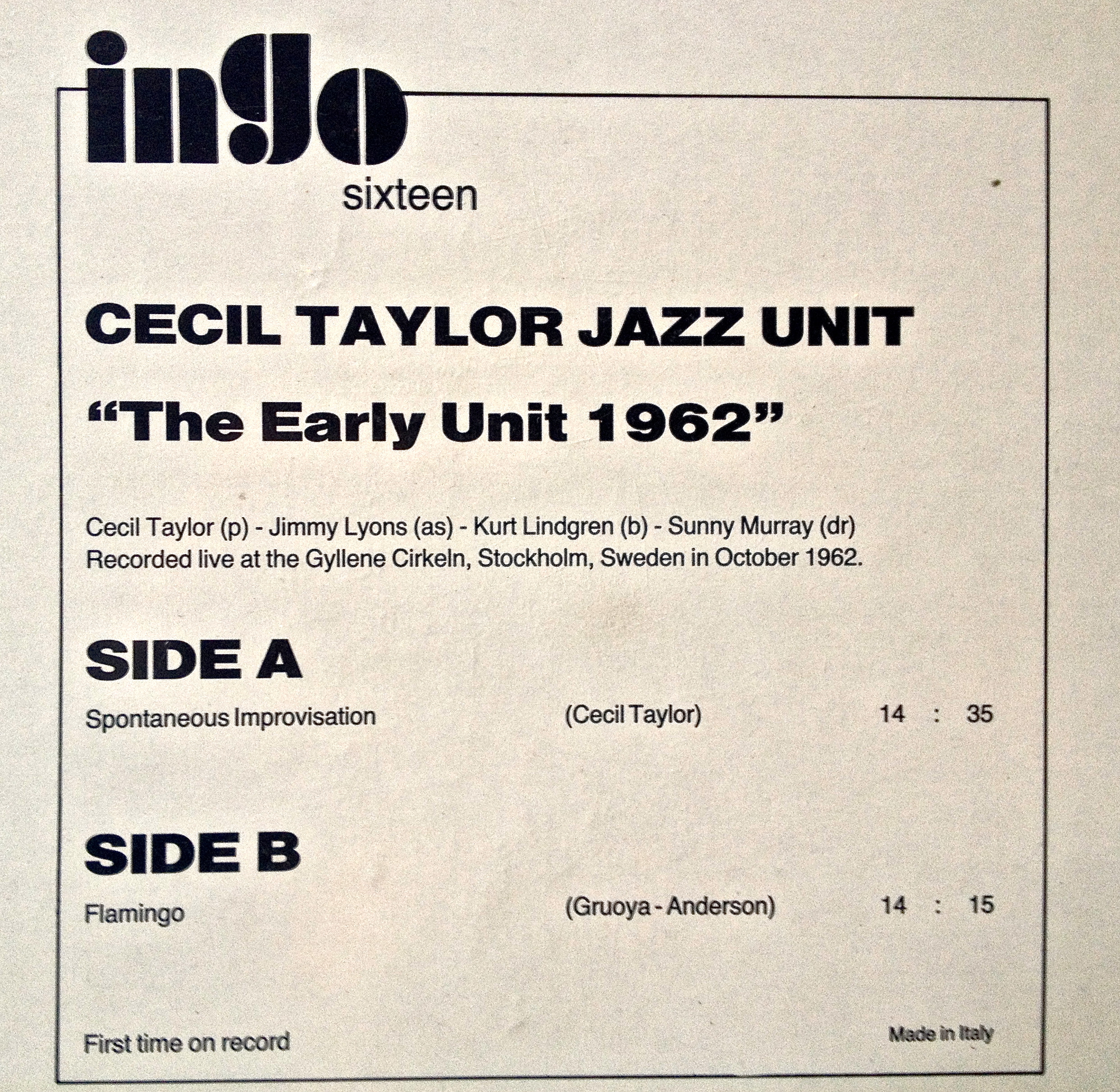
Speaking of harmony, a good friend in Amsterdam has the most astonishing record collection. I’d never seen Cecil Taylor’s The Early Unit 1962 before.

IMG_2752

According to the Research Group, Kurt Lindgren only played with the famous trio only for two days. His rather square personality hooks up something really bizarre on “Flamingo,” which is now one of my favorite Cecil tracks. It’s incredibly swinging and more overtly Ellingtonian than usual from CT. (Indeed, Ellington’s arrangement of “Flamingo” may be the reference.) Jimmy Lyons is magnificent. I must find this bootleg.

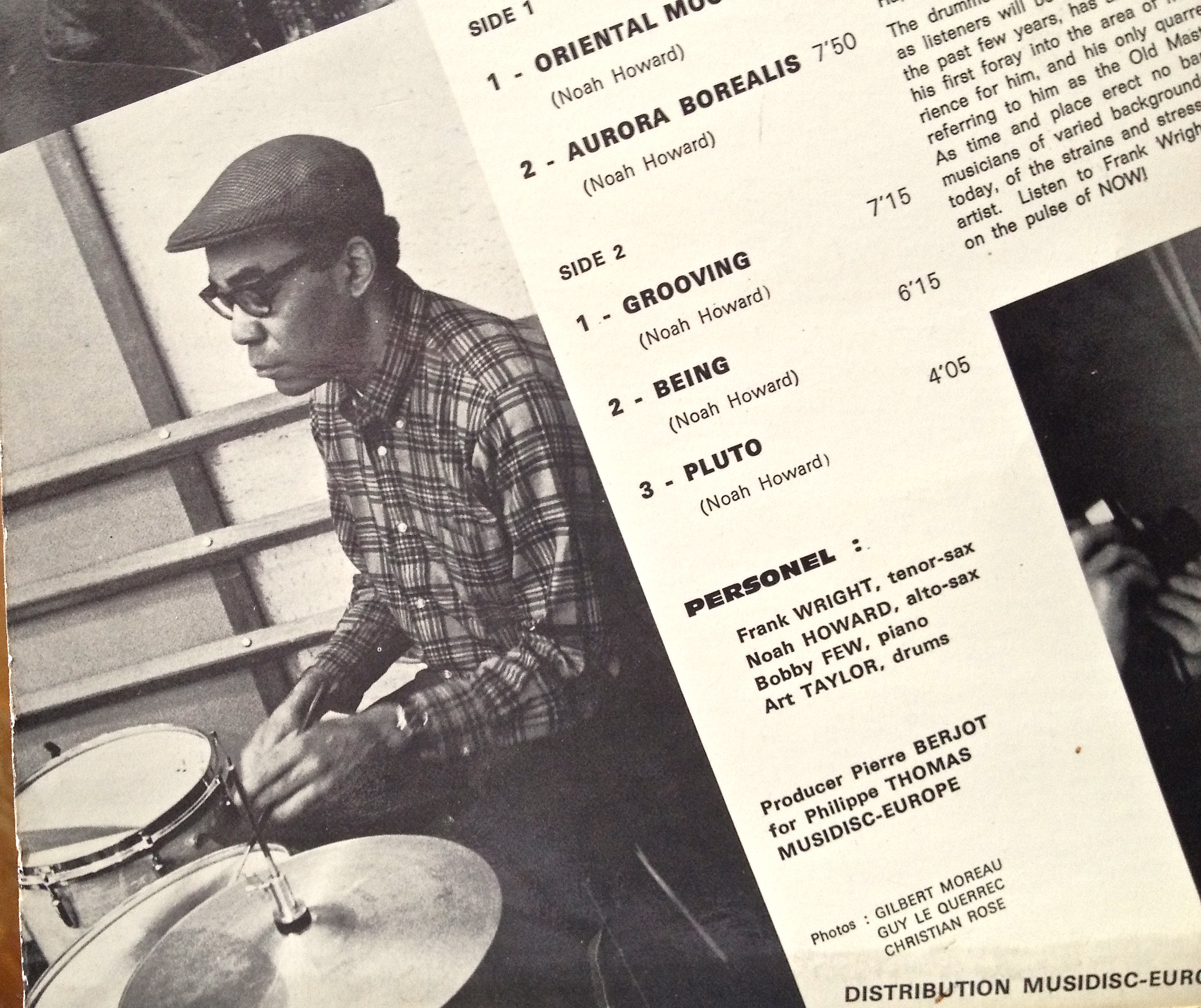
Another rarity: Frank Wright’s Uhura Na Umoja with Noah Howard, Bobby Few, and…Art Taylor!

IMG_2759

A.T. plays the New Black Music! He sounds amazing. Now I have to get all those circa 1970 Paris free jazz records too. While I’m pretty sure the drumming community generally sleeps on this transgressive moment, some people already know. When I told Billy Hart that Art Taylor was a great free player he said, “Of course.”

Jabali and Jeff Ballard had a nice moment together at Duc Du Lombards last week.

IMG_2714

Graft, Murder, and His Best Friend’s Wife

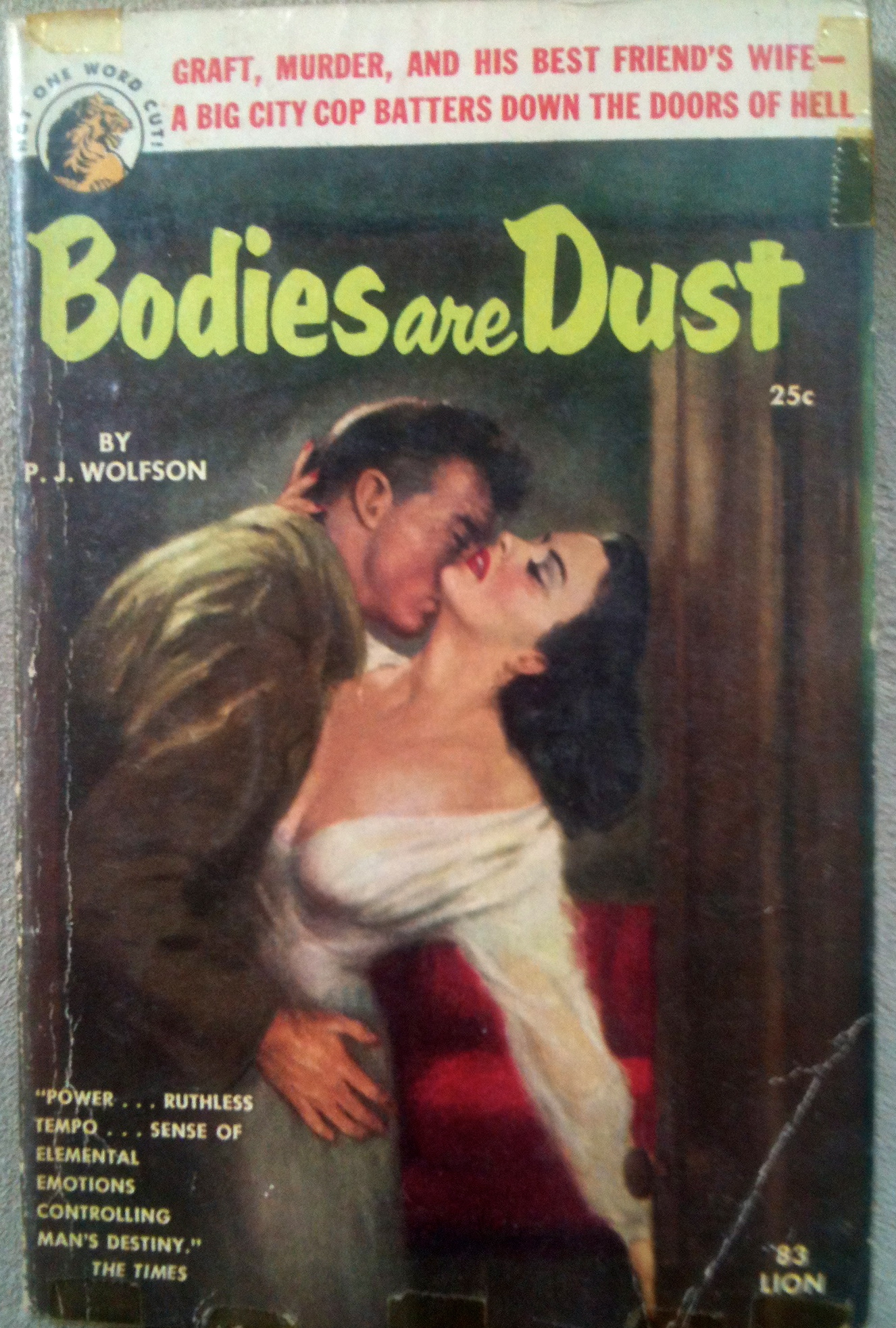
According to many of the best-read in crime, P. J. Wolfson's Bodies Are Dust from 1931 is an overlooked classic. It's very hard to find. While I've almost never seen it online for less than $100 (usually more like $200), it showed up recently for only $30, so I grabbed it.

This edition is a Lion reprint from the early 50's. It cost all of a quarter when new.

IMG_2572

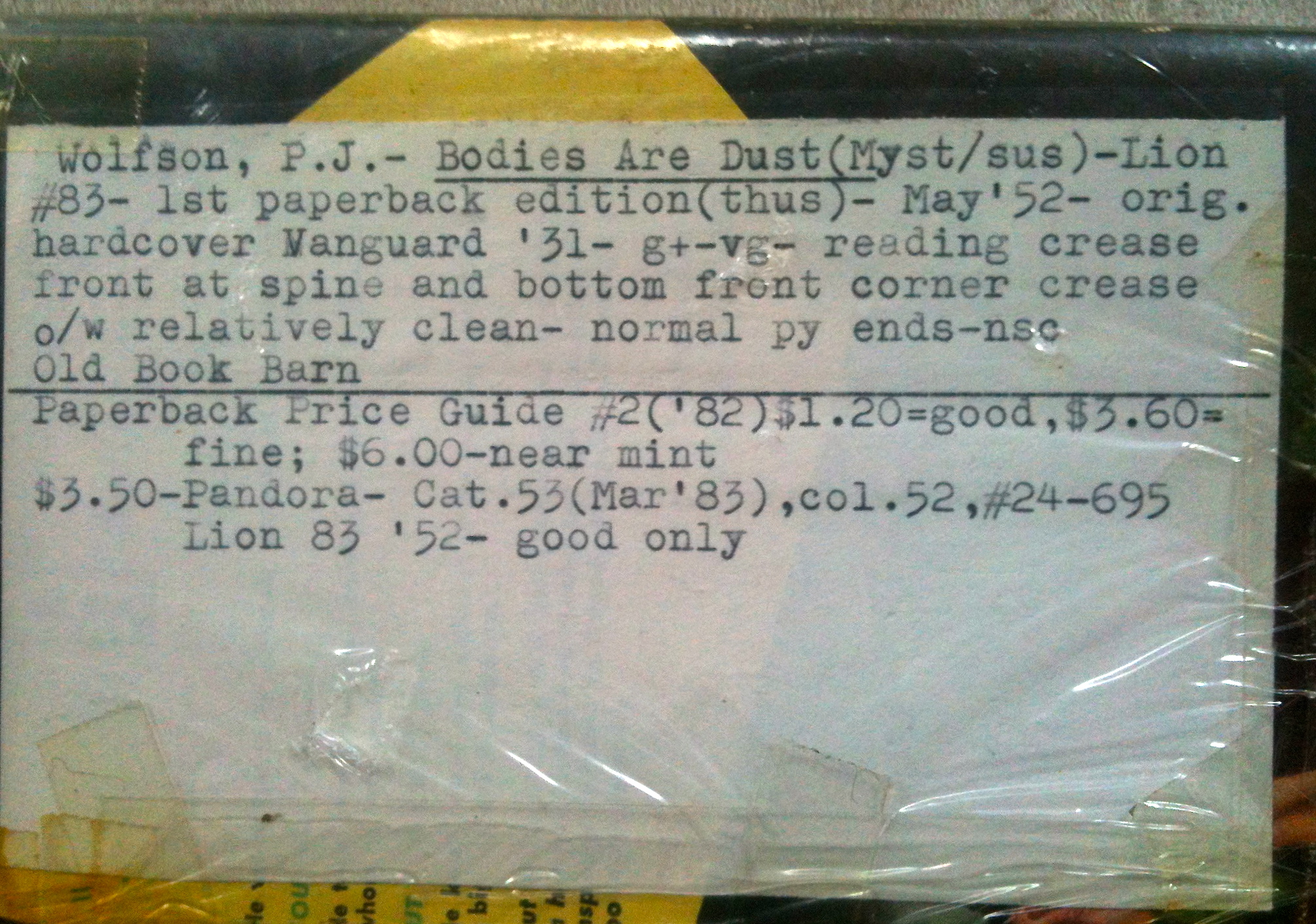
I am not a book collector by any means, but I'm going to have to work up some nerve to take off the shrink-wrap. The card tucked inside on the back dates it as having been untouched for about thirty years.

IMG_2578

Charlie Haden on Larance Marable

When I heard that Larance Marable had passed, I called Charlie Haden and asked him to say a few words.

I first met Larance Marable in the late fifties when I was playing with Paul Bley at the Hillcrest Club in L.A. and Larance was playing gigs around town. We soon started playing together with Art Pepper, Hampton Hawes, Sonny Clark, Paul Bley, and would often drive up to San Francisco to play with different musicians including Chet Baker. I still remember the stories he told on that drive, about Bird and other great musicians. In fact, on our Quartet West album Now Is the Hour there's a picture of him at a birthday party for Bird in Watts, sharing ice cream and cake.

He was a beautiful person that loved to laugh. My daughter Tanya once played him several games of ping pong when we were in Paris. When she missed a point, she'd say, "I'm going to get you, Wabbit" like she was talking to Bugs Bunny, and Larance would crack up.

This guy had something that was magical. I experienced it from the first time we started to play. The thrust of his cymbal was so strong. Strength is not the right word. Maybe power is right. It would happen anytime, anywhere. You could always rely on him. He had a lot of dynamics in his playing. You can’t explain it, but he had it. He functioned in my Quartet West like Jimmy Cobb functioned for Miles Davis, especially on Kind of Blue.

In 1986 or thereabouts, in Hollywood, there was some kind of benefit or reception for the movie Round Midnight. Billy Higgins was there, and he and I were talking and Higgins said, "Look over there, it's Larance Marable." Way across the room! Larance Marable! I went over to him, and we hugged. We had't seen each other in many years. I said, "Man! Are you playing?"

He said, "I always loved playing with you!" and I said, "Now that I found you, we have to play together!"

First Larance subbed with Quartet when Higgins couldn't make it, but then, when Billy started touring with the Round Midnight band a lot, Larance joined my band full time.  His cymbal beat was perfect: It was earthshaking when he came in with the time.

In Quartet West he was the other part of my heartbeat.

Partial Larance Marable discography, according to Tom Lord

1951-52 live tracks with Charlie Parker, Frank Morgan, Wardell Gray, Chet Baker, Hampton Hawes, and others

1953  The Modernity Of Kenny Drew — Teddy Charles, West Coasters

1954 Lorraine Geller, At The Piano – Herb Geller Plays

1955 Frank Morgan On GNP – Jack Sheldon Quintet —  A Recital By Tal Farlow —  Sincerely Conte Candoli — Dexter Gordon Daddy Plays The Horn — Kenny Drew Talkin' And Walkin'

1956 Introducing… Carl Perkins — Hampton Hawes Bird Song — Milt Jackson Ballads and Blues — Sonny Criss Go Man! — The Lawrence Marable Quartet Featuring James Clay Tenorman — Sonny Criss Plays Cole Porter — Chet Baker Big Band —  Chet Baker/Art Pepper Sextet Picture Of Heath

1957 Herb Geller Sextet Fire In The West

1959 Jimmy Giuffre Quartet Ad Lib —  Sonny Stitt Plays Jimmy Giuffre Arrangements — Anita O'Day Sings Jimmy Giuffre Arrangements: Cool Heat – George Shearing And His Orchestra Satin Brass

1960 George Shearing Quintet Acc By Billy May's Orchestra The Shearing Touch — George Shearing Quintet San Francisco Scene — George Shearing/Nancy Wilson The Swingin's MutualThe Montgomery BrothersThe Resurgence Of Dexter Gordon

1961 Teddy Edwards Octet Back To Avalon

1962 Richard "Groove" Holmes After Hours — Victor Feldman Stop The World I Want To Get Off

After this long run of great West Coast jazz, Marable's discography thins out. Joe Farrell's Skateboard Park from 1979 seems to be the next date. There's also Milt Jackson's Night Mist from 1980.

Marable became more visible again when he joined Charlie Haden's Quartet West. The studio albums are all classics: In Angel City (1988), Haunted Heart (1991), Always Say Goodbye (1993), Now Is the Hour (1995), and The Art of Song (1999).

In addition to the essential work with Haden, Marable is heard on post-1988 records with Charlie Shoemake/Harold Land, The Herbie Harper/Bill Perkins Quintet, Paul Moer, Frank Strazzeri, Shorty Rogers/Bud Shank & The Lighthouse All Stars, Walter Norris, Bruce Eskovitz, Dianne Schurr, Robert Stewart, Eden Atwood, and Ruth Cameron. Speaking of which, thanks to Ruth for her help with this post!

A little bit of sterling 50's-era Marable on YouTube:

Kenny Drew, Joe Maini, Leroy Vinnegar, Larance Marable play "Minor Blues." Incredible piano solo!

Marable presents James Clay with Sonny Clark and Jimmy Bond


Warsaw Rhapsody

IMG_2363

I told a young Polish assistant at the gig the other night, “It’s nice that your airport is named after a great composer instead of a politician.”

She shrugged. “I like Mozart better. Chopin is too romantic.”

I used to feel that way, too. But almost any pianist who becomes interested in canonical classical music eventually finds their way to understanding Chopin. Every page sounds well on the instrument. It’s all instantly memorizable. Many works are the apotheosis of folkloric dance, while just as many are a provocative balance between curved melody and inventive figuration. In some of the big pieces, Chopin rivals any of his contemporaries for generating fantastical appropriations of older large-scale forms. His Études remain the most poetic technical studies ever written. It all fits the hand, yet of course much of his work is terribly difficult to master.

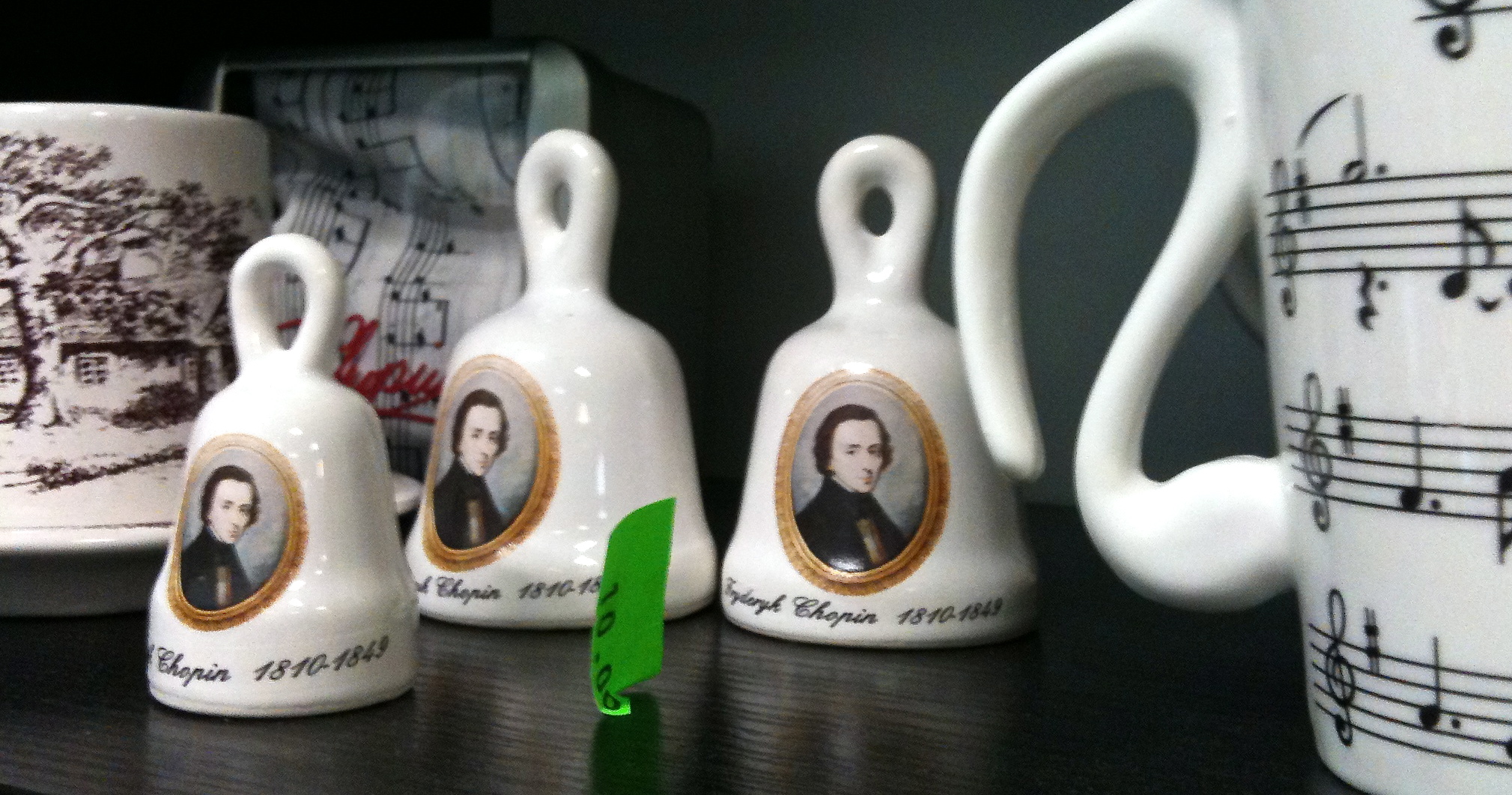
Wandering around old town before the gig, I found the music store SAWART, ul.Moliera 8. Some terrible kitsch

IMG_2346

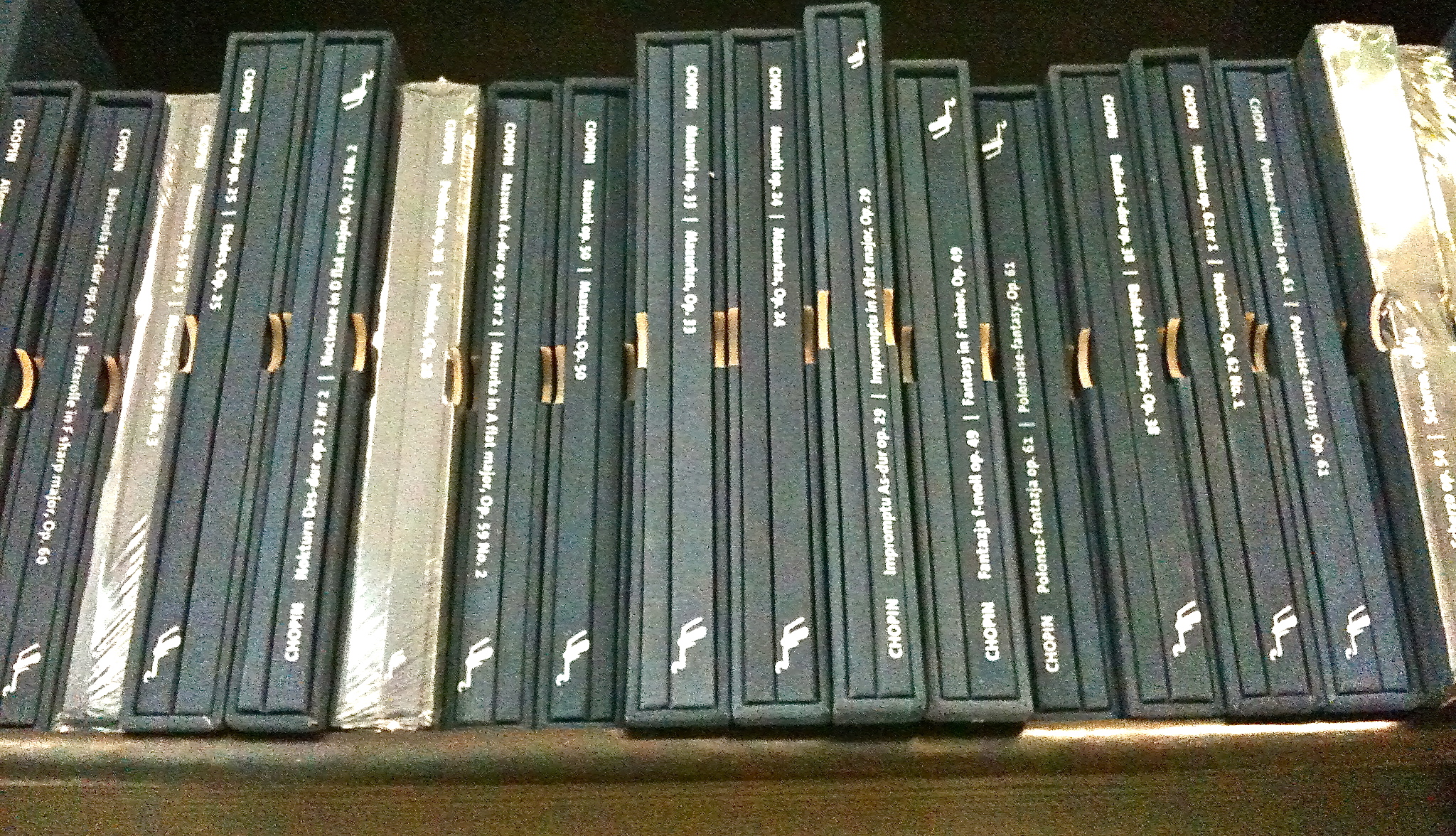
was offset by autograph scores of the complete works, a high-end product usually only found in university libraries.

IMG_2349

I bought a couple of Chopin records by pianists I wouldn’t expect to find in American stores. Unfortunately they were uninteresting, with manufactured rubato and labored phrasing. I left them in the hotel room.

In general, I worry about modern Chopin performance. There must be as much room on the bench for the player as the composer. The oxymoronic phrase “conservatory romanticism” should be banned from all teaching and ideologies.

My heart lies with the pre-WWII pianists. They treated Chopin like a great jazz musician treats the blues or rhythm changes: “How do I feel about this Ballade today?”

It is telling that a recent Limelight poll of the greatest classical pianists of all time (more interesting than usual, since it was made by by fellow professionals) left off Josef Hofmann and Ignaz Friedman. Only Alfred Cortot represents the “old school” Chopin; the rest are mid-century favorites or sober Germans. A great composer is safely chosen for the number one slot — but not everyone thinks Rachmaninoff was comfortable in Chopin.

This reflects current taste. I can think of many modern pianists I’d love to go see play Bach, Beethoven, and Schubert. For that matter, French transparency, Russian virtuosity and contemporary music are also doing well. But I can hardly think of anyone that is a “must see” these days for Chopin, where vulnerability must marry the quotidian in an improvisatory reverie.

Perhaps I’m out of touch: most of my deep Chopin listening was done well over a decade ago. There are legions of talented pianists everywhere, and I’ve surely missed some recent arrivals. Naturally, I admire the polished musicianship and technical skill displayed on modern Chopin records by Louis Lortie, Garrick Ohlsson, Krystian Zimerman, Mikhail Pletnev, Nikolai Lugansky, Mitsuko Uchida, Evgeny Kissin, Yundi Li, Stephen Hough, and other serious musicians.

But, just for fun, here’s an approximately chronological list of ten pianists that have given me truly exceptional pleasure in Chopin. I claim little originality; among my influences are the writings of Harold Schoenberg, David Dubal, Allan Evans, Jeremy Nicholas, Jed Distler, and others. The valuable liner notes of the Marston box A Century of Romantic Chopin by Gregor Benko and Frank Cooper are found here.

Josef Hofmann. When I listen to Art Tatum, I shake my head. It just seems impossible. Hofmann creates the same effect in classical music. The hand merges imperceptibly with the mechanism. Chopin has the most space in Hofmann’s small discography, and every performance is astonishing. There are perfect miniatures in the studio (his A-Flat Impromptu has ruined all others for me) and epic, risky battles for grand audiences (the G minor and F minor Ballades).

Ignaz Friedman. He’s more like Jelly Roll Morton, a great dance pianist and noisy thumper. When he’s not bouncing around — a handful of Mazurkas are immortal, and the lesser-known B-flat Polonaise must be definitive — his singing tone is golden, like in a famous performance of the late E-flat Nocturne. A technical wizard, he set the bar for a few Études. Some of the other tracks can be disappointing, like a ludicrous F-sharp Impromptu. Who cares? His style is unforgettable.

Alfred Cortot. I’ve gone back and forth on Cortot. Ultimately I rank him after Hofmann and Friedman, but he unquestionably has something, especially in smaller and simpler pieces when his hands are completely out-of-sync with each other. The Preludes suit Cortot especially well. An important part of his tonal magic comes from his distinctive Pleyel, which sounds closer to Chopin’s own instrument than modern pianos.

Before I move on to the mid-century greats: Some of the other early wax cylinder artists with an intimate relationship to Chopin include Moritz Rosenthal, Sergei Rachmaninoff, Raoul Koczalski, Vladimir De Pachmann, Emil Von Sauer, and especially Ignacy Jan Paderewski. (I was just listening to Paderewski’s C-sharp minor waltz on YouTube, a magnificent performance.) If were to play Chopin myself, I’d study up on all of these musicians, all of whom were connected to 19th-century traditions, yet none of whom played in the same way.

Vladimir Horowitz. Some of his Chopin is rather shrill. Even though he was famous for playing it, I don’t really like his “Heroic” Polonaise. Better is a nerve-wracking Polonaise Fantasy or a nasty B minor Scherzo, both featuring the kind of “growling” sonority that only this pianist could achieve. In the coda of the Scherzo, Horowitz re-scores the unison chromatic scales into interlocking octaves, a sensible flourish that would be frowned upon today. Careful listening shows subtle re-scoring in his first recording of the G Minor Ballade, as well. An extraordinary performance, this may be my favorite rendition of the most famous Ballade.

(Admittedly, the drama of the G Minor Ballade is so natural that it remains compelling even in the hands of amateurs. I compared many professional versions at one point: early Emil Gilels, live Sviatoslav Richter, Jorge Bolet, Gary Graffman, Robert Casadesus, Samson François, Arturo Benedetti Michelangeli, Claudio Arrau, early Maurizio Pollini, others. Everyone had something to say.)

The pre-LP era Horowitz is better then what came later, but some 60’s studio miniatures are terrific, especially the “Cello” Étude from op. 25, still the best I’ve heard. The Mazurkas on the Horowitz in Moscow video are sensational. They called him “the last romantic,” and it’s true; no one plays like this anymore.

Artur Rubinstein. For several generations, Rubinstein was the pianist most identified with Chopin. At one time his Ballades were not virtuosic enough for me, but now I hear the wisdom accumulated through thousands of live performances. Try the earliest records of Scherzi and Concerti to hear a born virtuoso. Most of his other Chopin records are fabulous as well, especially in smaller forms. 

But seeing Rubinstein on video is even more extraordinary than hearing the records: the confidence, the passion, and yes, the casualness. After all, it’s not scaling the heights to play a Nocturne, Mazurka, or Waltz. It’s pouring an excellent table wine in charming company. A rare Russian television performance of the Barcarolle is as good as it gets.

Rudolf Serkin. Along with Horowitz and Rubinstein, Serkin was part of “the big three” of mid-century America. He never recorded Chopin in the studio, and frankly it’s impossible to imagine Serkin playing much of the more sentimental or Polish Chopin. But a live version of the Op. 25 Études (from the bonus disc included in his biography, also on YouTube) has to be heard to be believed.  These are some of the fastest and loudest versions of several fingerbusters, but retain an Old World charm. (Grigory Sokolov also has a wonderful live op. 25.)

Vladimir Ashkenazy. Ashkenazy was a harbinger of today’s “conservatory romanticism.” He makes this list partly because an inexpensive bootleg recital boasting a wicked Op. 10 no. 1 Étude and a magisterial “Heroic” Polonaise was an early addition to my first tiny record collection. A YouTube from that era documents a similar performance.

Indeed, Ashkenazy’s first serving of the Études is still the best overall version I’ve heard: clear, poetic, and thankfully lacking the occasionally distracting “iciness” of some other professional post-1960 sets.

(Charlie Haden’s favorite piece of Chopin is the Étude no. 6 from Op. 10 in E-flat minor. He plays the Pollini recording for students. Pollini is excellent, of course, but for whatever it’s worth, I have never heard a performance of this Étude that I thought was truly superlative. At one point, I compared about two dozen recordings, and thought they all lacked something or other.)

Martha Argerich. Now, if Argerich were programming Chopin these days, I’d do anything to get a ticket. Unfortunately, the great virtuoso rarely plays solo recitals anymore. Still, DG accounts of Chopin Sonatas, Preludes, Concertos and a few precious Mazurkas from 40 years ago are on anybody’s list of essential Chopin recordings. I don’t even really like the E minor Concerto, but her performance makes me a believer. Likewise, a heated collaboration with Rostropovich on the Cello Sonata transforms an inessential work into an erotic experience.

Earl Wild. At his 80th birthday recital, Wild was a superb swashbuckler in the Andante Spianato and Grande Polonaise Brillante. The coda to this piece of fluff raised us to our feet. At his 90th birthday recital, the hoary C-sharp minor Fantasie-Impromptu had perfect, Hofmann-level jeu perle.

Sadly, I’ve never really enjoyed Wild’s Chopin on record. How many other pianists have tightened up and not been able to really express themselves in the studio, knowing that both critics and students would be judging them against the printed score as soon as the record was released?

Marc-André Hamelin. I’m a major fan, as my interview attests. Naturally, Hamelin’s recent disc of the Sonatas, Nocturnes, the Berceuse and the Barcarolle is excellent, with secure structural control and unforced rubato.

(To be fair to contemporary pianists, the Sonatas are probably played better now than they used to be in general. For example — although some swear by it — I don’t find Rachmaninoff’s version of the B-flat minor compelling. Certain other “serious” works like the F Minor Fantasy are also more appropriate for the modern style.)

But ultimately, I’d rather listen to Hamelin play Godowsky’s 53 Studies of Chopin Études on one of the greatest piano records ever made. The best of the studies create a unique feeling: seemingly sunk into distant memory, while simultaneously arriving from the future. Perhaps after these Godowsky transcriptions are truly accepted as legitimate by all pianists everywhere, there will be room to go back to the original Chopin with less reverence and more immediacy.

Credit Where It’s Due

When I played with Lee Konitz a little bit, he would start always start with "Solar." Afterwards he would say, "That was not by Miles Davis, but by Chuck Wayne." I was unsurprised to hear this, because many years ago Jim McNeely had told his jazz camp students the same thing, with the caveat that Miles had changed the first chord from major to minor.

Well, they were both right. Larry Appelbaum has found proof. Read and listen here.  

There's been a lot of internet and forum discussion. I particularly like Marc Myers's take, especially since he doesn't shy away from race. 

Just a few more thoughts: 

I think the unusual minor is why it became a popular jam session staple.  It certainly made the original 1954 recording distinctive: Miles Davis over a minor chord, that's a canonical sound. Now that we know it is Wayne's tune, are we going to honor the composer and change the first chord to major again? (Not me, anyway.)  

Miles doesn't play the tune very clearly. It's an impressionistic take at the begining and even more abstracted at the end. That's how Bill Evans and Lee Konitz play it too. After all, the melody is mostly just descending guide tones over a distinctive progression: "How High the Moon" meets the blues. The jazz-school approach of several horns reading out the Real Book version in unison is comparatively banal. 

Several tracks on early Davis dates for Prestige are quick but soulful looks at interesting blues progressions. Since the outlines of "Solar" are so hazy, it's surprising that it became so popular with others…which is perhaps why he waited so long (1963)  to copyright it himself. At any rate, it never entered the band book, which is why the quote on Miles's gravestone is doubly ironic. (Thanks to Mark Stryker for showing me the photo.)

Finally, Lewis Porter pointed out to me that the way all musicians pronounce "Solar" (the tune) is weirdly different than "solar" (like "solar rays").

Strange history for a friendly little tune!

Three McCoy Videos

Hadn't seen these yet. Excellent shots of the pianist's outlandish pentatonic patterns over standard progressions.  Talk about chops!

"Moment's Notice" with Avery Sharpe and Ronnie Burrage, 1981.

"You Stepped Out of a Dream" with Ron Carter and Joe Chambers, 1987.

Since McCoy plays so heavy in the left, he doesn't really need a bass player.  (I've written before about "I Mean You" with Tony Williams.) A 1987 version of "Naima" with Elvin Jones has a lot of advanced rhythmic information.