Meet Me at 20th and Federal

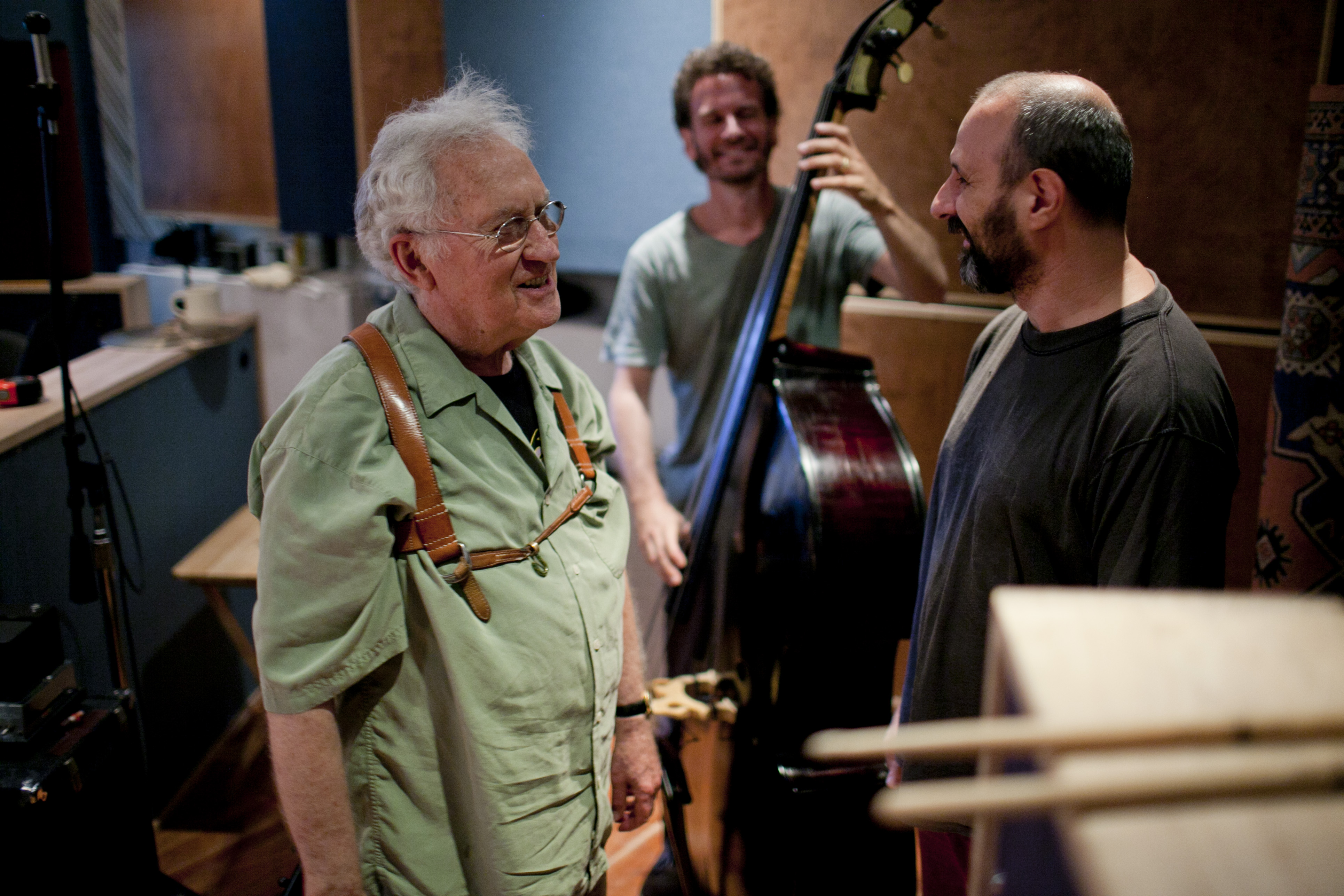
Yesterday we took Tootie Heath to his old neighborhood in South Philly.

He stood outside the house he grew up from 12 years on.

IMG_3968

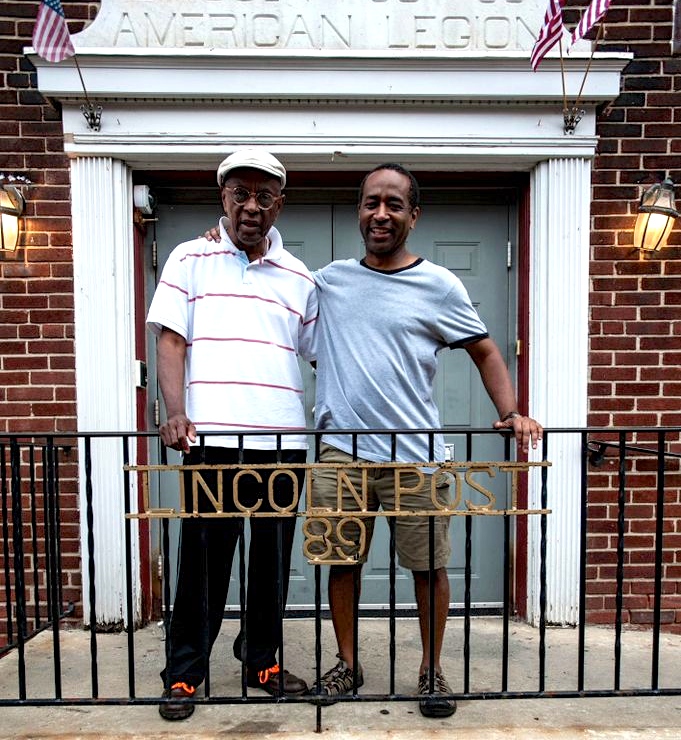
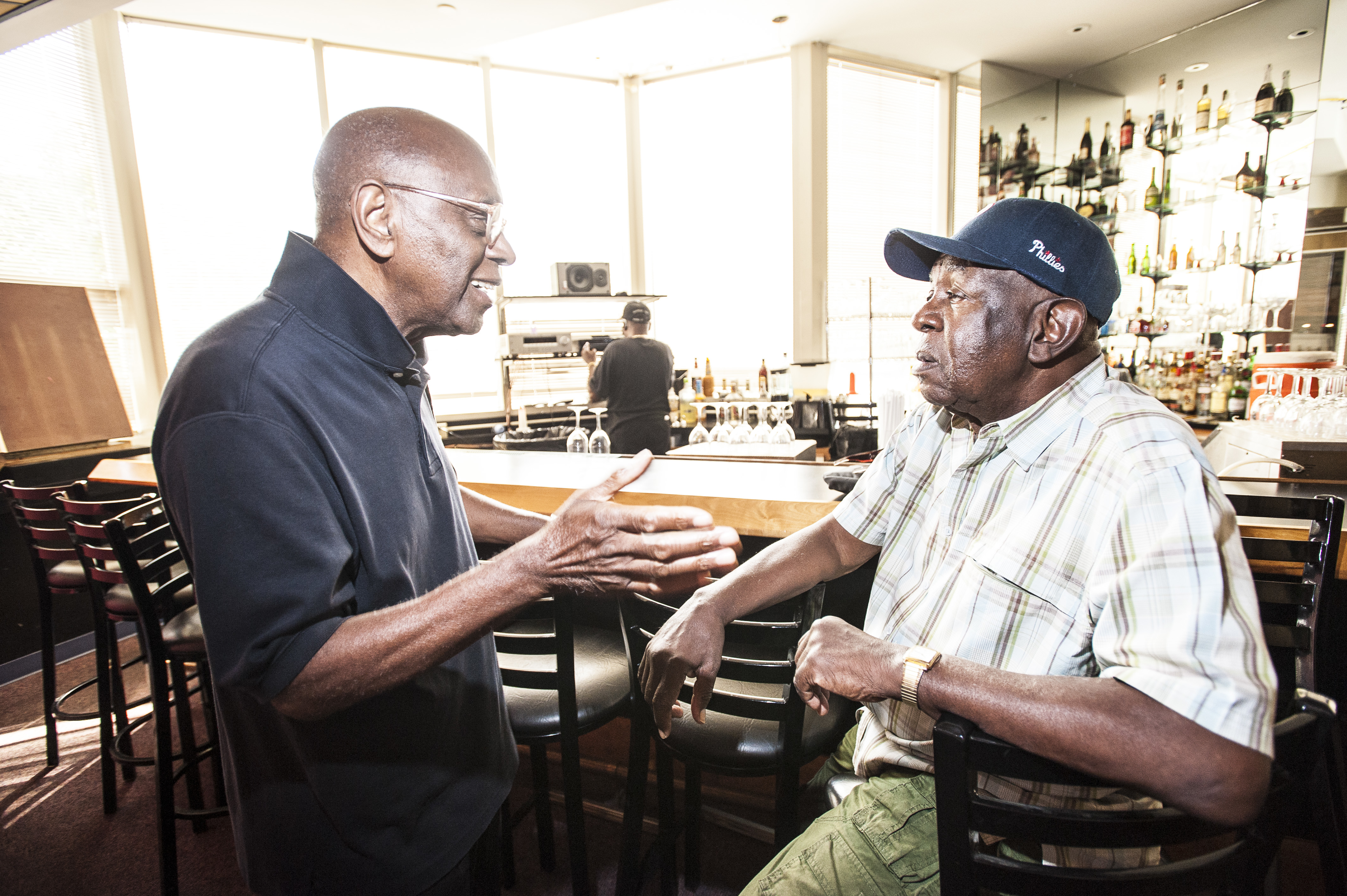
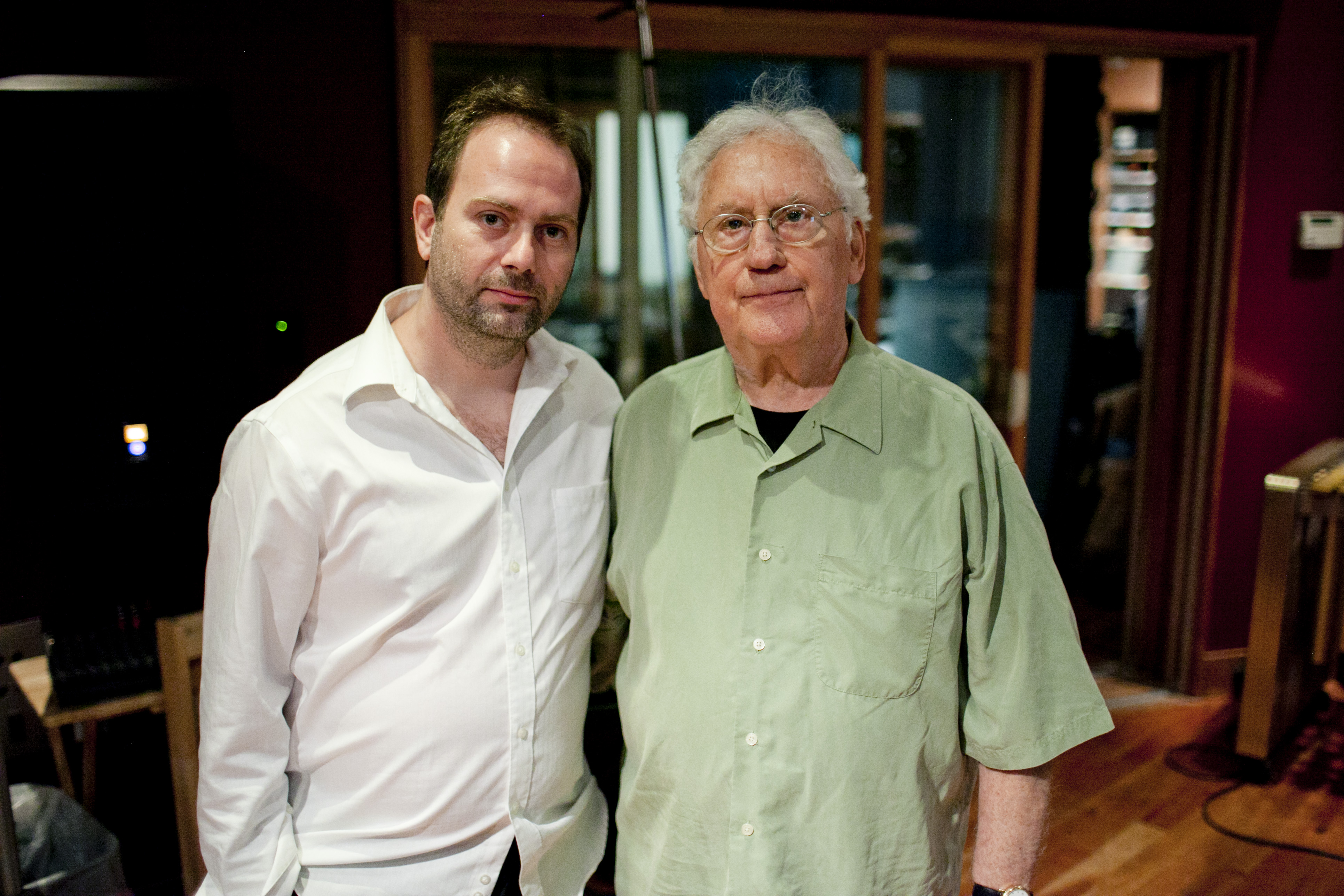
His old buddy saxophonist Sam Reed still lives in the neighborhood, and they posed outside the Lincoln Post, where Tootie heard his first live drums as part of the local marching band.

IMG_3964

Tootie Time

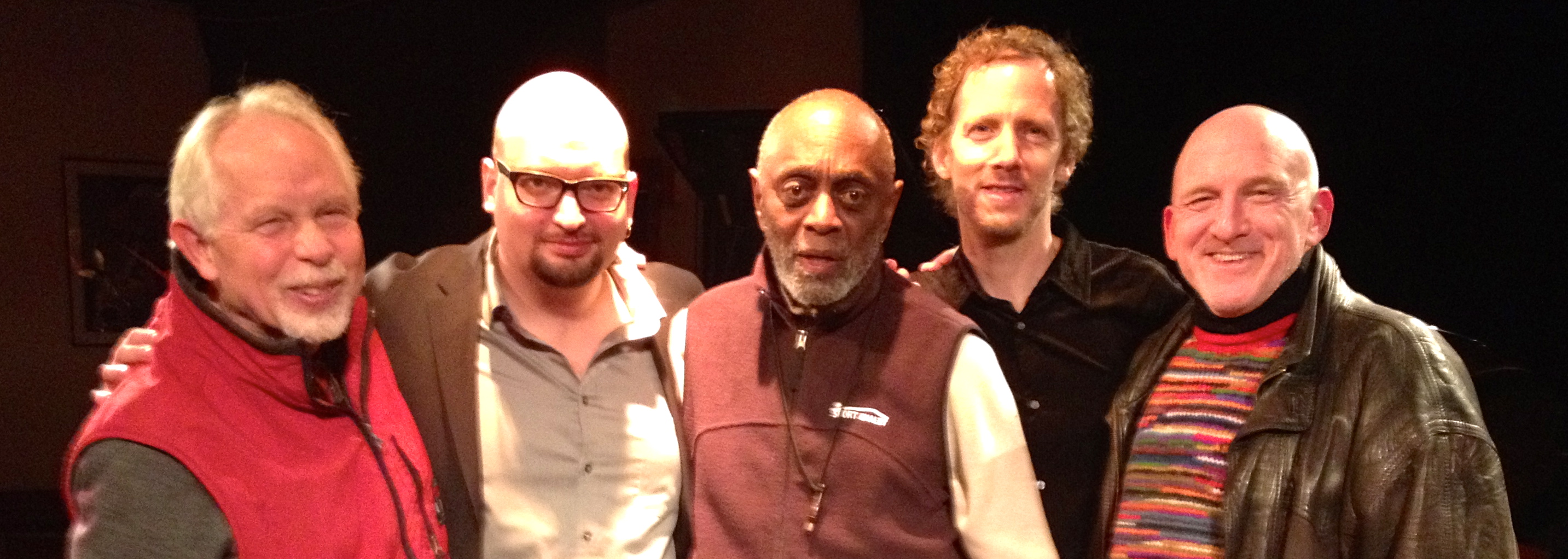
Tonight at the Falcon, we had some really nice special guests in the audience.

IMG_3956

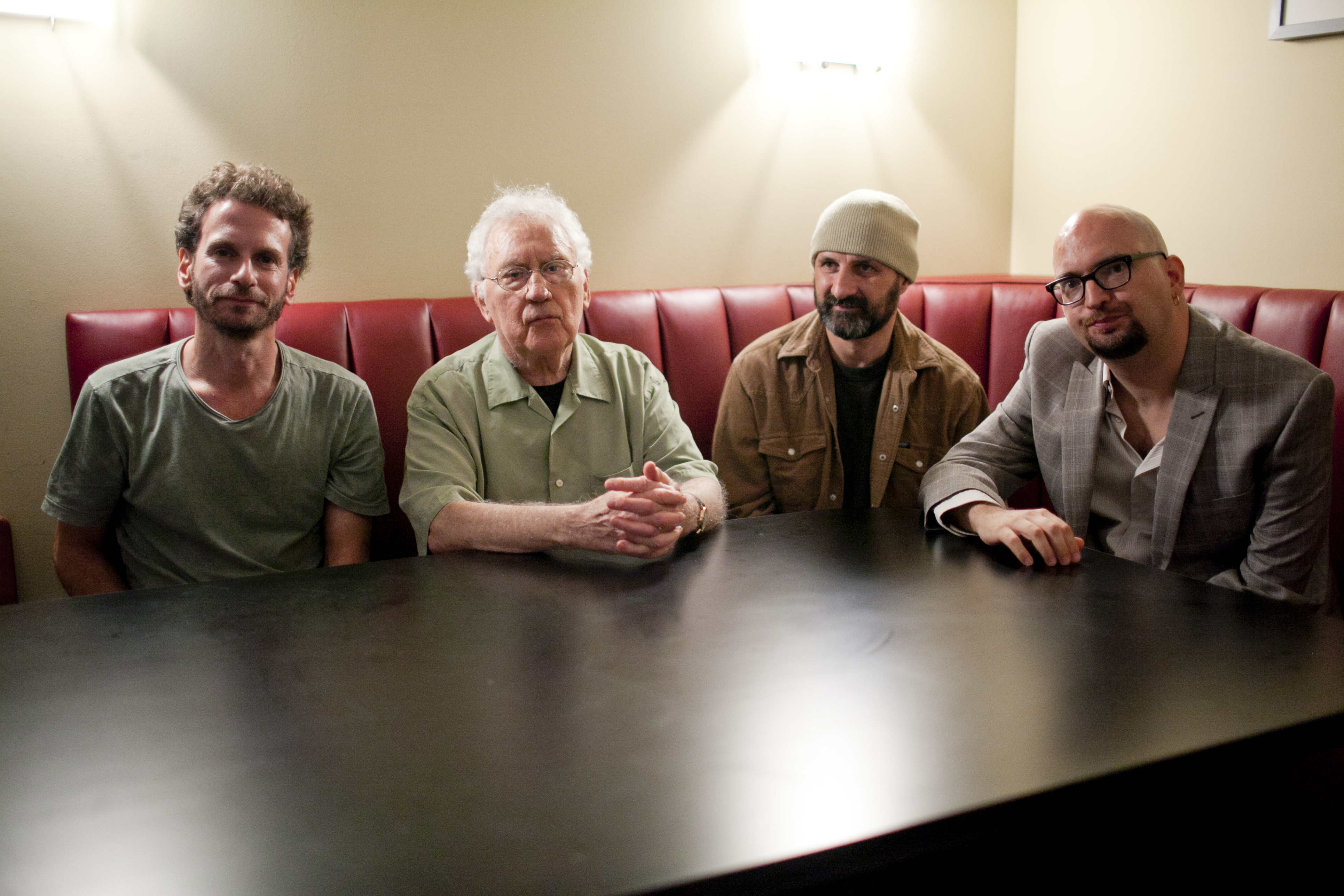
(Cameron Brown, me, Tootie Heath, Ben Street, Adam Nussbaum)

Cameron told me that his first time playing with Tootie was when Cameron was 19, with George Russell’s sextet, documented on Sextet at Beethoven Hall. That reminded me that when I was 19 or 20, I played with Cameron backing the Kim Kalesti/Marion Cowings vocal duo. Winard Harper was the drummer. (I couldn’t believe I had just moved to New York and was playing with people I had heard on records.)


A Visit to MAXJAZZ

For about 8 years, TBP has had a recurring gig at Jazz at the Bistro for Jazz St. Louis.

That very first time at the club all those years ago, there was some killing bebop piano blues on the stereo and I asked the bartender who it was. A man next to me said, “Mulgrew Miller. I’ll bring you a copy tomorrow.”

It was Richard McDonnell, the owner of MAXJAZZ and a mainstay of the thriving St. Louis jazz scene. The record in question was Mulgrew live at the Kennedy Center playing “Relaxin’ at the Camarillo” with Derrick Hodge and Rodney Green.

Over the years Richard has hung out with us quite a bit. He’s a jazz fan from the old school: he played saxophone and heard everybody was anybody. In 1999 he started a label to showcase the kind of jazz he really loves.

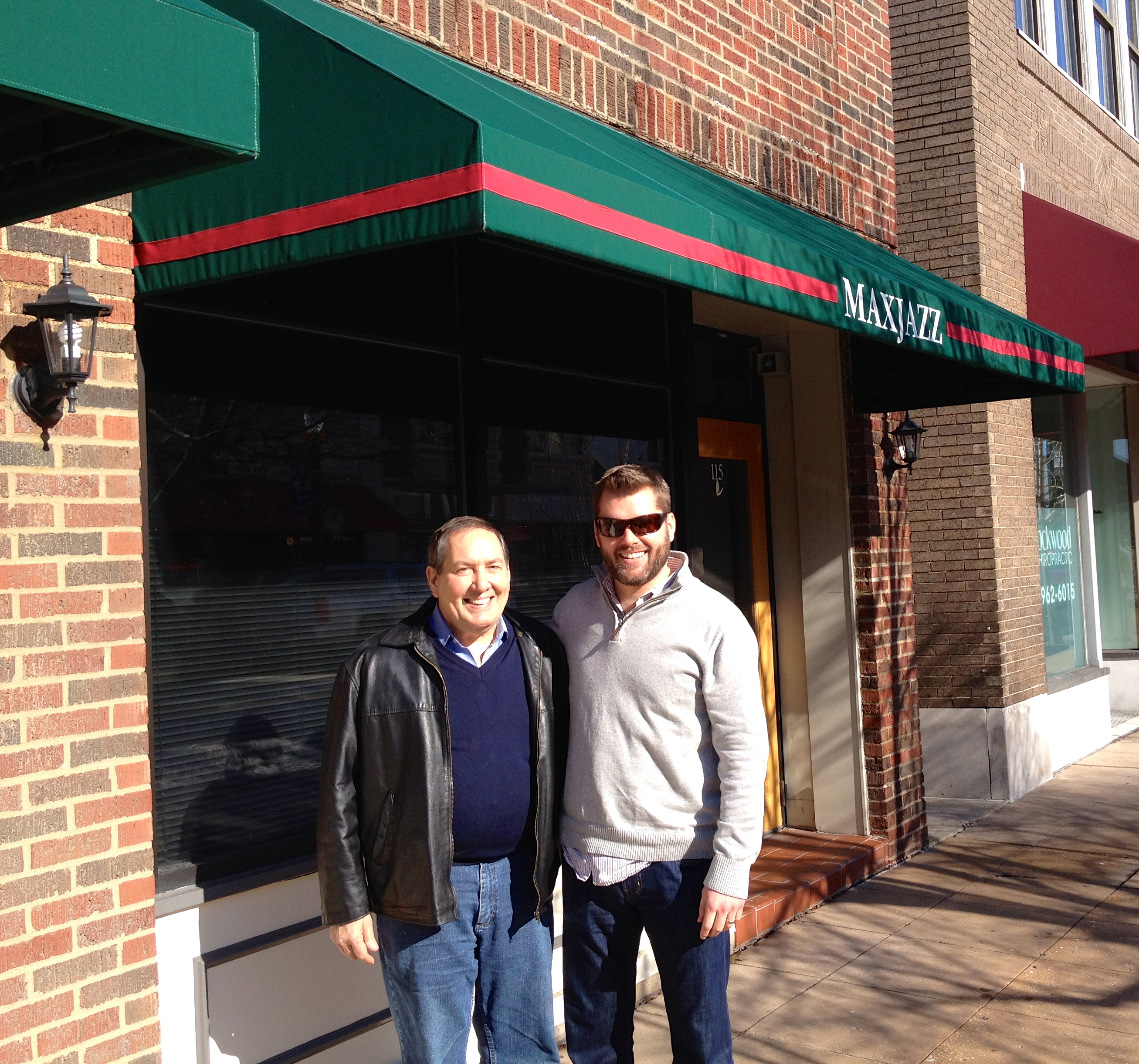
Today his son Clayton, who works with Richard, took me out to the MAXJAZZ offices in Webster Grove.

IMG_3903

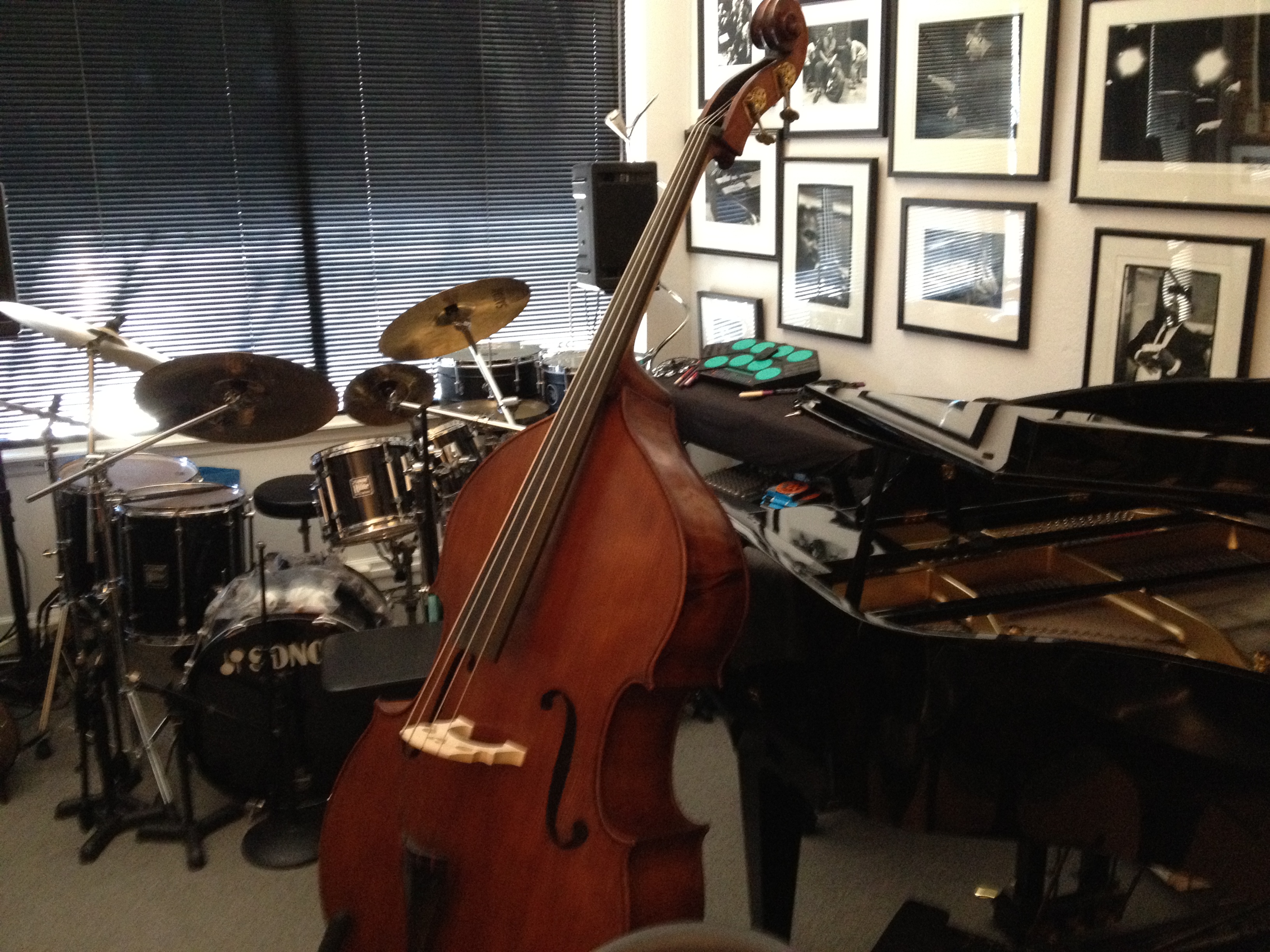
The offices are comfortable and stocked with instruments, photos, and jazz memorabilia.

IMG_3875

IMG_3893

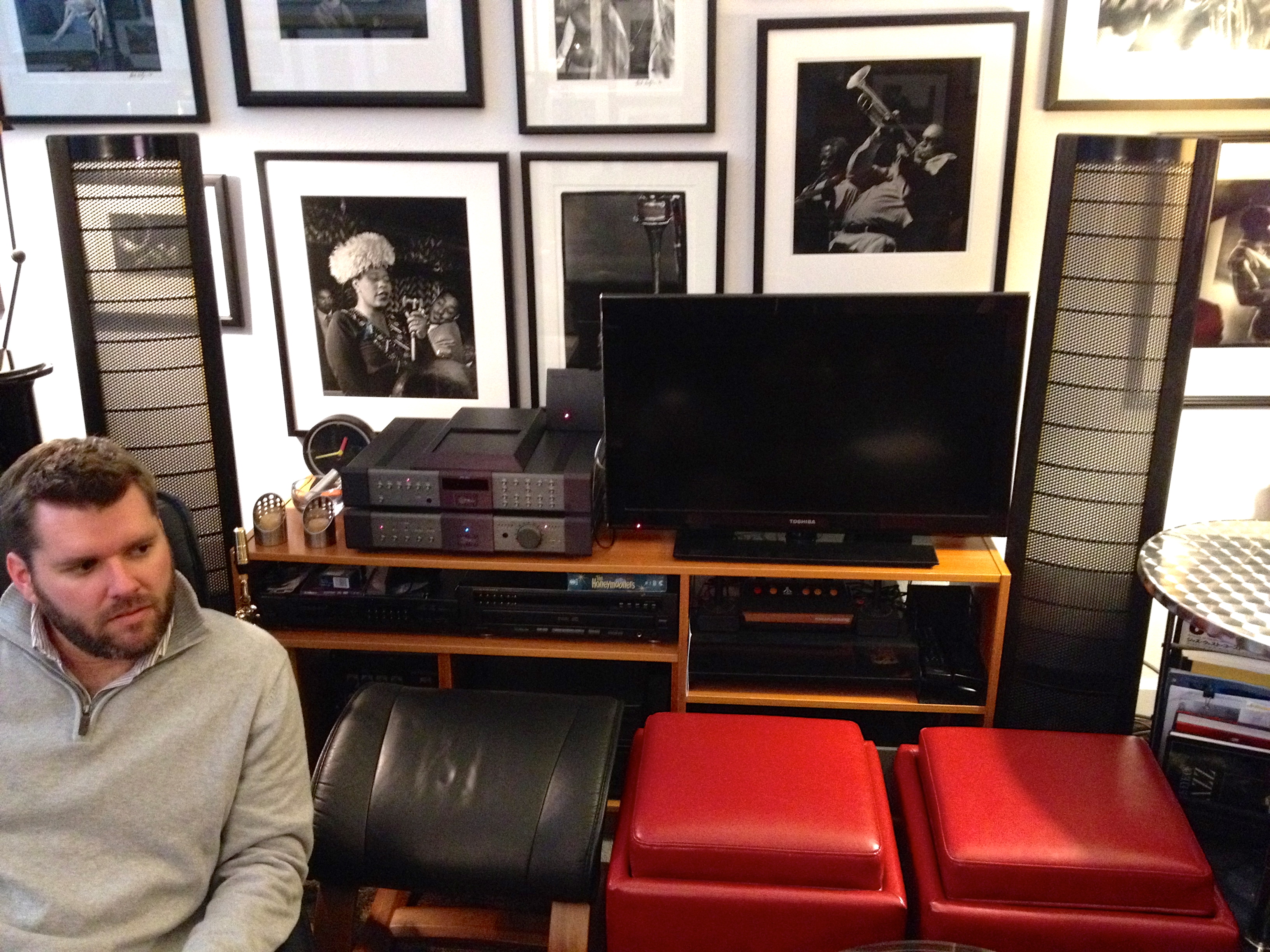
Here Clayton listens while Richard and I talk a mile a minute: Coltrane, Kenny Kirkland, Joe Henderson, Al Foster, other favorites.

IMG_3894

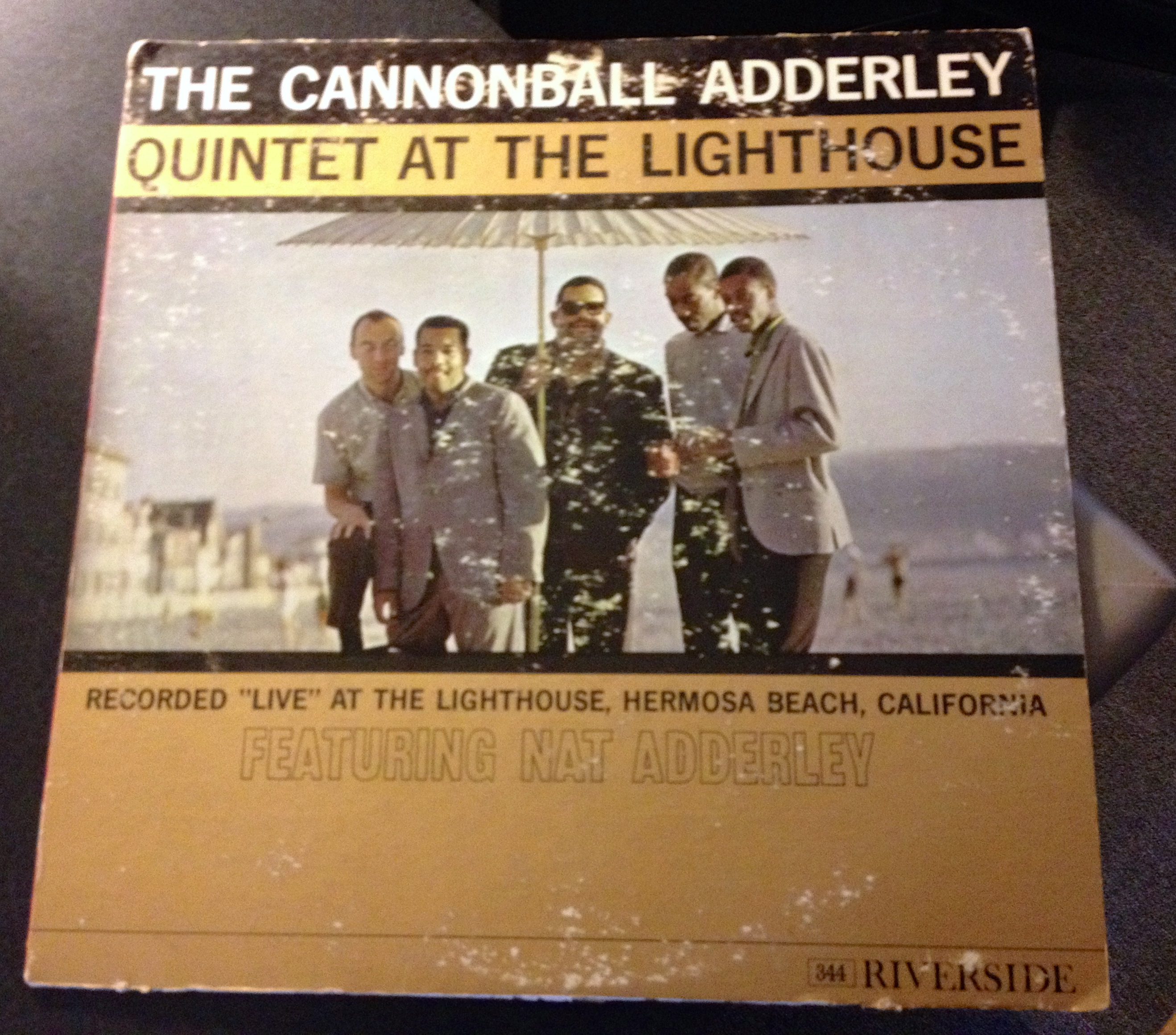
At a Kenton camp, Cannonball Adderley was Richard’s section leader. Richard shared an amusing story of telling Cannonball he had just gotten work done on a Frank Wells custom mouthpiece. Cannonball responded, “I play a Meyer 5.” (This is the most standard mouthpiece.)

Richard said, “He could have blown on a piece of plumbing and it would have sounded good.”

Then he brought out an LP purchased new in 1963. Still sounds and plays great, although the cover is a bit weatherbeaten.

IMG_3905

Richard looks for sound and melody in his artists. At this point there are about 80 MAXJAZZ CDs on the market.

IMG_3889

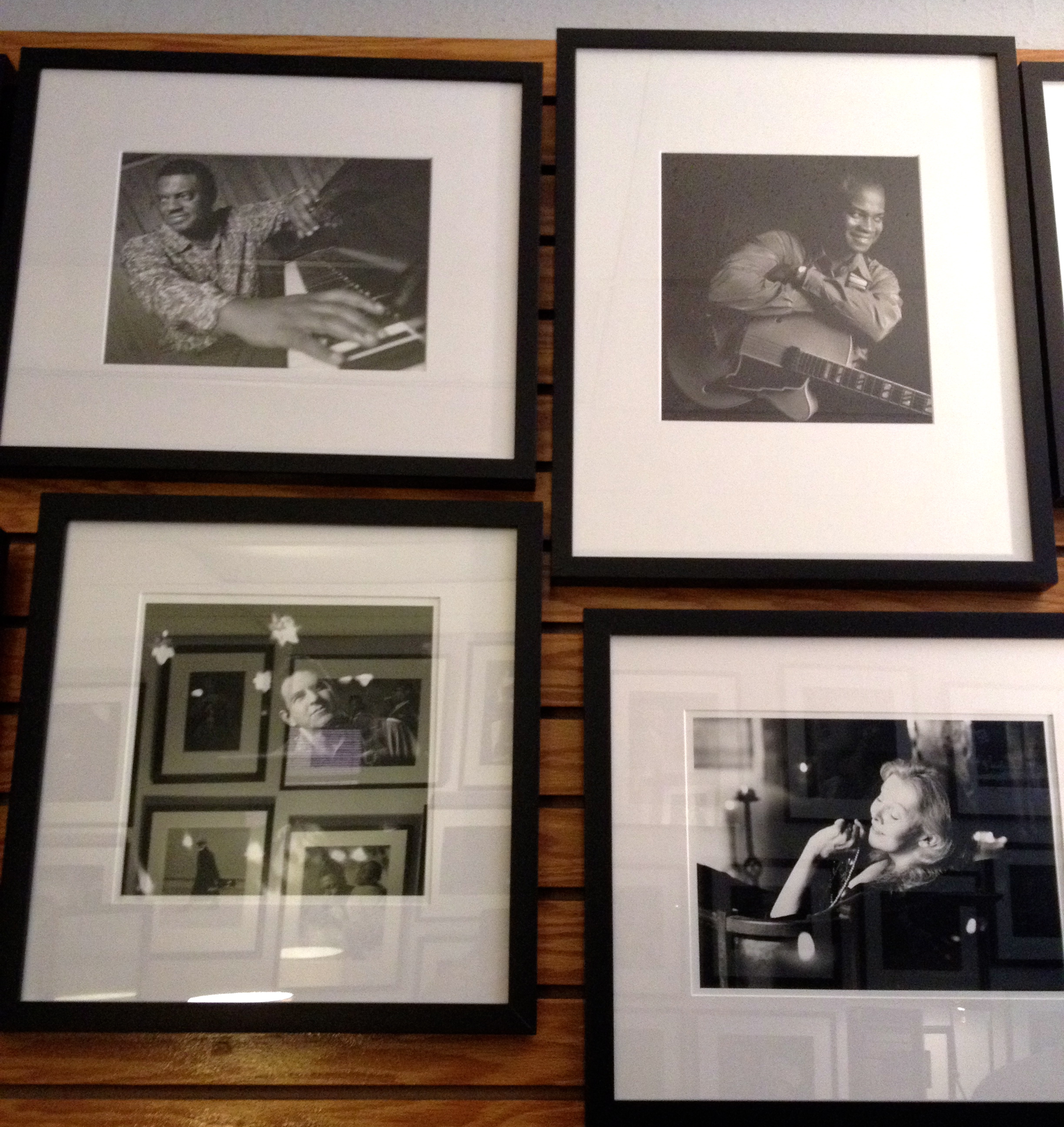
Jimmy Katz took these framed shots of important MAXJAZZ artists, Mulgrew Miller, Russell Malone, Bruce Barth, and Jessica Williams.

IMG_3898

The latest three releases are by Ben Wolfe, Ben Paterson, and Emanuele Cisi. I got to walk with fresh copies, a nice perk.

IMG_3880

Yusef Lateef (by John Rogers)

In addition to working with many others, John Rogers took the photos for several recent albums that I play piano on: Costumes Are Mandatory, Tootie's Tempo, All Our Reasons, and the forthcoming Billy Hart One is the Other.

John has published a lovely story about Lateef on A Blog Supreme, and offers more here:

After the publishing of the article for NPR and even before, Ethan and I had already been talking about sharing this story for DTM. I recently read the following quote from Yusef on his funeral guest book.

"I will watch you leave until you're gone – for I will never turn my back on those I love."

This was in reference to the fact that Yusef would always watch his friends depart his company.Yusef did it for us that first day, but I did not know until a few days ago that he would always do this for Ed and apparently lots of other people as well. For me that's a beautiful thing I will try to incorporate into my life.

As my friends all well know I am what tattoo people call a tattoo collector. On my chest I have some initials on each side: PM for Paul Motian and above that the words " Remember the good times". On the other side MB for Marion Brown and above that a hummingbird and the words "Stan the glad man" for my buddy Stan Rawls who took his own life. In the center is my heart chakra surrounded by a lion and a elephant for Ed and his teaching me about reggae music and culture from a young age. Above that is Yusef's eye to watch over me all the days of my life in this world. To protect me and be with me because real friendship never dies, and with my brother near my heart, I will never be alone.

John Rogers

Brooklyn NY, Dec 25 2013

Chest tattoo crop

Masterpieces, Curiosities, Farewells, Anniversaries, Societies

Jazz collectors and serious fans know there’s nothing else like Mosaic Records. At this point they have curated hundreds of the finest box sets ever produced. These sets are limited editions and appreciate in value: If the Monk, Bud Powell, Mingus, and Herbie Nichols LP boxes I saved up for in high school were in pristine condition they would fetch a lot of money today.

Apart from the music, the booklets are extraordinary, full of rare photos and informed liner notes. An important seed for DTM was planted by the exquisite essay by Roswell Rudd for the Nichols box.

The latest Mosaic release The Complete Clifford Jordan Strata-East Sessions collects two Jordan albums, In the World and The Glass Bead Games, and several more that Jordan produced: Cecil Payne Zodiac, Charles Brackeen Rhythm X, Wilbur Ware Super Bass, Pharoah Sanders Izipho Zam (My Gifts), and the previously unreleased Shades of Edward Blackwell.

Jordan is one of the great jazz tenor saxophonists, a man who always sounded like the blues but who had no problem embracing the avant-garde. The crown jewel of the set, Glass Bead Games, is widely regarded as one of his best albums. (Recently I called it “…A marvelous document of a kind of post-Coltrane black music that honors the Aquarian Age yet still has tough hard-bop roots.”) In addition to the unforced spirituality of the leader’s tenor, Glass Bead Games is a terrific place to appreciate Billy Higgins playing a variety of soulful grooves. These days I regard Elvin Jones and Billy Higgins as part of the same family, and Glass Bead Games just might be Exhibit A.

Higgins always credited Ed Blackwell as his teacher, and for those that care about Blackwell, this box is a kind of holy grail. For years a bit of In This World was the only example of Blackwell and Wilbur Ware playing together, although discographies listed 1968 sessions led by both featuring the other. Finally, last year the Wilbur Ware Institute put out Super Bass with poor sound and indifferent production. The Mosaic set improves the sound (especially by boosting the drums), lists the composers of the tunes, and includes the two Blackwell/Ware tracks never heard before from Shades of Edward Blackwell. Since both dates are from 1968 and have piano-less quartets with Don Cherry, it is natural to think of them as companion pieces.

I wrote before:

For Wilbur Ware, music was a way to have a family and a community; an expression of his masters and of himself; a way to rise up out of oppression. Super Bass is about as Afrocentric as you can get. The session was originally for the Dolphy series on Strata-East, the first significant jazz label run by black musicians. All the musicians are basically untouched by any European classical ethos, instead incarnating what Ralph Peterson called the “Energy of the motherland and the fire and fury of what we’ve survived as people in the Middle Passage.”

Wilbur doesn’t play anything that isn’t intimately bound up with oral tradition. Neither does Blackwell. What a pair! Intensely personal, tribal, indomitable patterns emanate in a circular and almost completely un-improvised fashion from the bass and drums. They swing hard, but they aren’t going to help anyone else swing. They are immovable forces. Fortunately, Cherry and Jordan never needed anybody’s help to sound great. It’s particularly exciting to hear the horns deal with some mid-tempo rhythm changes on “Wilbur’s Red Cross.” Jordan is Sonny Rollins on acid, Don is salutations, fragmentations, and flashes of pure melodic invention.

There are two terrific solo bass pieces. “Symphony for Jr” seems to reflect on past experiences and “By Myself” is mostly fabulous walking. Both are informed by a collection of canonical jazz quotes that Wilbur plays in his own way. They can’t be played better than they are here: Wilbur’s sound, phrasing and time are impeccable.

From the new Blackwell session, “Farid” is the obvious keeper, where Blackwell and Ware play a menacing groove together for eight precious minutes. There’s no good academic way to talk about this kind of simulaneous rigor and looseness. Probably it is essentially African in nature. Don Cherry sounds so good playing on top of it, I almost started dancing. The tune is by mysterious Luqman Lateef, an excellent tenor player who apparently never had a professional career.

The rest of the Blackwell date includes several nice pieces for drum choir that are a bit monochromatic for home listening. (Live would be another thing.) It’s more pure fun to return to Charles Brackeen’s Rhythm X with Blackwell, Cherry, and Charlie Haden. Again, the sound is a bit rough but I’m sure Mosaic has done the best anyone has managed yet (at least one of the previous CD issues was unlistenable). I always contend that Ornette Coleman’s greatest music was the sum of its parts: the “Old and New Dreams-esqe” aura of Rhythm X — not to mention much of Super Bass and “Farid” — will delight any traditional Ornette fan.

It’s a shame there isn’t more of this kind of 1968 music extant. Ware, Blackwell, Jordan, Cherry, Haden, and Brackeen are all in good form and eager to experiment. But apparently we have Clifford Jordan to thank that any of it was recorded at all.

There is a bit of a downside. Jordan clearly didn’t have a budget: Besides the raw sound, the piano Wynton Kelly plays on two records is woefully out of tune and uncharismatic. And perhaps Jordan didn’t have enough experience to put together impeccable sessions. Was Jordan’s edict to record only original tunes that smart a decision? Some of the tracks are the thinnest of excuses for new material (“Wilbur’s Red Cross” is “Red Cross,” “A Real Nice Lady” is “Sophisticated Lady”), but honestly that bothers me less than full albums of tunes that the ensembles don’t know well enough to make their own. Most obviously, Payne’s Zodiac is a missed opportunity: if it had been a comfortable blowing session of standards there’s every chance it would have been immortal. Instead the mixed bag of originals with struggling Kenny Dorham and awkward overdubs by Kelly is almost hard to listen to.

Still, full props to Jordan for attemping some amazing things that a conventional producer wouldn’t have allowed. “Ouagadougou” from In This World is one of the most outrageous jazz tracks ever recorded. A sardonic D-minor line played unison by Jordan and Richard Davis leads into near-chaos with Richard Davis, Wilbur Ware, Ed Blackwell, and Roy Haynes all playing mid-tempo modal swing together. I don’t listen to much “extended chant” jazz — the Pharoah Sanders cuts here are for someone else, not me — but my god, does this chaotic “Ouagadougou” conjure the sublime. Dorham and Kelly sound great on this tune as well. Along with Ware this is their sunset period, and it’s nice to have them going out in such a celebratory and Afrocentric fashion.

Posterity is lucky that Clifford Jordan gave all this experimental and uncompromising music a shot. The best of it is sensational. Mosaic’s production is outstanding as always: The photos are marvelous and the notes by Willard Jenkins informative.

Jazz has lost some major figures recently. I don’t have a unique take on Chico Hamilton, Jim Hall or Stan Tracey. I admire them all, and wish I knew their music better.

To mark Hall’s passing I downloaded These Rooms with Tom Harrell, Steve LaSpina, and Joey Baron. Surely one of the best from 1988; Hall and Harrell are a perfect match. I’ve never heard better LaSpina and this is one of the best periods for Joey’s gentle jazz playing.

I’d also note that Hall was one of the great duo guitarists. In addition to a lot of fabulous sides with Ron Carter, there’s also a rewarding live record with Bob Brookmeyer.

As for Tracey, one time I wandered way, way out to the the fringes of London to hear him at a little club. He was known as the “Monk-influenced” English pianist, so I wanted to check it out. The gig didn’t make much of an impression; he was pretty good but the rhythm section wasn’t professional. However recently I heard some live Tubby Hayes with Tracey from the late 50’s that was terrific.

DTM just celebrated Morton Gould’s 100th birthday but did nothing for his exact contemporary Benjamin Britten. Again, this is someone I need to learn more about. I have tickets for Billy Budd at BAM in February. Read Alex Ross: both a personal note in his blog and the more official story in The New Yorker.

Via Alex, I looked at this intriguing polemic by John Halle and Halle’s further thoughts. Clearly Halle is on to something. I remember how furious I got at David Byrne for attacking the idea of “learning Mozart.”(My essay is “Same As It Ever Was.”) But I don’t know political theory and get lost in some of Halle’s more erudite references. Also, as I get older, I’m less concerned about the state of classical music in America then the state of jazz music in America.

What Halle’s piece made me think of, once again, is my slogan “SAVE COMMERCIAL MUSIC.” I don’t know how to save the symphony, but is it too much to ask for intellectually stimulating music in our current, socially relevant television and film? At one point our country dominated those industries with imaginative scores, which were usually informed by European classical music. These days big-budget entertainment frequently uses home studio tracks made by composers who are only one step removed from a demo track from the first keyboard you’d run into at Guitar Center. Surely some of Halle’s worthy concerns about class would be lessened if society encouraged at least a minimum amount of harmonic and rhythmic complexity in our sonic wallpaper.

Remember: SAVE COMMERCIAL MUSIC.

I Used to Encourage Everyone I Knew to Make Art

Belatedly, I've finally looked at Exit Through the Gift Shop. Some movies have a "long finish." I dreamed about Exit last night and it was in the forefront of my consciousness today. I expect to be considering it from different angles all week.

There's nothing to be said about the film if you haven't seen it. However — if you have seen it and are still thinking about it, too — at the moment I concur with Matt Cale's smart parsing at Ruthless Reviews.

The New York City edition of Banksy's website has a month's worth of brilliance on offer. I may even make the T-shirt.

Notes on Albert Murray Memorial

1. The opening slow drag “Flee as a Bird To the Mountain,” where Wynton walked in his NOLA-styled crew, was utterly marvelous. Actually I think this is some of Wynton’s most utterly compelling music these days: when he takes it all the way back.

2. Loren Schoenberg, director of The Jazz Museum in Harlem and my mentor in Lester Young studies, was in the parade and blew a couple of tenor solos with the full band as well. Hi Loren!

3.  In response to LaTasha N. Nevada’s reading of Elizabeth Alexander’s “Omni-Albert Murray,” Aaron Diehl added some boogie to a personalized, delicate, una corda rendition of the Lion’s “Echoes of Spring.”

4. The unquestioned highlights were personal essays about and recollections of Murray by Leon Wieseltier, Douglas Brinkley, Rob Gibson, Michelle Murray, Sidney Offit, and Erroll McDonald. Uniformly first-class, these diverse speakers gave us an astonishingly broad portrait of Murray the man, the mentor, the martinet, the magician.

5. The US armed forces provided comic relief: Colonel Robert S. Spaulding III read a 50’s-era letter from Murray to Ralph Ellison where Murray complained about both the Air Force (“I like the Air Force less and less”) and the Miles Davis/Gil Evans collaborations (“no match for Such Sweet Thunder“).

6: Jimmy Heath read a terrific Murray bit about going to Columbus Circle to Harlem from South to a Very Old Place while the audience looked out at Columbus through the huge windows in the Allen Room.

7. Dan Nimmer played even softer than Aaron when accompanying Joe Temperley on bass clarinet in “Single Petal of a Rose.”  Even though I don’t think Duke or Lion used it much, apparently JALC is where jazz pianists love una corda. At any rate, the audience adored the Temperley/Nimmer duo, and with good reason.

8. All the music was excellent, with the possible exception of Coltrane’s “Alabama,” done by Victor Goines and rhythm section, which was way too professional and uncommitted for my liking. (“This is some serious stuff, man!” as Albert Murray would say.) My favorite tune overall was a thrilling “Goin’ To Chicago” with Brianna Thomas and full band. Damn, that was really swinging. I need to hear more of her! Ben Wolfe held it down wonderfully. So did Christian McBride in a trio “Epistrophy” with Diehl and tasteful Ali Jackson. However, their rather standardized small band ramble through Monk showed how hip it was to hear the JALC band’s tight covers of “Happy Go Lucky Local,” “C-Jam Blues” (great Marcus Printup trumpet chorus), “Blues in Hoss’ Flat,” and the concluding NOLA-sized traditional parade trilogy “Oh, Didn’t He Ramble,” “In the Sweet Bye and Bye,” and “Over in the Gloryland.”

9. Wynton and Judith Jamison read moving excerpts from Murray’s semi-autobiographical novels. They were hardly the only two present: Unsurprisingly, the audience held the greatest number of prominent/significant Black intellectuals I ever expect to be in the same room with.

10. I scanned the room carefully. Apologies if I missed someone, but as far as I tell, there were absolutely no “younger white experimental jazzers” present for this free event. Too bad for them! Their music would only get better if they cared about this side of things, too.

UPDATE: That last tart sentence is related to my criticizing 10 young pianists at the Banff workshop for not recognizing “Carolina Shout.” As I wrote before:

It’s really no big deal if any given young jazz pianist isn’t interested in James P. Johnson. One’s muses needn’t include early jazz if one wants to make good improvised music. But ten out of ten pianists not recognizing “Carolina Shout” really bothered me.

Those so critical of Wynton should remember that this is the battle he’s fighting: to get respect for people like James P. Johnson. Not just respect as a fine pianist of the Jazz Era, but respect for James P. Johnson as an intellectual property vital to the American identity.

Today, it wouldn’t have been a big deal if any given young cool white jazz player couldn’t make the Albert Murray memorial. But in a city that must house at least 2,000 of them, I noticed their absence.

A penny dropped for me a few hours later. The lack of young white faces reminded me of Murray’s obituary by Ratzo Harris in NewMusicBox. Harris is a brillant bassist and absolutely my senior: indeed, I suspect every note of Kenny Werner’s Introducing the Trio can be found engraved in my brain somewhere.  But I just can’t understand why Harris initally sounds so suspicious:

While Murray wasn’t a musician, his influence on music today—for better or for worse—is huge.

After this dark initial salvo, the rest of the obit is pretty positive. But what an introductory qualifier! And my god, Murray isn’t the only one his page that might deserve some qualifiers. Marian McPartland might have been introduced as, “A talented pianist most comfortable in ballads, whose mettle was never tested in the crucible of serious modernist black jazz.”

Hey, I dig Marian. I was on her show, it was a good experience. Also I am not uncritical of Murray. But I’d hate it if Ratzo Harris thought that Piano Jazz was really hipper than JALC.

Another belated penny drop was a memory of attending David Tudor’s memorial in 1996. While I didn’t really know anything substantial about Tudor, John Cage, or Merce Cunningham at that point, I knew enough to walk into Judson Church on a rainy day. After enjoying Tudor’s wild experimental “Rainforest,” Cunningham delivered a long, powerful, and charismatic history of his most important musical collaborator.

I’ve traded on the story of Tudor’s memorial for years: making friends with choreographers, flirting with dancers, listening to historians. After today, I’ll have the same kind of ammunition if I ever meet Henry Louis Gates. (Meaning: at least I can talk about the Albert Murray memorial with him.)

Always go and check it out. It’s what we are here to do.

Tootie’s Tempo and Philadelphia Beat

Beat

Philadelphia Beat, available on Sunnyside Records.

All Beat photos by Michael Perez.

ZLQ3_dci1xCJoHq9yk0YVgMoh9etoULFA2eKkeFJDQs,7pzO-llLKW4UAg3zE5W6R5RGzhXbOe-X6_TRH-nnKGE
Tootie Heath and Hyland Harris

The booklet of Philadelphia Beat includes new and vintage photos, some track-by-track liner notes by me, and the following commentary by drummer/historian Hyland Harris.

It was one thing just being around Tootie and watching him up close… his every move, every observation, and of course every joke that rolled off of his lips. That was already enough to send me back into the shed and rethink everything.

However, it was the Clef Club get together that did me in.

You know there is this undying effort to whiten up the history of jazz. It just refuses to go away.

My retort was always… look at the great Migrations… black people took an evolving culture with them and this is where all of these strong jazz communities flourished. How many jazz musicians came from Salt Lake City?

Years ago I hung around Bob Hurst and Jeff Watts saw them constantly trying to (humorously) one up each other with the Detroit vs Pittsburgh jazz wars… this is when I began to notice these regional differences are really minor. The commonality was more important: jazz was a big deal in these working class black communities and these communities nourished and continually produced talent.

Unlike today’s musicians these musicians were socialized in this environment and in the greater world. Trane and Tommy Flanagan played dances and R ’n B gigs; they were also drafted into military service, got married young and lived in these communities.

It came together for me seeing Tootie and Roker and Buster — three of the baddest muthafuckers on the planet — talking everything from paratrooper experience to doing gigs with Sonny Stitt weeks out of high school. Any performance we enjoy by these musicians is not just a testament to how great of an artist these guys are but also the community that produced them. The above list of Philly jazz cats represents the fruit of a community. However we should also think of the names we will never hear about: the bakers, laborers, construction workers, house cleaners, doctors, and lawyers who were the fabric of that community. Without them, Tootie and Buster would not have anyone to play for.

That stuff is never talked about but it was as clear as day at the Clef Club. For me, that is what “Philly Beat” is all about. — HYLAND HARRIS

On September 6, 2014, between sessions for this album, Tootie met some old pals and associates at the Clef Club, the first black musician’s union in the city. The closest friends Tootie still has in Philadelphia are Sam Reed and Billy Bonner (better known as Fundi). Among other things, Sam was the musical director for Teddy Pendergrass for many years. Fundi wasn’t a player but rather a proficient carpenter; eventually he would go to be tour manager for Herbie Hancock during the Mwandishi years. (Tootie got Fundi that gig.) Others coming to the event included Buster Williams, Mickey Roker, Bill Carney (who led the Hi-Tones with Tootie, Coltrane, and Scott) and additional friends and family. 

_DSC8761
Tootie, Buster Williams, Mickey Roker, Sam Reed

_DSC8674
Tootie Heath and Mickey Roker

_DSC6532
Billy Bonner (AKA Fundi)

_DSC8916
Bill Carney and Tootie Heath
Another hi-tones
Tootie Heath, Bill Carney, Shirley Scott, John Coltrane: The Hi-Tones

Reviews of Philadephia Beat:

Nate Chinen in NY Times

Jeff Tamarkin in JazzTimes

Tim Wilkins at WBGO

Step Tempest

Peter Margasak in Chicago Reader

Jonathan Frahm in PopMatters

Cormac Larkin in Irish Times

Interview with Tootie by Arun Rath for NPR

Simon Sweetman in Off the Tracks

Tootie's Tempo cover

Albert Heath/Ethan Iverson/Ben Street: Tootie’s Tempo, released on Sunnyside Records in late August 2013. Photo by John Rogers.

Albert Heath is the youngest of three powerful jazz brothers from Philadelphia. While still a teenager he was backing up visiting New York artists like Lester Young and Thelonious Monk. After moving to New York, he was with J.J. Johnson, the Jazztet, and the Bobby Timmons trio, and for while made so many dates for Orrin Keepnews it seemed like he was house drummer for Riverside records.

In the mid-sixties Tootie began the first of many extended sojourns in Europe: when living in Copenhagen was the first-call drummer for any serious visiting Americans like Dexter Gordon and Jackie McLean. He was a crucial member of one of Herbie Hancock’s first touring bands (the Hancock album The Prisoner is canonical) before joining one of Yusef Lateef’s most important groups. Since moving to California in the early ‘70s he has played less in NYC than most of us wish, although he keeps turning up with The Heath Brothers once or twice a year. An endlessly open musician, Tootie sounds comfortable on records with Ben Webster, Anthony Braxton, and Roscoe Mitchell; his own first album Kawaida is the only studio meeting between Don Cherry and Herbie Hancock. Recently he was the founder of The Whole Drum Truth, a provocative series of concerts showcasing percussionists in solos and ensembles.

Diverse résumé aside, Albert Heath remains at his core a classic bebop drummer. Today he is one of the few left who learned bop from the streets, not the schools. It is a wonderful honor and responsibility for Ben and me to share the stage with him.

Related DTM: Interview with Tootie Heath.

NY Times review by Nate Chinen.

Time Out NY review/preview by Hank Stheamer.

Chicago Reader review by Peter Magarsak. 

Los Angeles Times review by Chris Barton.

All Things Considered at NPR by Tom Moon.

Music and More by Tim Niland.

Larry Blumenfeld listens to record, gig, and interviews me about Tootie

NPR All Things Considered review by Tom Moon.

NYC Jazz Record review by Seth J. O’Connell.

DownBeat 4 1/2 star review by Ken Micallef.

Tootie is the cover story by Giovanni Russonello in the November 2013 JazzTimes

As everybody who’s met him can attest, Albert “Tootie” Heath is a natural storyteller. Now on offer is a special educational event perfect for schools and workshops.

Tootie’s Tempo: A Drum Story  is a unique multimedia journey that follows the migrations of drums and rhythms – from Nigerian talking drums to the innovations of jazz greats like Elvin Jones and Tony Williams. Designed for live presentation, it features as presenter the legendary Albert “Tootie” Heath.

Heath’s presentation is a rich narrative combining commentary and explanation of each of the diverse drum phases he has selected, such as: Batá drums, New Orleans parade music, and early big band percussion. Told through his one of a kind, engaging, and humorous lens, Tootie’s Tempo: A Drum Story is filled with moving personal anecdotes from Heath’s experiences contributing to some of the most integral decades of jazz. In this intimate and personal setting, participants will also be treated to live demonstrations of various rhythms, revealing their timeless power. Rare audio and video samples from the drummer’s own archive will be used to enrich the multimedia experience. The presentation, lasting about an hour, is designed with some flexibility in mind, allowing Heath to tailor it to different audiences depending on their musical backgrounds, age, and interests.

Perfect for students of all instruments, lovers of music, and anyone with an interest in history.

Tootie’s Tempo: A Drum Story can be booked through Vahagn Khachaturian of SoulPatch Music Productions.

(Soulpatchmusic[at]hotmail[dot]com)

A short sampling of the presentation (minus Heath’s dialogue and drumming) is viewable at flowvella.com/s/3g5b.

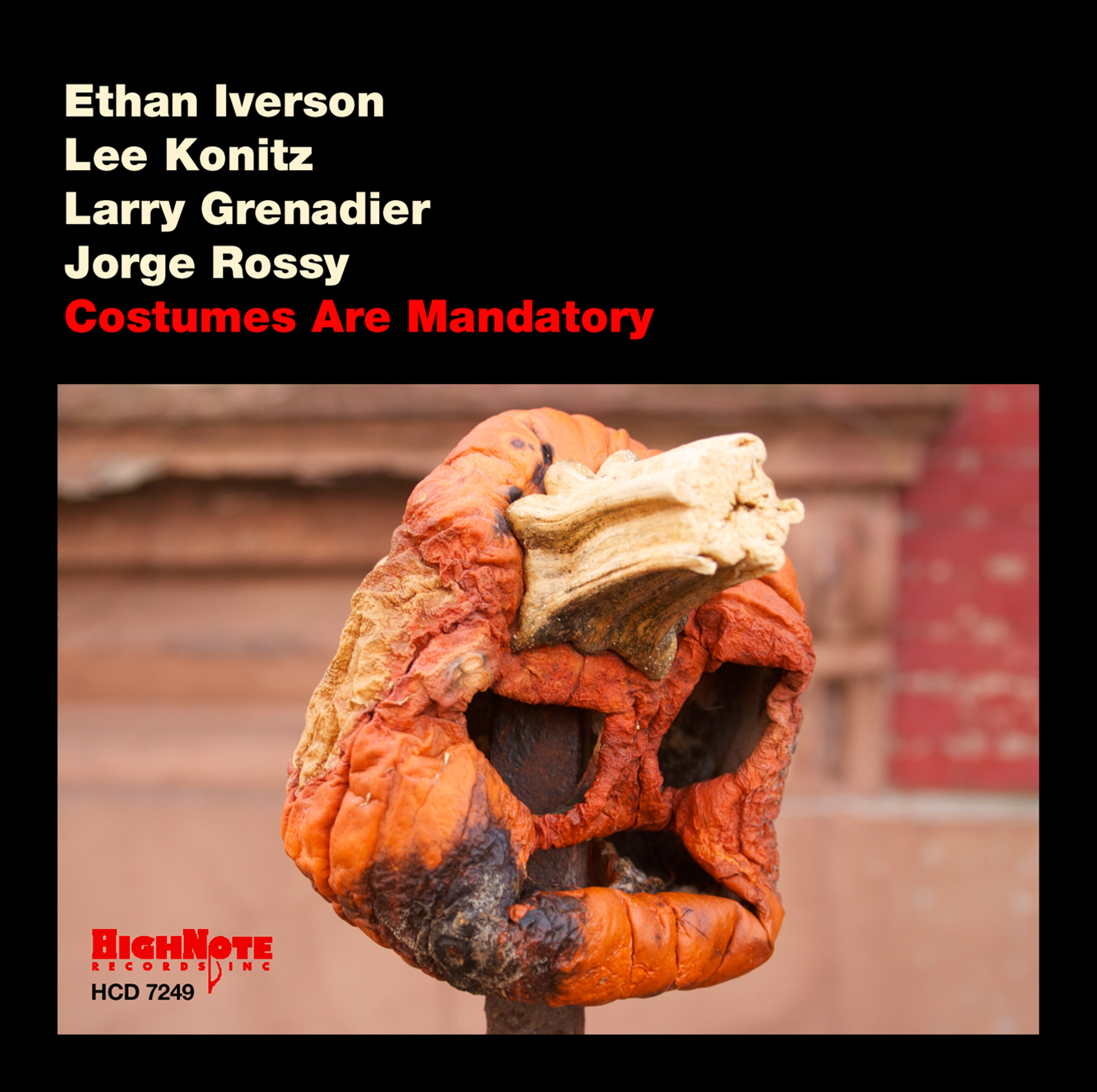
Costumes Are Mandatory

Costumes Are Mandatory cover

(cover photo by Julie Worden)

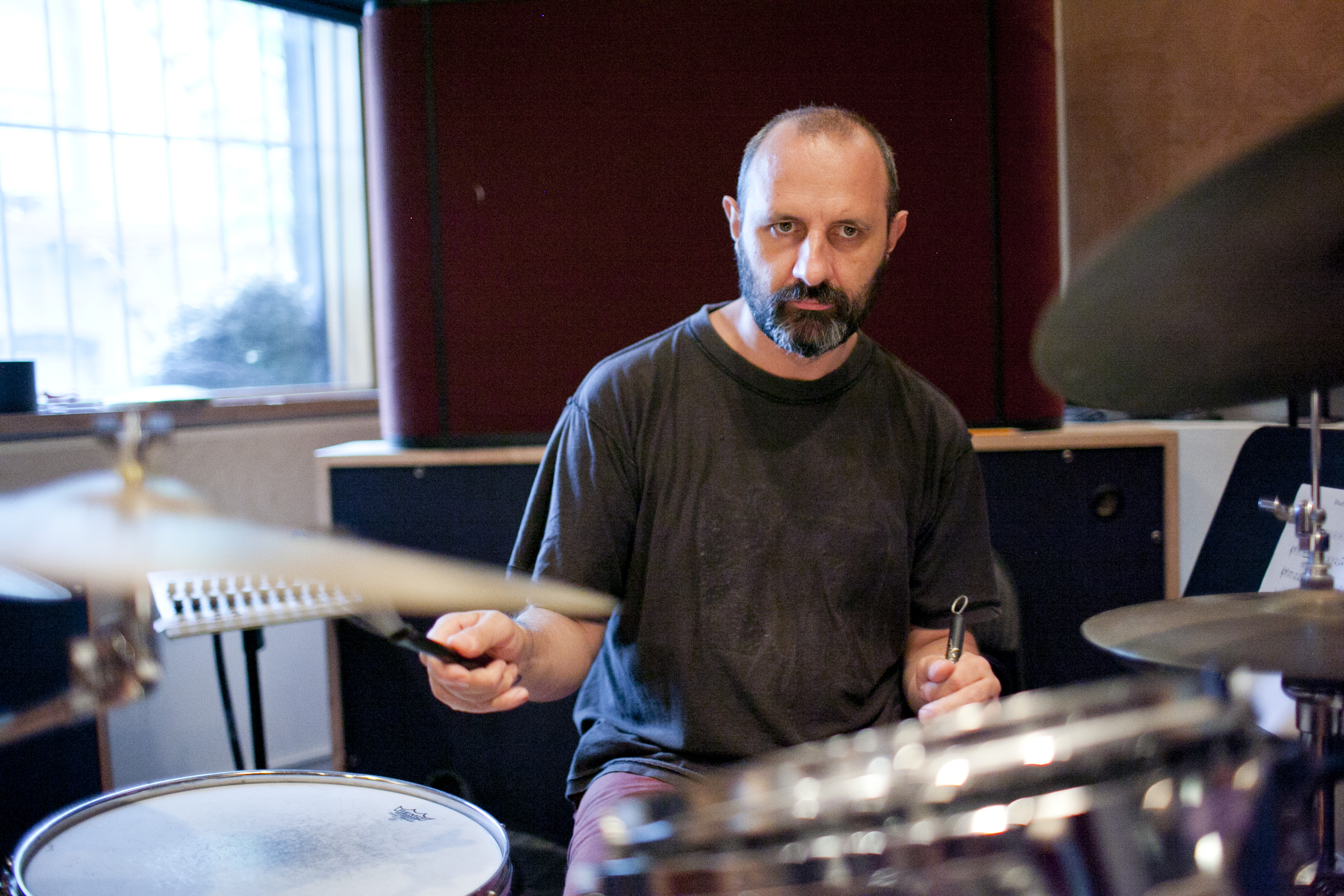
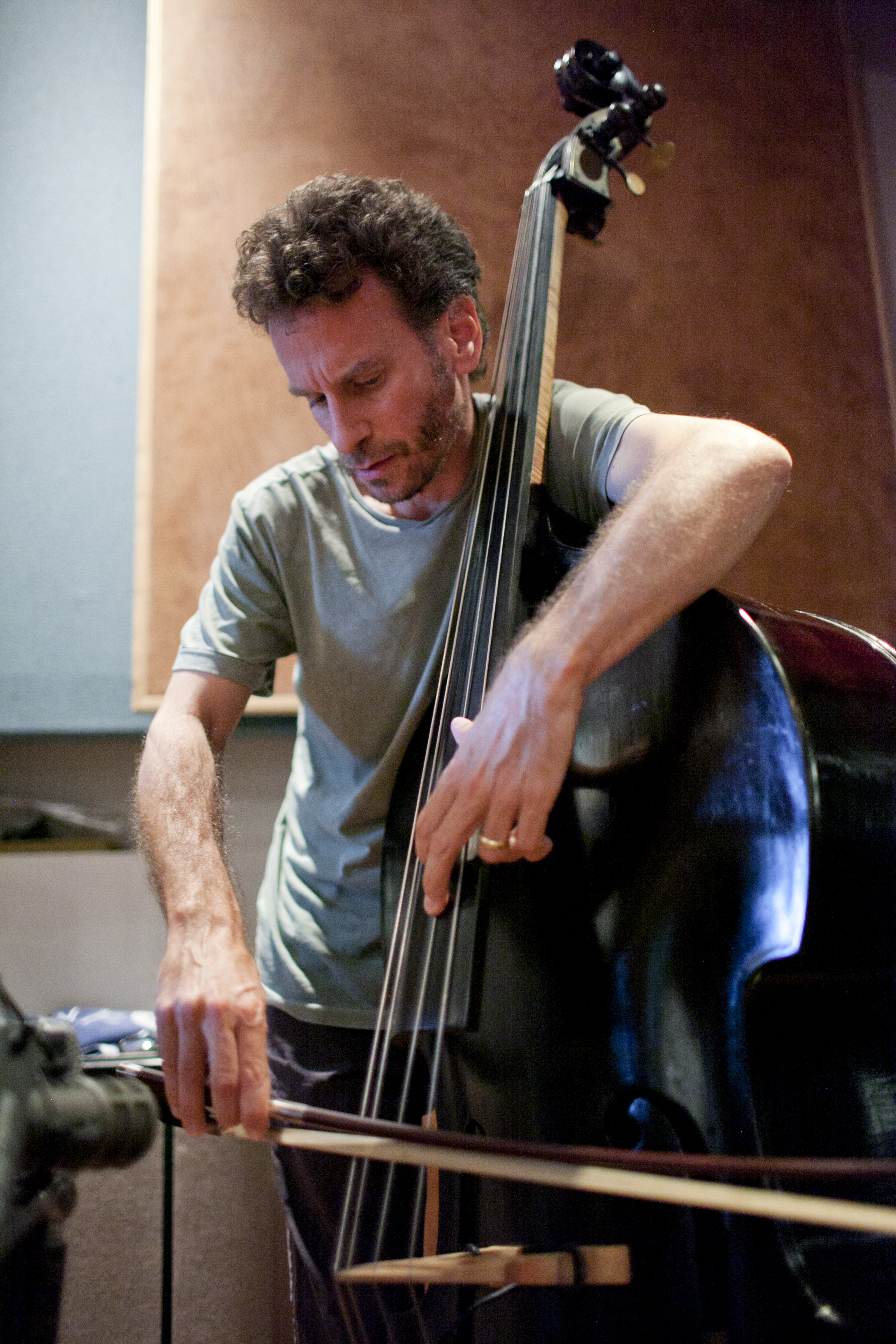
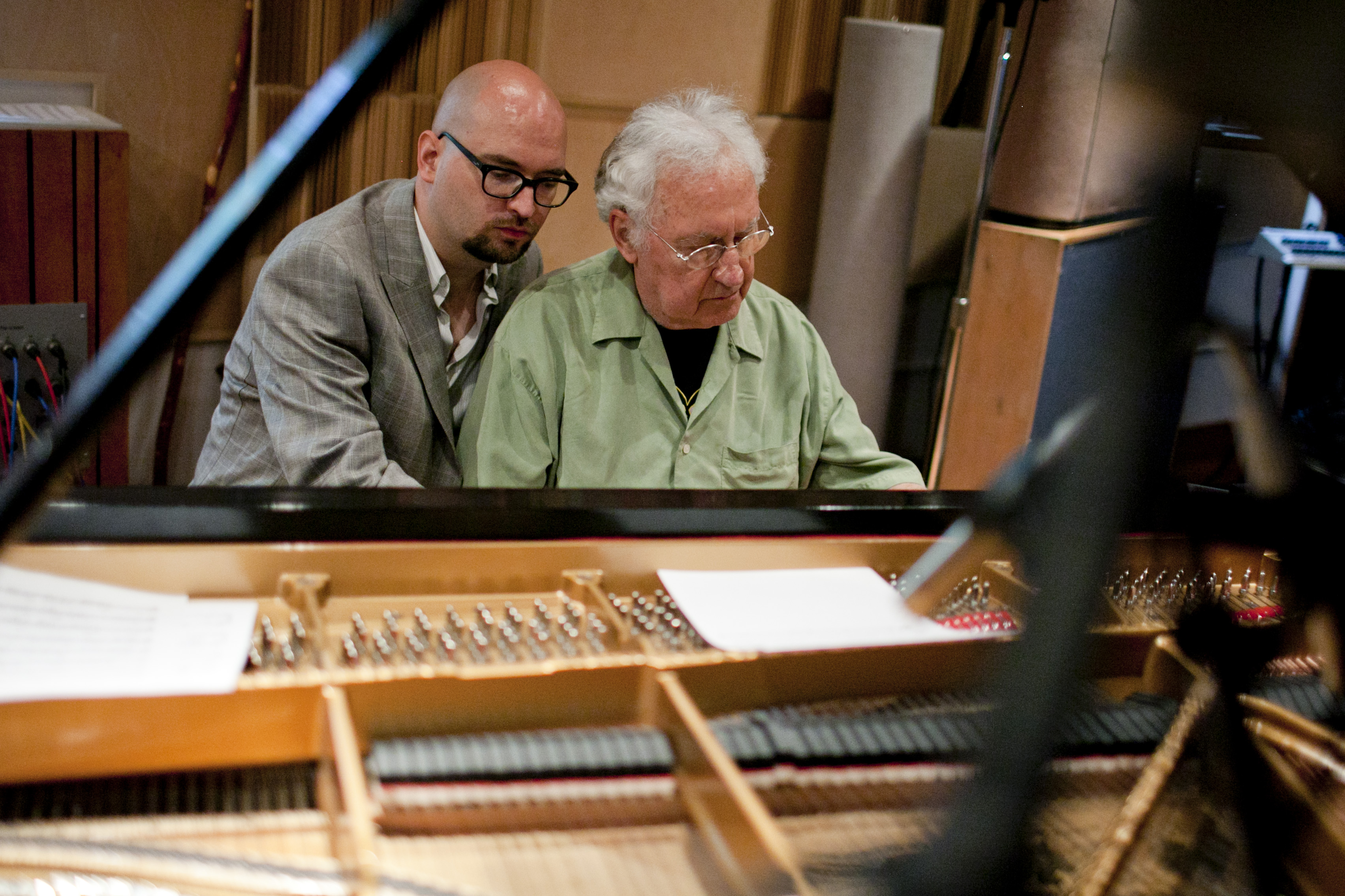
Lennie Tristano was the teacher; his foremost students were Lee Konitz and Warne Marsh. Together, they remain a fascinating resource for those seeking new ideas within old structures. Recorded in 2012 and released in summer 2013 by High Note records, Costumes Are Mandatory documents Ethan Iverson, Konitz, Larry Grenadier, and Jorge Rossy in dialog with the Tristano school and each other. Full liner notes explain choices and approaches to repertoire.

Related DTM: All in the Mix. Related interview: Konitz talks to Iverson in JazzTimes.

Chicago Reader review by Peter Margarsak.

Huffington Post review by Ralph A. Mirello.

Critical Jazz review by Brent Black.

Music and More review by Tim Niland.

Excerpts from The New York City Jazz Record review by David Adler:

The smartest thing a younger jazz player can do is to seek wisdom from established masters of the music. Pianist Ethan Iverson has done this again and again…On Costumes Are Mandatory he joins alto saxophone great Lee Konitz in
a session full of idiosyncrasy and varied repertoire…

Bassist Larry Grenadier and drummer Jorge Rossy, who worked together for years in Brad Mehldau’s trio, provide just the right feel – relaxed but deeply swinging. If anything Grenadier is more the timekeeper while Rossy blurs and deepens the textures. Grenadier’s bowing on the abstract piano-bass duet “Mr. Bumi” (named for pianist Masabumi Kikuchi) is especially strong…

The spirit of Tristano, Konitz’ old teacher, hovers over the set. Iverson alludes to some of Tristano’s distinctive practices: using a metronome on the piano-drum duet “Bats”; overdubbing or tweaking the piano sounds on “It’s You (Tempo Complex)” and “My New Lovers All Seem So Tame” (the latter a short prelude to
“My Old Flame”, on which Konitz scat-sings). The turbulent piano trio showcase “A Distant Bell” – based on “I Remember You” – also builds on Tristano’s (and
Konitz’) discipline of using standards as groundwork
for new inventions…

Konitz remains warm and inescapably melodic on
the horn…His duet with Grenadier on “Body
and Soul” stands out as well – hard to believe Coleman
Hawkins recorded his historic version two days before
Konitz’ 12th birthday.

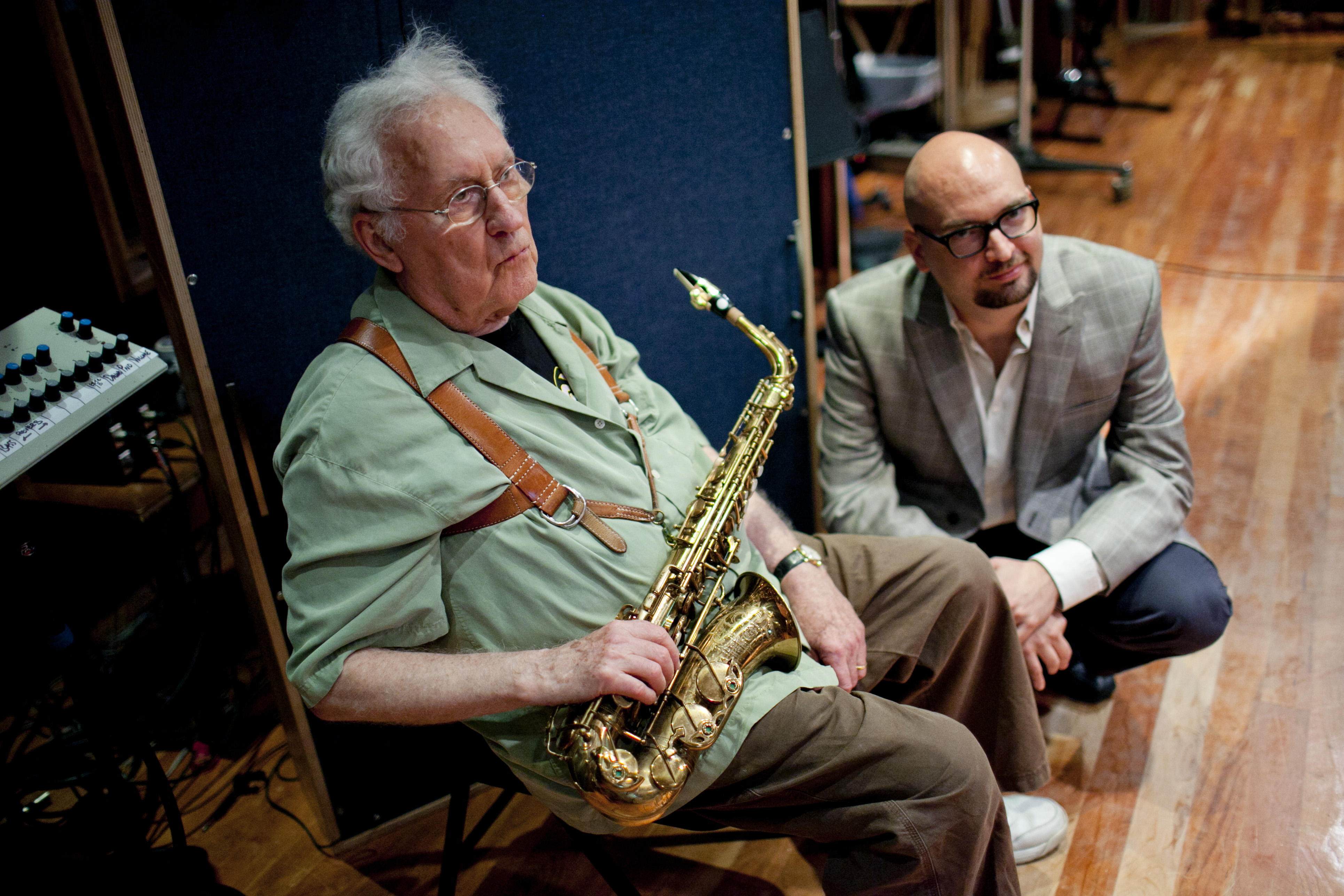
Session photos by John Rogers.

Ethan new edits

Ethan new edits_1

Ethan new edits_3

Ethan new edits_6

(Pete Rende supplied engineering, mixing, and special sonic touches)

Ethan new edits_5

Ethan new edits_7

Ethan new edits_8

Ethan new edits_2