Visitation From a Champion

I snapped an iPhone quickie between the ropes as Claressa Shields posed with the regulars at Atlas Cops and Kids today.

IMG_5018

Bottom row (Left to Right): Nyisha "Siyah" Goodluck, Coach Sarah Deming, Little Nick Scaturchio, Claressa "T-Rex" Shields, Chris "BHopp" Colbert 

Top Row: Tara Ciccone, Mo, Hamza Alhumaidi, Reshat "The Albanian Bear" Mati, Coach Aureliano Sosa, Richardson "Africa" Hitchins, Bruce "Shu Shu" Carrington, Jr, Akil "That Guy" Auguste, Coach Hilergio "Quiro" Bracero, Derrel "Bro Man" Williams

Drum Music

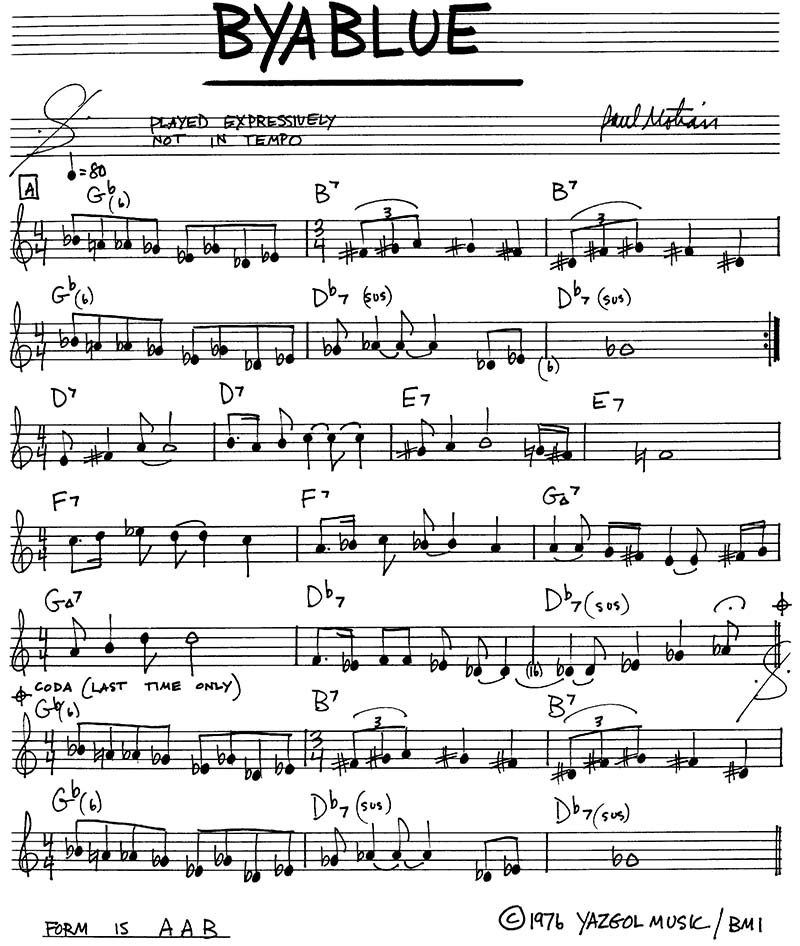
Byablue

Paul Motian’s melodies for improvisation rarely took more than a page to notate, but that doesn’t mean that his scores weren’t detailed. Motian frequently used phrase marks; sometimes chord symbols. Occasionally there’s something to raise a smile, like the tempo indication “latin” on the lunatic “Mumbo Jumbo.”

Motian always encouraged maximum freedom from his fellow musicians. Every version of his tunes is quite different. To cite an example I know well, “Byablue” was recorded twice by Keith Jarrett, both solo and quartet. While I learned Jarrett’s version as a kid, a glance at the chart handed to me by the composer was a revelation. Now when I play “Byablue,” I base it off of Motian’s handwriting, not Jarrett’s interpretation.

Going to the source gives one more room to make a personal statement. It’s also just interesting to discover the composer’s original intention, at least when the composer is profound as Paul Motian. “Victoria,” recorded in memoriam by TBP on Made Possible, is much closer to the score than previous versions where the melody and harmony was controlled by Jarrett or Sam Brown.

Cynthia McGuirl, Paul Motian’s niece and heir, has 115 of Motian’s handwritten charts. Those of us that love Paul’s music have been encouraging her to publish the collection. My personal vote would be for a facsimile edition, but that’s not the only option. Typesetting would be OK if a good editor was involved.

Cindy also has Paul’s fascinating unpublished autobiography, his legendary gig book (all the gigs he did, plus what he was paid) and many historical photos. Material from this archive has been showing up on Cindy’s remarkable blog and podcast, Uncle Paul’s Jazz Closet. (I’m particularly taken by the shot of Paul in a sailor suit.)

A few professional publishers have been contacted about making a Motian folio. So far I’ve been surprised at the lack of interest, but I guess music publishers are in the same bind as other vendors: sales of books and music are way down across the board.

Cindy is considering self-publishing a limited edition of her Uncle’s compositions in 4 volumes, ordered by date and albums. She’s hoping that sales of the first volume would pay for the 2nd volume, etc. Cindy gave her permission to post the original lead sheet of “Byablue” as she sees it for the composition book.

Surely all of Motian’s fans and students would love an official Motian book of tunes…? “Byeblue” is here, if you look around on Cindy’s blog you’ll find “Fiasco” and “Abacus” (very interesting phrase markings on the latter).

“Menard – as I recall – declared that censure and praise are sentimental operationsthat have nothing to do with literary criticism.”

I became aware of Jorge Luis Borges in college. My new friend JM pressed a copy of Labyrinths into my hand and told me to read it. I was entranced, most particularly by the story “Pierre Menard, Author of the Quixote.”

Thanks to Mostly Other People Do the Killing, I went back to “Menard” tonight. Good god, what an immortal masterpiece. Every sentence is either hilarious or profound. For straight-up funny, try this, a description of an arcane Menard work:

…A technical article on the possibility of improving the game of chess, eliminating one of the rook’s pawns. Menard proposes, recommends, discusses and finally rejects this innovation.

Since my previous post, MOPDTK has come under heavy fire for Blue, especially on Facebook. Some consider it racist; others cautiously approve of paying tribute to the masters but don’t like the packaging, which includes the Borges’s story “Pierre Menard.”

The question of racial appropriation certainly can be asked. For me, considering how much bad jazz and imitation black music I hear all the time from white culture everywhere (the garish “jazz” music on the most recent episode of Doctor Who, “Mummy on the Orient Express,” is a current irritation), MOPDTK actually playing the notes of a jazz classic seems perfectly acceptable.

Just a few further thoughts for those eager to condemn:

Black jazz means swing. And no, MOPDTK doesn’t swing on Blue. Not really, especially in the bass and drums. They are indictable for this, sure, but at the same time they are revealing something else about themselves in an arguably humble way. As Borges explains:

The archaic style of Menard – quite foreign, after all – suffers from a certain affectation. Not so that of his forerunner, who handles with ease the current Spanish of his time.

or perhaps:

He decided to anticipate the vanity awaiting all man’s efforts; he set himself to an undertaking which was exceedingly complex and, from the very beginning, futile.

The question, “How can you swing like Paul Chambers and Jimmy Cobb?” gets no satisfactory answer on Blue. But at least we know something more about this question than we did before.

To those not appreciating the meta, Borgesian, or conceptual aspects of Blue, my response is:

The importance of Miles Davis, John Coltrane, and the rest of the cast of Kind of Blue is hardly confined to jazz. To declare that they not be allowed to be part of a deconstructed or conceptual undertaking might inadvertently suggest they are not “worthy” of arty mischief. Of course they are worthy! They are Gods, nothing is going to harm them.

Besides, Miles and Coltrane would have actually been around NYC when Cage made “4’33″” and Warhol printed “Campbell’s Soup Cans.” In a way they deserve to be looked at through the prism of Blue.

I mentioned “Pierre Menard” in a jazz context on DTM a few years ago when discussing Bud Plays Bird. My comparison of that disc to the Borges story is in a way more appropriate than MOPDTK, as Menard stresses he is just trying to remember how Quixote goes, not copy it out. In the end Menard recreates only a few fragments, not the whole work.

Classical Music

[UPDATE: Part 2.]

From the minute I heard that Mostly Other People Do the Killing was doing a note-for-note cover of Kind of Blue I was impressed. I kind of wished I’d thought of doing it myself.

Jazz tends to mirror trends in the art world to a certain extent. But what jazz has been conceptual art? As in, the idea and context matters more than an objective look at the material? That it exists almost solely to provoke discussion?

To be clear, most satirical or humorous jazz like The Art Ensemble of Chicago’s “Walking in the Moonlight” isn’t really conceptual art.  John Zorn playing free jazz alto on top of a Sonny Clark tune is certainly “conceptual,” but I don’t think Voodoo is really conceptual art, either. Archie Shepp honking “Girl From Ipanema” in response to Stan Getz? Yeah, almost…but it also just sounds like plenty of other Archie Shepp. If there’s a concept, it’s less important than the natural individuality of the tenor player.

Usually the word “jazz” ends up getting almost irrelevant to most conceptual jazz-related work. Anthony Braxton outside with 100 tubas: that’s conceptual art for sure, but at least I don’t think it has all that much to do with jazz. Braxton’s extremely strange jazz standards on piano is closer, but I wouldn’t be unduly surprised if Braxton just feels like playing piano in a quartet sometimes.

Probably there are other examples I don’t know. But surely there is nothing so blatant as Blue by Mostly Other People Do the Killing. This is conceptual art with the heart of jazz fully in the frame. 

I’m blogging about it mainly because I have heard so many musicians and fans react in horror. I’m afraid to tell all these folks this, but it’s true: You have already had a sincere and strong reaction to the conceptual art, so therefore you have already validated the work.

I don’t really like Blue, of course. How could I? But it is definitely a strong statement. When I can, I’ll grab it and happily file it my CD collection. It will probably go in the jazz section…

Sam Newsome blogged recently on a relevant topic: “What’s the Deal with Interview Music?”

Birthday Greetings to Tim Berne

The massively influential saxophonist and composer Tim Berne turns 60 on October 16. This is posted early to encourge everyone to go the Stone, where Tim will be in residence with a variety of groups tonight through Sunday.

In typical DTM fashion, I asked musicians to contribute to a birthday festschrift. (Apologies to many colleagues who might not have been on the email chain. If you see this and want to add on, find me.)

If had asked non-musicians as well, the submissions would have doubled in size. Rather perfectly, Valerie Trucchia (who felt like she just had to weigh in even though not a musician) ends the alphabetical order with a comment suggesting how many lives Tim touches in all walks of life.

Related DTM: Interview with Tim Berne.

RALPH ALESSI:

Happy Birthday, Tim. Thanks for the music, inspiration and friendship.

DJANGO BATES:

Meeting Tim for the first time: I arrived a day late to the first rehearsal of a George Gruntz Concert Big Band, somewhere in Switzerland. The room was full of New York heavies who not surprisingly looked askance at the bemused, skinny weirdo who crept in with his mouldy Eb Horn. At the coffee break I realised I had no Swiss money so I stood on the edge of the intimidating crowd wondering how I would ever find a way in. Tim made a bee line to me and said, “you look like you need a coffee”. The most generous and sensitive person in the room by a long way because he recognized my outsider status and addressed it, and, well yes, he paid for the coffee.

On that tour we talked a lot and exchanged our music, and within hours of the tour’s end he’d recommended me to Stefan Winter which led to my 3 albums for Polygram/JMT/Winter & Winter. Tim played my music to lots of influential Americans who mostly told him to take it away and do something with it himself. Which he did. Tim put Quiet Nights out on screwgun 70007. He helped me to get Sanborn to do a beautiful solo on Life On Mars (You Live & Learn – Lost Marble 001). He inspired me: listening to Fractured Fairy Tales on the tour bus reinforced and encouraged my hope that there was an audience and a community of musicians who wanted to be surprised, challenged, amused, and even confused! I think the only example of my music I had with me was Music For The Third Policeman; god knows how Tim extrapolated from that album that I might fit into JMT’s roster (or maybe he just wanted to confuse Stefan Winter by putting an English spanner in the works).

As I said, Tim’s the most generous person in the room, but he’s also a musician. I love Tim’s music. It’s idiosyncratic, awkward, passionate, and a fourth adjective which I’ll think of later. In Copenhagen some years ago I took some students to see Berne, Ducret, & Rainey perform. After the gig the students were discussing what/who it sounded like, at great length. After a while I said, “I’ll tell you what it sounded like: three master musicians at the very top of their game.” Luckily for me, Tim was walking past at that very moment and got to hear what I really think of him. Enough said!

JUDITH BERKSON:

Dear Tim, Happy Birthday! Thank you for being so supportive of me over the years. You lead the way for all of us in your singular, focused, transcendent musical voice, astonishing body of work and dedication to your art.

JIM BLACK:

Happy 60 Tim!! with love, coffee, and mechanicals from my heart!

URI CAINE:

Happy 60th Birthday! first heard Tim on his early JMT cds like Fractured Fairy Tales and Fulton Street Maul on Columbia and I loved the freshness and openness of the music (not to mention the great cover art by Steve Byram). Tim’s compositions are intricate and challenging- The music weaves improvisation with structured sections in such a natural and organic way. I also love the sly sense of humor in his playing and always admired his energy and passion in creating Screwgun Records. Tim  always had his own sound and is open to the weird and unexpected,and he has led so many  great groups through the years. He is a lot of fun to play with! Tim- I look forward to  hearing more of your great music in the future and to playing together soon again – Happy 60th!  love – Uri

ALEX CLINE:

Dear Tim:

Back in 1977, when we first met at your old loft in Brooklyn, who among us gave serious thought to the possibility that we would still be pursuing the elusive musical muse on the verge of your 60th birthday?!  And yet here we are on the cusp of that daunting milestone!  How lucky we are!  Not only are we still alive, still continuing our respective streams of life, but we are still playing creative, uncompromising music, still continuing the streams of artistic vision,  accomplishment, and determination that so inspired us to head in this treacherous but, in its weird way, glorious direction.  So happy Continuation Day!  Thank you for keeping the fire going and for making so much distinctive and daring music.  Thank you for being such a skillful bandleader that you are able to so generously and effectively inspire and create space for so many willing and capable collaborators to contribute to the realization of your compelling personal musical manifestations, trusting in their talents, allowing and encouraging them to grow further as artists themselves .  Although it’s been ages since we made any of it together, some of it remains some of the favorite music-making experiences I’ve had the privilege and pleasure of sharing over the years.  All the best to you as you step into another open vista of life and music.  I pray that continued inspiration, good health, diligence, happiness, and peace may grace the decades ahead.  Life is fleeting, precious, and miraculous; may you wisely navigate it and deeply enjoy it for many more wonderful years to come.

A deep bow to you,

Alex Cline

KRIS DAVIS:

60! What an accomplishment on so many levels! You are a constant source of inspiration- thank you for your music and dedication.

RYAN FERREIRA:

i didn’t really know tim’s music until we started playing together.. i mean, of course i had heard his name in college at some point and i think i heard a record with him / ducret / rainey playing together.. when we first started getting together, i talked with a friend of mine (who’s been a fan of TB’s for a long time..) and asked him what i should listen to, so i could be prepared, i guess.. he gave me three records (but i can’t remember which ones – maybe fulton maul was one of them…) the one i listened to had joey baron and hank roberts – can’t remember if ducret was on there, too.. i listened to the whole thing, but decided i wasn’t really gonna seek out any other records – realizing that i had an opportunity to learn his music directly from him. since then we’ve had lots of duo sessions, played trio with dave king, dan, tyshawn, tom and ches, played quartet with mike / ches, joining snakeoil on occasion, being part of the septet (snakeoil + weiss / formanek), and the band with craig / ches / david torn.. its been feeling good to be part of all this – thanks, tim.

AND happy birthday!

MIKE FORMANEK:

Happy 60th Birthday Tim – Just making it to 60 is enough of a milestone to celebrate when you think about all of the great artists who did not. What’s really important though, is what you do with the time you have. In his case it’s definitely about the recordings, and the tours, the compositions, and the music itself, but it’s also about what he sees and what he hears in the people he meets and chooses to collaborate with. It’s about the forces he sets in motion once he gets an idea, and how quickly he’s already taken action on some insane sounding project that other people, myself included, aren’t even sure he’s serious about. I’ve witnessed and been fortunate to play a part in many of those projects over the past twenty-four years, since we were both in our thirties! There were countless numbers of events during that that I could talk about, but what’s most amazing to me is how much he continues to grow as a musician and how much humility he has about what he does that enables him to have that extremely rare balance knowing exactly what he’s doing with his music and where he wants to take it, and that completely open, curious, and receptive mind, always willing and anxious to learn something new. It’s part of what’s made him a force in music for all these years. That fierce and rugged individualism, and completely unique perspectives in his music are all his trademarks, along with his equally unique and particular sense of humor! It’s also what’s made him what I commonly refer to him as the “best sideman ever”! Learns the music, wants to rehearse, doesn’t bitch about anything, except the occasional F-flat or E-sharp on a poorly edited Sibelius part, and is always there to play the music. Positive, focused…and just so damn punctual! It’s been a wild few years getting to know Tim, and I’m extremely grateful to be able to call him one of my all time closest friends. But he’s also been a huge influence on me musically and personally, and I’ll go so far as to say that if we hadn’t met when we did my entire musical world would have a much different landscape than it does now. For better or worse, I can’t really say, but most definitely different. I can say with complete confidence though, that I’m really happy that they worked out the way they did!

Thanks Tim, for all the music, for all the inspiration, for all the support, for all the laughs and great times, and for all the friendship – Happy 60th, my brother! I can’t wait to hear what you’ll be doing at 70!

BILL FRISELL:

:          .        *.            .:       +

.       *.        .

deAr.    T iM.    .

wiShing.     YOu.        .   :  *

+         .   A super super….

HAPpy.   biRtH dAy!

.*.  +             YAY!     *.

Lots of LOVE.  ….. * ..:

*.       +

*.  ..   :  *. frOm the FriSells   -.

:      .      *

/________\.        /__\.      -[•]-   *

.   .:        +

.          .

TOMAS FUJIWARA:

Happy 60th, Tim. You’re a great friend and musician, and you have the best jump shot I’ve never seen.

MARY HALVORSON:

Happy 60, Tim. I can’t believe it’s been 16 years since I first saw you perform live with Bloodcount at the Knitting Factory’s Old Office. You have been an enormous influence on me as a person and as a musician, and your music continues to inspire me today just as much as it did back then. Thanks for being a wonderfully generous friend, collaborator, vacation adviser, and comedian. H&H…. Mary

DAVID KING:

Hi Tim……..It’s Dave…….wanna get a coffee?………I really love you and your music and your parties and your house and your wife (sorry) and your “get down to the lobby” wake up calls and the fact that no one is as funny as you. No one. Your fierce tone and gentle soul is the secret to your mysterious, awesome music I think.

With great love and respect happy 60th birthday Tim,

Dave King

MATT MITCHELL:

For Tim on his 60th Birthday

I could write at great length about what Tim Berne means to me:

as an instrumentalist who possesses a unique combination of singular identity and capacity for reinvention and openness;

as a composer who continually searches and expands his approaches while constantly chiseling away to reveal things;

as a bandleader who has allowed and required that I be completely myself in the context of his music, and indeed afforded me the chance to fully grow into myself, musically speaking, just as he has done for dozens of musicians before me;

as an inspiring example of a tireless yet sensible work ethic;

as friend who is as genuine, generous, supportive, loyal, and hilarious as anyone I’ve ever had the privilege to call a friend.

I’ll stop here, though, for as the man himself says: “Always leave them wanting less.”

Happy 60th Birthday, Tim. Thank you is not even close to enough.

SAM NEWSOME:

Tim, I’m really looking forward to getting to know you, personally and musically, during these Sci-Fi hits. Happy 60th and may there be many more to come!

OSCAR NORIEGA:

Happy Birthday Tim

Working with Tim is both a pleasure and work. His music is challenging and engaging to play, consistently pushing one to play something new. He inspires me not only to work hard on my music but to remember to stay young.

BOBBY PREVITE:

Tim,

60! Holy crap, that is OLD. Man, not being anywhere near that age I can only guess how that must feel. So sorry.

I suppose there’s only your memories left eh? And we had some killer ones from all those years with Chaos Totale, didn’t we? Too bad it’s all over now, but it was great! I remember everything.

Remember when we all overslept at that weird high security hotel? Very nearly missed the train, lucky Swell was on the case and woke us all up, as usual! Remember when the guy didn’t show up to take Dresser’s bass case off our hands before our flight and we had to cram it in the trunk of a tiny taxi? Mark was having kittens. I have the photo somewhere. How about when we were on that 12 hour train ride through Italy with no dining car, and the Duke jumped off the train in Verona to get sandwiches for everyone in the 9 minutes we were supposed to be stopped there? He would have been a hero, except he took 10 minutes and the train was gone when he got back. You eventually forgave him because he was so hungry, and,well, because he IS French, after all (man, that guy would eat ANYTHING, absolutely no standards).

Remember when you won the Pulitzer, the Grammy, and even the National Book Award (we never did figure that one out!) for Nice View (with a special mention of my drum part on ‘Third Rail’)? Fun times! You’re welcome.

How ’bout when we opened for Sting at the Hollywood bowl and they went totally crazy for Herb’s extended trumpet techniques, so much so that they booed Sting when he came on and then chanted ‘More Chaos, More Chaos’ for 15 minutes until we came back for 2 more encores? I mean, Sting had to be PC about it, because he’s Sting, but we could tell he was PISSED. Many laughs later at the hotel.

Well old pal, those were the days. I hope your retirement will go well. You can always look back and say, yes that was me, I once had a band that played the Super Bowl halftime show one night, (as I remember, Marc had his own wardrobe malfunction that day, YEARS before Janet) and the Unterfahrt the next, and sold out both!

How many people can say that?

Ok, gotta go, they are calling me in to dinner. Creamed corn tonight! And I think they are showing another Mickey Rooney film!

Hope we get to hang again some day. Our recreation periods are Tuesdays and Thursdays between 2:30 and 4 (or is it Wednesdays after 6)? Bring your tenor.

fondly,

Previte

TOM RAINEY: 

That went fast ….. Happy birthday Tim!

HERB ROBERTSON:

Happy 60th Tim!

Thanks for 33 years of playing music together!  Always amazing.  Looking forward to the next 33 years of playing music together.  Enjoy your birthday and see you around real soon!

JACOB SACKS:

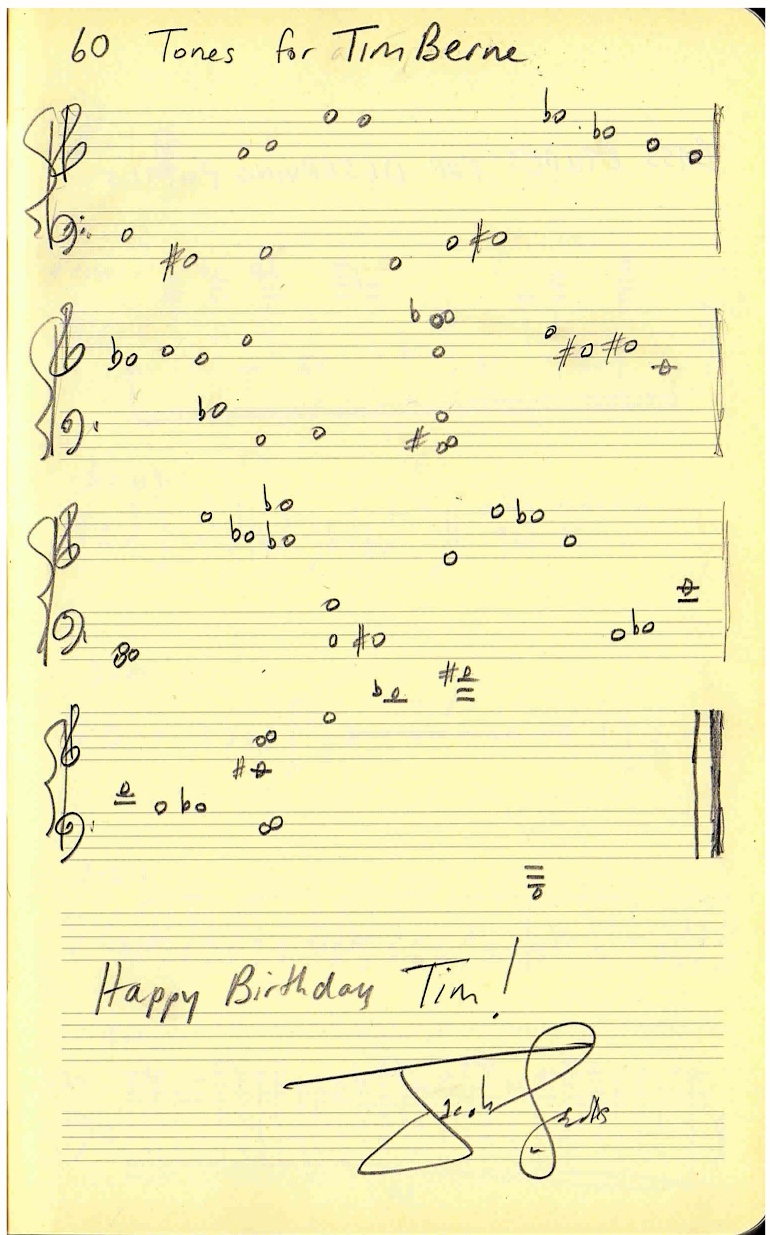
I wrote this while sitting across from Tim on the plane two days ago:

60 Tones for Tim Berne

CHES SMITH:

Tim Berne should get more credit for the ways in which he champions/mentors/assists so many musicians on the scene. I’ve never encountered anyone so selfless in that regard. There would be distinctly less of a communal feeling around here if he were not around. His humor and intelligence holds us together.

Happy Birthday, Tim. Let’s take it all the way out.

CHRIS SPEED: 

Tim Berne is a hilarious cat, ingeniously self deprecating, and definitely uncomfortable if he’s reading this blog.  I wanted to write something comedic for him, or a roast that he would enjoy, but since I’m feeling nostalgic, and not naturally a funny storyteller, I’m going for heartfelt.

In 1992 I moved to NYC… and luckily was home when my roommate Jim Black was jamming with Tim in the basement one day. He invited me to come down to read some of his tunes, and then invited me to join a trio he was trying out with Jim and Mike Formanek, and that was the beginning of Bloodcount.  Looking back, I am in awe that Tim even bothered to work with me, there were so many musicians who were better, more experienced, etc.. Tim choosing to work with me says a lot about his willingness to take chances and not make the obvious move, his intuition was that the ‘odd’ combination was a good match for his music. In any case, I felt like I had won the lottery, hooking up with Tim is probably the most important connection of my musical life, a mentorship with one of the icons of new improvised music and the opportunity to participate directly in the insane journey his music takes you on.

Tim would joke that playing with him would make one unemployable, or apologize for “killing my career”. Which if there is any reality to that imagined scenario, to comparing having a professionally oriented jazz sideman career vs. getting to play, tour, record, and hang with Tim Berne, there is still no contest:-)

Thanks Ethan for the Tim Berne appreciation post, and Happy Birthday Tim.

CRAIG TABORN:

From the Walker in ’87 through countless train adventures to happy hours at farm you have always been and continue to be a huge inspiration and great friend. Thank you for all of it.

I think 60 was the old 80.

Happy Birthday Tim!

DAVID TORN: 

so, waitupwaitupwaaaituuuuup:
the undeniable Tim Berne, our looming maestro & steady generator of impossibly edifying vibe, is 60!
congratulations, tim….. long life, health, brilliant home-life, comfort, great coffee & single-malts etc etc etc to you.

i could say all kinds of abundantly & luminously true things about tim’s musical genius,
about his body-of-work, his meaningful tenacity,
his ongoing hub-like activities which’ve brought (& continue to bring) so many musicians together & so fruitfully,
his intense & continuously proliferate encouragement (as well as his embodiment!) of the quite freaking real commitment to personal & musical integrity & on & on & on & on…..
but, i’ll go no further with that, right now.

a few years ago, it came as a surprise to me to discover that, among my sons & their families, tim is generally known as Uncle Bear.

i suppose that the “Bear” part is obvious, eh?, but the “Uncle”-bit is more key:
that there was, among them, a broad recognition of their perceptions that tim was a “family member”, somehow, and that he & i were that close, rang a recognizable note.

the fact is: i love tim.
i don’t mean in that beneath- maudlin,  bullshitty-“bro’s”, “i love you, man!”  kinda way, i simply mean it:
i love the guy, and….. he’s been one of the very best of friends to me during this weird-bit-of-a-life.

happy b-day, ta!

dt

VALERIE TRUCCHIA:

I am not a musician, but am a friend and the wife of Oscar Noriega. I wanted to write something because for years Tim has been sending me his pictures mostly taken with his iPhone, always captivating and surprising me. His images are as astonishing as his music, with his unique eye they take you to unexpected places. I am very lucky to be able to see and hear Tim’s world that close, thank you and happy birthday Tim.

Romanticism

Last weekend I spent many enjoyable hours with those that live and breathe movies. I’m not one of that tribe, but I like sharing a conversation with those that do.

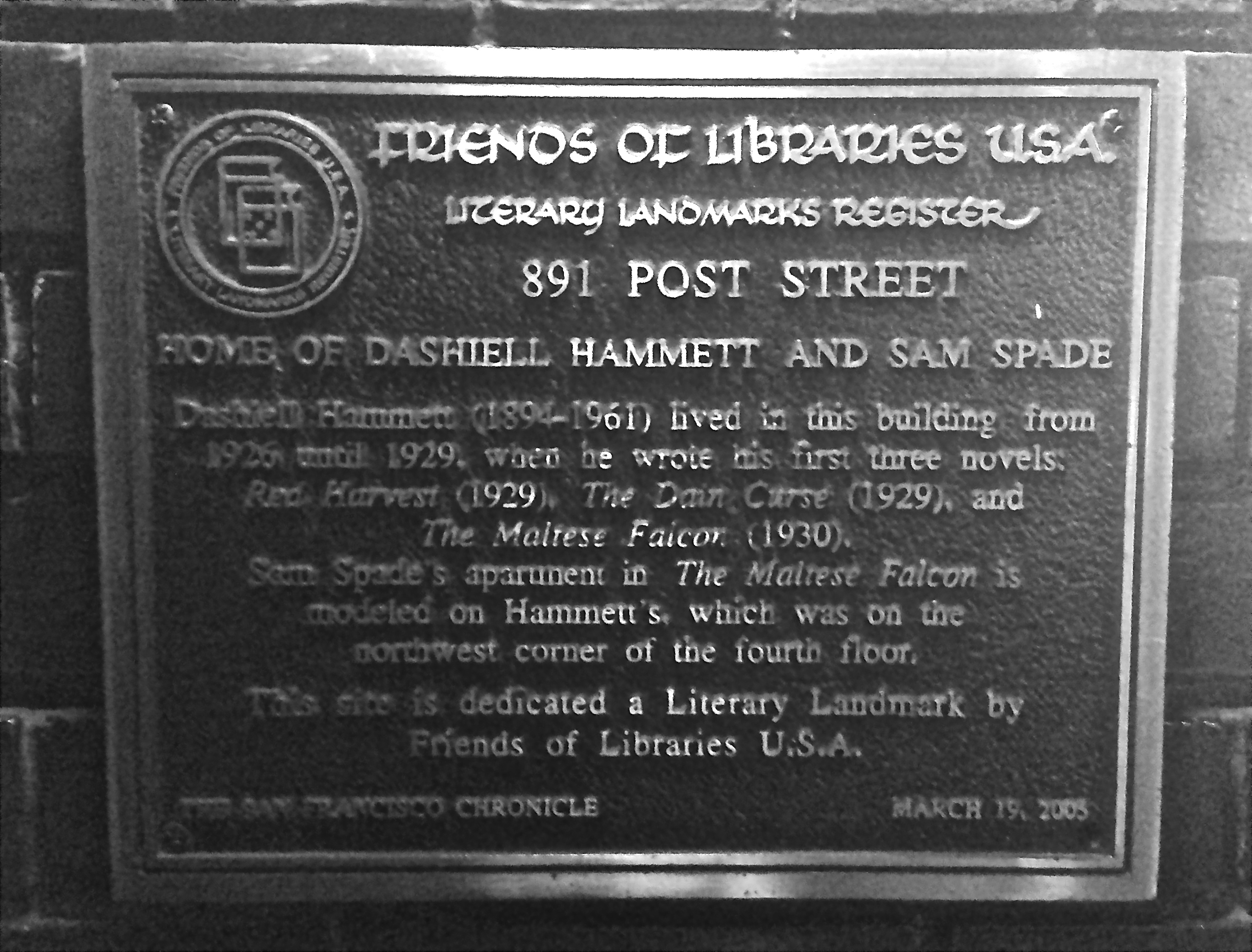
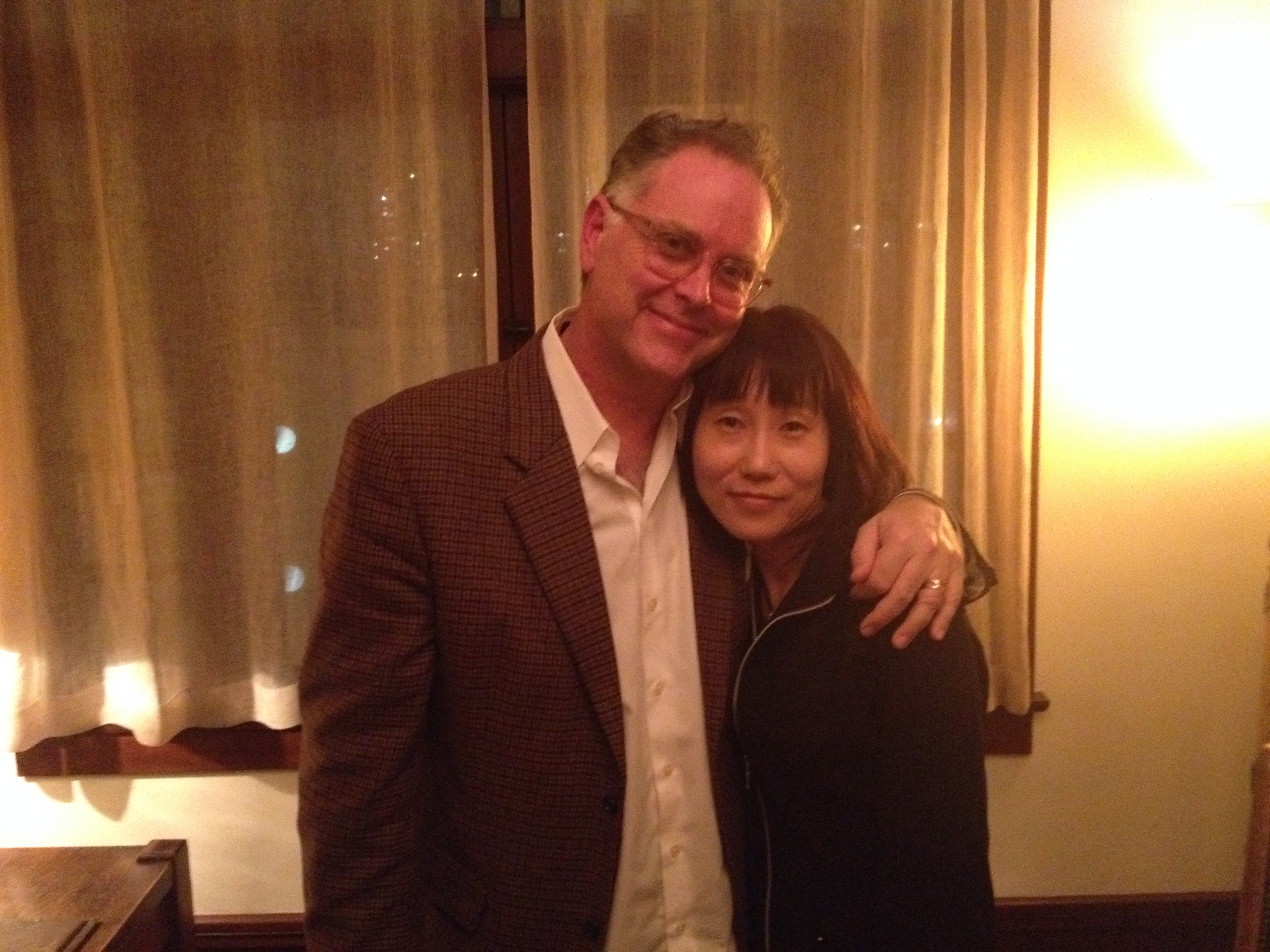
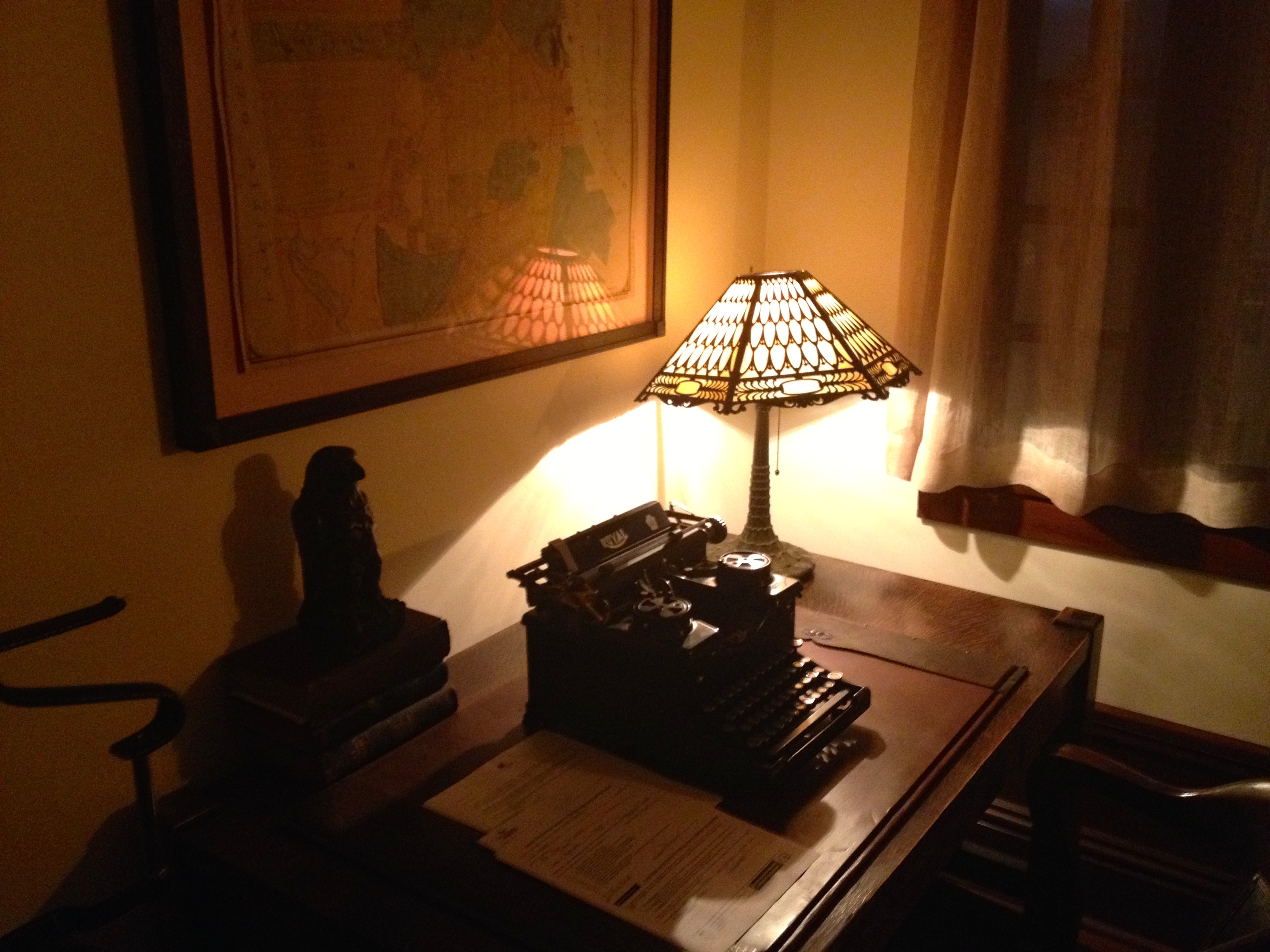
Thanks to Vince Keenan, I met Eddie Muller at last. With Etsuko Tamazawa, we all spent time at the Dashiell Hammett apartment on Post Street in San Francisco.

IMG_4785

IMG_4801

IMG_4787

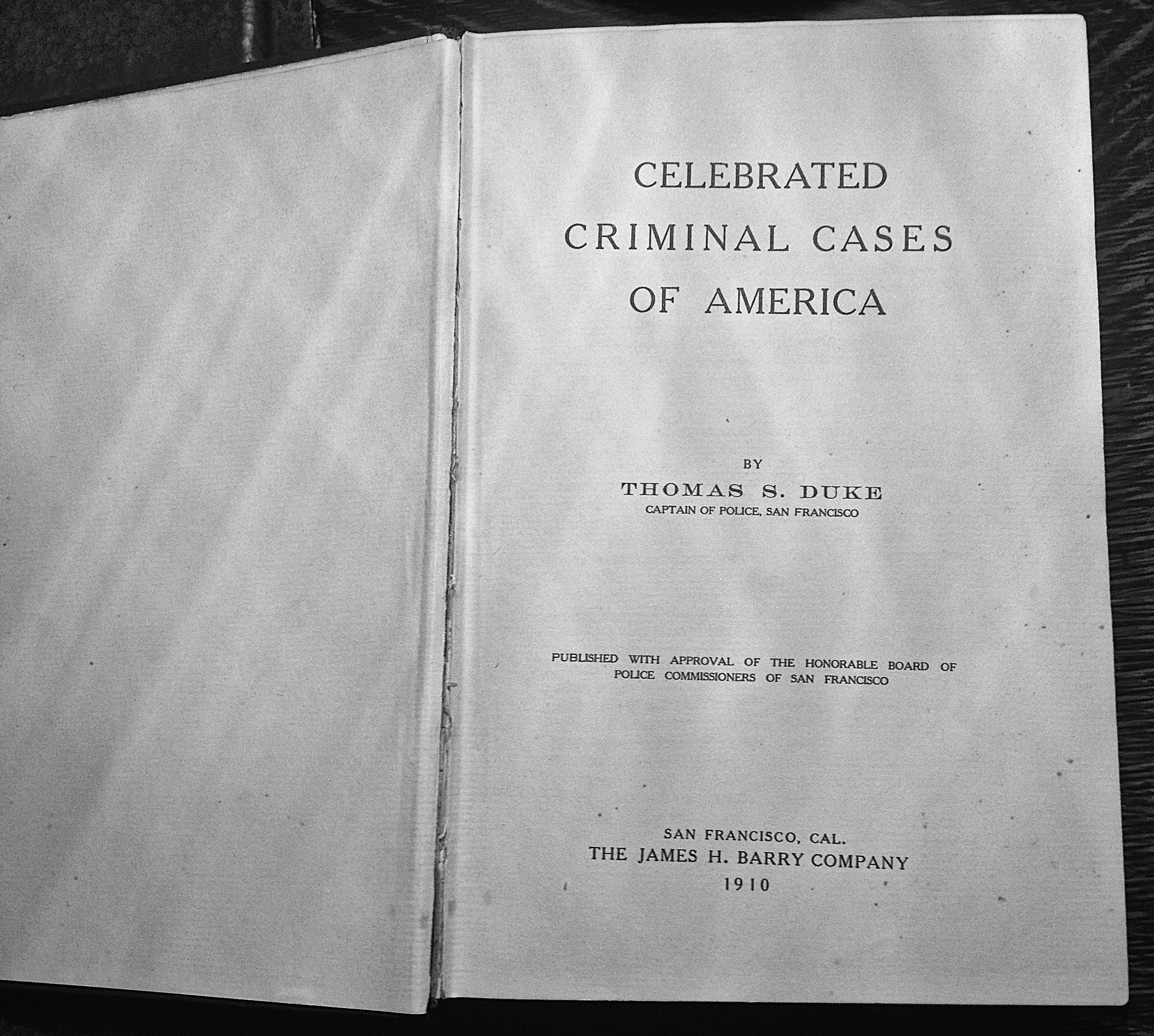
It was a great hang. I went a little fanboy crazy when confronted with an actual copy of Duke’s Celebrated Criminal Cases of America. (Every Hammettophile knows this book lurks beneath the alarm clock on Sam Spade’s shelf.)

IMG_4793

When in the apartment, I grilled Eddie about every Hammett adaptation and screenplay. It was a such a pleasure listening to an expert in his element. There’s a lot more there than I had realized; most of it I haven’t seen.

Regrettably I still haven’t made my way though Etsuko’s list of top film noir (found at the end of DTM’s “Crimes of the Century”), but that’s a project I certainly intend getting done sooner rather than later.

Earlier, in Seattle at the start of this tour, Vince and I wondered about the great recent crime films. Are there any? Well, yes. But it’s not a golden age. Honestly I think thrillers are better these days than simpler crime movies. We are too sentimental and fancy to easily accept cops and bad guys as everyday people now. We need things to be done on a grander scale.

Somehow I never saw Jackie Brown until last night, but Vince said I should check it out. (He also sent me a link to an interesting commentary by Gary Deane. Deane agrees with me that Out of Sight is not that great – probably we are the only two who share that opinion.)

In Jackie Brown, I was struck by how much more comfortable Robert Forster seemed than his more famous fellow actors. Samuel Jackson and Robert DeNiro are somehow not quite right in this self-consciously simple tale. They are too big or too small. But Forster is a working man. He gets it. For me, he carries the movie. (Both women, Pam Grier and Bridget Fonda, are good too.)

Jackie Brown and the current A Walk Among the Tombstones seem obviously influenced by my favorite set of movies, those classic gritty crime films of the late 60’s and early 70’s. Just for fun, here are ten commandments:

Point Blank (1967) Arty yet believable. Lee Marvin as existential man.

Bullitt (1968) Plot makes no sense yet the tension maintains. Steve McQueen is not just hard, he is vulnerable. Famous car chase.

The French Connection (1971) Another famous chase. Gene Hackman has only the most tenuous hold on morality.

Get Carter (1971) Astonishing Newcastle noir. Michael Caine is meaner and more charismatic than anybody.

Dirty Harry (1971) Don Siegel’s reactionary masterpiece of working class entertainment is a successful closed system. Far too influential, but I admit I’ll always enjoy it.  The terrible sequels should never have happened.

The Long Goodbye (1973) Meta and marvelous. Elliott Gould in a black suit on a bright California beach. Many scenes improvised in standard Robert Altman fashion. Probably my favorite film of all time.

The Friends of Eddie Coyle (1973) Robert Mitchum was a star, but he had no problem playing a minor criminal in superb underdone fashion. (Robert De Niro should have looked at this when preparing for Jackie Brown.) It seems like director Peter Yates learned from Bullitt, for Coyle solves a certain problem in the plot even more convincingly than in the book.

All you need to know about why it is hard to made a good crime movie now can be learned by comparing the recent Killing Me Softly with The Friends of Eddie Coyle (both adaptations of George V. Higgins).

The Taking of Pelham One Two Three (1974) Well, maybe this is a thriller, not a crime film. But what a movie! It’s one of the most purely enjoyable flicks I know. A must for any serious New Yorker.

Chinatown (1974) Very famous, with an original Robert Towne script worthy of the very best crime novels. In terms of going for something retro, Chinatown remains in a class of one.

Night Moves (1975) Maybe this isn’t quite as good as the rest of this list, but it is an appropriate end to the era. Gene Hackman can’t figure out a damn thing, and the conclusion is as downbeat as they get. They really don’t make them like this any more.

Without A Song 2: Errata and Transcription

Ever since hurriedly commenting on Joe Henderson’s “Without A Song,” I’ve been nagged with the feeling I got something wrong.

While working on a transcription, the penny dropped. I called the substitute changes “Coltrane changes.” However, that’s not correct.

Eb / A7b5 / Ab maj7 / Gb7
B / Eb over E (or E maj7) / Db maj 7/ Bb7

The mediant movement in the bass is not Coltrane-esqe. While descending thirds are like the melody of “Giant Steps,” I don’t think Coltrane ever used descending thirds in the bass. His famous “Coltrane changes” uses an upward third in the bass, followed by normal dominant/tonic stuff.

The second four bars of JoeHen’s “Without a Song” actually recalls the changes of Henderson’s own tune “Inner Urge.” And that big Eb over E thing is pure 60’s modernism. Coltrane never used that chord except in passing: That is JoeHen’s world, along with contemporaries like Woody Shaw, Herbie Hancock, and Wayne Shorter.

Still, the idea of using obtrusively hip alternative changes in order to give an old tune new meaning stems from Coltrane. I got that part of it right.

And just one more fun detail: JoeHen has chromatically alter the melody to make it fit the reharm, playing Gb instead of G in bar four in order to go with the new key. This reminds me of Coltrane playing a shocking Bb instead of B in bar seven of the melody of “Summertime.”

—-

“Summertime” is an interesting tune to consider when thinking about jazz politics. It’s the most famous tune from the white composer’s black opera.

Duke Ellington’s trio version is a takedown.

But I think Duke (who had issues with Gershwin in general) is the exception. Unless I’m missing something, most straight-ahead jazz versions of “Summertime” are free of an ironic frame. Miles Davis and Gil Evans have a wonderful sophisticated arrangement but they don’t attempt redo the basic emotion. The only other possible “meta” version that I know about from the classic years is Jeanne Lee and Ran Blake, but Blake’s gospel rhythms seem honest despite the unusual pitches.

Perhaps – and this only a suggestion – Coltrane’s wildly swinging, Afro-Cuban influenced version with that big “blat” of Bb is a subtle rejoinder to white privilege’s appropriation of blackness. Certainly nothing McCoy Tyner and Elvin Jones play on that track could be appropriated the way Gershwin appropriated spirituals.

“Summertime” is on the same album as the premiere Coltrane performance of “My Favorite Things.” Is “My Favorite Things” a political statement? It could be. I wouldn’t put anything past John Coltrane, all of his choices had depth. At the same time, we know that Coltrane tried out “The Inchworm,” “Nature Boy,” and “Chim Chim Cheree” explicitly to find another hit for his band like “My Favorite Things.” Hard to see that as really political (beyond how his band made these tunes really Afro-American and profound). It seems simply a way to gain more audience by playing current hits on the stage, radio, and silver screen.

This is all rather tangential, but after my first post, I got private correspondence from JM suggesting that JoeHen was reclaiming racist material and transcending the lyric as a purely instrumental work.

This is a familiar interpretation of certain events in hip-hop and other places where Black Studies plants a flag. But I just can’t see it as common-practice for classic jazz. Duke or Monk or Archie Shepp in certain cases, maybe. But not Joe Henderson.

Sonny Rollins has always said he plays standard repertoire because he loves the tunes. The Freedom Suite features not just one of the most famous political suites in all of jazz, but also cheerful renditions of “Someday I’ll Find You,” “Will You Still Be Mine?,” “Till There Was You,” and “Shadow Waltz.” Those standards feature fearsome black rhythm and a certain amount of natural Rollinish irony but surely aren’t an overtly political statement.

There’s no difference between the way Sonny plays the standards on “Freedom Suite” and the way he plays “Without a Song.” These are just good tunes for a improvisor to dig into.

Probably I should have mentioned Sonny Rollins in the previous “Without a Song” post. That song came up when I interviewed Bob Cranshaw: Sonny’s bassist says, “I like this tune.” Checking the discography, it seems like at one point Sonny played it a lot. It opens 1962’s classic studio date The Bridge. JoeHen certainly paid attention to Sonny Rollins, so his selection of “Without A Song” was a tip of the hat to Sonny as well as Trane.


Anyway, now that he knows that Eckstine changed the racist lyric on his hit record from 1946, John Halle’s renewed contention that “Without a Song” is politically incorrect for jazz musicians is baffling. I wrote the whole above post before reading his second sally, which includes this bit:

The difference with respect to the claims for Henderson’s arrangement of Without a Song is that there is nothing to debunk.  While Iverson will, of course, deny it, I’d be willing to bet that he, or the other jazzers reacting with such outrage, never had any idea of the original lyrics before they encountered them on Sunday.   His construction of the ex-post facto ironic narrative is pure invention-a bad faith attempt to shore up the ideological foundations of the music-a task which is both futile and, as I mention in the piece, entirely unnecessary.

Unless I’m misreading him, Halle’s essentially still scolding Joe Henderson for this repertoire choice. And, no, I didn’t know the racist lyric, and I’m surprised he thinks any of the masters knew it, either. If the racist version was common parlance, I doubt they would have played it. But if Mr. B did it! And if Mr. B did it, you knew you were cool.

There’s absolutely nothing there that I can see getting upset about. Halle’s idea is academia at its most disconnected. To double down on it with a bunch of references to Shostakovich and irony strikes me as bizarre.

To be fair to Halle, after my friend JM texted me something similar, I did suspect that my post could be misinterpreted as this kind of “ironic” defense, which is why I spent so much time above trying to define further what I mean. Before reading Halle today, I was going to cut him more slack in this space, mainly because I do believe in the left. However, now I’m less sympathetic, and am more aligned with Mark Stryker’s caustic tweet: “White pinhead playing racial ‘gotcha’ on point so irrelevant to black innovator’s art/life/politics = institutional racism.”

—-

My speculation about “Without A Song” being a tribute to the departed Coltrane gained a bit of unexpected weight from MG reminding me that Sonny Rollins has a recent record called Without A Song: The 9/11 Concert. Instrumentalists like titles; the title “Without a Song” is evocative. People are gone: we are without a song.

But my Henderson/Coltrane riff is just a theory. I woke up the next day thinking my first post was more like a fever dream than reality. At any rate, it has been fun for me to check out this track in detail. Right or wrong, I’m learning.

I’ve never transcribed Joe Henderson before, and frankly this was a bit of a trial. At some point I lost patience with the double-time flurries. They are so fast and growly! What I ended up writing in the second chorus is occasionally just a pointer in the right direction.

JoeHen doesn’t play on the Eb over E chord much. Both he and Kenny Barron change it to E major when threading.

After trying to deal with this solo, I have even more respect for how funky Joe Henderson is, even at this fast tempo.

I do hear a little Sonny in there, certainly some Trane. But they only made one Joe Henderson.

Without a Song 1

Without a Song 2


(Update: The transcription is really pretty inaccurate, even by DTM’s sloppy standards.)


Without A Song

In “Jazz After Politics,” John Halle says he is a jazz fan.

Shuja Haider responded in a most inspired fashion. Thanks! (Also thanks to Darcy James Argue for debating with Halle on Twitter a little bit and privately pointing me in the direction of Haider’s piece.)

The nice thing about these little internet dust-ups is how they give us occasion to re-listen. I’ve owned Joe Henderson’s The Kicker forever, but I can honestly say “Without A Song” is not a JoeHen track I’ve really dealt with until tonight.

Halle says:

A nadir of obliviousness was reached by the legendary tenor saxophonist Joe Henderson through the inclusion of the standard “Without a Song” in a sequence of classic recordings paying tribute to the then-dominant Black Power movement. Some of the titles of the albums are “Power to the People,” “In Pursuit of Blackness,” “If You’re not Part of the Solution, You’re Part of the Problem,” and “Black is the Color.” So it is more than a little disturbing, in this context, to encounter the vile Jim Crow racism of the second phrase: “A darky’s born/ but he’s no good no how / without a song.”

Henderson is by no means unusual among jazz musicians in being oblivious to the silliness and, worse, to the casual racism and misogyny informing the sensibility of the golden age of American song from which jazz draws.

H’mm. Okay. Well, Haider says it all, really, with his tart comment,

I wish I could state this with more restraint, but how dare John fucking Halle purport to know what Joe Henderson was thinking?

…But I’d thought I’d check out this track for myself and see what I could discover. It was an enjoyable investigation.

In 1967, the Blue Note label was fading fast, so JoeHen tried out Orrin Keepnews’s new venture. It seemed to be a good fit: There were a dozen Milestone JoeHen albums produced during the next decade.

For a long time, these albums were only available on CD as part of a box set Joe Henderson: The Milestone Years. So maybe that is why Halle claims that “Without a Song” is part of “a sequence of classic recordings paying tribute to the then-dominant Black Power movement.”

In reality, the first two Milestone records, The Kicker and Tetragon, are utterly conventional jazz dates. Only with 1969’s Power to the People was there a turn to the four albums with an overtly political theme.

For his Milestone debut, JoeHen had a sextet: Mike Lawrence, Grachan Moncur, Kenny Barron, Ron Carter, and Louis Hayes. It’s a great collection of great musicians, especially in the rhythm section.

However, for those that love experimentation, this configuration is a bit of a disappointment. It is inarguably more conservative than the bands on JoeHen’s previous classic Blue Note dates. The key figure is Louis Hayes. Mr. Hayes is one of the greatest bebop and hard-bop drummers, but no one thinks his major virtue is flexibility. Previously on Blue Note, JoeHen used Pete LaRoca, Elvin Jones, and Joe Chambers, all musicians who could bend to an avant-garde notion if needed. Mr. Hayes just isn’t that kind of player.

Not that Louis Hayes isn’t truly great. If his deep musicianship on The Kicker doesn’t satisfy, see any of his records with Horace Silver or Cannonball Adderley. My point is that the inclusion of Hayes suggests that JoeHen (or his producer) thinks this new label needs groovy sextet music in the Art Blakey and Horace Silver mold.

Trumpeter Lawrence and trombonist Moncur only get limited solo space, mostly playing on the heads and supplying backgrounds. The major soloist besides JoeHen is Kenny Barron. Despite his very young age, Barron had already been with Dizzy Gillespie and James Moody, and his playing on this album is marvelous in every detail. But just like Hayes, Barron is essentially conservative.

As far as repertoire goes, “Mamacita,” “The Kicker,” “If,” and “Mo’  Joe” are blues-based originals dispatched in fine style. More and more, I think this marriage of funk and velocity is the ultimate in jazz virtuosity. A couple of these themes were recorded before, it is interesting to compare different versions.

“Chelsea Bridge” is a revealing choice, suggesting that JoeHen’s much later album of Billy Strayhorn has more depth than one might guess, and (more importantly) also that Strayhorn’s suspended harmony really meant something to JoeHen.

“Nardis” is a rather weak attempt to make these hard-boppers play some Bill Evans-style modality. Ron Carter gets it (of course thanks to his Miles Davis training) but Louis Hayes is perhaps a bit lost. I wonder if this tune was an Orrin Keepnews suggestion, as Keepnews seemed hell-bent on getting Evans back on his new label. (Previously Evans was Keepnews’s most-beloved project on Riverside.)

“O Amor Em Paz” is a nice bossa done by João Gilberto; as far as I know this was the first jazz instrumental version. JoeHen loved not just the bossa-nova influence in jazz but also loved Stan Getz, the tenor sax player most associated with bossa. Indeed, JoeHen’s tribute to the genre, “Recorda-me,” may be his most-covered tune.

Anyway, before I get to “Without a Song”: There’s absolutely nothing about The Kicker that overtly suggests social ferment. Rather, it seems to suggest that the great records on Blue Note made a decade earlier are the correct model for happening jazz.

In his 1967 liner notes, Jack Springer says “Without a Song” is

…an old standard that Joe loves to stretch out on.

Fair enough. Jazz cats play old tunes. “Without a Song” is from 1929.

I am not an expert in how old tunes become “standards,” but when looking at the Lord discography, it seems like “Without a Song” was only taken up by jazz players after Billy Eckstine made a hit version in 1946. Being Afro-American, naturally Eckstine changed the word “darky” (or “darkie”) cited by Halle to “man.”

Every elder Afro-American jazz musician I’ve ever met reveres Billy Eckstine for being one of the most profound, sophisticated, and stylish Afro-American entertainers.

I personally believe this is why John Coltrane repeatedly made Eckstine’s “I Want to Talk About You” his outrageous ballad feature in the 1960’s. After all, Trane could have selected one of a thousand other non-black composers for royal deconstruction midway through his intense sets. It’s a political statement to repeatedly choose something by Eckstine.

I hasten to add, this is speculation! But if you are jazz fan who understands anything about black history, it becomes impossible not to read between the lines.

JoeHen must have known the Eckstine version of “Without a Song” as a kid. Intriguingly, that glamorous arrangement is full of chromatic chords. (I don’t know the arranger, but it is clearly someone hip to bebop.) These changes are not “Coltrane changes,” that difficult mediant movement given life by Coltrane in “Giant Steps” and other compositions and arrangements…but they aren’t so far off from mediant movement, either.

In August 1967, JoeHen had a record date. He needed to fill out the rep with an old standard. John Coltrane had just died a couple of months ago. Hey, why not arrange an old tune with Coltrane changes, just like Trane did with “How High the Moon” and “Body and Soul?” And since Trane always played that Eckstine ballad “I Want to Talk About You,” why not play one of Mr. B’s classic hits, “Without A Song,” but with Coltrane changes? Even the title suggests the loss we feel from Trane’s sudden absence…

Again, I’m speculating!

But John Halle definitely shouldn’t have seized on this track as “oblivious” politically. From where I’m sitting tonight, the 1967 JoeHen reharmonized “Without a Song” is absolutely a political statement about pretty tunes, hard bebop, Coltrane, race, velocity, and transition. If you love jazz, it’s impossible not to admire it.

At any rate, no speculation is required when listening to Louis Hayes here. Hayes plays like a man possessed! For me it is Hayes’s best performance on the album. The ferocious solos by JoeHen and Kenny Barron are great too.

Of course I get why John Halle and others are so interested in putting jazz down these days. It’s fairly moribund time, and jazz fans (like me) clearly respond to clickbait.

I also dig Halle’s leftist perspective in general. By all means let us address his list of racial inequities!

At the end of the day, though, I just can’t really accept anyone weighing in on jazz without proving that they actually love and care about the music first. In my view, musicians like Joe Henderson and Louis Hayes have never gotten the credit they deserve. Halle inadvertently reinforces the importance of JALC (an organization Halle seems to disapprove of) by fumbling around in this amateur fashion. Can you imagine the rage Wynton Marsalis has privately felt during a lifetime of trying to convince white establishment that this music deserves a proper platform and a proper elucidation?

Louis Hayes is still around: Perhaps Halle could talk to Hayes about jazz, race, and politics. Now that would be an interesting read.

Sonny’s Blues

I see from Twitter that today is Sonny Clark’s birthday…

Sam Stephenson’s pieces in the Paris Review have the most information on Clark extant (one, two). “One day a book,” Sam says: Let’s hope so.

By happy accident I transcribed some Sonny Clark yesterday on the plane. Dexter Gordon’s Go is justly famous. Throughout the whole date, Clark, Butch Warren, and Billy Higgins set up a groove that just won’t quit.

On “Second Balcony Jump,” Clark plays some immortal rhythm changes.

Sonny C.

I took down only the first two choruses, a really marvelous mixture of blues and search. (The third chorus always seems like a mistake, like he has to keep going in order to preserve the exquisite take. I might be wrong, though.)

It was probably only happenstance that James Baldwin called his famous short story “Sonny’s Blues.” The biographical details of the “Sonny” in Baldwin’s tale don’t match Clark’s. Still, the short story and the real life story go together extremely well.

(Update: Ahem. There is no fourth bar of rest! Also there’s a wrong note in bar 59. Please blame my copyist.)

Friends and Neighbors

New(ish) recordings of note:

Eric Revis In Memory of Things Yet Seen Wow, a really fun listen! Great tunes and a beautifully mysterious line-up: Darius Jones, Bill McHenry, and Chad Taylor, with Branford Marsalis on two tracks. Frequently the reference is the kind of blistering avant-garde music from the 60's Leroi Jones dubbed "New Black Music." But I haven't enjoyed a record made in that style so much as this one in years. Truthfully the compositional element trumps freedom, and on some tracks the horns don't even improvise. Revis's provocative and groovy bass is recorded well; the production overall is excellent. Branford sounds great in this context. It's more standard turf for Darius and Bill, and when they intertwine both pay attention to building a statement, not just blowing their brains out. Chad Taylor is a relatively new name for me; I'm paying attention as of now.

Bill's group with Eric, Orrin Evans, and Andrew Cyrille is at the Village Vanguard starting tonight. Cut and pasted from the website:

June 24 – June 29
BILL McHENRY
Bill McHenry-sax, Andrew Cyrille-d,
With:
Orrin Evans-p, Eric Revis-b (Tuesday, Wednesday)
Duo: Bill McHenry & Andrew Cyrille (Thursday)
Ben Monder-gtr, Reid Anderson-b (Friday & Saturday)
David Bryant-p, Jonathan Michel-b (Sunday)

Johnathan Blake Gone, But Not Forgotten Another seriously entertaining date. Who doesn't want to hear Mark Turner and Chris Potter try to cut each other in a bare bones situation? Actually the superb repertoire choices ensure that the testosterone stays at a managable level: Johnathan has selected pieces by recently departed masters Charles Fambrough, Trudy Pitts, Sid Simmons, Cedar Walton, Jim Hall, Mulgrew Miller, Paul Motian, Frank Foster, Frank Wess and Eddie Harris. Nifty arrangements with a very full sound despite the absence of piano. In this case I have to fault the production a bit, for Ben Street's bass really should be louder. Very swinging drumming and nice notes by David Adler, though. The standout track for me so far is "Firm Roots," I'm tempted to transcribe both Mark and Chris burning through this famous steeplechase.

Hiroko Sasaki Debussy Preludes The most unusual thing about Hiroko's recording – which is technically and musically excellent by any standard – is the instrument, a 1873 Pleyel. The sonority is grainier and more intimate than usual, and makes these familiar works sound new. "Historically informed performance practice" is one of the most exciting areas of classical music, and naturally sonority is one of the most important elements in that voyage of discovery.

That said, if you don't know the Debussy Preludes, than this wonderful recording is still a good place to start. (That's not true of all historical instrument recordings I've heard.)

When Sarah Deming interviewed Hiroko a few years ago for Only the Blog Knows Brooklyn, I especially enjoyed this exchange: 

Sarah: What does classical music have to teach us in the 21st century?

Hiroko: You tell me!  Actually, I think about this quite a bit.  Sometimes it feels so silly to me, everyone playing the same old repertoire that has already been played by millions of people.  It’s not like the old days, when recordings were not readily available, and people had to go to a concert to hear music, and the performers were closer, culturally, to the composers.  Or the really old days, when the performers were the composers.  Having said that, these are great works of art that have survived the test of time. We can always go back to them and be nourished.  I often notice that my impressions of a certain historical time and place are quite vivid, though they are informed almost entirely by music. Classical music takes people to different places in space and in time.