God bless Hall Overton, born 100 years ago today! Big DTM, freshly refurbished for the centennial: “Hall Overton, Composer.”
Time Further Out
Lewis Porter has a nice article on Dave Brubeck over at WBGO, “Reconsidering the Piano Legacy of Dave Brubeck, in a Deep Dive Centennial Special.”
I’m quoted as saying, “Dave Brubeck is one of my biggest primary influences!” Certainly true. His most famous LP Time Out was an early listen and I still think it is a masterpiece after all these years. The compositional material is strikingly charismatic and well organized, the band is on the same page, the engineering is to die for. In terms of improvising, Brubeck’s modest motivic solo on “Blue Rondo a La Turk” went straight into my young brain and has resided there ever since.
Much later in my development I was astonished by the big “classical fantasias” from Jazz at Oberlin. Cecil Taylor obviously heard that side of Brubeck, and Porter has unearthed a valuable quote from Taylor talking about Brubeck for his new article. Unlike the piano playing on Time Out, I worry about the piano style on Oberlin, it seems overbearing to me, with too much classical music pushing the jazz out of the frame. That said, it’s certainly impressive and exciting, and Porter is right to argue for giving Brubeck more credit as a fearless improvisor.
Keith Jarrett was influenced by the solo piano disc of original compositions, Brubeck plays Brubeck. These wandering, lean, and contrapuntal sounds are still a great blindfold test today. (Many jazz piano students at today’s colleges sound just like Brubeck plays Brubeck. They often sound like Jazz at Oberlin as well. I don’t think they know any Brubeck, but they are drawing on the same set of European, “complex” and “progressive” references.)
Jarrett also played through the reasonably accurate folios edited by Brubeck’s brother, Howard. I did this too.
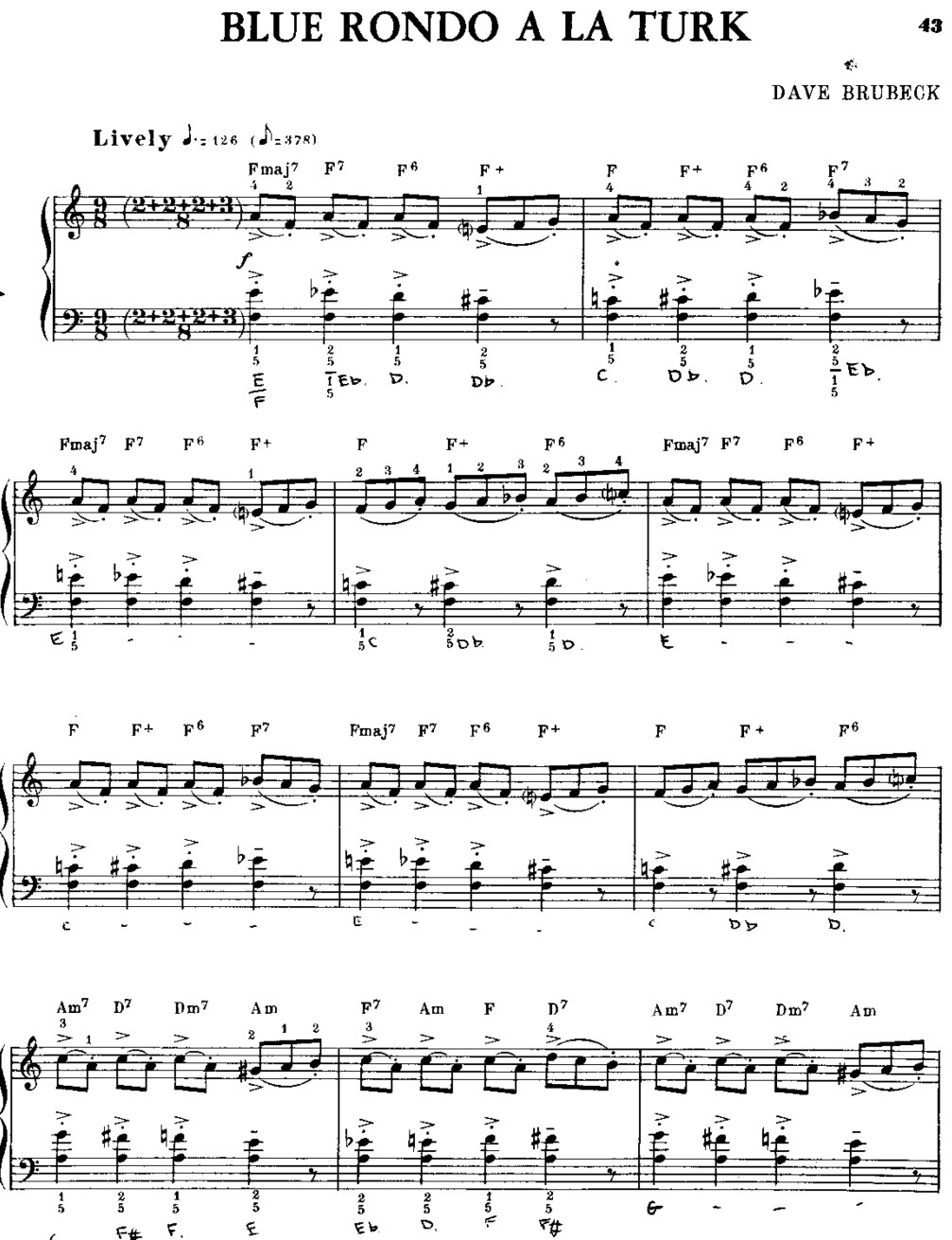
Prog Rock comes straight out of Brubeck. The Bad Plus used a lot of Prog Rock references, and our acoustic instrumentation sort of brought it back to Brubeck, although the musical material was more Rush or Yes than Brubeck.
Brubeck is famous for those “prog” odd meters, but ironically he wasn’t adept at improvising within those odd meters. In general Brubeck’s musical failings are mostly rhythmic. There’s an old joke that goes, “Since Brubeck couldn’t make it feel right in 4/4, why not add a beat and make it 5/4?” The best 50’s stuff is fine, and it reaches a peak with Time Out (it wouldn’t be a hit record if it didn’t swing) but from the mid-60’s on Brubeck can be hard to listen to, especially alongside Roy Haynes or Alan Dawson. He even turns the time around with Haynes on “All the Things You Are.” Not good.
The moody Duets LP with Paul Desmond is the best later Brubeck I know — but then again, Desmond was always Brubeck’s ace in the hole.
RIP Jon Christensen
Jon Christensen might have been the first European drummer to influence the New York jazz musicians. His charismatic performances were captured on dozens of ECM albums by Terje Rypdal, Jan Garbarek, Ralph Towner, Enrico Rava, Miroslav Vitous, Arild Andersen, Bobo Stenson, and many others. With the European Quartet of Keith Jarrett, Christensen was heard everywhere by everyone.
The first track on the 1971 debut Terje Rypdal, “Keep It Like That/Tight,” features loose groove drumming from a cubist perspective, almost as if Paul Motian was taking on funk, but I don’t know if even Motian had gotten all the way there yet by 1971.
On Keith Jarrett’s Belonging (1974) is “Long As You Know You Living Yours,” a straight up acoustic gospel anthem, with Christensen working a closed hi-hat and snare with relaxed finesse. It’s not far from something Jack DeJohnette might have played — surely both DeJohnette and Christensen loved Levon Helm — but Christensen is a bit straighter, yet totally at ease, with tiny surreal moments that come and go almost before you notice. He smoothly builds with Garbarek and the band, then goes to the bell of the ride cymbal for the piano interlude and diminuendo. Yeah, baby.
Ralph Towner’s Solstice (1975) begins with “Oceanus,” where Christensen’s double-time swing ride cymbal works in chattering counterpoint with doleful melodies and romantic harmonies by Towner, Garbarek, and Eberhard Weber. You want to know what the ECM sound is? This is the ECM sound — and it would be unthinkable without Christensen’s driving yet evocative brass.
Thank you Jon Christensen for your monumental contribution.
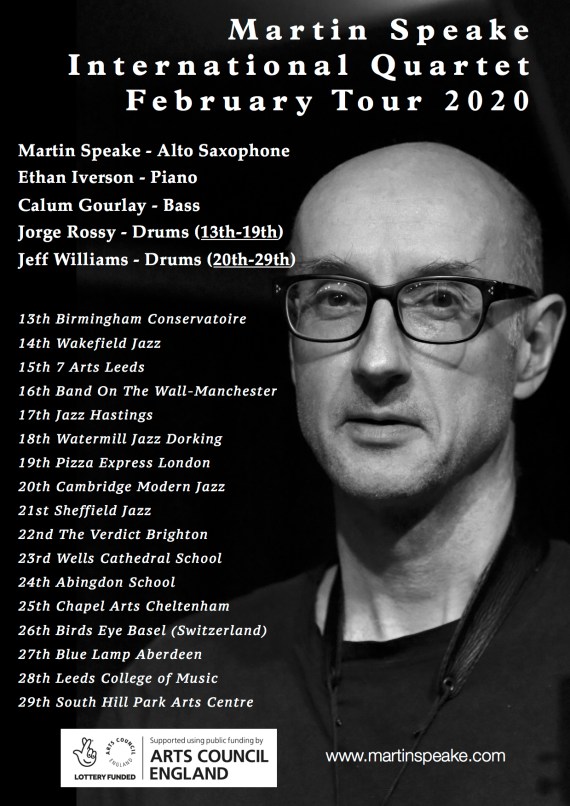
UK tour
Looking forward to this tour with Martin Speake and several other stellar players…
Close Associate
With the passing of Peter Serkin, it was time to give my Peter Lieberson overview a fresh edit.
Practice is Peaceful
New DTM page, about the late, great Peter Serkin, one of the classical pianists I have spent the most time with over the years…
Jimmy Cobb GoFundMe
Serena Cobb explains.
In Ashley Kahn’s book on Kind of Blue, there’s a photo of the expenses for the first of two KOB sessions.
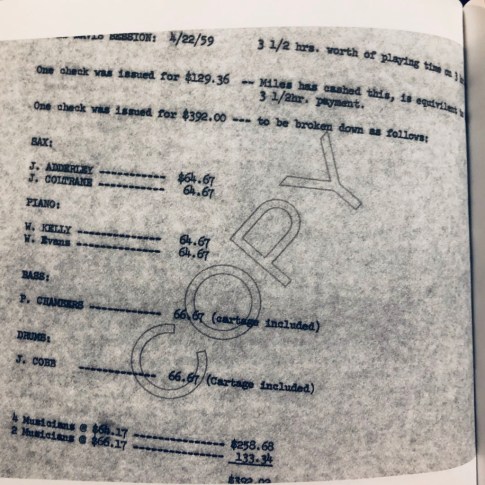
Jimmy Cobb made $66.67 that day.
According to a trusted source, Cobb received no royalties. Ever. But Sony did toss him a thousand dollars in the “CD box set era” for doing interviews connected to “new” releases.
I’m sorry that I don’t have a photo credit for the below, but suffice to say that Jimmy Cobb gives Chris Evans a run for his money in the sweater department.

Cobb has a big beat, a driving approach that makes a small band sound big. His legendary hook-up was with Wynton Kelly: Any of the live dates with Kelly and Cobb together are just insane.
A lesser-known studio date of tremendous interest is Bobby Timmons’s The Soul Man! with Wayne Shorter and Ron Carter.
But really anything with Cobb is going to be top shelf.
And, of course, there is Kind of Blue, where every articulation of each cymbal beat has gone in the annals of the most precious human achievement.
Chronology 7: Harold Mabern, Larry Willis, and Richard Wyands
New Chronology for JazzTimes, a potentially controversial obit for three greats.
Gigsalicioius Rex
On February 4, I’m going to perform a new through-composed piece, Dance Sonata, at Halyards in Gowanus. This work was commissioned by Dance Heginbotham and will get a proper premiere at Jacob’s Pillow this summer with choreography by John Heginbotham.
Dance Sonata is in four movements — Allegro, Andante, Scherzo, Rondo — and is completely written out. The piece may be played solo piano but will be even more effective with bass and drums; I will be joined by Dylan Reis and Vinnie Sperrazza both at Halyards and at the Pillow. (To be brutally frank, we are making the demo tape for John the next day and a little Brooklyn gig will be a good opportunity to tighten up the polyrhythms.)
The aesthetic of Dance Sonata will be no surprise for those that have heard Pepperland or Concerto to Scale. I guess I have truly arrived at “my style” when it comes to formal composition. Well, I turn 47 in February, so it’s certainly about time!
At Halyards, Dylan, Vinnie, and I will also play some normal jazz to fill out the hour. We start at 8, Diego Voglino takes over for the second set. Donation.
—
Easter Weekend, Friday and Saturday April 10 and 11: Ethan Iverson All -Star Quartet Featuring Al Foster, Chris Potter and Ben Street at Iridium.
The blurb:
Ethan Iverson was a founding member of The Bad Plus, who the New York Times said was, “…Better than anyone at melding the sensibilities of post-60’s jazz and indie rock.” Iverson has released two acclaimed albums on ECM in the last two years: Temporary Kings, a duo recital with Mark Turner, and Common Practice, a live quartet featuring Tom Harrell. He is a member of the Billy Hart Quartet and composes scores for the Mark Morris Dance Group and Dance Heginbotham. An interest in combining the very new with the very old led Iverson to start the website Do the Math, a beloved repository of wonky analysis and musician-to-musician interviews, and surely one reason Time Out New York selected Iverson as one of 25 essential New York jazz icons: “Perhaps NYC’s most thoughtful and passionate student of jazz tradition—the most admirable sort of artist-scholar.”
For this special engagement Iverson is joined by a truly formidable cast. Chris Potter is everyone’s favorite tenor saxophonist, a player who commands any idiom with style and virtuosity. Ben Street has joined Iverson in many collaborations and is widely regarded as one of the most swinging bassists in New York. However, the real star is Al Foster, the legendary drummer who was a key sideman with Miles Davis, Sonny Rollins, Joe Henderson, and many others. Iverson and Foster have played as a trio with Ron Carter, Christian McBride, and Larry Grenadier, but this is their first meeting in a quartet. Watch the sparks fly! The repertoire will include toe-tappers from Duke Ellington and Count Basie, steeplechases like “Giant Steps” and “Moment’s Notice” selected just for Mr. Potter, and new music written especially for this one-time-only engagement.
The Midwest Connection
Sincere thanks to Pamela Espeland for taking the time to do an in-depth interview for the Star Tribune.
 DO THE M@TH