Louis Armstrong and Miles Davis

Terry Teachout’s play Satchmo at the Waldorf recently opened in New York. While obviously well-acted by John Douglas Thompson and successful with the audience, for me there wasn’t enough unconditional love and respect for Mr. Louis Armstrong. This is also the theme of my essay about Terry’s book on Duke, “Reverential Gesture.”

I did appreciate Terry’s biography of Armstrong, Pops. He’s a true polymath (see our interview), and always considers jazz as part of American popular music. Those dedicated to jazz are often over-informed by insider knowledge, and it is refreshing to remember there’s a whole wide world out there.

Even when I disagree with Terry it is grist for the mill. I was pulled up short by one aspect of Satchmo at the Waldorf: the portrayal of Miles Davis. After spending an afternoon with Google and my library, what I found was interesting enough to write up briefly for DTM.

In Satchmo at the Waldorf. Miles Davis appears as the “young angry black man” who thought Louis Armstrong was an Uncle Tom.

The fullest explication of the discordance between the civil rights era and Armstrong that I’ve seen is in Gerald Early’s Tuxedo Junction:

The pain that one feels when Armstrong’s television performances of the middle and late sixties are recalled is so overwhelming as to constitute an enormously bitter grief, a grief made all the keener because it balances so perfectly one’s sense of shame, rage, and despair. The little, gnomish, balding, grinning black man who looked so touchingly like everyone’s black grandfather who had put in thirty years as the janitor of the local schoolhouse or like the old black poolshark who sits in the barbershop talking about how those old boys like Bill Robinson and Jelly Roll Morton could really play the game; this old man whose trumpet playing was just, no, not even a shadowy, ghostly remnant of his days of glory and whose singing had become just a kind of raspy-throated guile, gave the appearance, at last, of being nothing more than terribly old and terribly sick. One shudders to think that perhaps two generations of black Americans remember Louis Armstrong, perhaps one of the most remarkable musical geniuses America ever produced, not only as a silly Uncle Tom but as a pathetically vulnerable, weak old man. During the sixties, a time when black people most vehemently did not wish to appear weak, Armstrong seemed positively dwarfed by the patronizing white talk-show hosts on whose programs he performed, and he seemed to revel in that chilling, embarrassing spotlight.

Early is writing in the late ’80s, just before Wynton Marsalis and Stanley Crouch would gain traction with an alternative narrative.

People like beefs. Satchmo at the Waldorf includes Armstrong jousting with both Dizzy Gillespie and Miles Davis. Terry is very canny, and I’m certain that all the quotes are true, although it isn’t explained that some of them are from years after Louis was dead.

Miles’s appearances in Waldorf culminate in that remarkable bit of gallows humor from 1985 in Jet:

If somebody told me that I had an hour to live, I’d spend it choking a white man. I’d do it nice and slow.

Miles is playing to the audience here. He wouldn’t say that to DownBeat, he’s saying it to Jet. (It reminds me of Armstrong being photographed with Amiri Baraka’s Blues People in the pages of Ebony twenty years earlier.) If Miles makes you upset, you’ve fallen into his trap. Later on in the Jet piece, Davis says, “Those the shoe don’t fit, well, those don’t wear it.”

Miles had a lot of facets. His support of Gil Evans and Bill Evans did the most of anybody to validate a kind of romantic or white sound in modern jazz. By 1985 all the editions of his band had had white players for years.

Anyway, back to beefs. According to Waldorf, Miles really gave Louis Armstrong a hard time. A casual search of the internet indicates this is common wisdom. (Rifftides; CBC; Daily Kos; Newsday; many more.)

Beefs are fun, but it is more helpful to see Afro-American jazz as a continuum. I was just listening to Miles Davis’s E.S.P. and think that part of the trumpeter’s solution to this hard new Wayne Shorter and Herbie Hancock music was to play Louis Armstrong quotes.

As far as I can discover from my library and the internet at this moment, the following is what Miles said about Louis Armstrong when he was alive:

1949: In DownBeat to Pat Harris, Miles says that Louis is one of his favorite musicians.

1955: In a DownBeat blindfold test with Leonard Feather, he listened to “Ain’t Misbehavin'” with Bobby Hackett and Jack Teagarden. I believe the “statements” Miles refers to are Louis’s putdowns of modern jazz.

I like Louis! Anything he does is all right. I don’t know about his statements, though, I could do without them…I’d give it five stars.

1958: In the Jazz Review with Nat Hentoff, he listened to “Potato Head Blues”:

Louis has been through all kinds of styles. That’s good tuba, by the way. You know you can’t play anything on a horn that Louis hasn’t played – I mean even modern. I love his approach to the trumpet; he never sounds bad. He plays on the beat – with feeling. That’s another phrase for swing. I also love the way he sings.

1962: In Playboy to Alex Haley:

I love Pops, I love the way he sings, the way he plays – everything he does, except when he says something against modern-jazz music. He ought to realize that he was a pioneer, too. No, he wasn’t an influence of mine, and I’ve had very little direct contact with Pops. A long time ago, I was at Bop City, and he came in and told me he liked my playing. I don’t know if he would even remember it, but I remember how good I felt to have him say it. People really dig Pops like I do myself. He does a good job overseas with his personality. But they ought to send him down South for goodwill. They need goodwill worse in Georgia and Alabama and Mississippi than they do in Europe.

Hyland Harris also sent me two candids, and you can see the respect Miles has on his face when greeting Pops.

Miles-DAVIS

Louis-Armstrong-and-Miles-Davis

The most condemning things Miles said about Armstrong seem to be from his 1989 autobiography co-written with Quincy Troupe. Armstrong is repeatedly name-checked as one of the greats, but in the photo album he gives us Pops, Beulah, Buckwheat, and Rochester: “Some of the images of black people I would fight against throughout my career. I loved Satchmo but couldn’t stand all the grinning he did.”

Also from the book:

As much as I love Dizzy and loved Louis “Satchmo” Armstrong, I always hated the way they used to laugh and grin for the audiences. I know why they did it – to make money and because they were entertainers as well as trumpet players. They had families to feed. Plus they both liked acting the clown; it’s just the way Dizzy and Satch were. I don’t have nothing against them doing it if they want to. But I didn’t like it and didn’t have to like it…Also I was younger than them and didn’t have to go through the same shit to get accepted by the music industry. They had already opened up a lot of doors for people like me to go through…

I loved the way Louis played trumpet, man, but I hated the way he had to grin in order to get over with some tired white folks. Man, I just hated when I saw him doing that, because Louis was hip, had a consciousness about black people, and was a real nice man. But the only image people have of him is that grinning image off TV.

This last quote is close to what Early worries about in Tuxedo Junction.

After leaving Satchmo at the Waldorf I asked myself: is this progress? I decided that it was. At the least, having a black man best known as a cheerful entertainer repeatedly curse at a mostly white audience is still mildly subversive. (Many reviewers of Waldorf are somehow surprised that Mr. Armstrong swore and smoked weed.)

In drama, clear antagonists are required. Terry has to make a story go. That should be fine, except that in Waldorf, fast-talking manager Joe Glaser is almost more interesting than doddering old Armstrong, and Miles Davis becomes a cartoon version of black nationalism.

To his credit, the portrayal of the Armstrong/Davis divide is much more nuanced in Terry’s book Pops than in the play.

It’s just good to remember how much Miles Davis must have loved Louis Armstrong. When Miles told Haley that Louis wasn’t an influence, that just wasn’t true. Trumpet playing aside, the whole concept of playing white show tunes in an improvisatory and black music context – i.e., the bulk of Miles Davis’s recordings from the studio in the 50’s and live in the 60’s – comes straight from Louis Armstrong.

Straight From the Source

The Solo Concert: Sam Newsome plays Monk and Ellington is a single track, available for less than two dollars from CD Baby and iTunes. More about it on Sam’s blog.

Sam explores “Sophisticated Lady,” “Misterioso,” “Ask Me Now,” and “In a Sentimental Mood” in a long medley. It’s very abstract but intensely compelling. There’s no one else that does what Sam does, period.

I’ve gotten to hear all these arrangements before live, and some of them are already recorded, but I can understand why Sam wanted to release this version. It’s got a wonderful acoustic, the performances are inspired, and you can hear the audience listening hard.

Philip Sandifer has several books out. I supported his Kickstarter and received the first four volumes of Tardis Eruditorium recently. Those are all about Doctor Who, my ancient and still moderately ardent love. I naturally read the last one first, as this is about the era I know best, Tom Baker and Philip Hinchcliffe. I enjoyed his blog entries, but reading them in a brilliantly packaged paperbound book was even better. (There’s also new content.)

I don’t know anything about Wonder Woman, but since I admire Sandifer, I got A Golden Thread: An Unofficial Critical History of Wonder Woman too. Wow. Lots of interesting stuff here! I admit I just skipped around, looking at how the comic began, a long chapter about famous television show, and Sandifer’s thoughtful coda. Still worth every penny. 

Support your self-produced artists! This is clearly the way now: Many of our best just do it on their own.

(Another Philip Sandifer fan is Matthew Guerrieri, who does something for Beethoven’s Fifth Symphony like Sandifer does for pop culture. The First Four Notes is just about to come out in paperback, so there’s no excuse not to take a look.)


In the Zone

I asked my Twitter followers, “Yr favorite TV themes are…?”

They were a generous bunch, I retweeted them all, about 80 I think.

Two relevant to jazz not mentioned are the The Price is Right, with a wildly funky bassist and sort of celebratory Afro-centric vibe put on a Charles Strouse tune (I don’t know the arrangers or performers) and Roger Kellaway’s piano on All in the Family.

I think the one theme that didn’t come up – until a last minute tweet by Ted Reichman – that means a lot to me personally is The Twilight Zone by Marius Constant. This is (relatively) hardcore European modernism, a style I had no youthful access to in any other way but from the television.  Much of the incidental music for TZ was just as important and truly top-drawer, with many big names like Jerry Goldsmith, Leonard Rosenman, and Bernard Herrmann (who contributed a theme tune as well).

That TZ music, just like the music for Doctor Who by Delia Derbyshire, Ron Grainer, Malcolm Hulke, Dudley Simpson, Paddy Kingsland and others, was crucial to my development as a musician. A blessed gateway to the strange.

Thanks to all!

Meet Me at 20th and Federal

Yesterday we took Tootie Heath to his old neighborhood in South Philly.

He stood outside the house he grew up from 12 years on.

IMG_3968

His old buddy saxophonist Sam Reed still lives in the neighborhood, and they posed outside the Lincoln Post, where Tootie heard his first live drums as part of the local marching band.

IMG_3964

A Visit to MAXJAZZ

For about 8 years, TBP has had a recurring gig at Jazz at the Bistro for Jazz St. Louis.

That very first time at the club all those years ago, there was some killing bebop piano blues on the stereo and I asked the bartender who it was. A man next to me said, “Mulgrew Miller. I’ll bring you a copy tomorrow.”

It was Richard McDonnell, the owner of MAXJAZZ and a mainstay of the thriving St. Louis jazz scene. The record in question was Mulgrew live at the Kennedy Center playing “Relaxin’ at the Camarillo” with Derrick Hodge and Rodney Green.

Over the years Richard has hung out with us quite a bit. He’s a jazz fan from the old school: he played saxophone and heard everybody was anybody. In 1999 he started a label to showcase the kind of jazz he really loves.

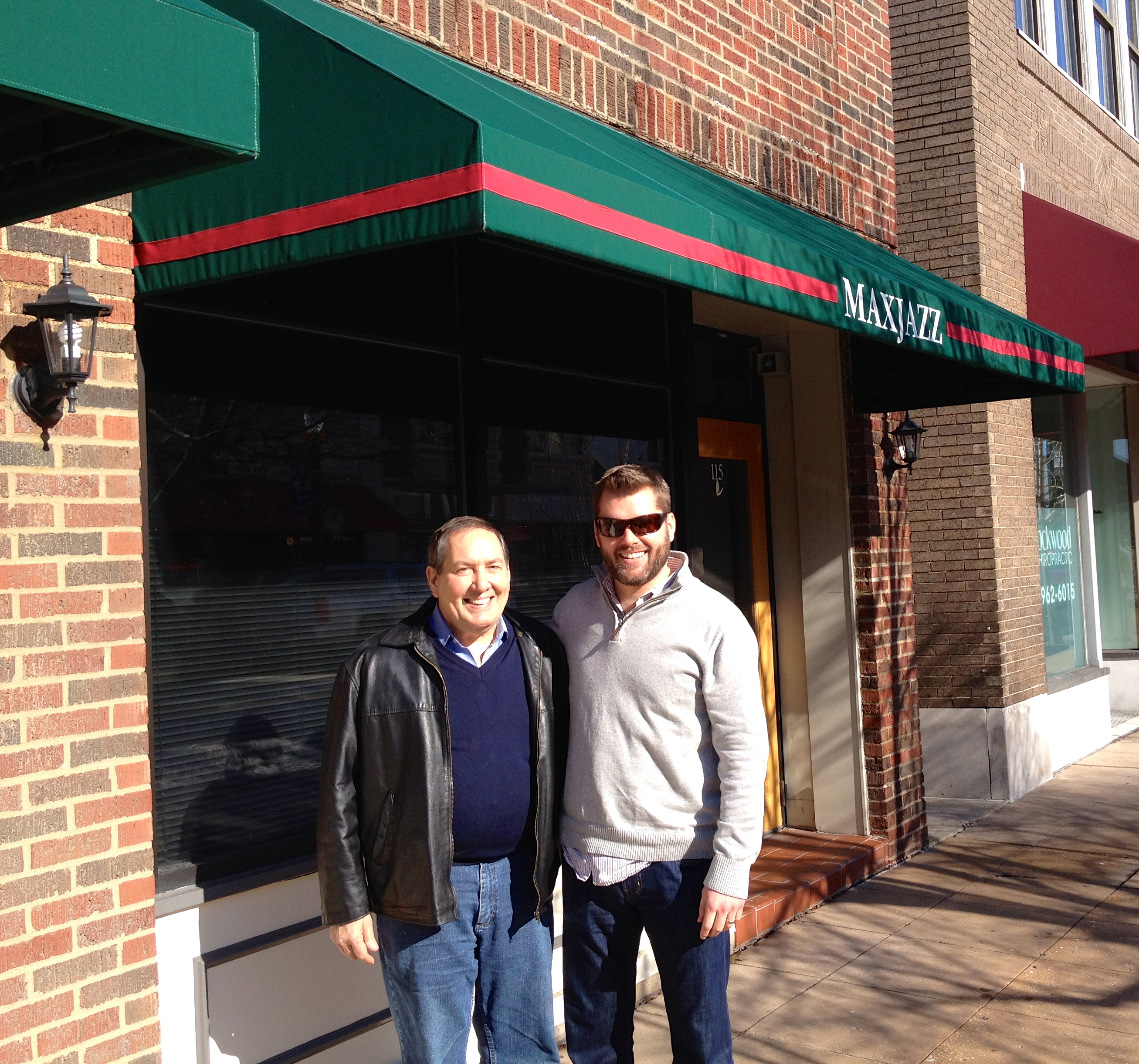
Today his son Clayton, who works with Richard, took me out to the MAXJAZZ offices in Webster Grove.

IMG_3903

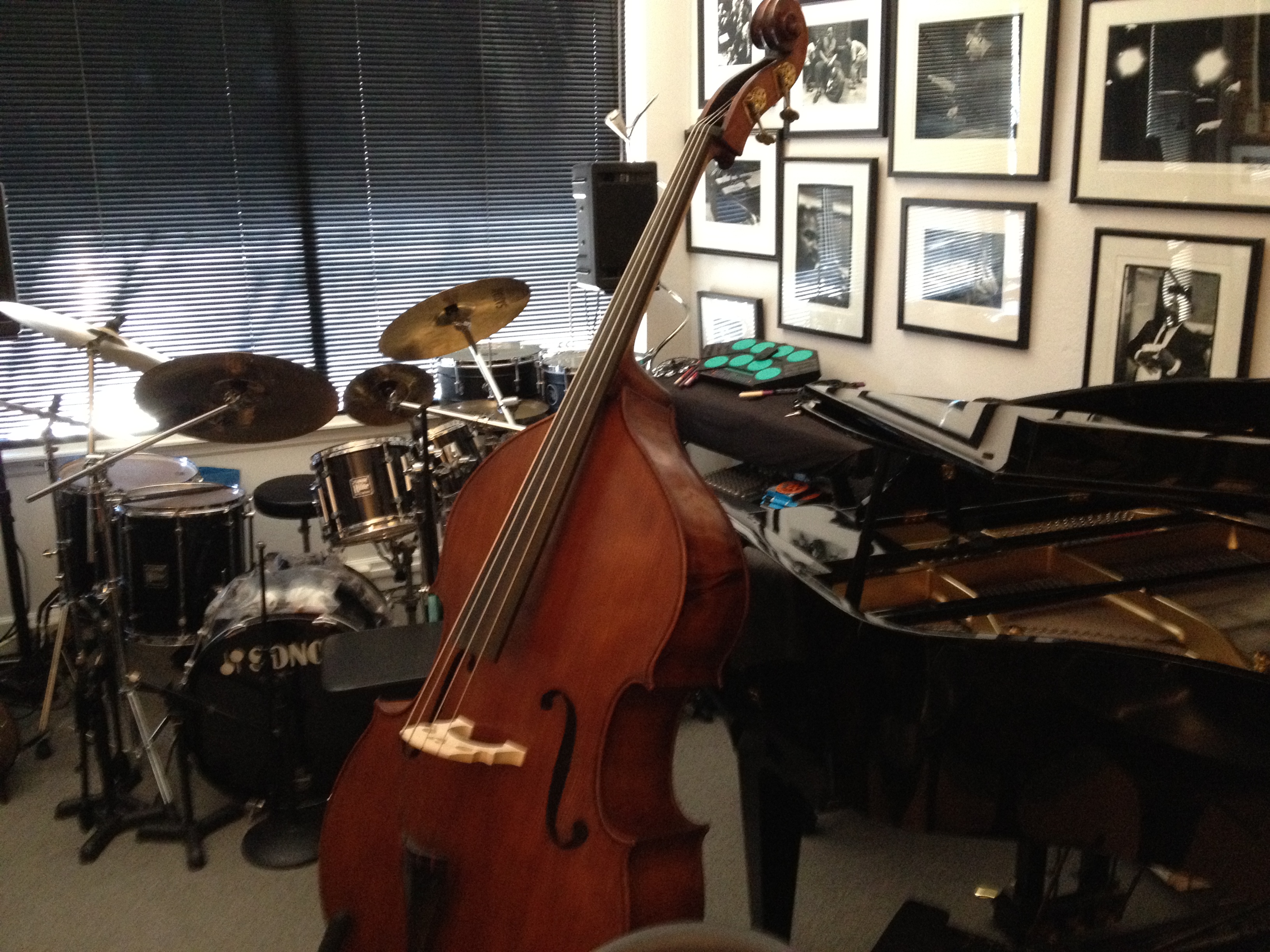
The offices are comfortable and stocked with instruments, photos, and jazz memorabilia.

IMG_3875

IMG_3893

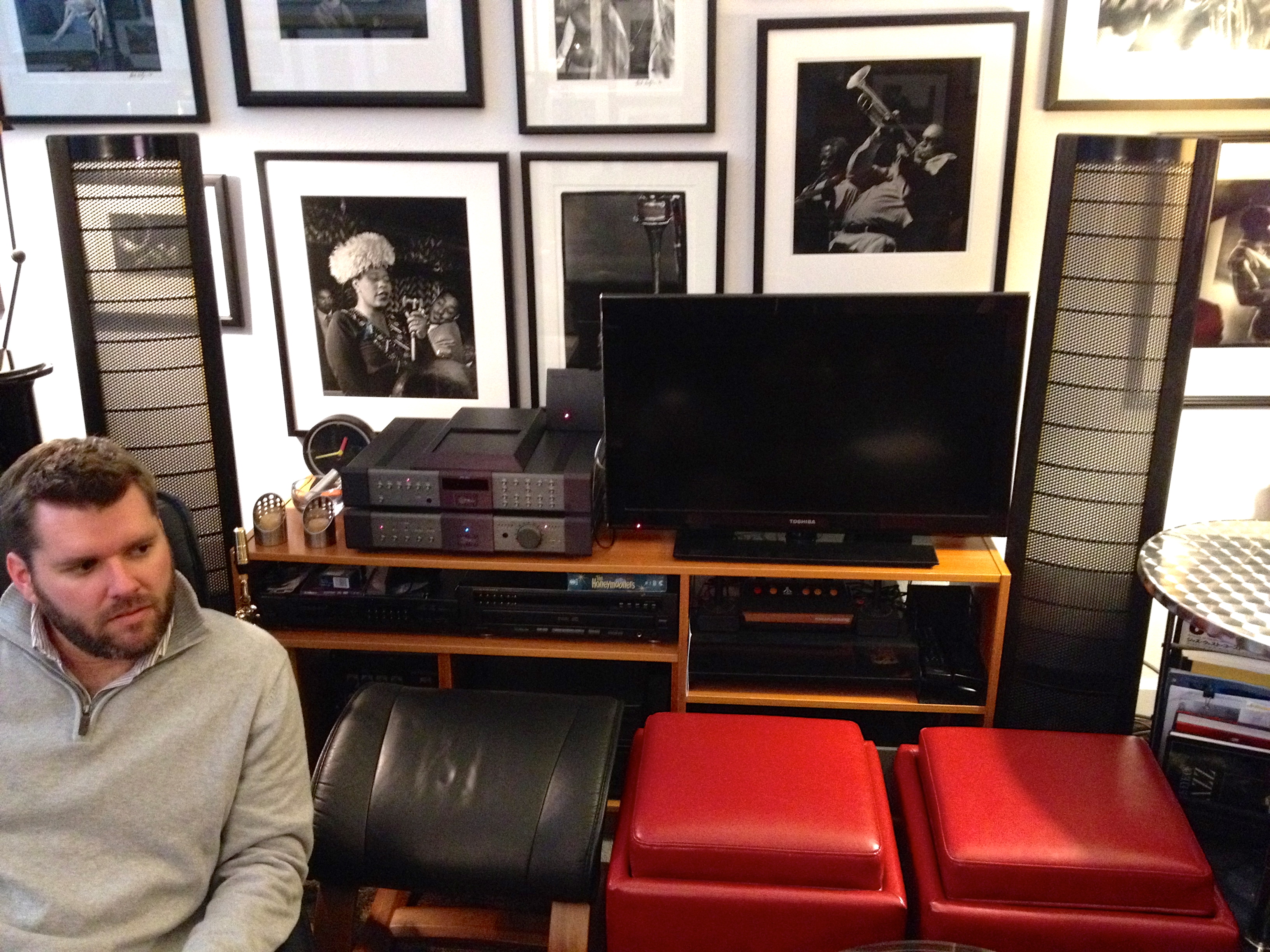
Here Clayton listens while Richard and I talk a mile a minute: Coltrane, Kenny Kirkland, Joe Henderson, Al Foster, other favorites.

IMG_3894

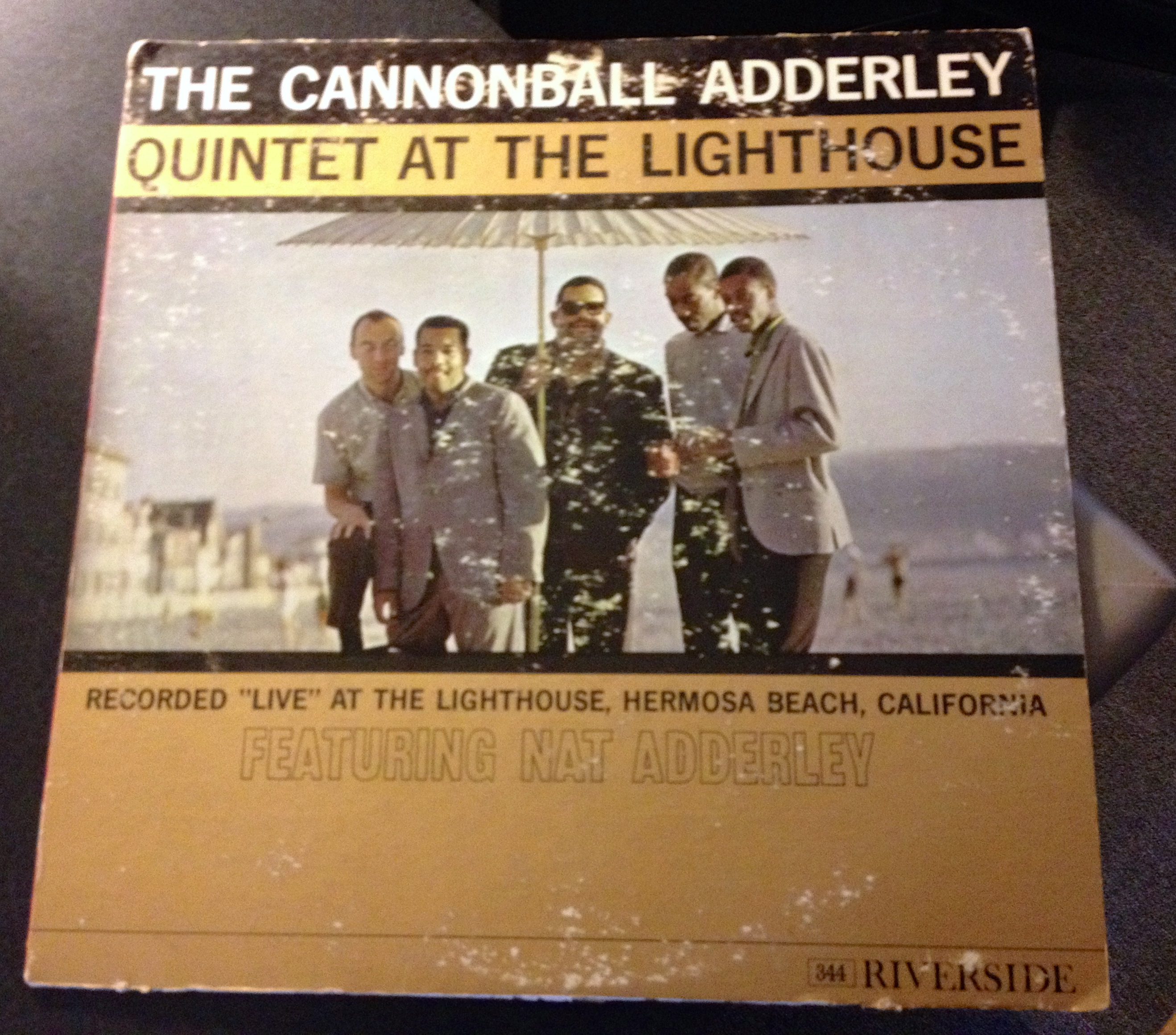
At a Kenton camp, Cannonball Adderley was Richard’s section leader. Richard shared an amusing story of telling Cannonball he had just gotten work done on a Frank Wells custom mouthpiece. Cannonball responded, “I play a Meyer 5.” (This is the most standard mouthpiece.)

Richard said, “He could have blown on a piece of plumbing and it would have sounded good.”

Then he brought out an LP purchased new in 1963. Still sounds and plays great, although the cover is a bit weatherbeaten.

IMG_3905

Richard looks for sound and melody in his artists. At this point there are about 80 MAXJAZZ CDs on the market.

IMG_3889

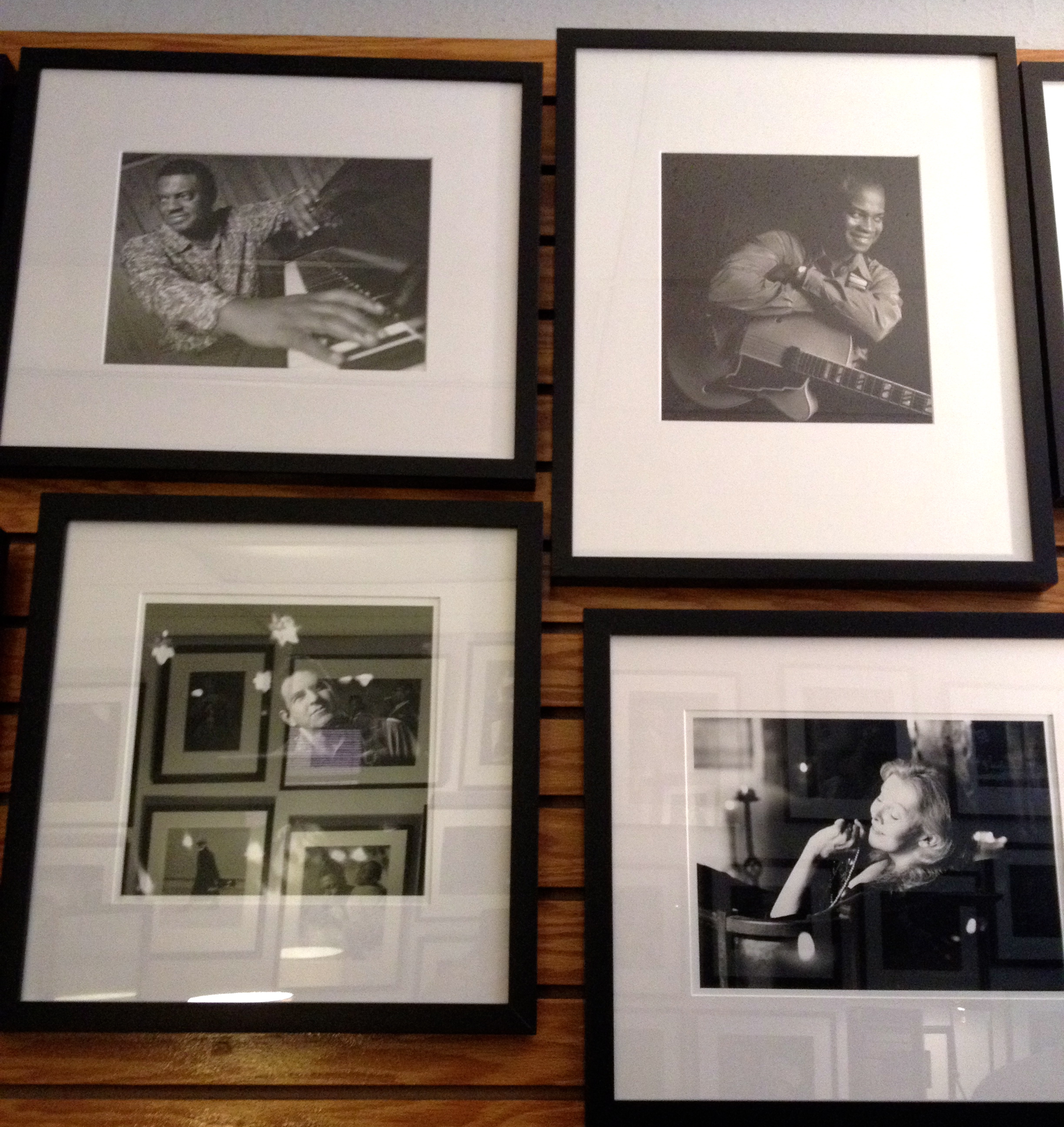
Jimmy Katz took these framed shots of important MAXJAZZ artists, Mulgrew Miller, Russell Malone, Bruce Barth, and Jessica Williams.

IMG_3898

The latest three releases are by Ben Wolfe, Ben Paterson, and Emanuele Cisi. I got to walk with fresh copies, a nice perk.

IMG_3880

Yusef Lateef (by John Rogers)

In addition to working with many others, John Rogers took the photos for several recent albums that I play piano on: Costumes Are Mandatory, Tootie's Tempo, All Our Reasons, and the forthcoming Billy Hart One is the Other.

John has published a lovely story about Lateef on A Blog Supreme, and offers more here:

After the publishing of the article for NPR and even before, Ethan and I had already been talking about sharing this story for DTM. I recently read the following quote from Yusef on his funeral guest book.

"I will watch you leave until you're gone – for I will never turn my back on those I love."

This was in reference to the fact that Yusef would always watch his friends depart his company.Yusef did it for us that first day, but I did not know until a few days ago that he would always do this for Ed and apparently lots of other people as well. For me that's a beautiful thing I will try to incorporate into my life.

As my friends all well know I am what tattoo people call a tattoo collector. On my chest I have some initials on each side: PM for Paul Motian and above that the words " Remember the good times". On the other side MB for Marion Brown and above that a hummingbird and the words "Stan the glad man" for my buddy Stan Rawls who took his own life. In the center is my heart chakra surrounded by a lion and a elephant for Ed and his teaching me about reggae music and culture from a young age. Above that is Yusef's eye to watch over me all the days of my life in this world. To protect me and be with me because real friendship never dies, and with my brother near my heart, I will never be alone.

John Rogers

Brooklyn NY, Dec 25 2013

Chest tattoo crop

Masterpieces, Curiosities, Farewells, Anniversaries, Societies

Jazz collectors and serious fans know there’s nothing else like Mosaic Records. At this point they have curated hundreds of the finest box sets ever produced. These sets are limited editions and appreciate in value: If the Monk, Bud Powell, Mingus, and Herbie Nichols LP boxes I saved up for in high school were in pristine condition they would fetch a lot of money today.

Apart from the music, the booklets are extraordinary, full of rare photos and informed liner notes. An important seed for DTM was planted by the exquisite essay by Roswell Rudd for the Nichols box.

The latest Mosaic release The Complete Clifford Jordan Strata-East Sessions collects two Jordan albums, In the World and The Glass Bead Games, and several more that Jordan produced: Cecil Payne Zodiac, Charles Brackeen Rhythm X, Wilbur Ware Super Bass, Pharoah Sanders Izipho Zam (My Gifts), and the previously unreleased Shades of Edward Blackwell.

Jordan is one of the great jazz tenor saxophonists, a man who always sounded like the blues but who had no problem embracing the avant-garde. The crown jewel of the set, Glass Bead Games, is widely regarded as one of his best albums. (Recently I called it “…A marvelous document of a kind of post-Coltrane black music that honors the Aquarian Age yet still has tough hard-bop roots.”) In addition to the unforced spirituality of the leader’s tenor, Glass Bead Games is a terrific place to appreciate Billy Higgins playing a variety of soulful grooves. These days I regard Elvin Jones and Billy Higgins as part of the same family, and Glass Bead Games just might be Exhibit A.

Higgins always credited Ed Blackwell as his teacher, and for those that care about Blackwell, this box is a kind of holy grail. For years a bit of In This World was the only example of Blackwell and Wilbur Ware playing together, although discographies listed 1968 sessions led by both featuring the other. Finally, last year the Wilbur Ware Institute put out Super Bass with poor sound and indifferent production. The Mosaic set improves the sound (especially by boosting the drums), lists the composers of the tunes, and includes the two Blackwell/Ware tracks never heard before from Shades of Edward Blackwell. Since both dates are from 1968 and have piano-less quartets with Don Cherry, it is natural to think of them as companion pieces.

I wrote before:

For Wilbur Ware, music was a way to have a family and a community; an expression of his masters and of himself; a way to rise up out of oppression. Super Bass is about as Afrocentric as you can get. The session was originally for the Dolphy series on Strata-East, the first significant jazz label run by black musicians. All the musicians are basically untouched by any European classical ethos, instead incarnating what Ralph Peterson called the “Energy of the motherland and the fire and fury of what we’ve survived as people in the Middle Passage.”

Wilbur doesn’t play anything that isn’t intimately bound up with oral tradition. Neither does Blackwell. What a pair! Intensely personal, tribal, indomitable patterns emanate in a circular and almost completely un-improvised fashion from the bass and drums. They swing hard, but they aren’t going to help anyone else swing. They are immovable forces. Fortunately, Cherry and Jordan never needed anybody’s help to sound great. It’s particularly exciting to hear the horns deal with some mid-tempo rhythm changes on “Wilbur’s Red Cross.” Jordan is Sonny Rollins on acid, Don is salutations, fragmentations, and flashes of pure melodic invention.

There are two terrific solo bass pieces. “Symphony for Jr” seems to reflect on past experiences and “By Myself” is mostly fabulous walking. Both are informed by a collection of canonical jazz quotes that Wilbur plays in his own way. They can’t be played better than they are here: Wilbur’s sound, phrasing and time are impeccable.

From the new Blackwell session, “Farid” is the obvious keeper, where Blackwell and Ware play a menacing groove together for eight precious minutes. There’s no good academic way to talk about this kind of simulaneous rigor and looseness. Probably it is essentially African in nature. Don Cherry sounds so good playing on top of it, I almost started dancing. The tune is by mysterious Luqman Lateef, an excellent tenor player who apparently never had a professional career.

The rest of the Blackwell date includes several nice pieces for drum choir that are a bit monochromatic for home listening. (Live would be another thing.) It’s more pure fun to return to Charles Brackeen’s Rhythm X with Blackwell, Cherry, and Charlie Haden. Again, the sound is a bit rough but I’m sure Mosaic has done the best anyone has managed yet (at least one of the previous CD issues was unlistenable). I always contend that Ornette Coleman’s greatest music was the sum of its parts: the “Old and New Dreams-esqe” aura of Rhythm X — not to mention much of Super Bass and “Farid” — will delight any traditional Ornette fan.

It’s a shame there isn’t more of this kind of 1968 music extant. Ware, Blackwell, Jordan, Cherry, Haden, and Brackeen are all in good form and eager to experiment. But apparently we have Clifford Jordan to thank that any of it was recorded at all.

There is a bit of a downside. Jordan clearly didn’t have a budget: Besides the raw sound, the piano Wynton Kelly plays on two records is woefully out of tune and uncharismatic. And perhaps Jordan didn’t have enough experience to put together impeccable sessions. Was Jordan’s edict to record only original tunes that smart a decision? Some of the tracks are the thinnest of excuses for new material (“Wilbur’s Red Cross” is “Red Cross,” “A Real Nice Lady” is “Sophisticated Lady”), but honestly that bothers me less than full albums of tunes that the ensembles don’t know well enough to make their own. Most obviously, Payne’s Zodiac is a missed opportunity: if it had been a comfortable blowing session of standards there’s every chance it would have been immortal. Instead the mixed bag of originals with struggling Kenny Dorham and awkward overdubs by Kelly is almost hard to listen to.

Still, full props to Jordan for attemping some amazing things that a conventional producer wouldn’t have allowed. “Ouagadougou” from In This World is one of the most outrageous jazz tracks ever recorded. A sardonic D-minor line played unison by Jordan and Richard Davis leads into near-chaos with Richard Davis, Wilbur Ware, Ed Blackwell, and Roy Haynes all playing mid-tempo modal swing together. I don’t listen to much “extended chant” jazz — the Pharoah Sanders cuts here are for someone else, not me — but my god, does this chaotic “Ouagadougou” conjure the sublime. Dorham and Kelly sound great on this tune as well. Along with Ware this is their sunset period, and it’s nice to have them going out in such a celebratory and Afrocentric fashion.

Posterity is lucky that Clifford Jordan gave all this experimental and uncompromising music a shot. The best of it is sensational. Mosaic’s production is outstanding as always: The photos are marvelous and the notes by Willard Jenkins informative.

Jazz has lost some major figures recently. I don’t have a unique take on Chico Hamilton, Jim Hall or Stan Tracey. I admire them all, and wish I knew their music better.

To mark Hall’s passing I downloaded These Rooms with Tom Harrell, Steve LaSpina, and Joey Baron. Surely one of the best from 1988; Hall and Harrell are a perfect match. I’ve never heard better LaSpina and this is one of the best periods for Joey’s gentle jazz playing.

I’d also note that Hall was one of the great duo guitarists. In addition to a lot of fabulous sides with Ron Carter, there’s also a rewarding live record with Bob Brookmeyer.

As for Tracey, one time I wandered way, way out to the the fringes of London to hear him at a little club. He was known as the “Monk-influenced” English pianist, so I wanted to check it out. The gig didn’t make much of an impression; he was pretty good but the rhythm section wasn’t professional. However recently I heard some live Tubby Hayes with Tracey from the late 50’s that was terrific.

DTM just celebrated Morton Gould’s 100th birthday but did nothing for his exact contemporary Benjamin Britten. Again, this is someone I need to learn more about. I have tickets for Billy Budd at BAM in February. Read Alex Ross: both a personal note in his blog and the more official story in The New Yorker.

Via Alex, I looked at this intriguing polemic by John Halle and Halle’s further thoughts. Clearly Halle is on to something. I remember how furious I got at David Byrne for attacking the idea of “learning Mozart.”(My essay is “Same As It Ever Was.”) But I don’t know political theory and get lost in some of Halle’s more erudite references. Also, as I get older, I’m less concerned about the state of classical music in America then the state of jazz music in America.

What Halle’s piece made me think of, once again, is my slogan “SAVE COMMERCIAL MUSIC.” I don’t know how to save the symphony, but is it too much to ask for intellectually stimulating music in our current, socially relevant television and film? At one point our country dominated those industries with imaginative scores, which were usually informed by European classical music. These days big-budget entertainment frequently uses home studio tracks made by composers who are only one step removed from a demo track from the first keyboard you’d run into at Guitar Center. Surely some of Halle’s worthy concerns about class would be lessened if society encouraged at least a minimum amount of harmonic and rhythmic complexity in our sonic wallpaper.

Remember: SAVE COMMERCIAL MUSIC.

I Used to Encourage Everyone I Knew to Make Art

Belatedly, I've finally looked at Exit Through the Gift Shop. Some movies have a "long finish." I dreamed about Exit last night and it was in the forefront of my consciousness today. I expect to be considering it from different angles all week.

There's nothing to be said about the film if you haven't seen it. However — if you have seen it and are still thinking about it, too — at the moment I concur with Matt Cale's smart parsing at Ruthless Reviews.

The New York City edition of Banksy's website has a month's worth of brilliance on offer. I may even make the T-shirt.

Notes on Albert Murray Memorial

1. The opening slow drag “Flee as a Bird To the Mountain,” where Wynton walked in his NOLA-styled crew, was utterly marvelous. Actually I think this is some of Wynton’s most utterly compelling music these days: when he takes it all the way back.

2. Loren Schoenberg, director of The Jazz Museum in Harlem and my mentor in Lester Young studies, was in the parade and blew a couple of tenor solos with the full band as well. Hi Loren!

3.  In response to LaTasha N. Nevada’s reading of Elizabeth Alexander’s “Omni-Albert Murray,” Aaron Diehl added some boogie to a personalized, delicate, una corda rendition of the Lion’s “Echoes of Spring.”

4. The unquestioned highlights were personal essays about and recollections of Murray by Leon Wieseltier, Douglas Brinkley, Rob Gibson, Michelle Murray, Sidney Offit, and Erroll McDonald. Uniformly first-class, these diverse speakers gave us an astonishingly broad portrait of Murray the man, the mentor, the martinet, the magician.

5. The US armed forces provided comic relief: Colonel Robert S. Spaulding III read a 50’s-era letter from Murray to Ralph Ellison where Murray complained about both the Air Force (“I like the Air Force less and less”) and the Miles Davis/Gil Evans collaborations (“no match for Such Sweet Thunder“).

6: Jimmy Heath read a terrific Murray bit about going to Columbus Circle to Harlem from South to a Very Old Place while the audience looked out at Columbus through the huge windows in the Allen Room.

7. Dan Nimmer played even softer than Aaron when accompanying Joe Temperley on bass clarinet in “Single Petal of a Rose.”  Even though I don’t think Duke or Lion used it much, apparently JALC is where jazz pianists love una corda. At any rate, the audience adored the Temperley/Nimmer duo, and with good reason.

8. All the music was excellent, with the possible exception of Coltrane’s “Alabama,” done by Victor Goines and rhythm section, which was way too professional and uncommitted for my liking. (“This is some serious stuff, man!” as Albert Murray would say.) My favorite tune overall was a thrilling “Goin’ To Chicago” with Brianna Thomas and full band. Damn, that was really swinging. I need to hear more of her! Ben Wolfe held it down wonderfully. So did Christian McBride in a trio “Epistrophy” with Diehl and tasteful Ali Jackson. However, their rather standardized small band ramble through Monk showed how hip it was to hear the JALC band’s tight covers of “Happy Go Lucky Local,” “C-Jam Blues” (great Marcus Printup trumpet chorus), “Blues in Hoss’ Flat,” and the concluding NOLA-sized traditional parade trilogy “Oh, Didn’t He Ramble,” “In the Sweet Bye and Bye,” and “Over in the Gloryland.”

9. Wynton and Judith Jamison read moving excerpts from Murray’s semi-autobiographical novels. They were hardly the only two present: Unsurprisingly, the audience held the greatest number of prominent/significant Black intellectuals I ever expect to be in the same room with.

10. I scanned the room carefully. Apologies if I missed someone, but as far as I tell, there were absolutely no “younger white experimental jazzers” present for this free event. Too bad for them! Their music would only get better if they cared about this side of things, too.

UPDATE: That last tart sentence is related to my criticizing 10 young pianists at the Banff workshop for not recognizing “Carolina Shout.” As I wrote before:

It’s really no big deal if any given young jazz pianist isn’t interested in James P. Johnson. One’s muses needn’t include early jazz if one wants to make good improvised music. But ten out of ten pianists not recognizing “Carolina Shout” really bothered me.

Those so critical of Wynton should remember that this is the battle he’s fighting: to get respect for people like James P. Johnson. Not just respect as a fine pianist of the Jazz Era, but respect for James P. Johnson as an intellectual property vital to the American identity.

Today, it wouldn’t have been a big deal if any given young cool white jazz player couldn’t make the Albert Murray memorial. But in a city that must house at least 2,000 of them, I noticed their absence.

A penny dropped for me a few hours later. The lack of young white faces reminded me of Murray’s obituary by Ratzo Harris in NewMusicBox. Harris is a brillant bassist and absolutely my senior: indeed, I suspect every note of Kenny Werner’s Introducing the Trio can be found engraved in my brain somewhere.  But I just can’t understand why Harris initally sounds so suspicious:

While Murray wasn’t a musician, his influence on music today—for better or for worse—is huge.

After this dark initial salvo, the rest of the obit is pretty positive. But what an introductory qualifier! And my god, Murray isn’t the only one his page that might deserve some qualifiers. Marian McPartland might have been introduced as, “A talented pianist most comfortable in ballads, whose mettle was never tested in the crucible of serious modernist black jazz.”

Hey, I dig Marian. I was on her show, it was a good experience. Also I am not uncritical of Murray. But I’d hate it if Ratzo Harris thought that Piano Jazz was really hipper than JALC.

Another belated penny drop was a memory of attending David Tudor’s memorial in 1996. While I didn’t really know anything substantial about Tudor, John Cage, or Merce Cunningham at that point, I knew enough to walk into Judson Church on a rainy day. After enjoying Tudor’s wild experimental “Rainforest,” Cunningham delivered a long, powerful, and charismatic history of his most important musical collaborator.

I’ve traded on the story of Tudor’s memorial for years: making friends with choreographers, flirting with dancers, listening to historians. After today, I’ll have the same kind of ammunition if I ever meet Henry Louis Gates. (Meaning: at least I can talk about the Albert Murray memorial with him.)

Always go and check it out. It’s what we are here to do.