Techmology

…Something similar happened with the cylinder phonographs that the merry matrons from France brought with them as a substitute for the antiquated hand organs and that for a time had serious effects on the livelihood of the band of musicians. At first curiosity increased the clientele on the forbidden street and there was even word of respectable ladies who disguised themselves as workers in order to observe the novelty of the phonograph from first hand, but from so much and such close observation they soon reached the conclusion that it was not an enchanted mill as everyone had thought and as the matrons had said, but a mechanical trick that could not be compared with something so moving, so human, and so full of everyday truth as a band of musicians. It was such a serious disappointment that when phonographs became so popular that there was one in every house they were not considered objects for amusement for adults but as something good for children to take apart.

One Hundred Years of Solitude by Gabriel García Márquez (1967)

…The Library, formerly the Library of Congress, but no one calls it that anymore. Most people are not entirely clear on what the word “congress” means. And even the word “library” is getting hazy. It used to be a place full of books, mostly old ones. Then they began to include videotapes, records, and magazines. Then all of the information got converted into machine-readable form, which is to say, ones and zeros. And as the number of media grew, the material became more up to date, and the methods for searching the library became more and more sophisticated, it approached the point where there was no substantive difference between the Library of Congress and the Central Intelligence Agency. Fortuitously, this happened just as the government was falling apart anyway. So they merged and kicked out a big fat stock offering.

Snow Crash, Neal Stephenson (1992)

Angels and Demons at Play

Sun Ra will be 100 years old as of tomorrow. The event I’m most curious is the 100 sax players in Chicago. Tootie Heath told us a story about Ra recently: Right before being pushed in the back of a police cruiser following a bust for possession of marijuana, Herman Blount turned, looked the arresting officer right in the eye, and said, “This is the unfriendliest planet I’ve ever been on.”


Act Now

Recent passings include:

Steve Backer, a record executive responsible for documenting so much vital and thorny jazz. Steve Smith has a good post that includes contributions from Anthony Braxton and David Sokol.

Herb Wong, whose Palo Alto and Blackhawk record labels turned out several important mainstream discs at a time when that music didn’t have many worthy venues in America. There’s a photo of Wong with Duke Ellington and some stories from musicians in Gabe Meline’s memorial essay.

Fred Ho, the legendary activist and baritone saxophonist. Kyle Gann has an interesting take; Ben Ratliff’s obit is excellent.

Joe Wilder, sweet-toned trumpeter from jazz’s golden era. Mark Stryker pointed me in the direction of this fascinating interview by Keith Winking. I want to hear that Alec Wilder trumpet sonata played by Joe Wilder. It’s hard to find; from what I can tell, Milton Kaye is the pianist, who I once visited in his apartment next to Carnegie Hall. Kaye was then in his late 80’s and not playing much, but that didn’t stop him from running though Moszkowski’s “Guitarre” in marvelously high-handed fashion.

—-

TBP just played the new SF JAZZ for the first time. It was extremely well run and a lot of fun all around; congratulations to Randall Kline and team for making the big building happen.

There’s no doubt that the future of American jazz is the patronage system. The latest financial bequests from the Doris Duke Charitable Foundation include an astonishing collection of our best and brightest. Since it is so rough out there, these kinds of transfusions are becoming essential to keeping the music alive.

JALC and SF JAZZ are just the beginning; probably every major American city will have its dedicated non-profit jazz space eventually. (UPDATE: A few hours after posting, a Blog Supreme tweeted this article about the new space in St. Louis by Kevin C. Johnson. Of course I know the Jazz at St. Louis people, they are great.)

When enjoying the benefits of societal largesse, is up to the musicians themselves to keep the art form rooted in private folklore. 

—-

Vijay Iyer has benefitted from the patronage system. I’m so impressed that he uses his ever-brightening platform to speak truth to power. In the speech to Yale’s Asian American alumni, “Our Complicity with Excess,” Vijay just goes in and dismantles it all beautifully:

And as we continue to consider, construct and develop our trajectories as Americans, I am also constantly mindful of what it means to be complicit with a system like this country, with all of its structural inequalities, its patterns of domination, and its ghastly histories of slavery and violence.

Many of us are here because we’ve become successful in that very context. That’s how we got into Yale, by being voted most likely to succeed; and that may be what emboldened some of us to show our faces here this weekend, because we actually have something to show for ourselves, that somehow in the years since we first dined at the Alternate Food Line we’ve managed to carve a place for ourselves in the landscape of America. Whether you attribute it to some mysterious triple package or to your own Horatio Alger story, to succeed in America is, somehow, to be complicit with the idea of America—which means that at some level you’ve made peace with its rather ugly past.

Bravo. If I am ever in a position of addressing a group of students at an Ivy League college, I hope I have this kind of courage.

—-

Vijay’s quote from Martin Luther King is obviously admirable, and certainly a good thing to tell students:

“Life’s most persistent and urgent question is, what are you doing for others?”

But Vijay and I might see the place of activism in jazz a little differently. To me, even radical musicians like Monk, Coltrane, and Ornette – even Albert Ayler – seem essentially to be about about pitches, rhythms, tones, and private emotions. Yes, they all argue that we need to make a better world, but that is a subliminal transmission, not the overt argument.

There are great jazz activists, of course. The greatest was probably Charles Mingus, who wore contentious raiment with superb grandeur. Archie Shepp is another; indeed, when he settles down and plays bebop and standards it can seem like something is missing. My idol Mal Waldron says somewhere that jazz was always protest music, and that idea surely helped him ignore conventional piano influences like Hank Jones and Red Garland when creating his mature doom-and-drone style. Oliver Lake can place beautiful politically-themed punches: Oliver recently broke into spoken word at Smalls, which was was thrilling and chilling; some old white people got up and left the club instantaneously. Max Roach made some of the best overtly civil-rights era records, although in the 70’s he seemed to get stuck somewhere and have trouble broadening out into a more generous vision the way Mingus did with Let My Children Hear Music.

In truth, many of my jazz heroes were and are essentially free-spirited gangsters, even Max and Mingus. (Perhaps even especially Max and Mingus.) I’d reject any suggestion that most great jazz musicians lived to the Yo-Yo Ma code Vijay cites, “A life in the arts is a life of service.”

Service was optional. Service was up to you, the listener.

I’ve complained about the New York Times obit for Cedar Walton by William Yardley before in the “Critic’s Blues” section of “Cedar’s Blues”.

Fred Ho’s New York Times obit was twice as long as Walton’s. Probably the main reason is simply that Ratliff commands the material in a way Yardley doesn’t. But another reason may be that Ho’s lectures about the oppression of Afro-Asian culture smoothly translate to a newspaper column, while only jazz insiders will ever really know how great Cedar Walton was.

Vijay namechecks Fred Ho in his speech but doesn’t mention any uncontroversial straight-ahead masters like Cedar Walton. That’s easy to understand; Vijay is talking to a specific audience in a special circumstance. Since he’s a jazz pianist who knows his onions, I can’t imagine that Vijay would be any happier than I am with the implication of the two NY Times obituaries: “Cedar Walton is a lesser musician than Fred Ho because social justice wasn’t Cedar’s overt message.”

Much of what Vijay says is simply true: racism exists. Activism is required. Racism exists. If you love jazz, you should fight for racial equality.

I was rather stunned to read Willard Jenkins’s article about William Shadd, “The First African-American Piano Manufacturer.” It never occurred to me, in all these years of playing the piano and listening to all the great black pianists, that there wouldn’t have been some black-made pianos somewhere. I can’t wait to put my hands on a Shadd and try it out. 

UPDATE: Vijay tweeted, “thanks for linking my speech. you might try checking out my music before talking about the role of activism or service in it.” Whoops! It’s true, I might have mentioned the man’s music. I’m very out of the habit of reviewing peers (other than buddies) on DTM, I get so many press requests already. Vijay let me off the hook with second tweet, “‘I admit I don’t know all of Vijay’s work as well as I should, mainly because I don’t want to be influenced by it.’ – @ethan_iverson,” quoting me from an earlier DTM post. I could then respond, truthfully, “[laughter] I’m worried I sound too much like you already! I admit I listened to MUTATIONS and really dug it.” Vijay: “thanks. so do you hear the “place” of activism in that music as “subliminal” or “overt”? or neither?” Me: “I liked that the first solo piece was clearly the Monk-Randy Weston-Muhal axis, a nod to Afro before ‘ECM classical’ began. kudos.”

SECOND UPDATE: There was more back and forth between us on Twitter, including Vijay calling me out on an embarrassing grammar mistake that is now fixed. A memorable tweet of his was, “anyway I find it difficult to make assumptions about what the dead were thinking, especially those who weren’t often asked.”

Which is of course a very good point. They almost never were asked. The one place I can think of offhand where they were is Arthur Taylor’s Notes and Tones. I’ve been looking through it right now and A.T. brings up politics and protest to almost every single musician. It seems to me that most of them want to keep it separate, even in the wake of the Civil Rights era (some praise the Black Panthers). 

Art Taylor: What do you think about musicians putting political aspects in their music?

Elvin Jones: There’s so much politics, and politics can be such a subtle sort of subject. The musicians who do that think there will be some advantage in it for themselves. Either you’re going to be a musician or a politician. 

Not everyone agrees:

Art Taylor: Have you felt any kind of protest in your music?

Don Byas: I’m protesting now. If you listen you will notice I’m always trying to make my sound stronger and more brutal than ever. I shake the walls of the joints I play in. I’m always trying to sound brutal without losing the beauty, in order to impress people and wake them up. That’s protest, of course it is.

There’s lots more in Notes in Tones – if you are interested in this topic, it’s a must read. Just one more from Ron Carter:

All of a sudden black-studies programs have been getting hot. Everybody is a black music authority. A lot of them are not, as you know.

The Bad Plus Plays The Rite of Spring

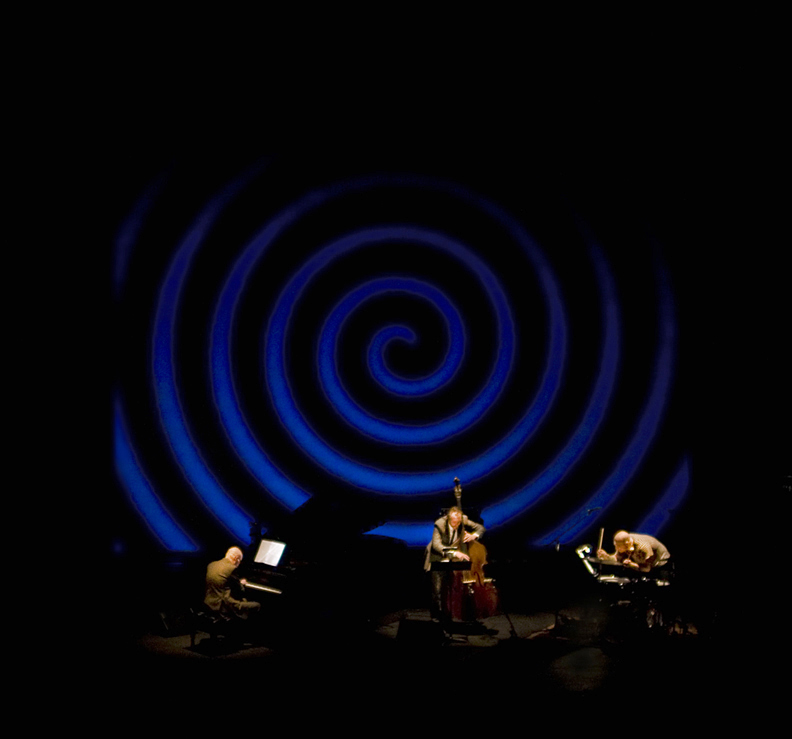
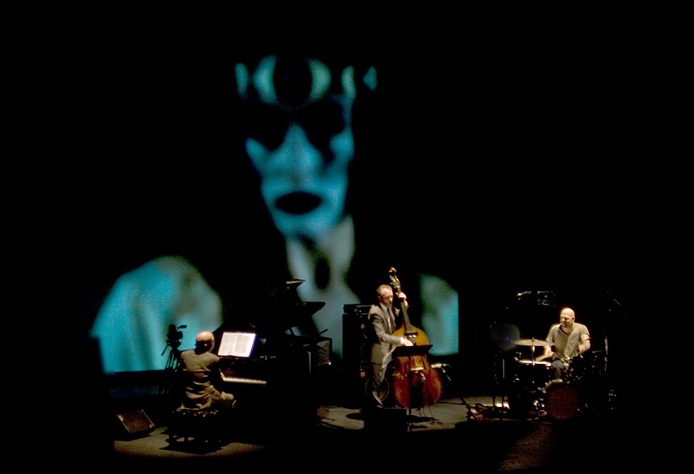
This special project was initiated by Aaron Greenwald of Duke Performances at Duke University and premiered March 2011 as On Sacred Ground: The Bad Plus plays Stravinsky’s Rite of Spring with video by Cristina Guadalupe and Noah Hutton featuring dancer Julie Worden.

Photos of the first performance in Durham, NC by Darryl Pitt:

TheBadPlus_OnSacredGround_9135rev

TheBadPlus_OnSacredGround_9140rev

TheBadPlus_OnSacredGround_9148revSQ

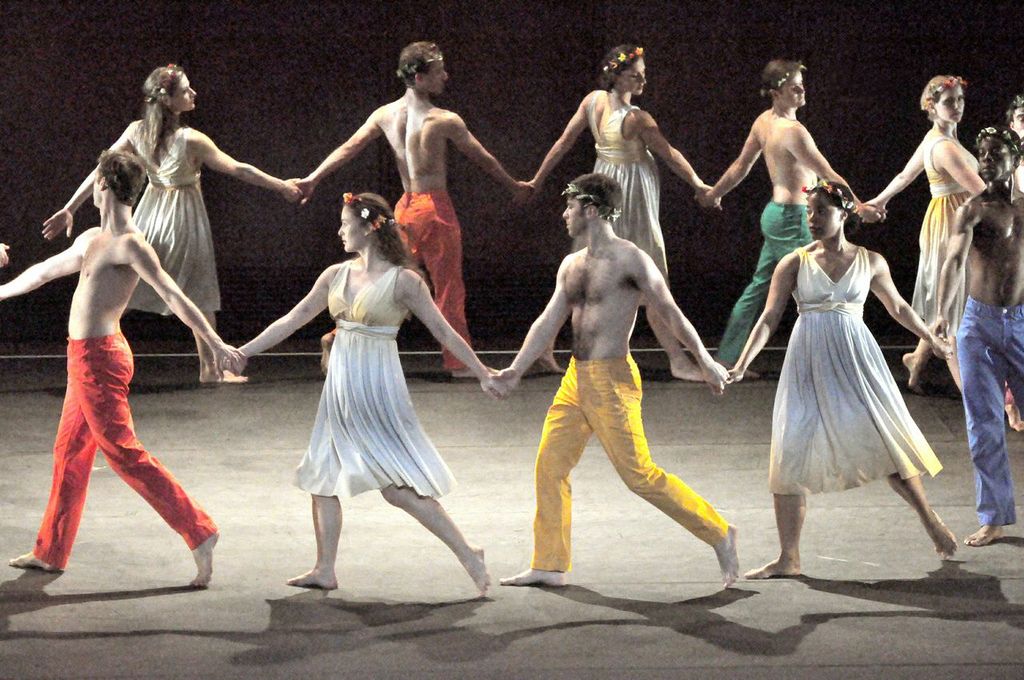
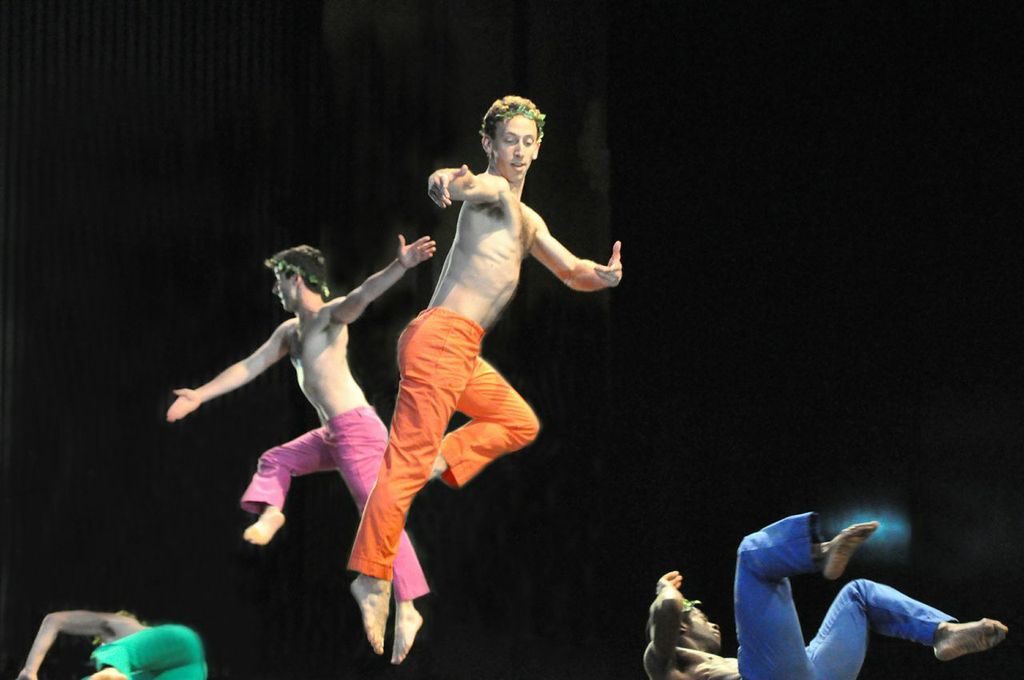
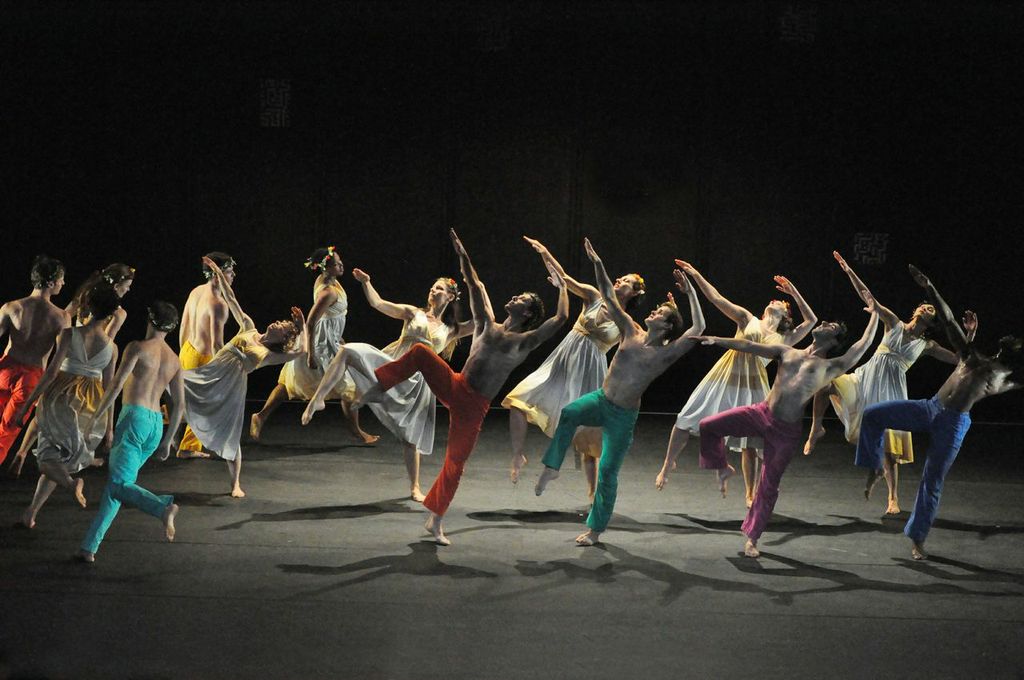
The Mark Morris Dance Group premiered Mark’s dance Spring, Spring, Spring with live TBP in June 2013. The joyous atmosphere of Mark’s choreography gave the band license to relax a bit: After all, none of us want to actually kill any virgins.

Photos of the premiere in Berkeley, CA by Peg Skorpinski:

LDvdUExpr8izkBEZDbqplu9sBSAuqoZQQdXUIYoUEAU,_yDrFYngJa_85JzYE5N7hl7WlWfclYa5ucgH4eYBajA

N211mGQU8XOo_6_1YsiHIFVZ0ocmMelcICo3R0kUdhs

W-PJszkwvTgQtMSjcmXV9VCF_tAW1SDBuWqxWPvoenQ

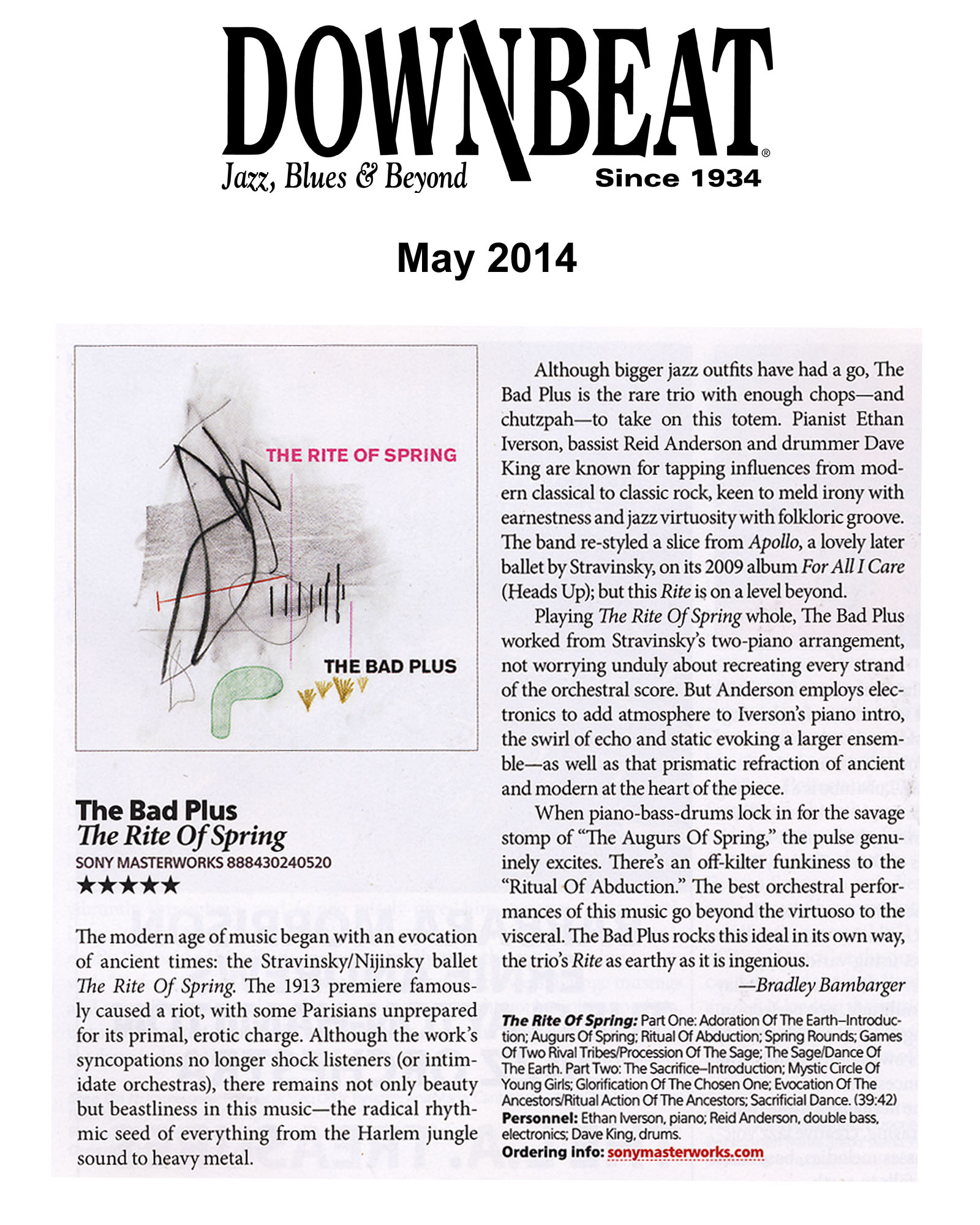
In March 2014, TBP released the studio recording The Rite of Spring on Sony Masterworks with an art package by David King.

Dave King rite

In all of the above, the prelude is my pre-recorded piano with electronic orchestration by Reid Anderson. Beginning with the second movement, TBP plays down the Stravinsky score with minimal improvisation.

Interviews: Jason Rabin with me in 2011Juan Rodriguez with Reid in 2014.

Related DTM: Mixed Meter Mysterium.

I’ve listened to many orchestral performances of the Rite, including Stravinsky’s in 1960, Bernstein, Boulez, and Rattle. The one I ended up enjoying the most is less familiar: Neeme Järvi conducting Orchestre de la Suisse Romande. (The couplings, Requiem Canticles and Canticum Sacrum, are also fabulous.)

While other valuable texts are cited in Mixed Meter Mysterium, Peter Hill’s Stravinsky: The Rite of Spring was the most helpful single volume resource when learning the notes. Hill offers bar-by-bar analysis, historical context, digests of others’ criticism, and compares several recordings.

When you are done reading the book, you can listen to Hill’s excellent recording with Benjamin Frith. Of the other two-pianist recordings I’ve heard, the astonishingly virtuosic Ashkenazy-Gavrilov rendition has pride of place.

There are several interesting solo piano transcriptions of The Rite of Spring. I managed to hear or look at most of them: thank you Dag Achatz, Sam Raphling, Vladimir Leyetchkiss, and Vicky Chow for the inspiration.

I especially admire the transcription by Serhiy Salov, who treats the score with freedom in the tradition of Lizst and Godowsky. (For that matter, it is in the tradition of Stravinsky’s own Three Movements from Petrushka.)

The Rite has long been an inspiration to jazz and rock musicians. I’m aware of recorded excerpts by Birdsongs of the Mesozoic, Hubert Laws, Don Sebesky, the Dylan Howe/Will Butterworth Duo, E.S.T., and Jamie Baum. The complete work has been tracked by Larry Coryell, the Butchershop Quartet, and Darryl Brenzel and the Mobtown Modern Big Band. There must be others as well.

For that matter, the Rite has been played by other classical ensembles: I once saw the Kronos Quartet play a quintet version with pianist Margaret Kampmeier, and in The Apollonian Clockwork: On Stravinsky by Louis Andriessen and Elmer Schönberger there is a fascinating picture of the four piano version created by Maarten Bon.

By the way, just because I anthologized my personal journey of Rite research here, that doesn’t mean I directed Reid and Dave in creating the TBP arrangement. As always, everyone in the band does what they wants, and the arrangement was a collective process.

Reviews of TBP recording include Bradley Bambarger in DB

Downbeat.review.5.14

and

Jon Pareles in NY Times“Jazz-classical crossover is often a collision or a dilution. This is a true connection, one that makes the piece newly vivid. As with the original, every instant is tense.”

Chris Barton in LA Times: “The Bad Plus mostly set aside improvisation in an effort to capture Stravinsky’s modernist vision, but in some ways it’s never sounded freer.”

Jon Garelick in Boston Globe: “This stripped-down ‘Rite’ offers another way to hear the piece, and another understanding of why it’s remained new.”

Fred Kaplan in Stereophile: “What really comes through in this Rite of Spring (and I’m not the first to say so) is the pulse—something that few orchestral conductors can sustain through the storms that this half-hour-plus piece throws their way at every curve.”

Dan Bilawsky in AAJ: “This is history and modern day life coming together as one. It’s a recording for the ages.”

Will Layman in PopMatters:  “The work here is impeccable and astonishing. The piece, played through with both precision and joy, has a natural feeling that denies any suggestion that this kind of tightrope act—Jazz Trio Plays Stravinsky Note-for-Note!—is a gimmick or mere schtick.”

Roger C. Miller in the Talkhouse: “The Bad Plus has obviously honed their ensemble playing, and this is clear in their seamless and lively performance of a very complex composition.  They ain’t just reading the notes, that’s for sure.”

A big undertaking requires many moving parts. Very special thanks to Aaron Greenwald. Also thanks to Todd Walker, Bill Bragin, Cristina Guadalupe, Noah Hutton, Julie Worden, James Diers, Jeanna Disney, Darryl Pitt, Chris Hinderaker, Bradford Swanson, Mark Morris, Nancy Umanoff, Pete Rende, Wülf Muller, Chuck Mitchell, and Jason Tors.

Rare McCoy and Trane on YouTube

[UPDATED.]

In Spring 1965, the classic Trane quartet with Tyner, Garrison and Jones played quite a bit at the Half Note. Bootlegs of the material – mostly radio broadcasts – have circulated for decades. Indeed, an illegal three-LP set from Audio Fidelity that included some of those tunes was my very first Coltrane album, purchased for a few bucks from the mail order vendor Publishers Clearing House.

According to the Tom Lord discography (verified by David Wild) the four Half Note sessions are:

WABC FM radio broadcast, "Half Note", New York, March 19, 1965
"Lonnie's Lament" 
Announcement 
"Chim Chim Cheree"
"Impressions" 
Announcement

Live "Half Note Cafe", New York, March 26, 1965
"One Down One Up" 
"Afro Blue"

WABC FM radio broadcast, "Half Note", New York, April 2, 1965
Announcement 
"Untitled Original" AKA "Creation" (ei: I've also heard it called "Chromaticon") 
"I Want to Talk About You" 
"Afro Blue" (incomplete)

WABC FM radio broadcast, "Half Note", New York, May 7, 1965
"Song of Praise"
"My Favorite Things"

In 2005 Impulse put out Live at the Half Note: One Down, One Up, consisting of the second and fourth sessions. 

At the time, in my review for DownBeat, I complained about how they didn't release the all the Half Note material. Several of the other tracks are simply essential. Maybe someday everything can get a proper release, although that moment may have been lost as YouTube get more and more rare content. Some of the most highly sought trade items among collectors are now just a click away.

"Creation" is remarkably fast and intense. A one off; for me even greater than "One Down, One Up."

"Impressions" is also really fast and has an astounding McCoy solo. For once he plays longer than Trane.

I'm most excited to find "I Want to Talk About You," previous only obtainable to my ears by going to Billy Hart's house and listening to a Japanese collector's cassette tape marked DO NOT DUPLICATE. Over the years I've looked for it on various pirated releases, but it was always another "I Want to Talk About You" from an earlier Half Note set.

Again, McCoy takes one of his best solos, but unlike "Impressions," where Coltrane sounds a bit diffident in response,  on "I Want to Talk About You" Coltrane downshifts into a stunning deconstruction while the band churns away. Usually Coltrane's cadenza was the highlight of this tune, but this time there's no cadenza: he's said it all already.

[UPDATE:  The whole April 2 set is up with better sound and pitch here.]

From later in 1965 (I believe, I can't find "official" documentation anywhere) McCoy plays "On Green Dolphin Street" with Scotty Holt and Jack DeJohnette

I'm listening to a lot of McCoy at the moment, probably working towards a future DTM post. This "On Green Dolphin" ranks easily as one of his greatest trio performances. 

Are there any more tunes from the date? There's also some live stuff with Henry Grimes and DeJohnette from around the same time I see listed occasionally…

[UPDATE: Yes! Here is "Summertime" and a C Minor blues.]

It would be nice to put out a well-produced "rare 60's McCoy" album while the master is still around. My services as liner note scribe are offered gratis if the right label has the interest and clearance to do a good job on that worthy project.

RIP Ralph Penland

I saw Ralph Penland twice in high school, with the Freddie Hubbard quintet (Don Braden, Benny Green, Jeff Chambers) in Minneapolis and the Don Menza quartet (Cedar Walton, Tony Dumas) in New Orleans. I already had a big record collection, and was impressed that there were such great players out there that were veterans but not yet a familiar name.

Penland was a West Coast musician, and therefore automatically comfortable with all kinds of genres. Unlike some musicians with similar careers and interests, though, Penland was truly convincing when dealing out serious swing.

There are 100 Penland sessions in the Lord discography, including dates with Hubbard, Hubert Laws, Joe Henderson, Eddie Harris, Nancy Wilson, Chet Baker, Dianne Reeves, Kirk Whalum, Stanley Clarke, Etta James, and many others. I’d like to hear some of the West Coast jazz dates led by players like Bob Cooper, Conte Candoli, Andy Simpkins, and James Leary, I’m sure they all benefit from having Penland behind the kit.

Penland was on Charlie Rouse’s last live album, Epistrophy, and on Bunky Green’s gentle Feelin’ the Pain. But the Penland I know best are several piano trio albums: The discs with George Cables are solid top to bottom. Two records with Marc Copland and Dieter Ilg have a playful and experimental sound, with Penland playing out more than usual. And a couple of tracks on Buddy Montgomery’s So Why Not? with Ron Carter are among Buddy’s very best recordings on piano.

RIP Al Harewood

Back in the heyday of hard bop, when everyone played a similar folkloric ride cymbal beat, it was up to the drummer to make sure his pattern was distinctive.

A quarter note is a quarter note is a quarter-note: Al Harewood’s version was effortless and Caribbean-inflected. His left hand coughed and bumped. Of course the bass drum was feathered just right. There was probably no moment of his professional career as a musician where Al Harewood wasn’t swinging.

Harewood can be heard on the following albums, all of which are lifted up by his beautiful beat. The 60's music is the most famous: the many albums with Horace Parlan and George Tucker show that unit was a canonical rhythm section. Later, through Betty Carter, Harewood linked up with Norman Simmons, another musician with whom he shared similar ideals and taste. Completed by Lisle Atkinson, that unit was canonical too.

Jay Jay Johnson & Kai Winding Jay & Kai Quintet (1954)

Ahmed Abdul-Malik Jazz Sahara (1958)

Ahmed Abdul-Malik East Meets West (1959)

Curtis Fuller Blues-ette (1959)

Benny Golson Gone With Golson (1959)

Lou Donaldson Sunny Side Up (1959)

Horace Parlan Movin' And Groovin' (1960)

Horace Parlan Us Three (1960)

Stanley Turrentine Look Out! (1960)

Horace Parlan Speakin' My Piece (1960)

Lou Donaldson Midnight Sun (1960)

Horace Parlan Headin' South (1960)

Booker Ervin That's It! (1961)

Stanley Turrentine Jubilee Shouts (1961)

Stanley Turrentine Up At Minton's (1961)

Horace Parlan On The Spur Of The Moment (1961)

Dexter Gordon Doin' Allright (1961)

Horace Parlan Up And Down (1961)

Grant Green Remembering (1961)

Ike Quebec Heavy Soul (1961)

Stanley Turrentine A Chip Off The Old Block (1963)

Grant Green Idle Moments (1963)

Bobby Hutcherson The Kicker (1963)

Betty Carter Finally – Betty Carter (1969)

David Amram No More Walls (1971)

George Benson Quartet (1973)

Norman Simmons Ramira The Dancer (1976)

Horace Parlan Frank-ly Speaking (1977)

Lisle Atkinson Bass Contra Bass (1978)

Norman Simmons Midnight Creeper (1979)

Norman Simmons I'm … The Blues (1980)

Buddy Tate/Al Grey Just Jazz (1984)

Dick Katz In High Profile (1984)

Norman Simmons 13Th Moon (1985)

Lee Konitz Ideal Scene (1986)

Benny Carter Cookin' At Carlos I (1988)

Curtis Fuller Blues-ette Part II (1993)

Joshua Breakstone Remembering Grant Green (1993)

Howard Alden Your Story – The Music Of Bill Evans (1994)

Louis Smith There Goes My Heart (1997)

Louis Armstrong and Miles Davis

Terry Teachout’s play Satchmo at the Waldorf recently opened in New York. While obviously well-acted by John Douglas Thompson and successful with the audience, for me there wasn’t enough unconditional love and respect for Mr. Louis Armstrong. This is also the theme of my essay about Terry’s book on Duke, “Reverential Gesture.”

I did appreciate Terry’s biography of Armstrong, Pops. He’s a true polymath (see our interview), and always considers jazz as part of American popular music. Those dedicated to jazz are often over-informed by insider knowledge, and it is refreshing to remember there’s a whole wide world out there.

Even when I disagree with Terry it is grist for the mill. I was pulled up short by one aspect of Satchmo at the Waldorf: the portrayal of Miles Davis. After spending an afternoon with Google and my library, what I found was interesting enough to write up briefly for DTM.

In Satchmo at the Waldorf. Miles Davis appears as the “young angry black man” who thought Louis Armstrong was an Uncle Tom.

The fullest explication of the discordance between the civil rights era and Armstrong that I’ve seen is in Gerald Early’s Tuxedo Junction:

The pain that one feels when Armstrong’s television performances of the middle and late sixties are recalled is so overwhelming as to constitute an enormously bitter grief, a grief made all the keener because it balances so perfectly one’s sense of shame, rage, and despair. The little, gnomish, balding, grinning black man who looked so touchingly like everyone’s black grandfather who had put in thirty years as the janitor of the local schoolhouse or like the old black poolshark who sits in the barbershop talking about how those old boys like Bill Robinson and Jelly Roll Morton could really play the game; this old man whose trumpet playing was just, no, not even a shadowy, ghostly remnant of his days of glory and whose singing had become just a kind of raspy-throated guile, gave the appearance, at last, of being nothing more than terribly old and terribly sick. One shudders to think that perhaps two generations of black Americans remember Louis Armstrong, perhaps one of the most remarkable musical geniuses America ever produced, not only as a silly Uncle Tom but as a pathetically vulnerable, weak old man. During the sixties, a time when black people most vehemently did not wish to appear weak, Armstrong seemed positively dwarfed by the patronizing white talk-show hosts on whose programs he performed, and he seemed to revel in that chilling, embarrassing spotlight.

Early is writing in the late ’80s, just before Wynton Marsalis and Stanley Crouch would gain traction with an alternative narrative.

People like beefs. Satchmo at the Waldorf includes Armstrong jousting with both Dizzy Gillespie and Miles Davis. Terry is very canny, and I’m certain that all the quotes are true, although it isn’t explained that some of them are from years after Louis was dead.

Miles’s appearances in Waldorf culminate in that remarkable bit of gallows humor from 1985 in Jet:

If somebody told me that I had an hour to live, I’d spend it choking a white man. I’d do it nice and slow.

Miles is playing to the audience here. He wouldn’t say that to DownBeat, he’s saying it to Jet. (It reminds me of Armstrong being photographed with Amiri Baraka’s Blues People in the pages of Ebony twenty years earlier.) If Miles makes you upset, you’ve fallen into his trap. Later on in the Jet piece, Davis says, “Those the shoe don’t fit, well, those don’t wear it.”

Miles had a lot of facets. His support of Gil Evans and Bill Evans did the most of anybody to validate a kind of romantic or white sound in modern jazz. By 1985 all the editions of his band had had white players for years.

Anyway, back to beefs. According to Waldorf, Miles really gave Louis Armstrong a hard time. A casual search of the internet indicates this is common wisdom. (Rifftides; CBC; Daily Kos; Newsday; many more.)

Beefs are fun, but it is more helpful to see Afro-American jazz as a continuum. I was just listening to Miles Davis’s E.S.P. and think that part of the trumpeter’s solution to this hard new Wayne Shorter and Herbie Hancock music was to play Louis Armstrong quotes.

As far as I can discover from my library and the internet at this moment, the following is what Miles said about Louis Armstrong when he was alive:

1949: In DownBeat to Pat Harris, Miles says that Louis is one of his favorite musicians.

1955: In a DownBeat blindfold test with Leonard Feather, he listened to “Ain’t Misbehavin'” with Bobby Hackett and Jack Teagarden. I believe the “statements” Miles refers to are Louis’s putdowns of modern jazz.

I like Louis! Anything he does is all right. I don’t know about his statements, though, I could do without them…I’d give it five stars.

1958: In the Jazz Review with Nat Hentoff, he listened to “Potato Head Blues”:

Louis has been through all kinds of styles. That’s good tuba, by the way. You know you can’t play anything on a horn that Louis hasn’t played – I mean even modern. I love his approach to the trumpet; he never sounds bad. He plays on the beat – with feeling. That’s another phrase for swing. I also love the way he sings.

1962: In Playboy to Alex Haley:

I love Pops, I love the way he sings, the way he plays – everything he does, except when he says something against modern-jazz music. He ought to realize that he was a pioneer, too. No, he wasn’t an influence of mine, and I’ve had very little direct contact with Pops. A long time ago, I was at Bop City, and he came in and told me he liked my playing. I don’t know if he would even remember it, but I remember how good I felt to have him say it. People really dig Pops like I do myself. He does a good job overseas with his personality. But they ought to send him down South for goodwill. They need goodwill worse in Georgia and Alabama and Mississippi than they do in Europe.

Hyland Harris also sent me two candids, and you can see the respect Miles has on his face when greeting Pops.

Miles-DAVIS

Louis-Armstrong-and-Miles-Davis

The most condemning things Miles said about Armstrong seem to be from his 1989 autobiography co-written with Quincy Troupe. Armstrong is repeatedly name-checked as one of the greats, but in the photo album he gives us Pops, Beulah, Buckwheat, and Rochester: “Some of the images of black people I would fight against throughout my career. I loved Satchmo but couldn’t stand all the grinning he did.”

Also from the book:

As much as I love Dizzy and loved Louis “Satchmo” Armstrong, I always hated the way they used to laugh and grin for the audiences. I know why they did it – to make money and because they were entertainers as well as trumpet players. They had families to feed. Plus they both liked acting the clown; it’s just the way Dizzy and Satch were. I don’t have nothing against them doing it if they want to. But I didn’t like it and didn’t have to like it…Also I was younger than them and didn’t have to go through the same shit to get accepted by the music industry. They had already opened up a lot of doors for people like me to go through…

I loved the way Louis played trumpet, man, but I hated the way he had to grin in order to get over with some tired white folks. Man, I just hated when I saw him doing that, because Louis was hip, had a consciousness about black people, and was a real nice man. But the only image people have of him is that grinning image off TV.

This last quote is close to what Early worries about in Tuxedo Junction.

After leaving Satchmo at the Waldorf I asked myself: is this progress? I decided that it was. At the least, having a black man best known as a cheerful entertainer repeatedly curse at a mostly white audience is still mildly subversive. (Many reviewers of Waldorf are somehow surprised that Mr. Armstrong swore and smoked weed.)

In drama, clear antagonists are required. Terry has to make a story go. That should be fine, except that in Waldorf, fast-talking manager Joe Glaser is almost more interesting than doddering old Armstrong, and Miles Davis becomes a cartoon version of black nationalism.

To his credit, the portrayal of the Armstrong/Davis divide is much more nuanced in Terry’s book Pops than in the play.

It’s just good to remember how much Miles Davis must have loved Louis Armstrong. When Miles told Haley that Louis wasn’t an influence, that just wasn’t true. Trumpet playing aside, the whole concept of playing white show tunes in an improvisatory and black music context – i.e., the bulk of Miles Davis’s recordings from the studio in the 50’s and live in the 60’s – comes straight from Louis Armstrong.

Straight From the Source

The Solo Concert: Sam Newsome plays Monk and Ellington is a single track, available for less than two dollars from CD Baby and iTunes. More about it on Sam’s blog.

Sam explores “Sophisticated Lady,” “Misterioso,” “Ask Me Now,” and “In a Sentimental Mood” in a long medley. It’s very abstract but intensely compelling. There’s no one else that does what Sam does, period.

I’ve gotten to hear all these arrangements before live, and some of them are already recorded, but I can understand why Sam wanted to release this version. It’s got a wonderful acoustic, the performances are inspired, and you can hear the audience listening hard.

Philip Sandifer has several books out. I supported his Kickstarter and received the first four volumes of Tardis Eruditorium recently. Those are all about Doctor Who, my ancient and still moderately ardent love. I naturally read the last one first, as this is about the era I know best, Tom Baker and Philip Hinchcliffe. I enjoyed his blog entries, but reading them in a brilliantly packaged paperbound book was even better. (There’s also new content.)

I don’t know anything about Wonder Woman, but since I admire Sandifer, I got A Golden Thread: An Unofficial Critical History of Wonder Woman too. Wow. Lots of interesting stuff here! I admit I just skipped around, looking at how the comic began, a long chapter about famous television show, and Sandifer’s thoughtful coda. Still worth every penny. 

Support your self-produced artists! This is clearly the way now: Many of our best just do it on their own.

(Another Philip Sandifer fan is Matthew Guerrieri, who does something for Beethoven’s Fifth Symphony like Sandifer does for pop culture. The First Four Notes is just about to come out in paperback, so there’s no excuse not to take a look.)


In the Zone

I asked my Twitter followers, “Yr favorite TV themes are…?”

They were a generous bunch, I retweeted them all, about 80 I think.

Two relevant to jazz not mentioned are the The Price is Right, with a wildly funky bassist and sort of celebratory Afro-centric vibe put on a Charles Strouse tune (I don’t know the arrangers or performers) and Roger Kellaway’s piano on All in the Family.

I think the one theme that didn’t come up – until a last minute tweet by Ted Reichman – that means a lot to me personally is The Twilight Zone by Marius Constant. This is (relatively) hardcore European modernism, a style I had no youthful access to in any other way but from the television.  Much of the incidental music for TZ was just as important and truly top-drawer, with many big names like Jerry Goldsmith, Leonard Rosenman, and Bernard Herrmann (who contributed a theme tune as well).

That TZ music, just like the music for Doctor Who by Delia Derbyshire, Ron Grainer, Malcolm Hulke, Dudley Simpson, Paddy Kingsland and others, was crucial to my development as a musician. A blessed gateway to the strange.

Thanks to all!