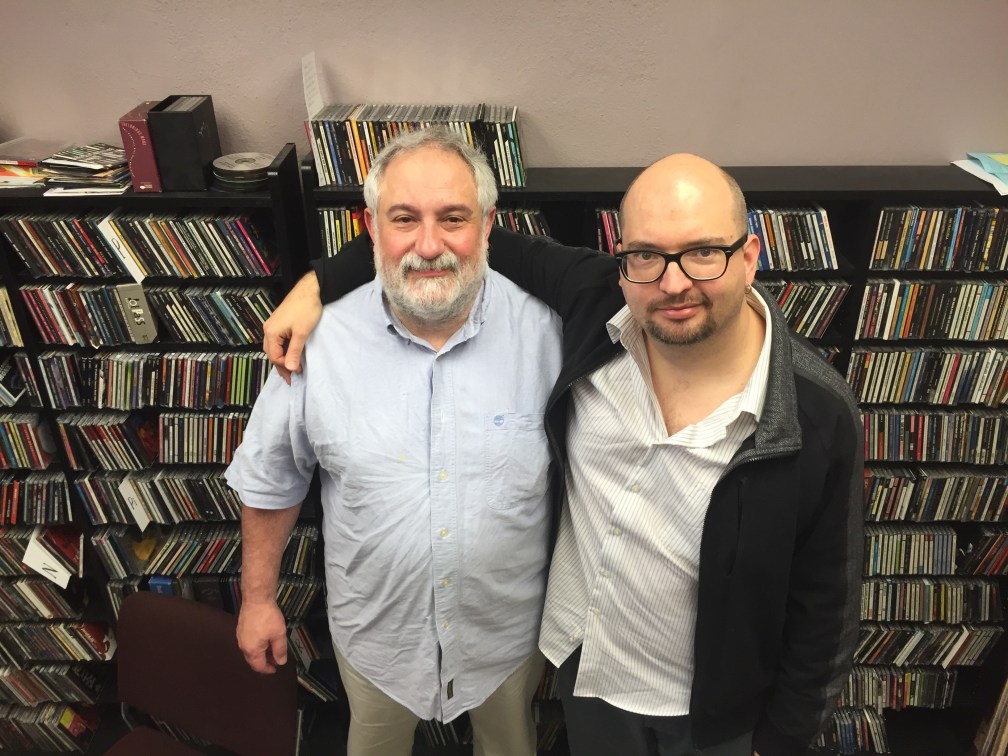
Don Asher’s Battered Grand

SFJAZZ has an unprecedented outdoor tribute, the Raise Up Off Me Alley. Hampton Hawes’s memoir is celebrated by jazz buffs,  but it was still surprising to see SFJAZZ honor a book. The fog cleared when talking to Robert Mailer Anderson, the board member who proposed the alley’s name. Anderson is writer and literary maven, and when he showed me a first edition of Raise Up Off Me signed by both Hawes and co-writer Don Asher I may have drooled a little bit.

While Don Asher is generally known only for the work with Hawes, there is one other Asher that should be on the shelves of the serious jazz book lover: Notes From a Battered Grand: A Memoir: Fifty Years of Music, from Honky-Tonk to High Society. Apparently Asher never made a record but he was obviously a competent musician. He grew up next to Jaki Byard, and one gets the sense that Asher knew he was never going to be a Byard so settled for being a superior cocktail pianist.

In addition to great stuff about Byard, there’s much more of general importance in Battered Grand, including how black musicians taught him to swing and a detailed explanation of how 60’s rock music was hard for the veterans to play. Asher’s voice is amusing and secure. I wish I had interviewed him, or at least been in his presence once: Asher died in 2010, and apparently still played cocktail piano in San Francisco until near the end.

Despite being the kind of virtuoso who could easily outgun any competition, Oscar Peterson was a very good colleague. For example, in Raise Up Off Me, Oscar cameos as a kind of helpful older brother to Hawes.

A video has turned up of Oscar hosting an informal TV show with guest Jimmy Rowles. Rowles is in a blue leisure suit, shy and smoking on camera. There is unrehearsed dialogue and Oscar is very classy throughout. The whole cast (with Ray Brown and Bobby Durham) sounds great but Jimmy’s chorus on “Our Delight” is simply to die for:  improvised, surreal, vocal, swinging.

The Shape of DTM to Come

This week the Billy Hart Quartet with Mark Turner, Ben Street, and me is at the Jazz Standard in New York. Thursday through Sunday, sets at 7:30 and 9:30.

In May we go on a European tour:

May 7: Bimhuis, Amsterdam

May 10: Hannover Jazz 

May 11: Vicenza Jazz Festival

May 12-14: Duc Des Lombards, Paris

May 16: Crossroads, Correggio, Italy 

This quartet has been together almost fifteen years and has evolved into a truly distinctive personality.

The real start of Do the Math was the interview of Billy Hart in 2006.

Welcome to the third iteration of Do the Math! Thanks to Mimi Chubb for editorial assistance, John Guari for Finale assistance, and especially my man webmaster Wayne Bremser. (Twitter: @wb)

A few pieces of small new content are just below: “We Always Swing,” Umberto Eco, David Baker. Stay tuned for a Red Garland overview and an interview with Wayne Shorter.

—-

See if you can find the menu on this page…if so, you are ready to navigate the archive.

I’m still tweaking errors and dead links; report faults to me on Twitter. Thanks for reading!

Congratulations to Henry Threadgill for winning a well-deserved Pulitzer! DTM: Interview and essay.

They Always Swing

America lacks support and venues for jazz music, especially outside the biggest cities. Only in a handful of comparatively smaller places is there some kind of team interested in presenting the music as a labor of love.

Jon W. Poses is the Executive & Artistic Director for the “We Always Swing” Jazz Series in Columbia, Missouri. Through Poses, The Bad Plus has played several times at Murry’s, a good restaurant that puts on jazz several times a season.

Jon is an old-school fan who began as a collector before getting more and more involved in the business: writing liner notes, managing artists, and now We Always Swing. He got addicted young and now still needs the jazz fix.

We Always Swing has a storefront in Columbia that has a remarkable lending library dedicated to the memory of Von Freeman. I stopped in for what I thought would be for a few minutes and ended up demanding to hear records. I’d been looking for Hod O’Brien’s first LP with Teddy Kotick and Jimmy Wormworth for years. Jon’s library gave me the chance to audition, and it proved to be a really nice bebop trio.

(Just recently I saw O’Brien at Mezzrow. He’s still got authentic notes and phasing; it was also a great opportunity for youngblood bassist Darryl Hall to get some really fabulous experience playing with the real deal.)

Once again, thanks to everybody who puts time and effort into this music. I tend to just praise the musicians themselves on DTM but the whole eco-system matters.

Jon and Ethan

with Jon W. Poses

Progenitor of Modern High and Low

RIP Umberto Eco.

It was amusing to look at Foucault’s Pendulum again. At one point this was one of my favorite books, but when I got a little older I realized that Eco was trying too hard.

Pendulum predates the similarly themed The Da Vinci Code by over fifteen years. The Da Vinci Code is poorly written, yet in some basic way Dan Brown delivers proper escapism in a way that Eco can’t. In particular, the opening chapters of Pendulum are obtrusively dry and academic. When the narrator finally settles in to tell a juicy history of the Templars, the book gets a grip and surges forward.

“Juicy” could mean low brow, “academic” could mean high brow. Eco was ahead of his time when trying to combine the two. I remember being stunned by “Casablanca: Cult Movies and Intertexual Collage” from Travels in Hyperrality in about 1990. However, that essay doesn’t hold up in the era of the information superhighway. Compared to TV Tropes and Idioms, Eco’s attempt to anthologize genre references is a rusted Model T in Grampa’s backyard.

Despite reservations, Foucault’s Pendulum definitely has something, perhaps especially in terms of the existential ending. I formerly thought that was the weakest part of the book but now  I have enough life experience to understand it better.

Eco’s first bestseller The Name of the Rose continues to charm. While Foucault’s Pendulum is like a modern chase or conspiracy thriller, Name of the Rose is simply an Agatha Christie-style mystery, which proves to be an easier trope to bend to scholarly pursuits. The historical detail and philosophical perspective is shamelessly academic from the first page to last, and the reader receives an amusing and digestible education hung on the conceit of amateur detection.

Eco’s interview with Lila Azam Zanganeh for the Paris Review is a joy throughout.

Baker’s Bebop to Bartók

When I was in high school I went every summer to the Jamey Aebersold Jazz Camp in Elmhurst, Illinois. The very first time I was placed in David Baker’s combo. (The tenor saxophonist in the same combo was Chris Cheek, a marvelous player who his since gone on to a major career here in NYC.)

David Baker was a thrilling personality. He had hung out and played with major jazz figures, and we loved hearing him tell stories about the masters from the vantage point of being a casual friend.  I remember him talking about whispering the changes to “Sugar” to Lee Konitz onstage at a big hall before Lee took the second solo after composer Stanley Turrentine. According to Baker, Lee played the hell out of “Sugar” that day, “Even though he had never heard the tune before.”

One day that week Baker came in and began singing Denzil Best’s “Wee” to us. No chart: We had to learn it by ear, and deal. The next day he made us play Lee Morgan’s “Ceora” in all twelve keys.

To this day, making the kids learn by rote and transpose are two things I always do when teaching a combo workshop myself.

Baker was also a serious composer. I had yet to become immersed in classical music, but Baker gave me a book that was a strong indication that I should investigate more 20th-century composition.

From 1973, Advanced Improvisation remains one of the hardest exercise books I’ve ever seen. Truthfully much of the material is a little ridiculous, like the wide leap “threading” of “Ladybird” changes made even more avant by the embrace of avoid tones. But the long listening lists full of Coltrane and Stravinsky next to each other remain eternally relevant.

It’s all there on the inside flap, with a review of a Baker cello sonata played by the great Janos Starker. I’m touched by the dedication from Baker himself, “To Ethan with affection.”

Baker 2


When Baker recently passed away at 84 I listened to his Cello Concerto with pleasure. The problem with this atonal work is the “jazz” in the last movement, which of course doesn’t swing. But the first two movements are great. 

For all that he is associated with jazz and jazz education, it may be that Baker was actually more intuitive and creative with his first language, classical music.

Another significant part of Baker’s legacy is editing (along with Lida Belt Baker and Herman Hudson) the book-length collection of interviews The Black Composer Speaks. It is mostly classical composers but Herbie Hancock and Oliver Nelson are in there too. 

In high school I kept re-checking out that big book (500 pages, hardbound) from the college library, especially since Herbie’s interview in Black Composer Speaks is so much more revealing and interesting than anything Herbie ever said to a jazz magazine.

The penny is only dropping now: The interviews I do on DTM are profoundly influenced by The Black Composer Speaks.

Toussaint and Craft

Allen Toussaint obit and celebrations from New Orleans Times-Picayune.

Robert Craft New York Times obit.

My first serious musical love was boogie woogie piano. Imagine my 12-year old excitement and astonishment when the documentary Piano Players Rarely Ever Play Together turned up on PBS one night. Fortunately the program ran again the following week and I was able to tape it on VHS.

Allen Toussaint is wonderful throughout, in charge of general diplomacy, wrangling his elders,  and of course offering superb playing. Shockingly, Professor Longhair died during the making of the movie, which leaves only Tuts Washington and Toussaint to perform the final selection.

The director Stevenson J. Palfi left little besides this invaluable hour-long documentary. That was not Palfi’s intention: Palfi had created a large archive of unique footage of New Orleans musicians waiting for curation and dissemination. However, that archive was lost in Katrina, and Palfi killed himself.

Stravinsky, Webern, Schoenberg: When trying to hear the essential works of modernism, it was easy enough to look for the name Robert Craft. At one point I had almost everything by those three under Craft’s name, although by now those fairly raw early records are mostly supplanted by more deluxe performances.

Along with many others, I adore late Stravinsky atonal masterpieces like Agon and Requiem Canticles. There is no doubt that we owe Craft a debt for helping Stravinsky understand dodecaphony.

I sort of met Craft once. As recounted in the Irving Fine essay: “I was only 19 when my girlfriend got me the job of rehearsal pianist for the Gregg Smith Singers. Reading music was always easy for me but I had almost no experience with classical music in general. The first rehearsal was Stravinsky’s Mass with Robert Craft guest conducting.”

The “Sanctus” movement of the Mass has an exposed slow quintuplet that is a serious rhythmic challenge to the average oboist. In rehearsal with Craft, I somehow kind of nailed that quintuplet the first time (probably a mistake as much as anything). Craft looked over at me and muttered, “Not bad.”

Somehow that tiny exchange was an extremely helpful inspiration: almost an injunction to keep learning about classical music.

Official Endorsement

I have been studying piano with John Bloomfield for about a year. It has been a fantastic experience.

John is associated with the Dorothy Taubman approach. After working with Taubman closely for many years, John is now on staff at the Golandsky Institute, the New York-based group of Taubman disciples led by Edna Golandsky.

After the first time I played duo with Ron Carter last October, I concluded I needed more firepower to really hang in this kind of exposed environment and started looking for a new coach.

While I will always be indebted to the great Sophia Rosoff, Sophia has basically stopped teaching.

Over this past year, John has offered me a complete set of solutions for acquiring more brilliance and facility. I’ve taken the Taubman approach (at least as taught by Bloomfield) completely to heart. It has my 100% endorsement.

The Taubman school is controversial. I myself felt a little hesitant beforehand. Any time there’s a bunch of people doing something different and apart from the mainstream, it is easy to worry that they are a cult or weird or something.

Apparently Dorothy Taubman herself was quite eccentric and brash. I’ve heard her described as “Like Edith Bunker, complete with a broad Queens accent.”

It’s possible that since her passing, the Taubman approach is actually gaining more traction. I’ve heard nothing but praise for Edna Golandsky and her teaching. It also helps that Yoheved Kaplinsky, who worked with Taubman, has chaired the Piano Division at the Juilliard School since 1997.

Kevin Hays was the first person who told me about Taubman. Bill Charlap is also a fan. After the Wayne Shorter gig at North Sea this past summer, I pulled Danilo Perez aside to rave about Taubman (actually Danilo really raved about Golandsky).

These are pretty big names in jazz. I can already tell this is going to mirror my experience with the Abby Whiteside school, where the jazz players (Fred Hersch, Barry Harris) who endorse the “outsider” system of Whiteside-Rosoff are more famous than the classical players.

The heaviest classical players obviously don’t need any special help; Schnabel once said something to the effect of, “It doesn’t matter who your teacher is, you will do it or you won’t.”

But at this point I can see videos of many famous names – Gould, Kissin, name your favorite – and think, “They need more emotional rhythm here, and should see Sophia,” or, “They are too digital, they could do it easier with Taubman.”

At any rate, the reason I gave Taubman a shot was hearing Yegor Shetsov play exceptionally ungrateful and difficult Hummel and Weber chamber music for Mark Morris. We shared a practice room, and I could tell he wasn’t drilling the pieces. (Anytime I played harder rep for Mark, I had to play the most challenging parts a dozen times before the gig just to make sure I could do them.) I asked Yegor about technique, and he said that everything had gotten so much easier since his relatively recent involvement with Taubman (specifically Golandsky).

There’s a lot about Taubman, Golandsky, and so forth on the internet. However, I must admit that style of the teaching videos and the official missives is not always that inviting. Indeed, the Dorothy Taubman wiki page still causes my eyes to glaze over (even though I now sort of understand most of it).

The work probably must be experienced in person to be understood. It’s not as complicated as it may appear. When you do it right, it feels right. At the first lesson with John I was hooked.

In my opinion the Taubman school rhetoric puts too much emphasis on healing hurt pianists. I’ve never been hurt playing the piano in my life. Many professionals, especially jazz professionals, find ways to play safely.

That emphasis on healing might keep away those who never feel pain from Taubman. If you are playing well, why go someplace to be fixed?

When studying the Taubman approach one learns how to put the arm behind the finger at all times. If your arm is there, the finger goes down with ease and you can make a solid sound no matter what. Reaching or crowding situations cause you to emphasize digital strength: Taubman gives you ways of managing those awkward moments so that your fingers are always backed up by the bigger piston of the arm.

Of course, you need finger strength to play the piano. But! You don’t need disconnected finger strength. And what you really need is a small burst of controlled speed to make the key go down quickly.

They called Bud Powell “hammerfingers” but that’s wrong. Look at a video: Bud’s fingers are always right there on the keys, with the arm behind every articulation. He never reaches: those fiery notes are right there for his hand at all times. Brute strength is not the concern.

Professionals know that the C major scale is surprisingly difficult. (B major is usually held to be the easiest.) For either hand, playing a medium fast C major scale in both directions for with a full sound and complete evenness is a virtuoso task.

A year ago I couldn’t play a C major scale. Oh, sure, I could fake a lumpy one, as fast as you want — but a real deal scale like you’d need in Mozart concerto? No way. I figured anyone who had perfectly even scales at forte drilled them incessantly as a kid, that it was too late for me to acquire a good scale technique.

Now I can play a C major scale. Not only that: It is easy for me to play the C Major scale.

I found John Bloomfield through the Golandsky Institute general email inquiry. John is very advanced and frankly pretty expensive (worth every penny though). However, there are teachers available at all levels.

Again, there’s a NYC workshop on October 23.

Red Light New Music + Scott Wollschleger

Official blurb:

Barbary Coast, the debut album from New York-based ensemble Red Light New Music, features works by the group’s founding composers: Christopher Cerrone, Ted Hearne, Vincent Raikhel, Liam Robinson, and Scott Wollschleger. These works represent ten years of collaboration between the composers and performers, and showcase the collective’s imaginative approach to contemporary chamber music.

Vincent Raikhel: “Cirques.” Droning, almost tuning up, resolving to minor-key hocketing dances in fine post-minimalist style. Good introduction to ensemble and the contemporary idiom.

Liam Robertson: “Chamber Concerto.” Features my friend Yegor Shevtsov on piano (he gave me this CD). “Sonata,” “Hymn,” “Rondo.” Goofy, virtuosic, extended techniques: handclaps and slide whistles? That sounds terrible, but Robertson is a serious composer who musters a coherent argument. Cool polyrhythms. “Hymn” perhaps most impressive movement with tasty tunes and spread counterpoint.

Christopher Cerrone: “The Night Mare.”  After the initial sting I’m not even sure what I’m listening to. Timpani maybe and…? Dread and sorrow, at any rate. Eventually a kind of mysterious B-flat minor tune in piano/percussion loops around the roil and rumble. Accelerando ensues, dissipates, races off page. Compelling.

Ted Hearne: “Crispy Gentlemen.” Punk-rock high modernism: Atonal, pointillist, banging drums. Bass clarinet feature! I would dig this more live, on headphones I get a little tired before the 12 minutes is up. Still an intriguing listen, though.

Scott Wollschleger, “Brontal No. 3.” Four similar movements, a kind of brutal pocket viola concerto. For me the highlight of the disc. Wow. This is some serious madness. Alternating microtonal monumental sonorities conjure Lovecraftian visions. The outraged viola “sings” stunted melancholy.

I’ll be looking out for more Wollschleger. There is fair amount of piano music for me to explore, including something on Ivan Ilic’s recent The Transcendalist. I’ve heard Ilic’s recording of the left-hand only Godowsky-Chopin paraphrases and was impressed. I’ll be investigating this disc and the rest of Ilic’s records soon; for now, kudos to Ilic to adding Wollschleger to the distinguished company of Scriabin, Feldman, and Cage. Wollschleger’s “Music Without Metaphor” is the dead intersection of Chopin and Feldman and simply a lovely listen as well.

Ivan Ilic interviews Scott Wollschleger.

Wollschleger SoundCloud page.

When In Doubt, Read a Book

(Hermann Hesse and Mark Leibovich)

A fair number of jazz musicians have mentioned Glass Bead Game over the years. For Tetragon, Joe Henderson recorded a significant piece of free jazz called “The Bead Game.” One of Clifford Jordan’s best albums is Glass Bead Games. When I asked Keith Jarrett to word-associate about Andrew Hill, he responded, “Glass Bead Game. I dunno. Something like that.” Last week I texted Mark Turner what I was reading and he responded, “Love that book. Western spirituality at its best.”

The Glass Bead Game breaks down into essentially three parts: An introduction to the future world and the game, the story of Magister Ludi Joseph Knecht, and an appendix of Knecht’s own writings.

The slightly pompous and comic introduction predicts the internet and the postmodern age with uncanny precision. The description of the Game – combining art, math, science, music, and sociology – could be helpful for those interested in the best American music. At the least, the following paragraph is relevant for anyone attempting to interface with an older jazz master:

We stress that this introduction is intended only for popular consumption and makes no claim whatsoever to clarifying the questions being discussed within the Order itself on the problems and history of the game. The time for an objective account of that subject is still far in the future. Let no one, therefore, expect from us a complete history and theory of the Glass Bead Game. Even authors of higher rank and competence than ourself would not be capable of providing that at the present time. That task must remain reserved to later ages, if the sources and the intellectual prerequisites for the task have not previously been lost. Still less is our essay intended as a text book of the Glass Bead Game; indeed, no such thing will ever be written. The only way to learn the rules of this Game of games is to take the usual prescribed course, which requires many years; and none of the initiates could ever possibly have any interest in making those rules easier to learn.

Clifford Jordan cared about history and society and how things really work on a macro scale. Musically, he was a master craftsman of straight-ahead tenor but also appreciated the avant-garde; in other areas, he was master of the hang and top-level weed dealer.

Jordan’s first leader dates like Spellbound and Bearcat are brilliant but reasonably conventional. 1966’s tribute to Leadbelly, These Are My Roots, changes it up by becoming superbly surreal. (Tootie Heath told me, “We had to rehearse a lot for that one.”) For the first Afro-centric record label, Strata-East, Jordan offered a curated set of sessions called “The Dolphy series.” While the late Eric Dolphy was a serious intellectual, much of those sessions’ groovy space-outs are only that much better when in an altered state of consciousness.

Billy Hart calls the jazz tradition, “A sociological experiment manifested through music.” Glass Bead Games, Jordan’s best Strata-East session, offers the full exertion of a community that is the product of a sociological experiment.

Hesse explains in terms a jazz master might endorse about their own art:

These rules, the sign language and grammar of the Game, constitute a kind of highly developed secret language drawing upon several sciences and arts, but especially mathematics and music (and/or musicology), and capable of expressing and establishing interrelationships between the content including conclusions of nearly all scholarly disciplines. The Glass Bead Game is thus a mode of playing with the total contents and values of our culture; it plays with them as, say, in the great age of the arts a painter might have played with the colors on his palette. All the insights, noble thoughts, and works of art that the human race has produced in its creative eras, all that subsequent periods of scholarly study have reduced to concepts and converted into intellectual property — on all this immense body of intellectual values the Glass Bead Game player plays like the organist on an organ.

To make his point about the community of “noble thoughts and works of art” extra clear, Jordan programs several pieces that explicitly honor musicians not present at the session: Paul Robeson, Eddie Harris, John Coltrane, Cal Massey.

I’m very impressed with the Game, and a puzzle piece about that “sociological experiment manifested through music” has definitely clicked into place. However,  I did joke to Sarah that the main story of Joseph Knecht was a bit of a sentimental slog, something akin to Tolkien. She was rightfully furious: “Tolkien is so bad and Hesse is so good.”

It may be that I am just a bit old for the big bildungsroman. I’ve heard before that Hesse is really for teenagers, and regret not reading him earlier.

—-

Much of The Glass Bead Game is connected to the question, “How much should the pure artist interface with politics?”

When Vince Keenan tweeted Mark Leibovich’s recent profile of Larry King, I was seriously impressed with the voice of author. Vince then told me that This Town: Two Parties and a Funeral -Plus, Plenty of Valet Parking! – in America’s Gilded Capital had changed the way he viewed politics.

I got This Town and was blown away. Just an amazing document: A Washington reporter and anointed insider dishes on the way it all really works.

A work of non-fictional reportage is inevitably episodic, so I am particularly impressed with This Town’s large-scale structure. We begin at Tim Russert’s funeral and end at the “Last Party” of Ben Bradlee. In between, each chapter flows seamlessly into one another. Just one exceptionally brilliant link: When Leibovich profiles Harry Reid and Tom Coburn in sequence, the transition is the former hanging up on the latter.

This Town is scathing and hilarious. I want to quote the whole damn book, but here are just two tidbits. The first one is short description of, “Terry McAuliffe, the former Democratic National Committee chairman, known as ‘the Macker.’”

McAuliffe made his mark as one of the most irrepressible money men in political history, or better. “The greatest fund-raiser in the history of the universe,” Al Gore dubbed him….So committed is the Macker to his art that he even stopped off at a fund raiser on the way home from the hospital with his wife, Dorothy, after she gave birth to their newborn son, Peter. Dorothy stayed in the car, crying, while the baby slept and the Macker did his thing. “I felt bad for Dorothy,” he would later write. “But it was a million bucks for the Democratic party.”

If McAuliffe’s signature is fund-raising, his principal identity is as professional best friend to Bill Clinton. The title of McAuliffe’s memoir What a Party! might as well be Let Me Tell You Another Story about Me and Bill Clinton….To deprive McAuliffe of the words “Bill Clinton” would be like depriving a mathematician of numbers.

And the second is a self-contained parenthetical bouncing off what “cordial” means in Washington:

Here is an example of how two senators with a “cordial” relationship deal with each other: In 2005, when Rick Santorum was still in the Senate, I wrote a profile of the brash Pennsylvania Republican, who had managed to claw his way into his party’s leadership despite being disliked by many of his colleagues. Santorum’s unpopularity was common knowledge on Capitol Hill. As a reporter, however, getting a senator to disparage a colleague on the record can be next to impossible, given protocol against even the mildest slander of fellow members. I tried. And I turned up the predictably limp platitudes from senators who plainly could not stand Santorum — which is “Latin for asshole,” as Democrat Bob Kerrey of Nebraska once helpfully translated. Finally, I encountered Democrat Mary Landrieu, of Louisiana, just off the Senate floor. As she walked by, I asked her, “What do you think of Rick Santorum?” To which Landrieu grimaced and replied, “You couldn’t quote what I’d have to say about him.” That was good enough for me. I quoted Landrieu saying exactly that. Sure enough, next time they were on the floor together, Santorum made a beeline for Landrieu, saying in so many words that his feelings were hurt. In turn, Landrieu did what most self-respecting lawmakers do when cornered about saying something objectionable: she blamed her staff; specifically, she blamed her communications director, Adam Sharp, who by any reading of the situation had nothing to do with it. But Landrieu reamed him out anyway demanded he craft a letter of apology to Santorum. He did; Landrieu reviewed it and then refused to sign it herself, apparently not wishing to authenticate this travesty with her pristine signature. The office autopen had to suffice.

This Town climaxes with three sections about Obama’s re-election campaign, after which Leibovich drily notes, “By ten p.m. on November 6, the results were sealed for POTUS and the $2 billion cacophony was officially in the books.”

Now that the current monstrously expensive cacophony is underway, I expect to be frequently clutching at my memories of This Town. The truth hurts, but the truth also sets you free.